


Kimono Robe vs Classic Silk Robe
By Tara Nguyen, Ph.D., Founder and Creative Director, Tara Sartoria
A customer in Tokyo wrote to me a few years ago, gently, to point out that the word kimono comes from her culture and is sometimes used very loosely in Western fashion. She was not angry. She was curious about what we meant by it. I wrote back the same day, because she was right to ask, and because the answer involved an admission.
What we sell as a kimono robe is not a kimono in the formal Japanese sense. It is a kimono-style robe, with the wider sleeves and the architectural drape that came out of centuries of garment design in East Asia. I told her this. She told me she understood, and that her grandmother in Kyoto, who had worn kimono her whole life, would have liked our silk weight. It was the kindest correction I have ever received.
A Short Answer for the Person Skimming
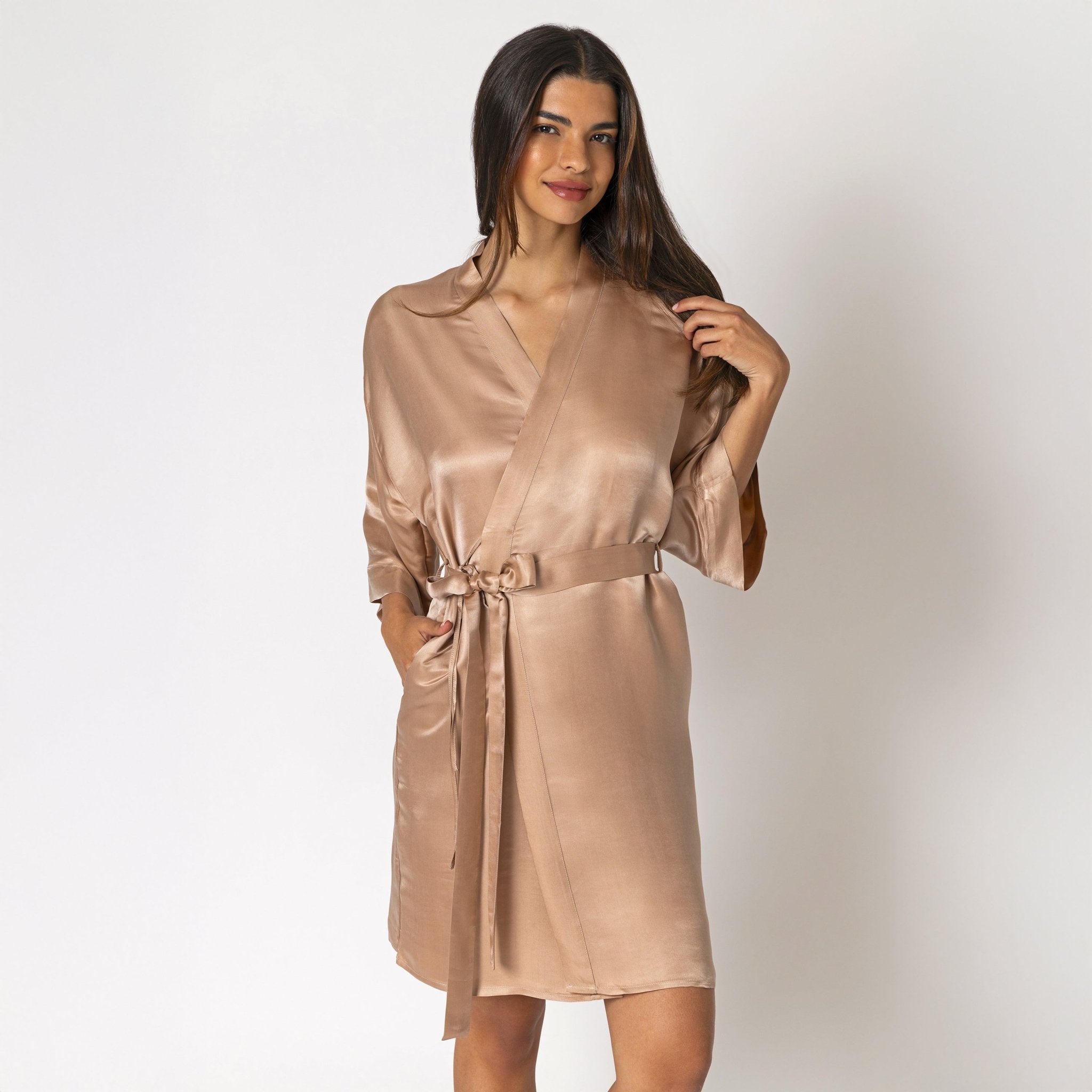
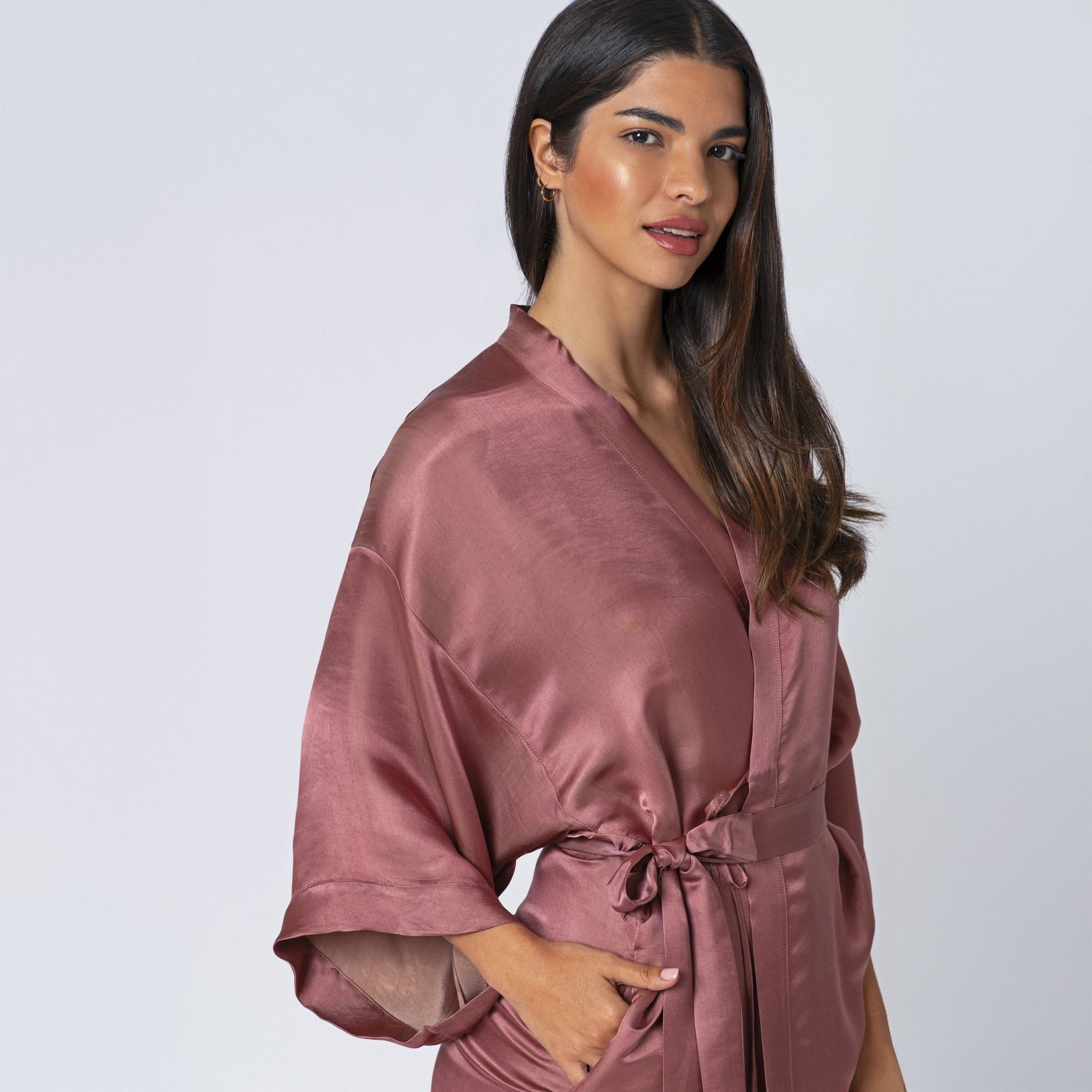
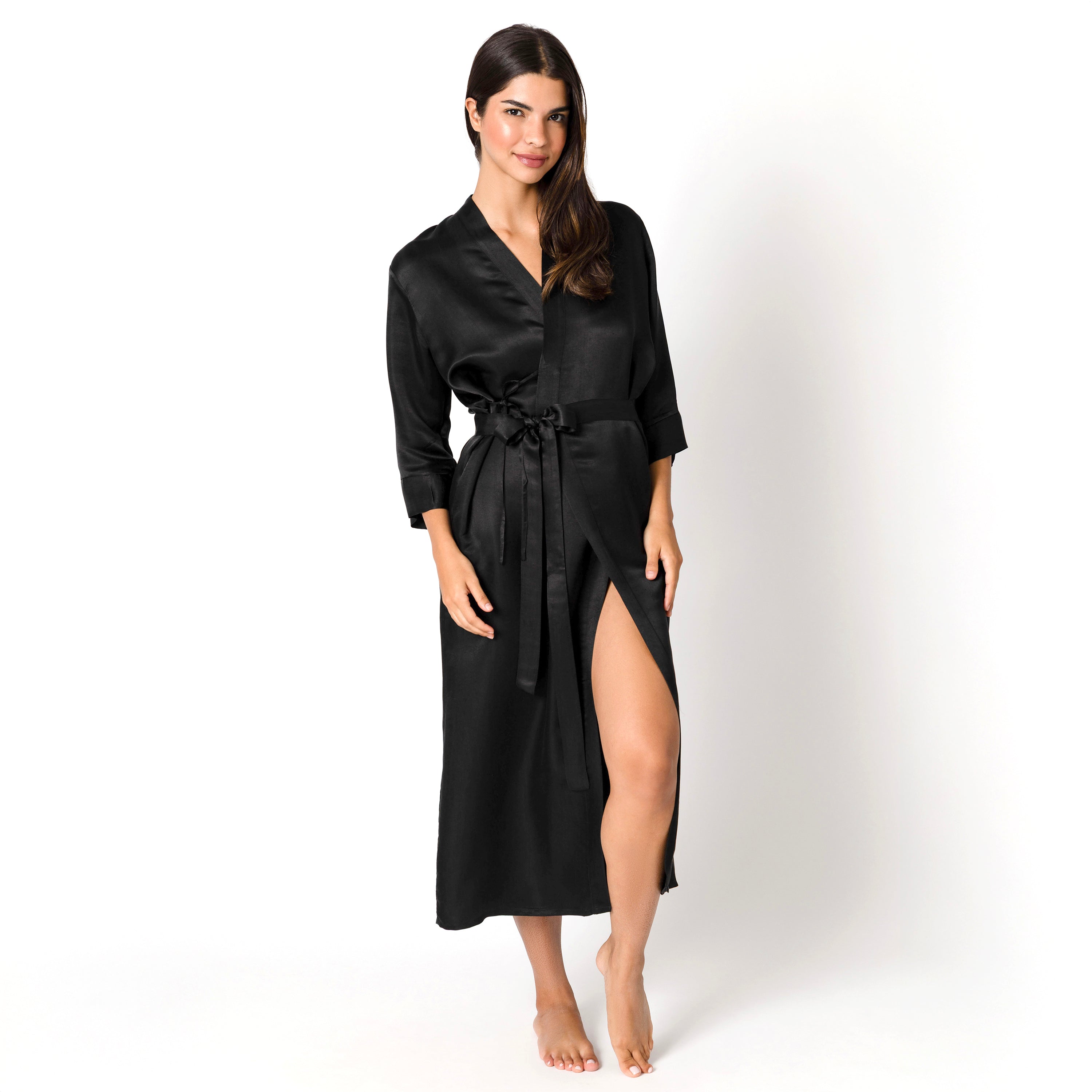
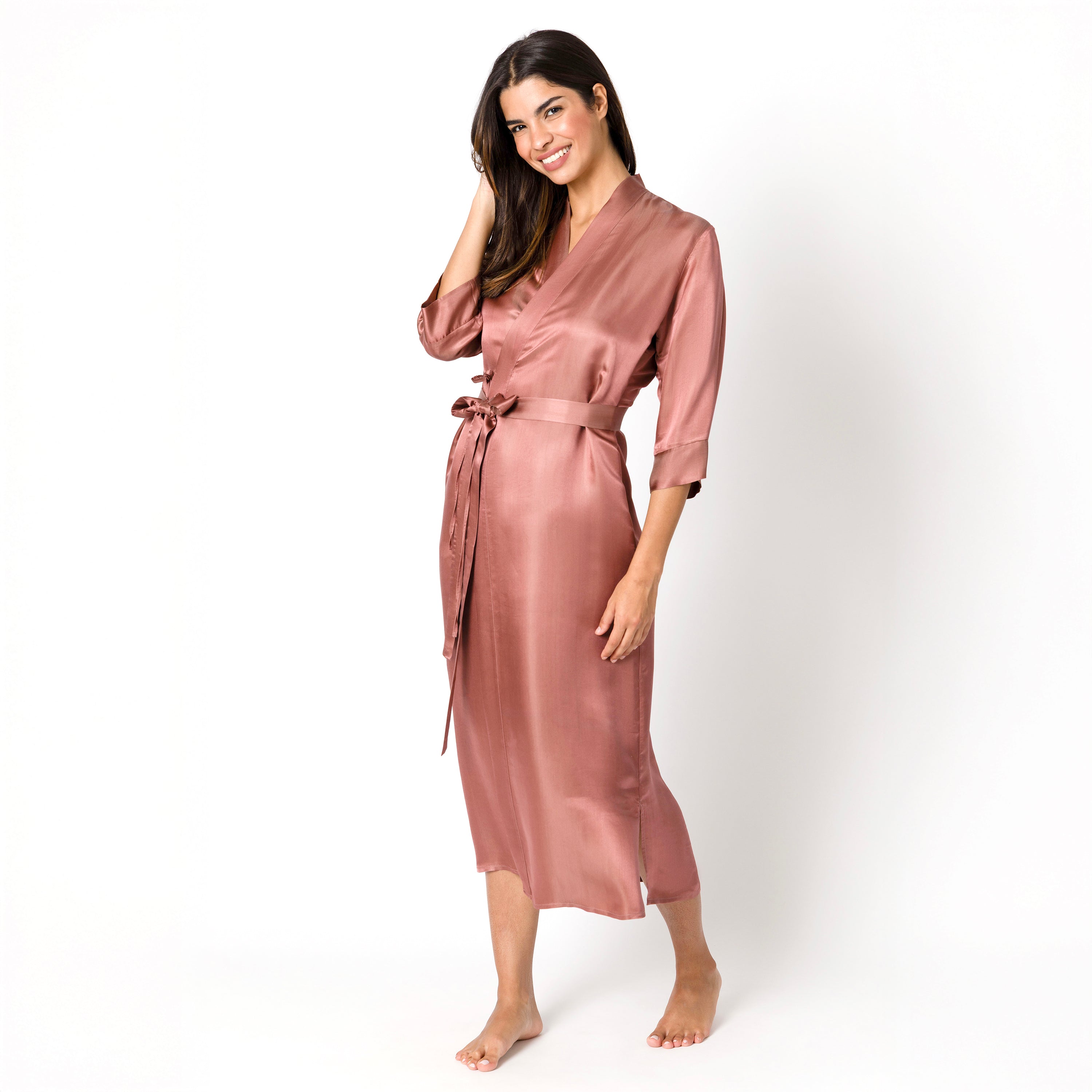
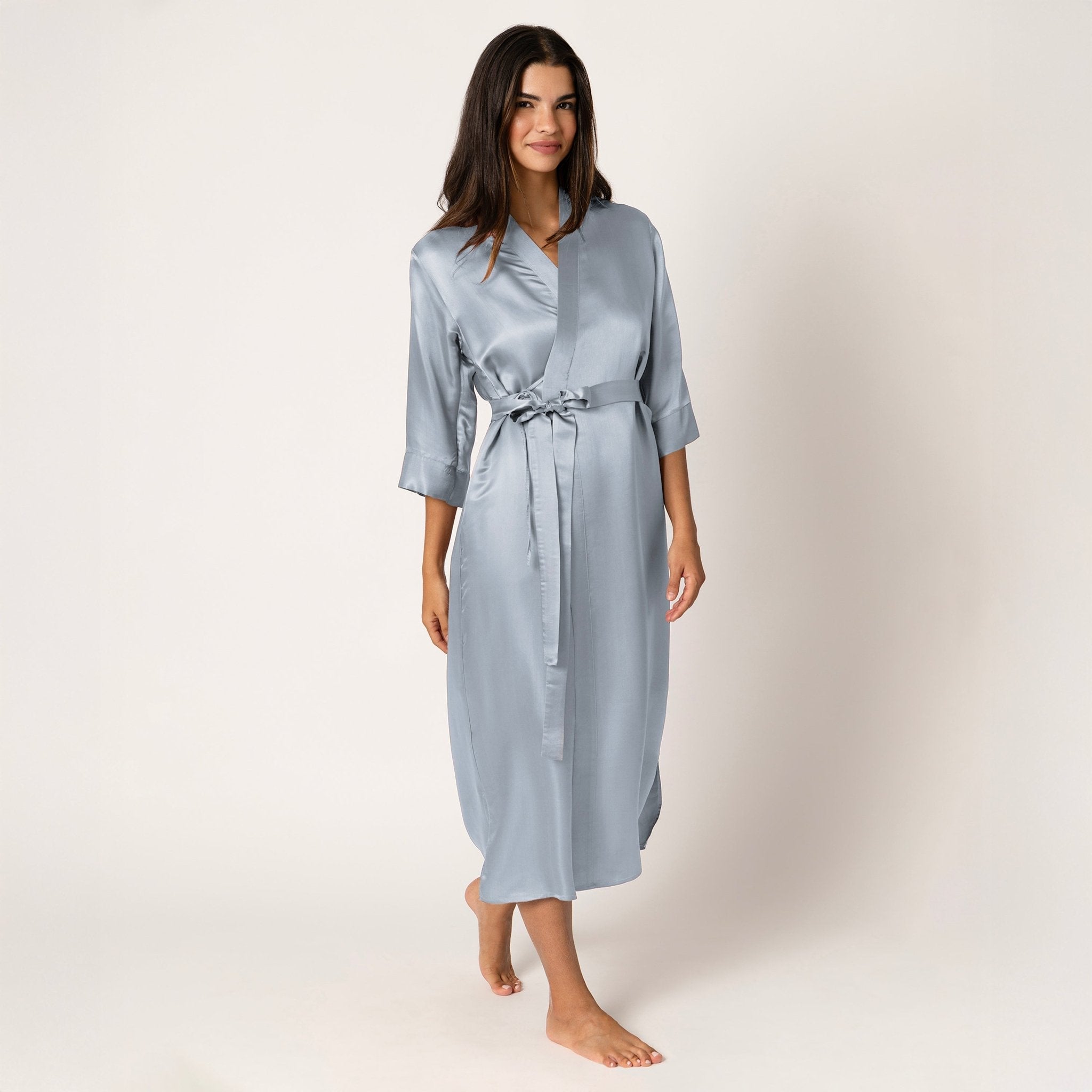
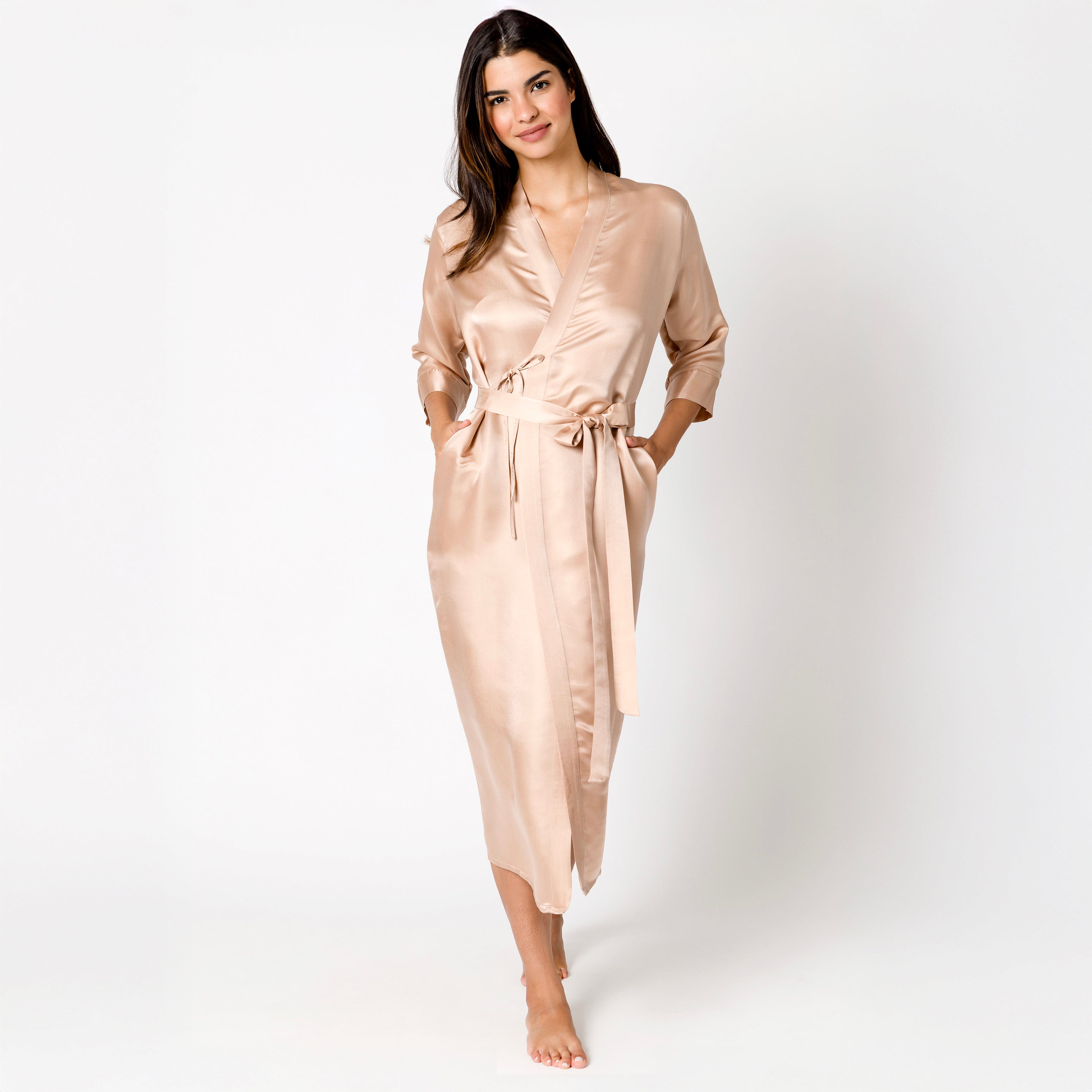
A classic silk robe is the everyday silk piece most customers buy first. The cut is straightforward, the sleeves are tailored close to the arm, and the silhouette is what people picture when they hear the words silk robe. A kimono robe has wider sleeves, a more open cut through the shoulders and arms, and a more architectural drape.
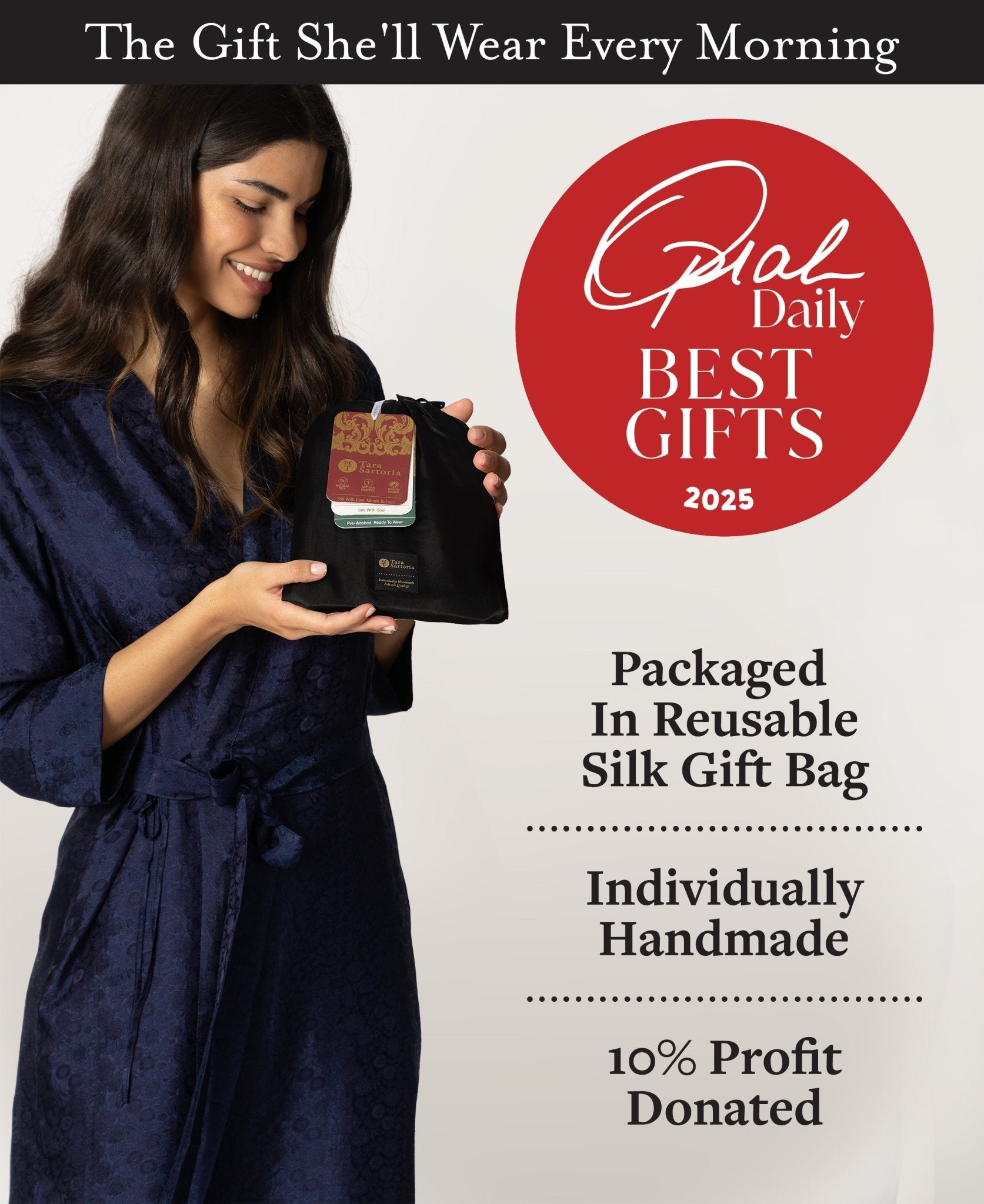
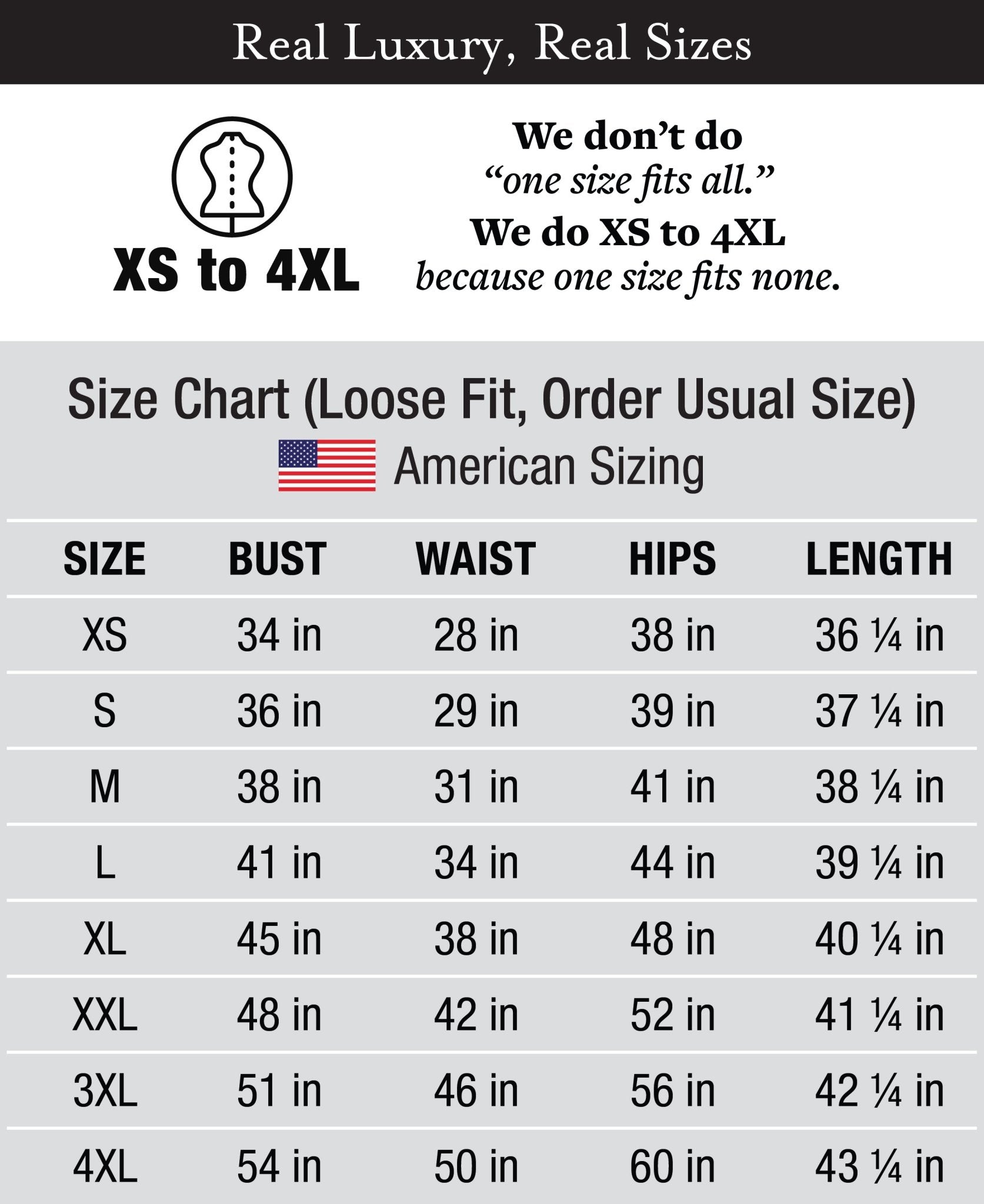
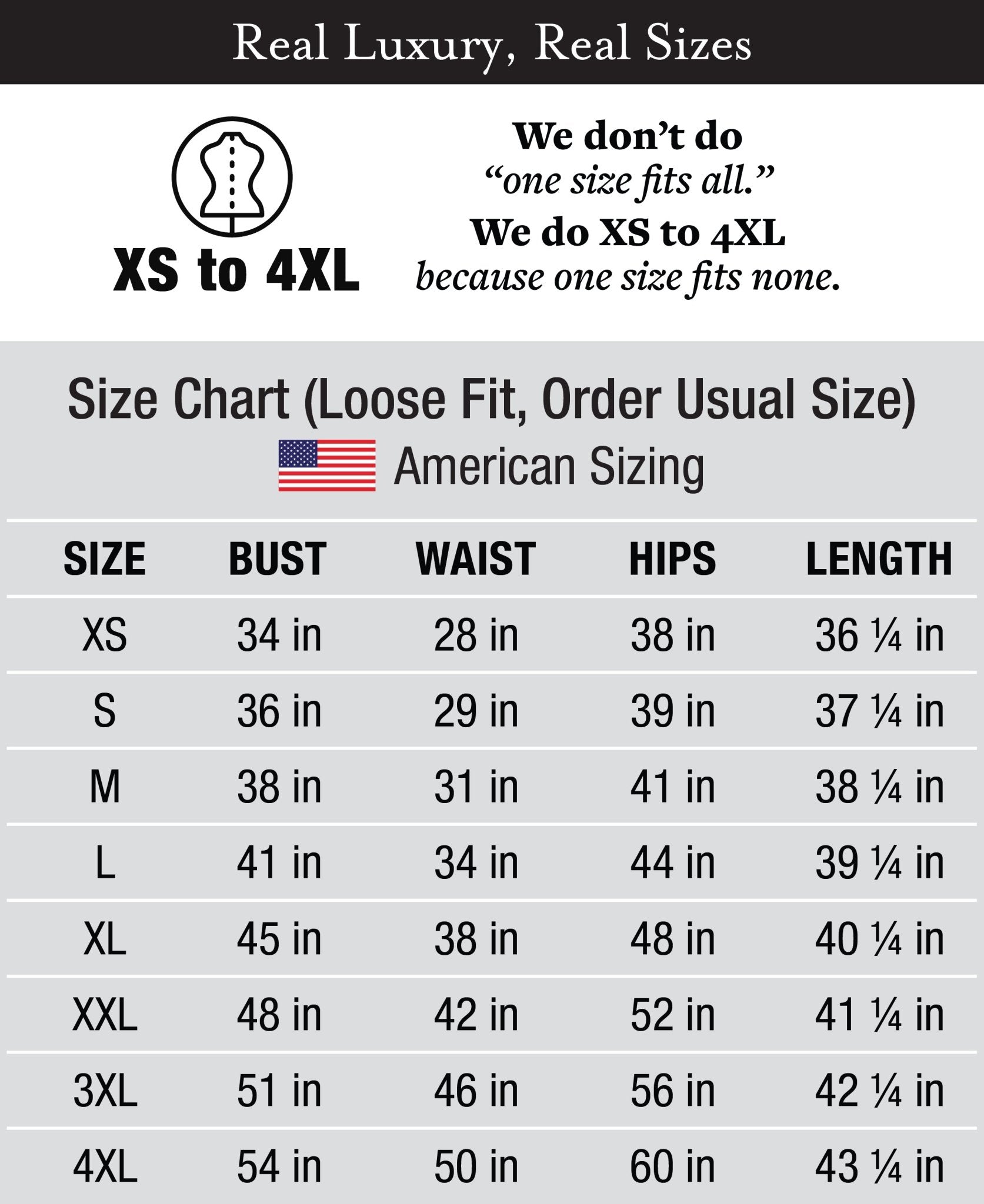
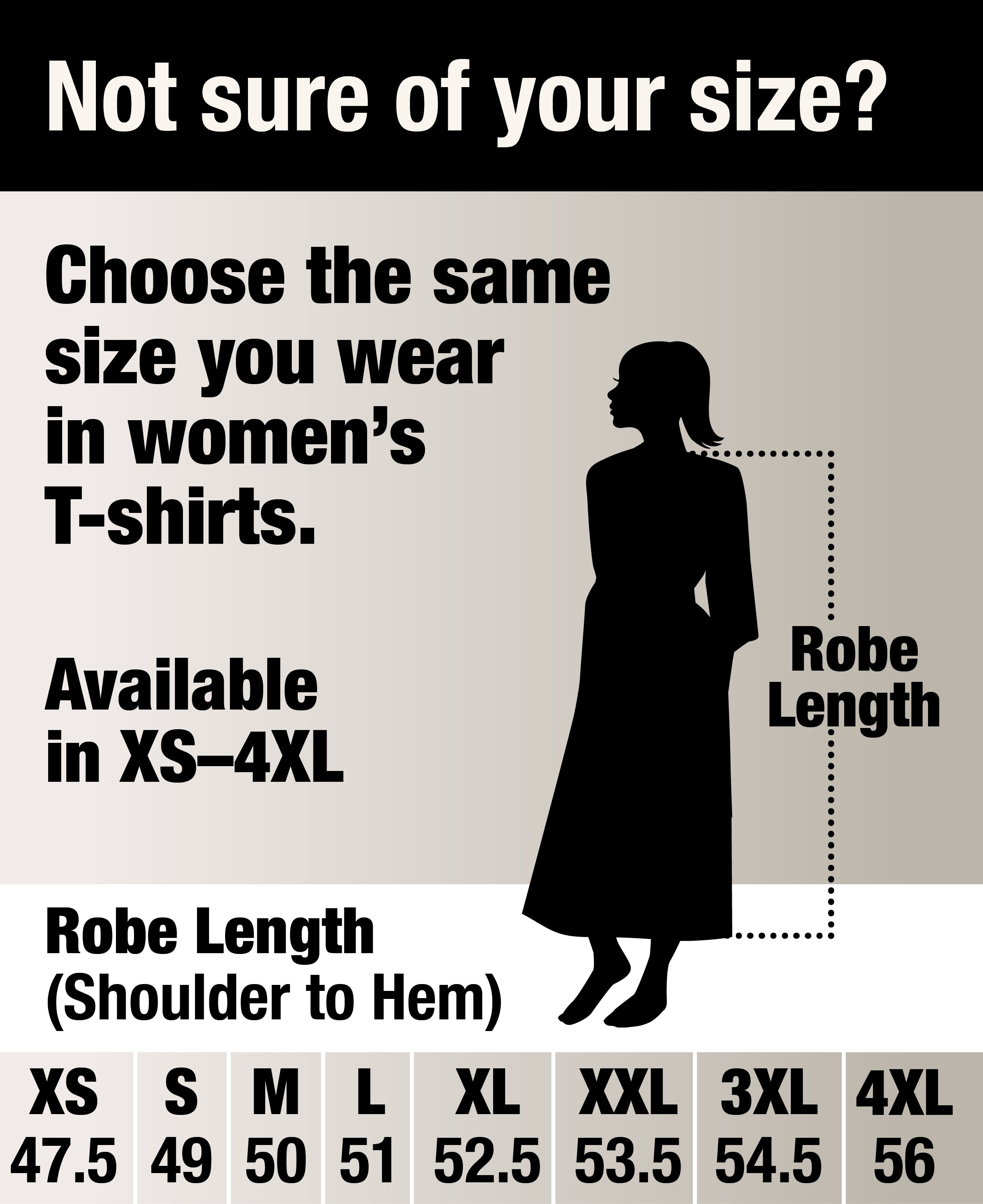
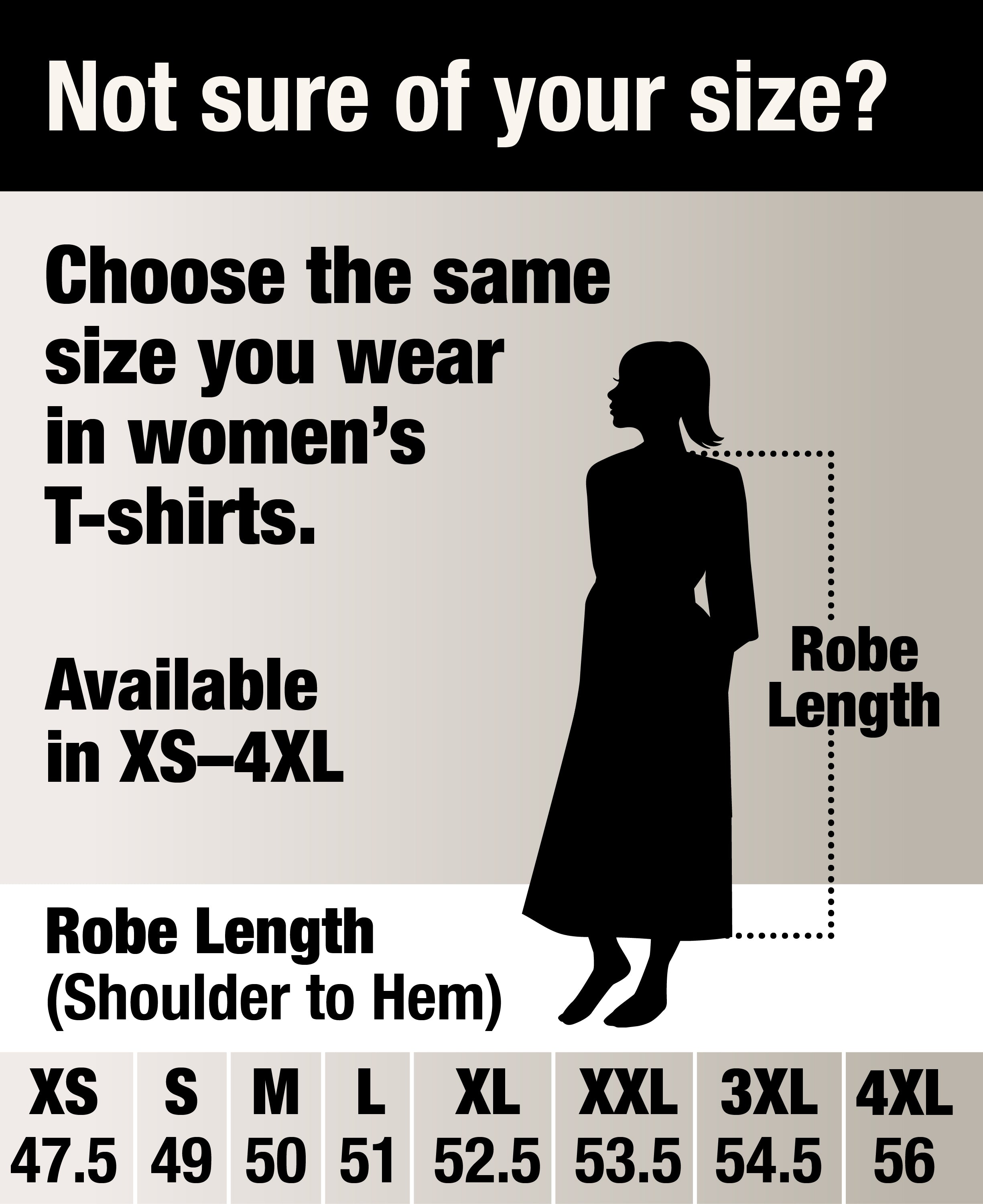
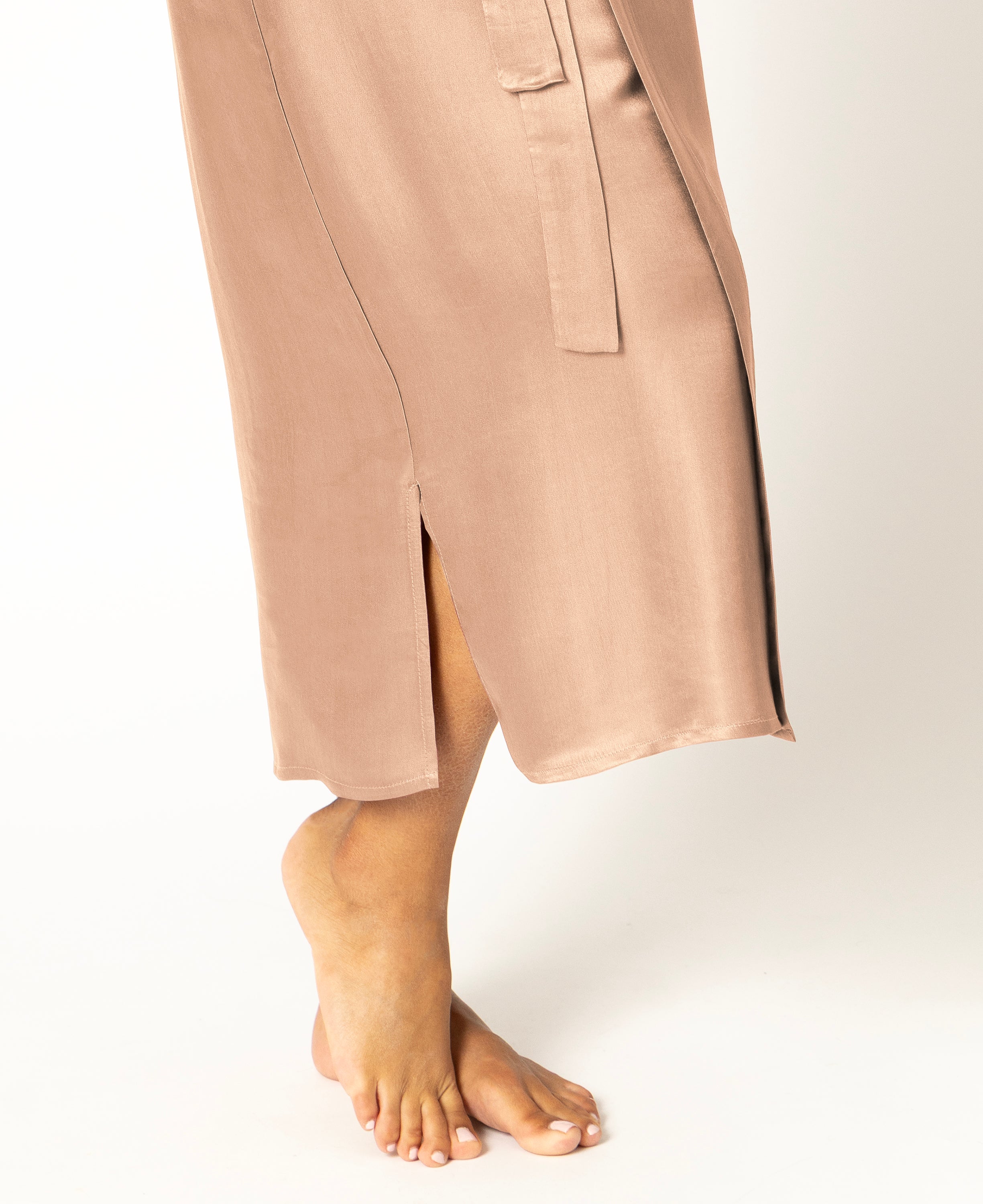
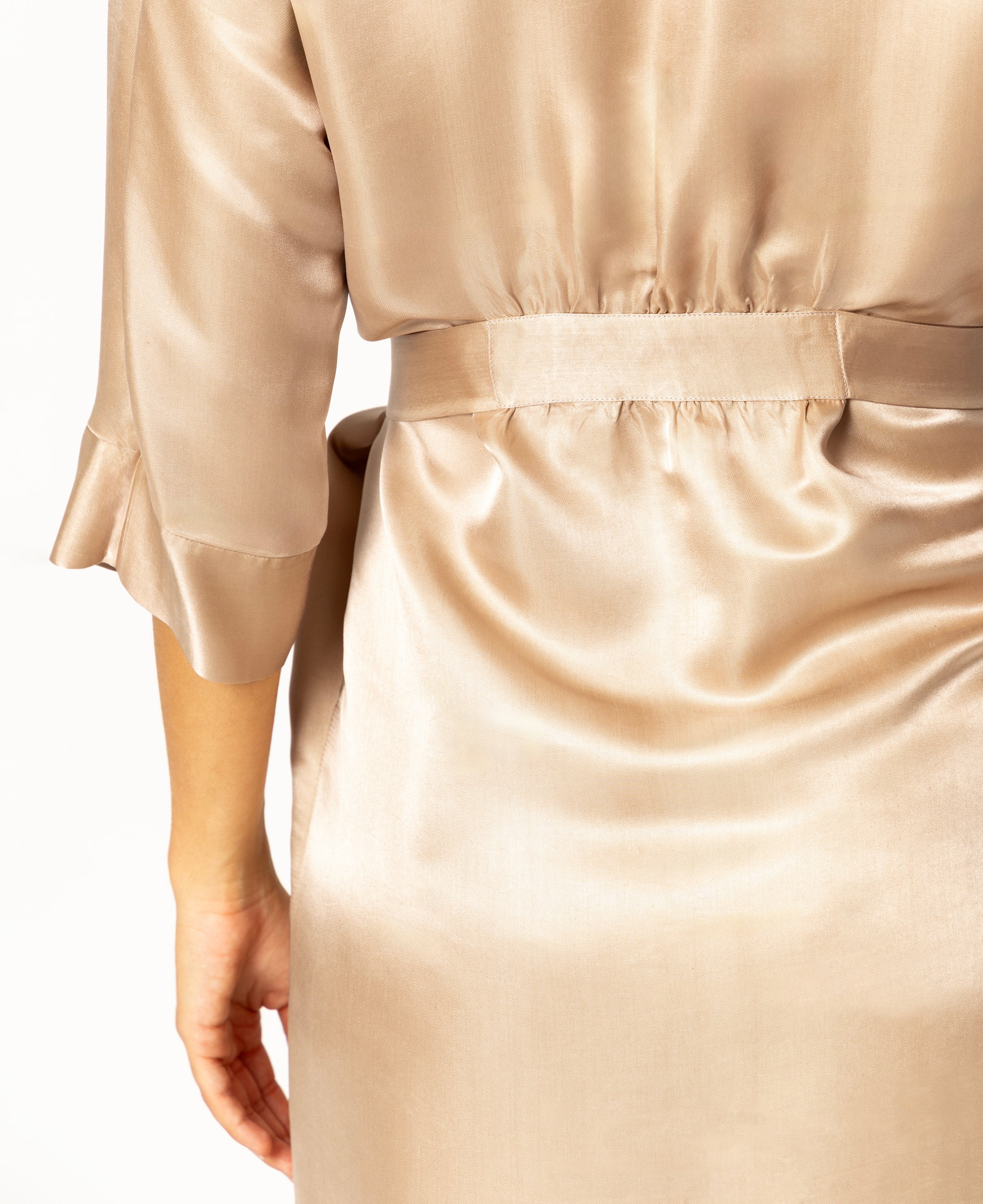
Both are made one piece at a time by master artisans in Vietnam's historic silk villages, woven on heritage looms, finished with French seams, machine washable, and sized XS to 4XL as standard. The classic is the safer first robe. The kimono is the more distinct second.

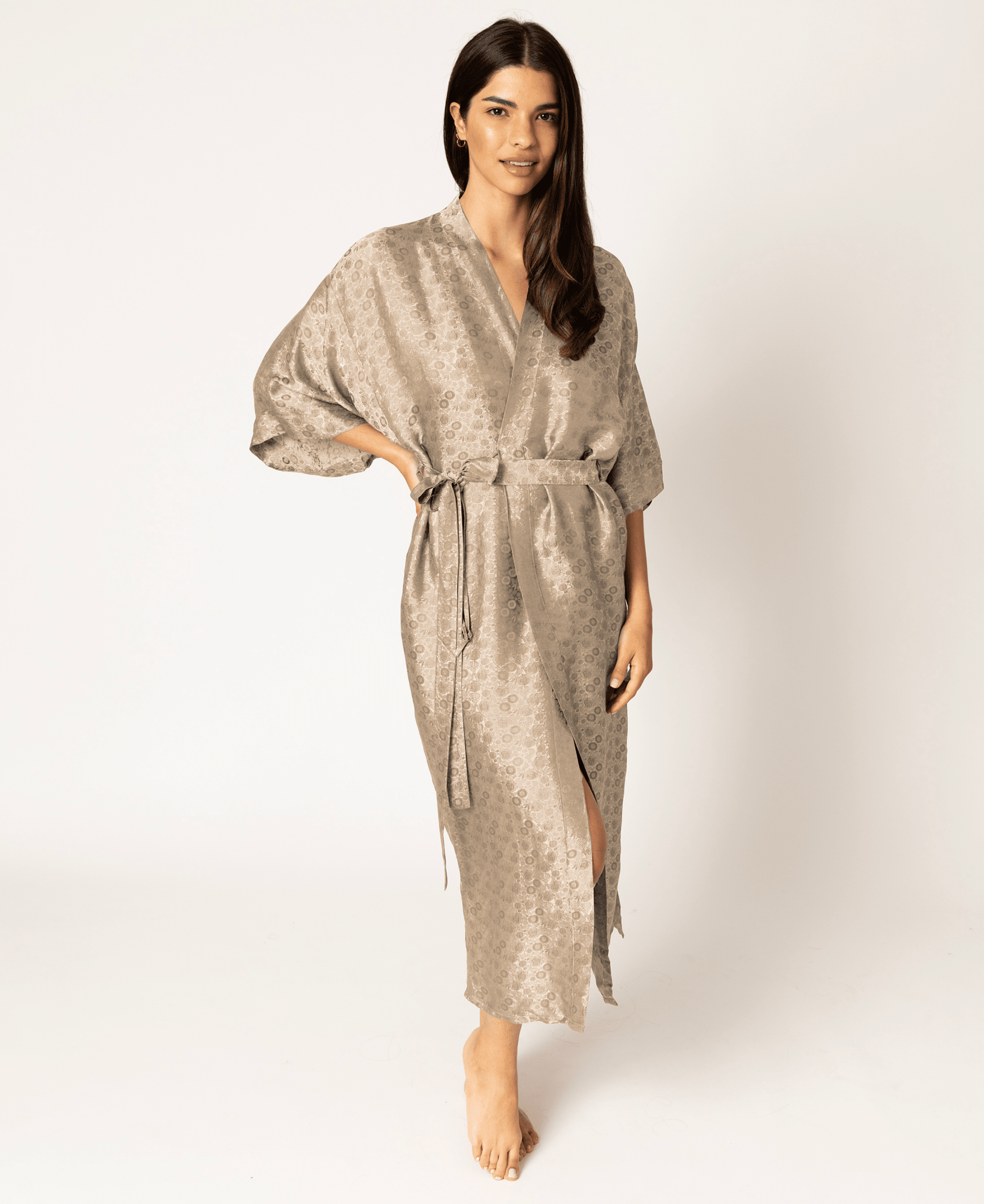
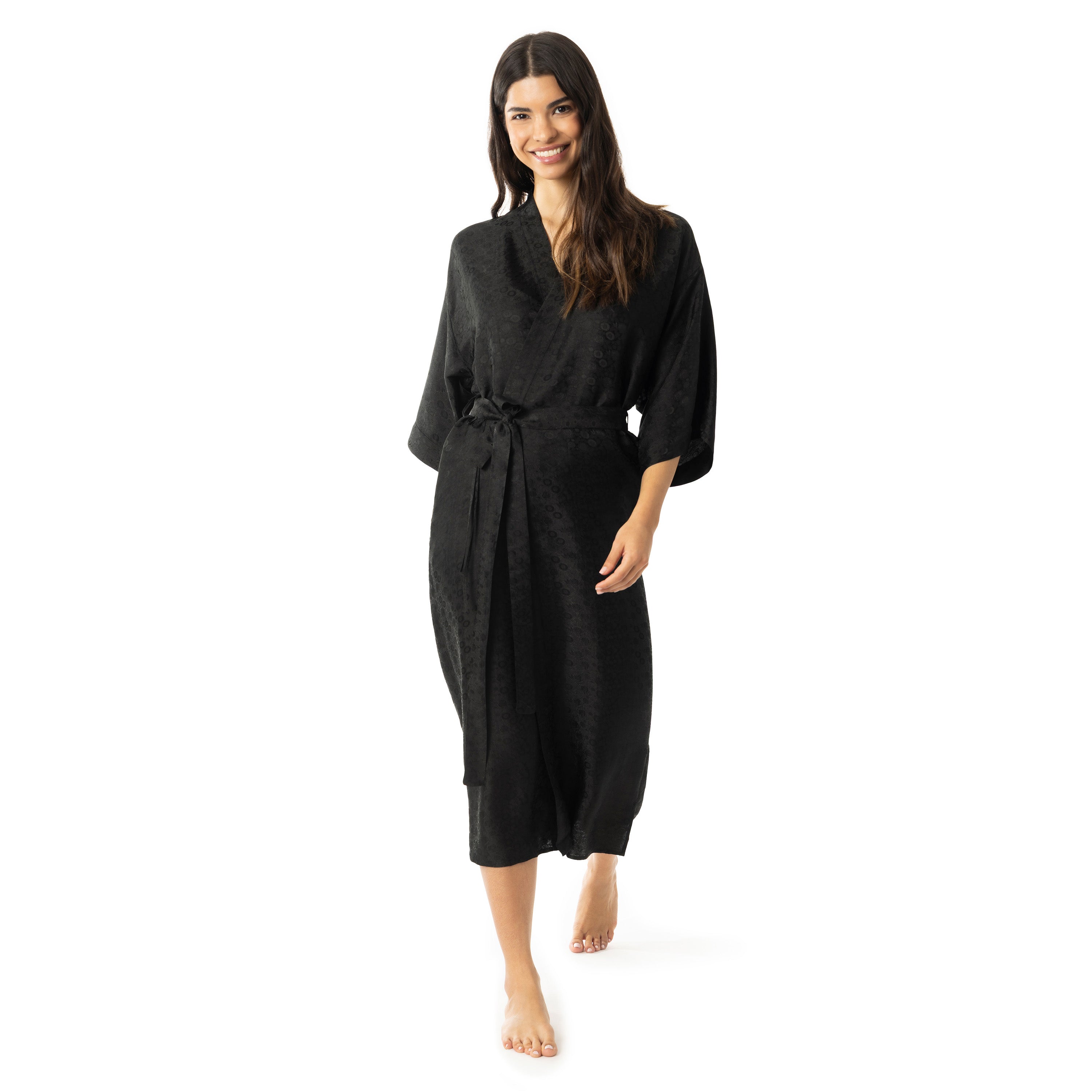


What the Two Silhouettes Actually Look Like
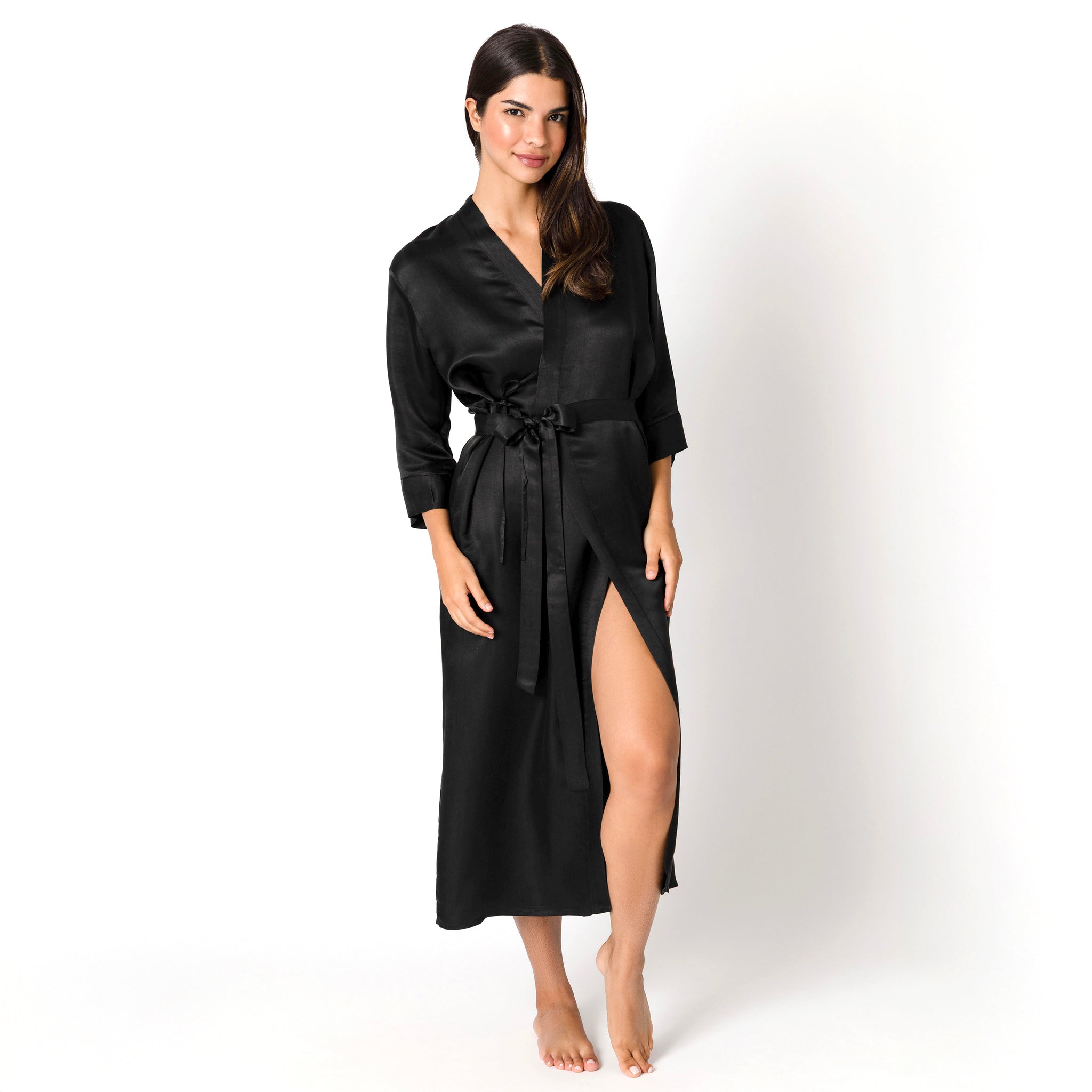
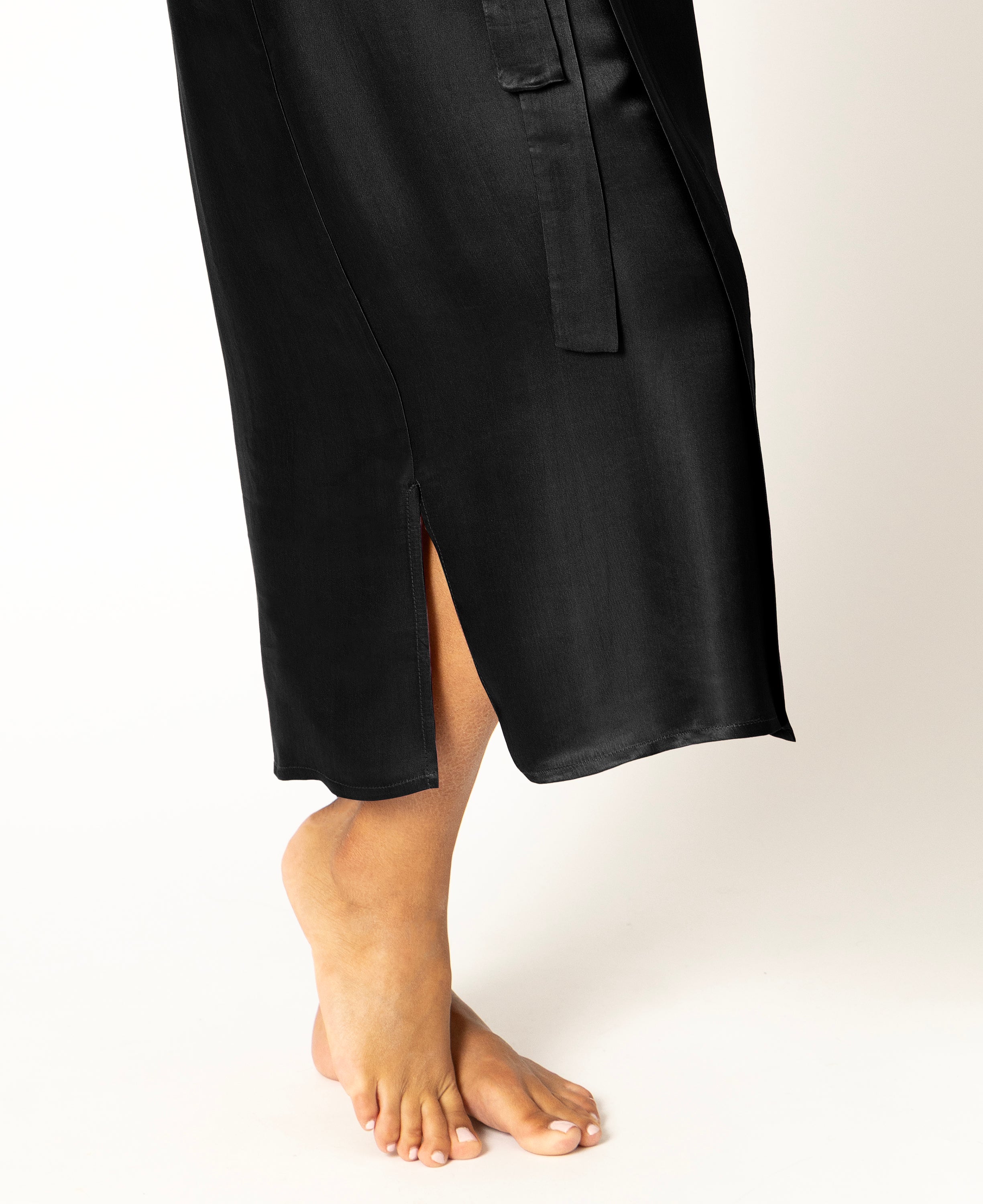
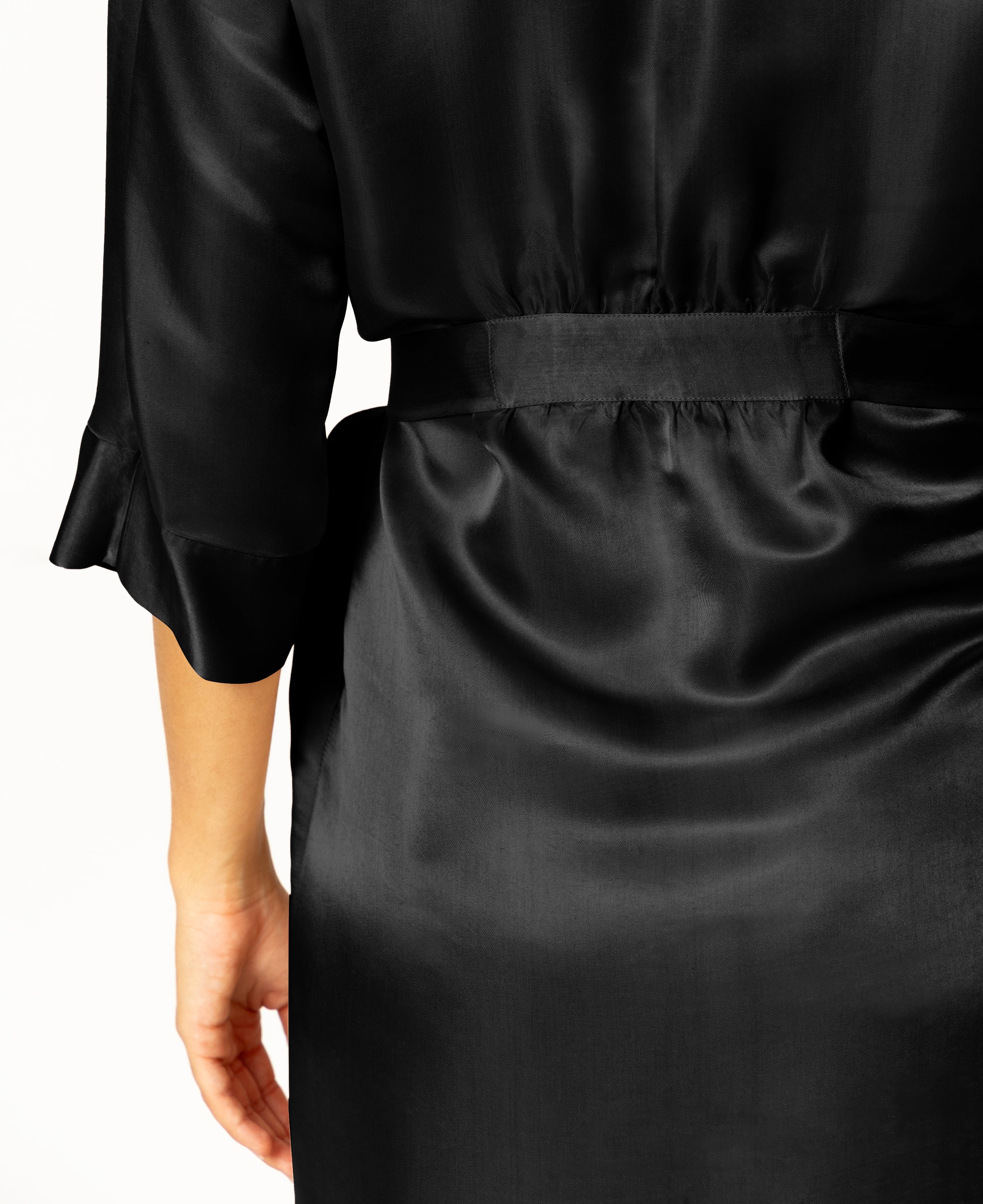
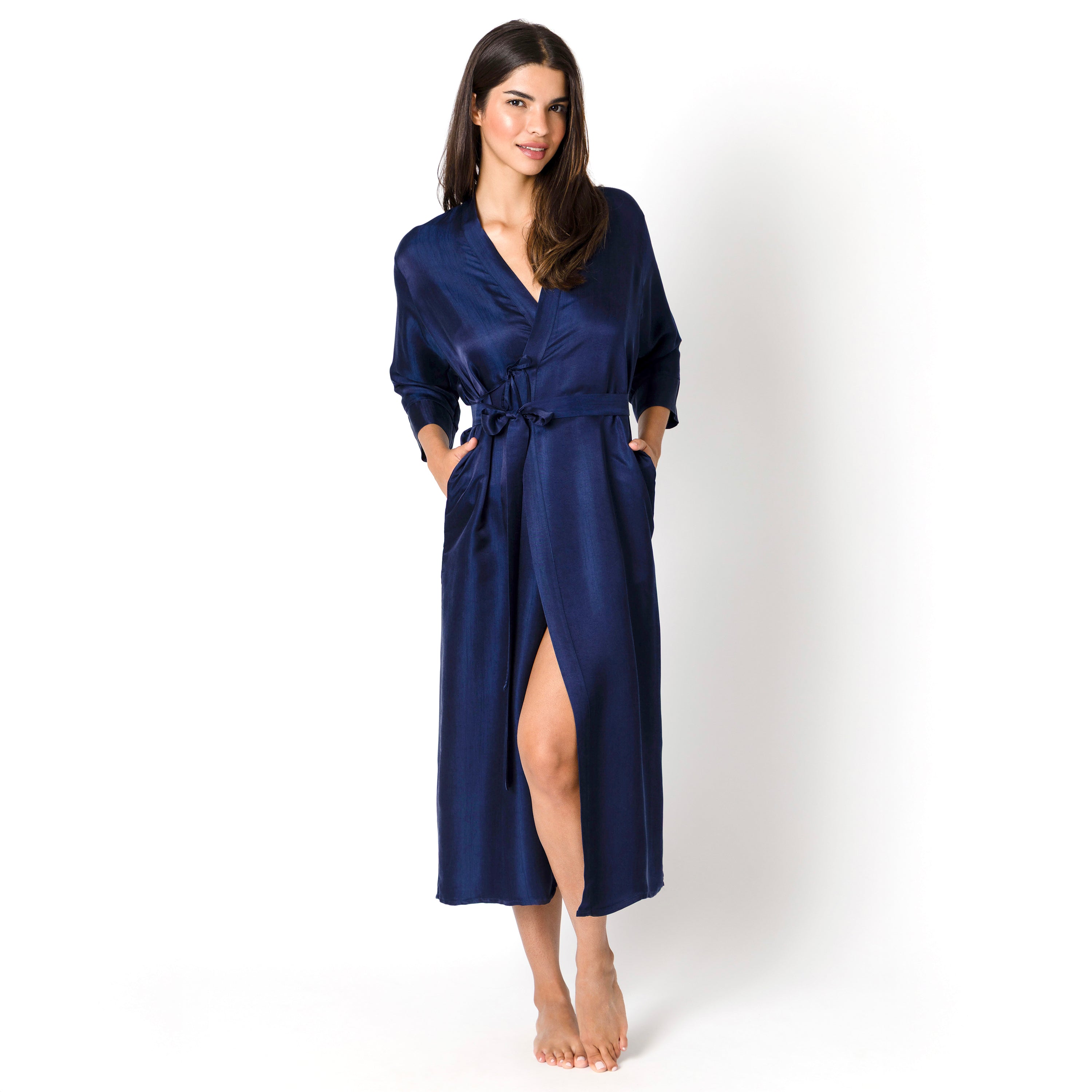
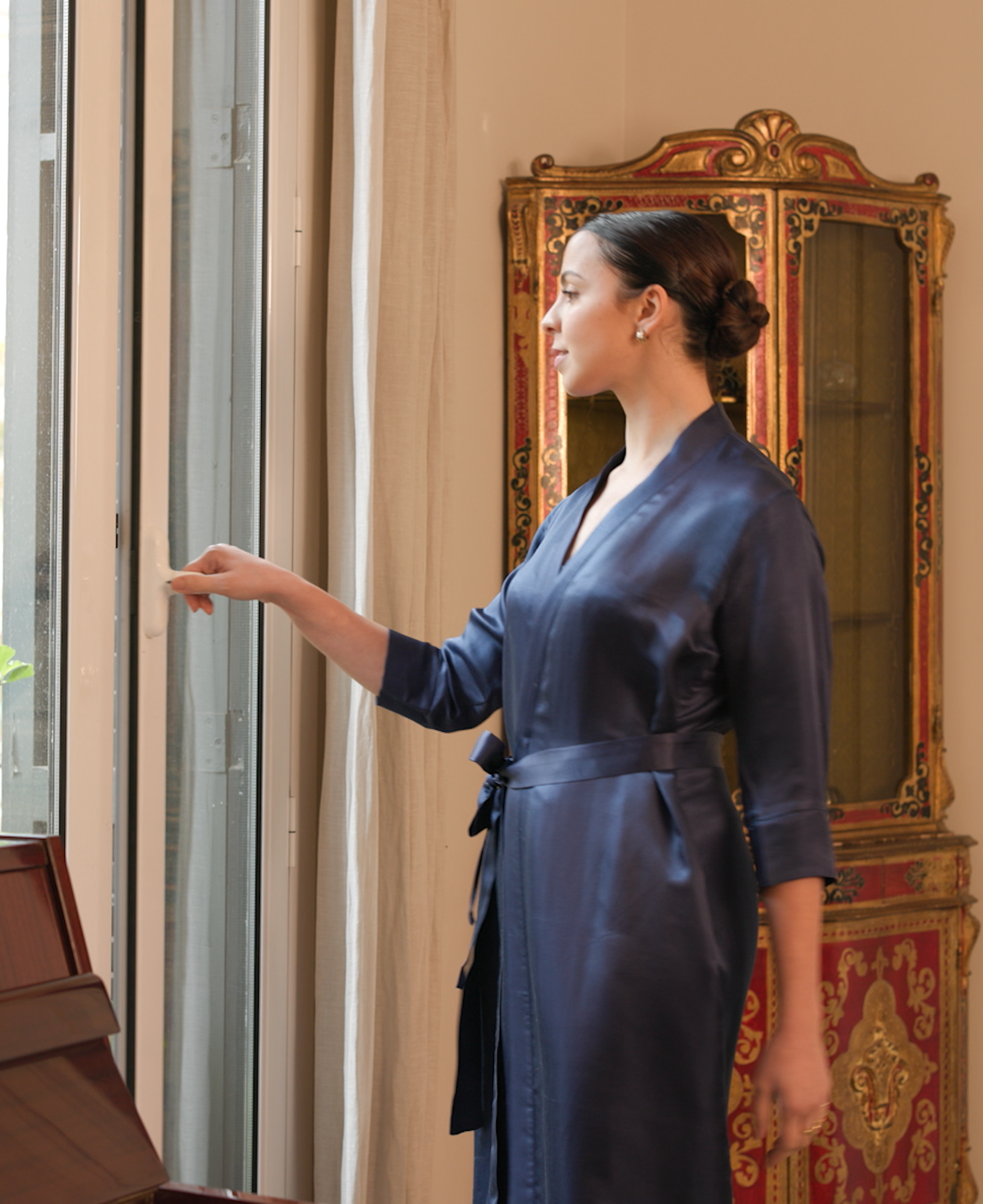
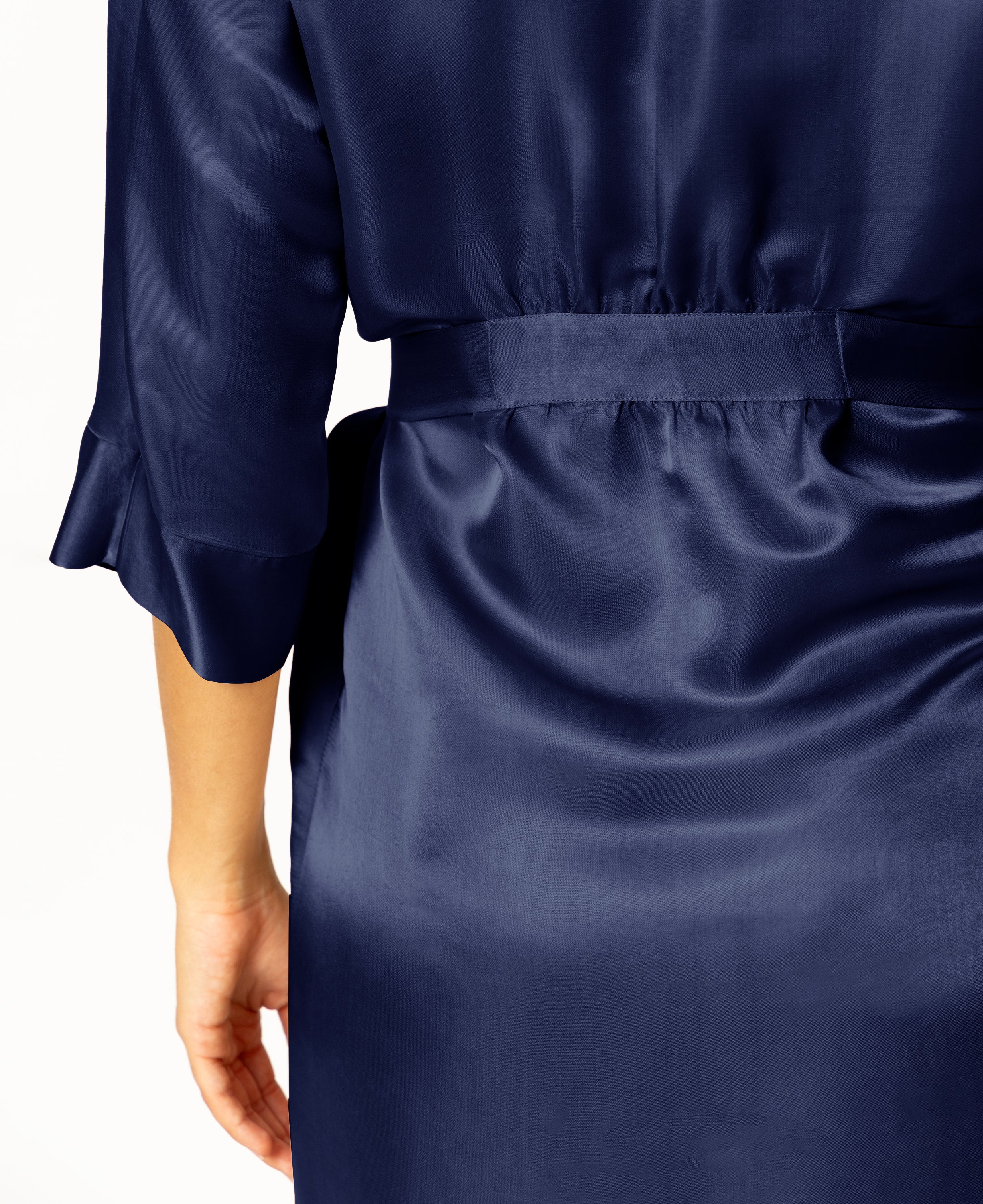
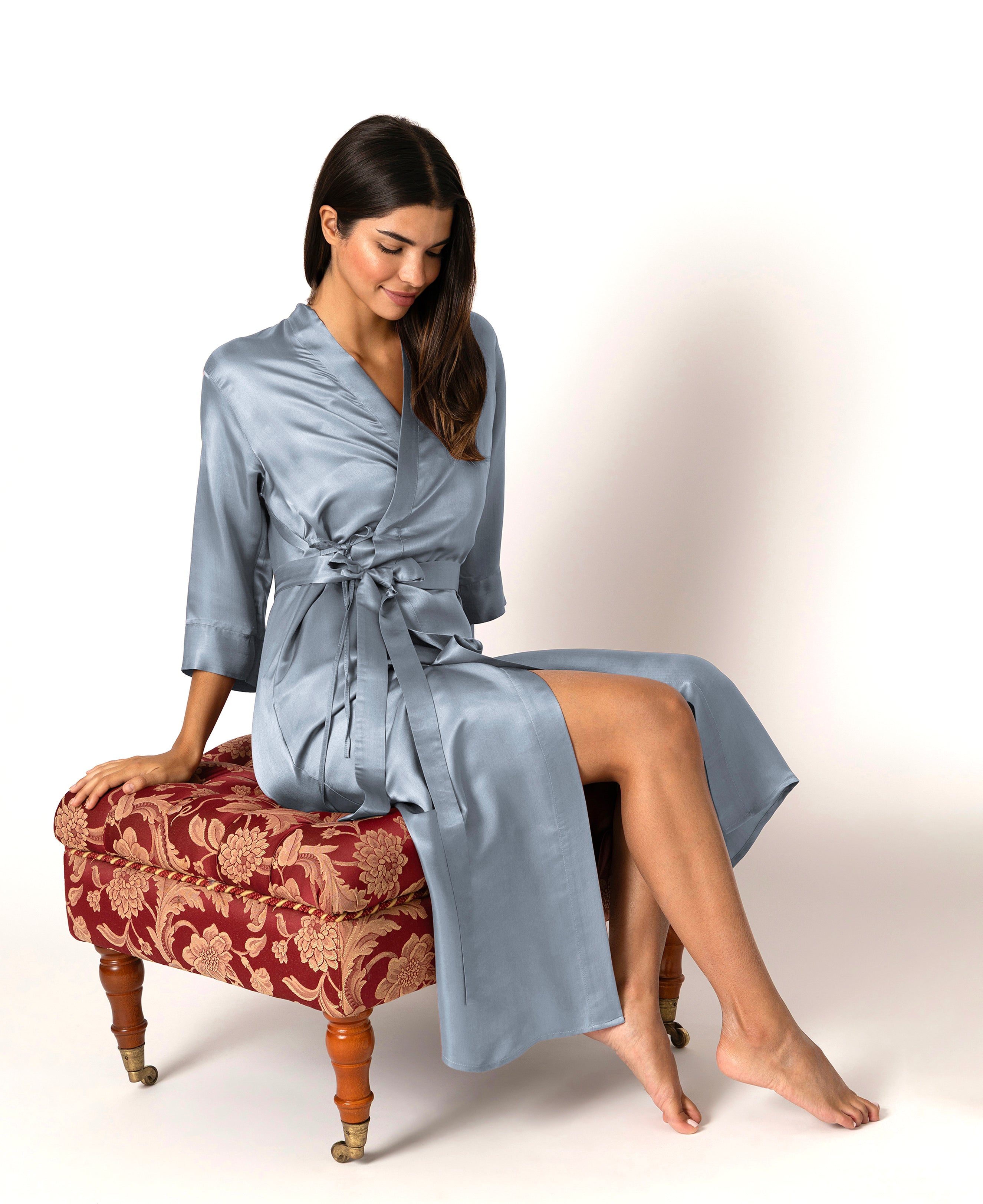
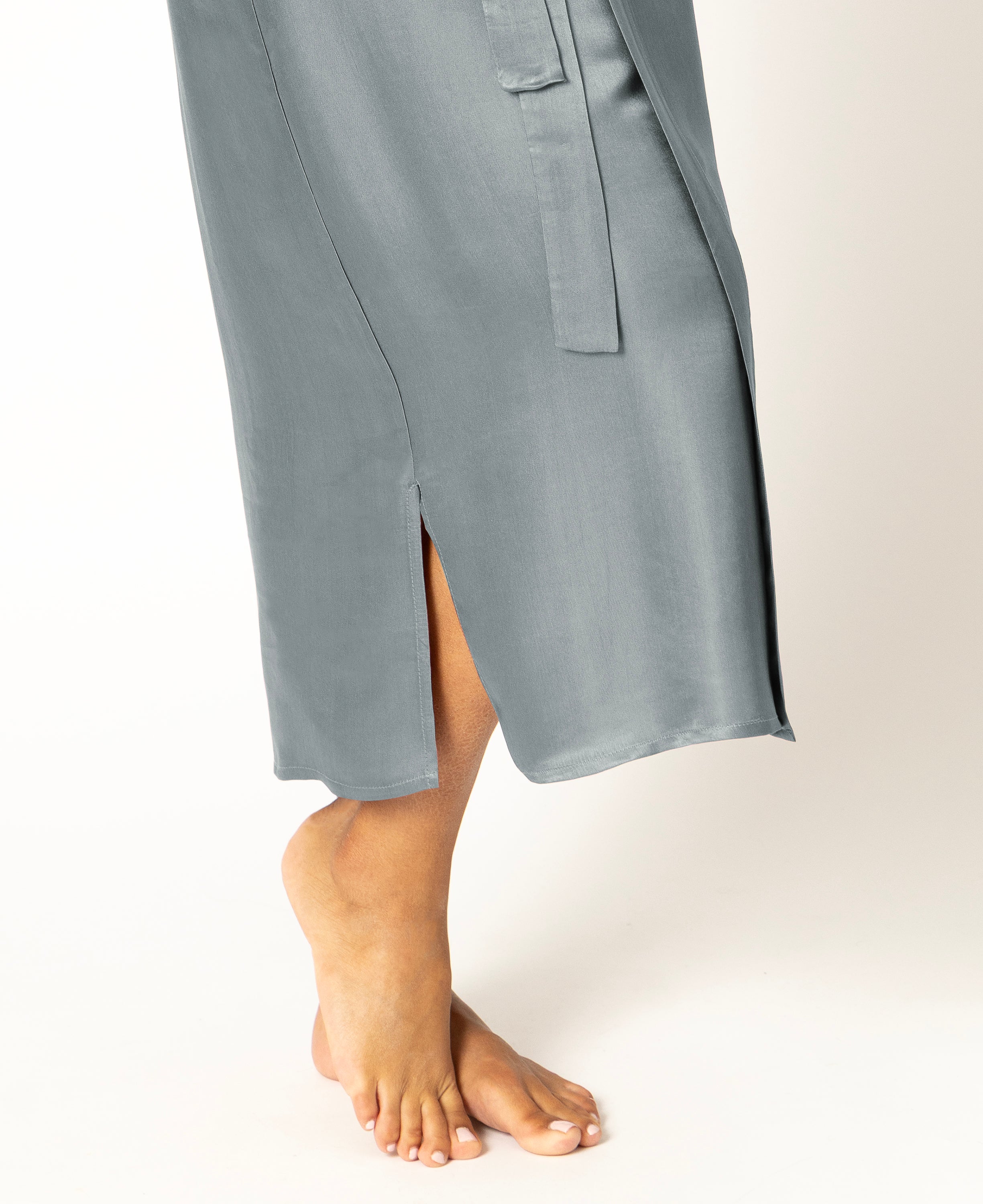
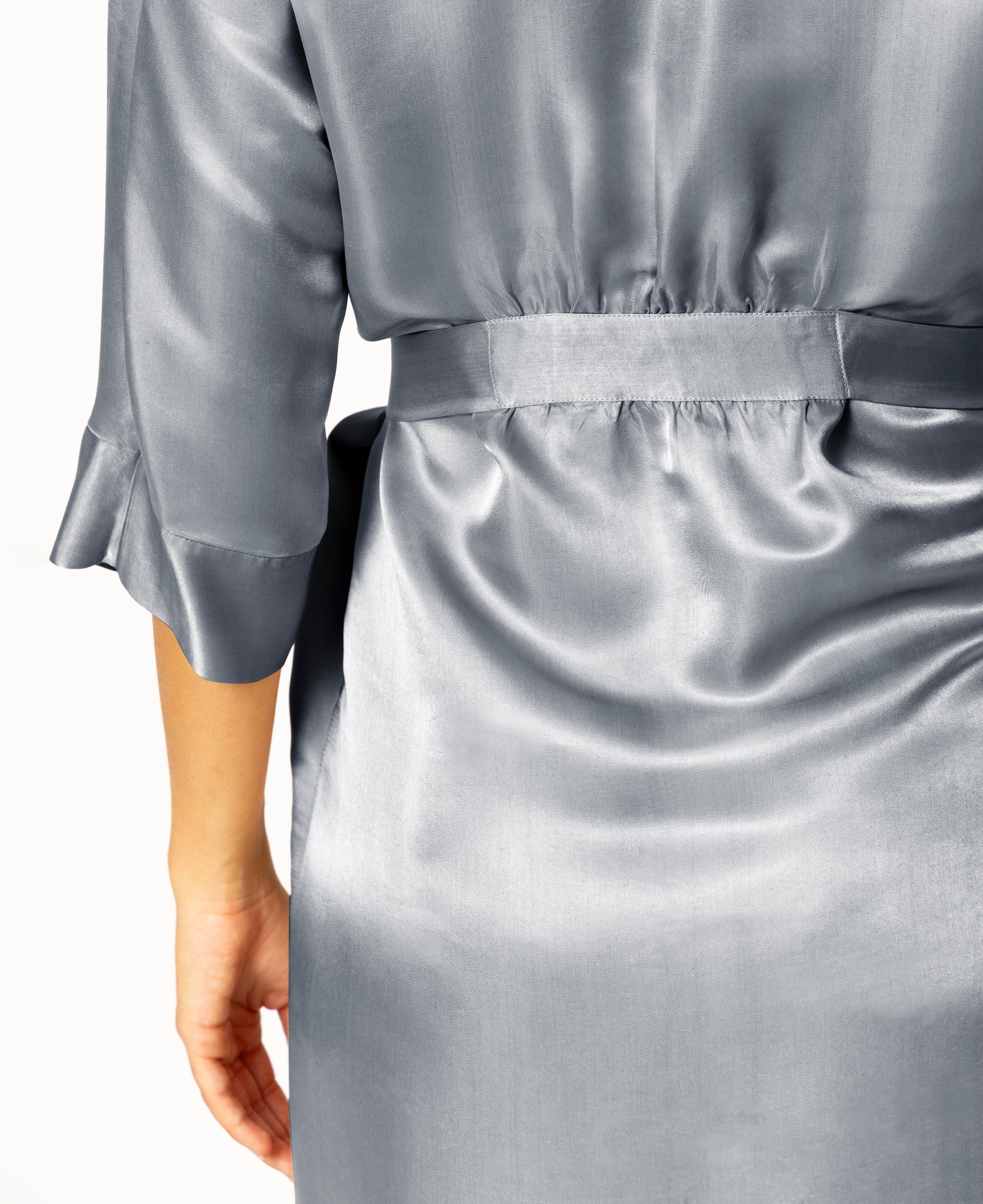
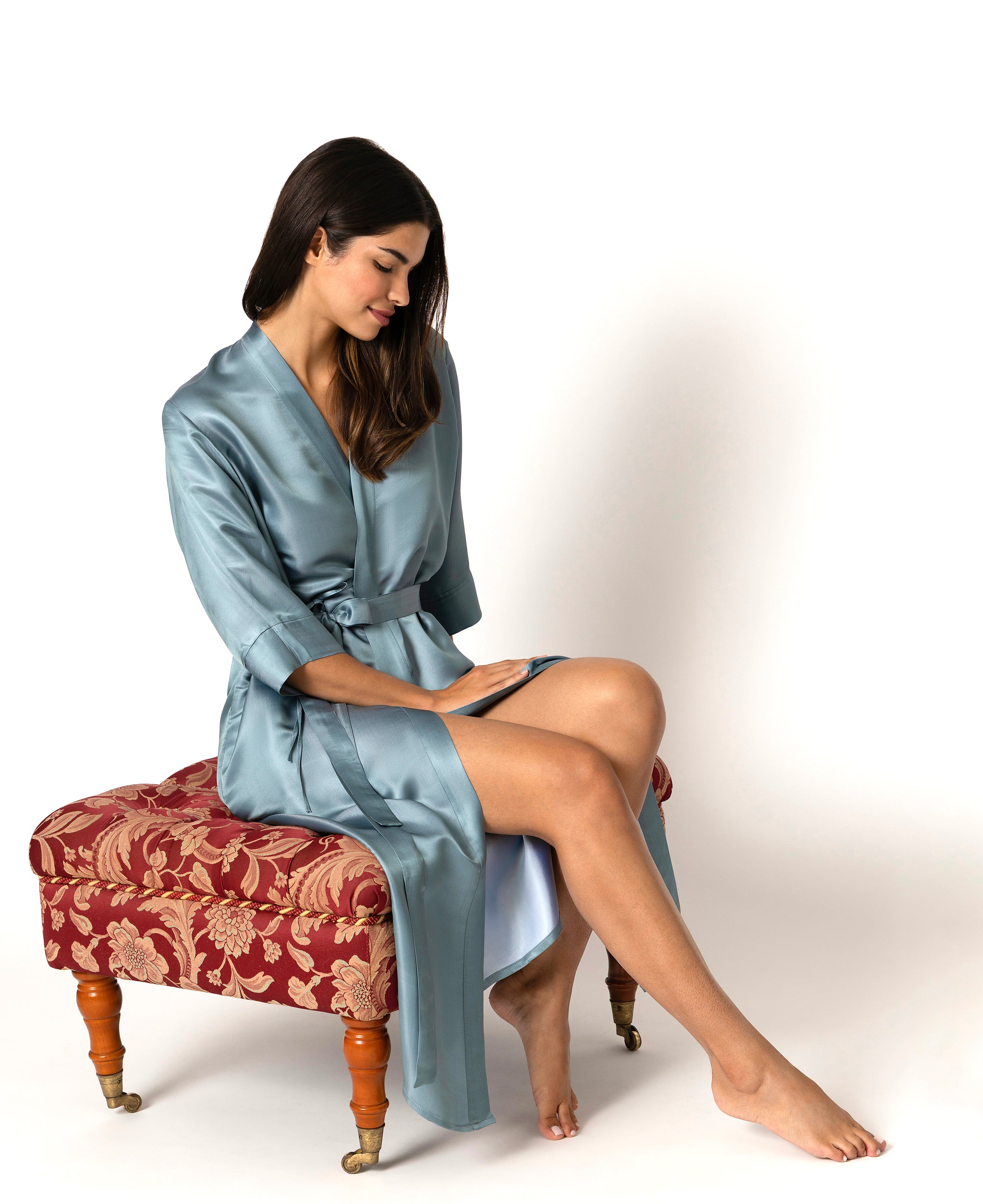
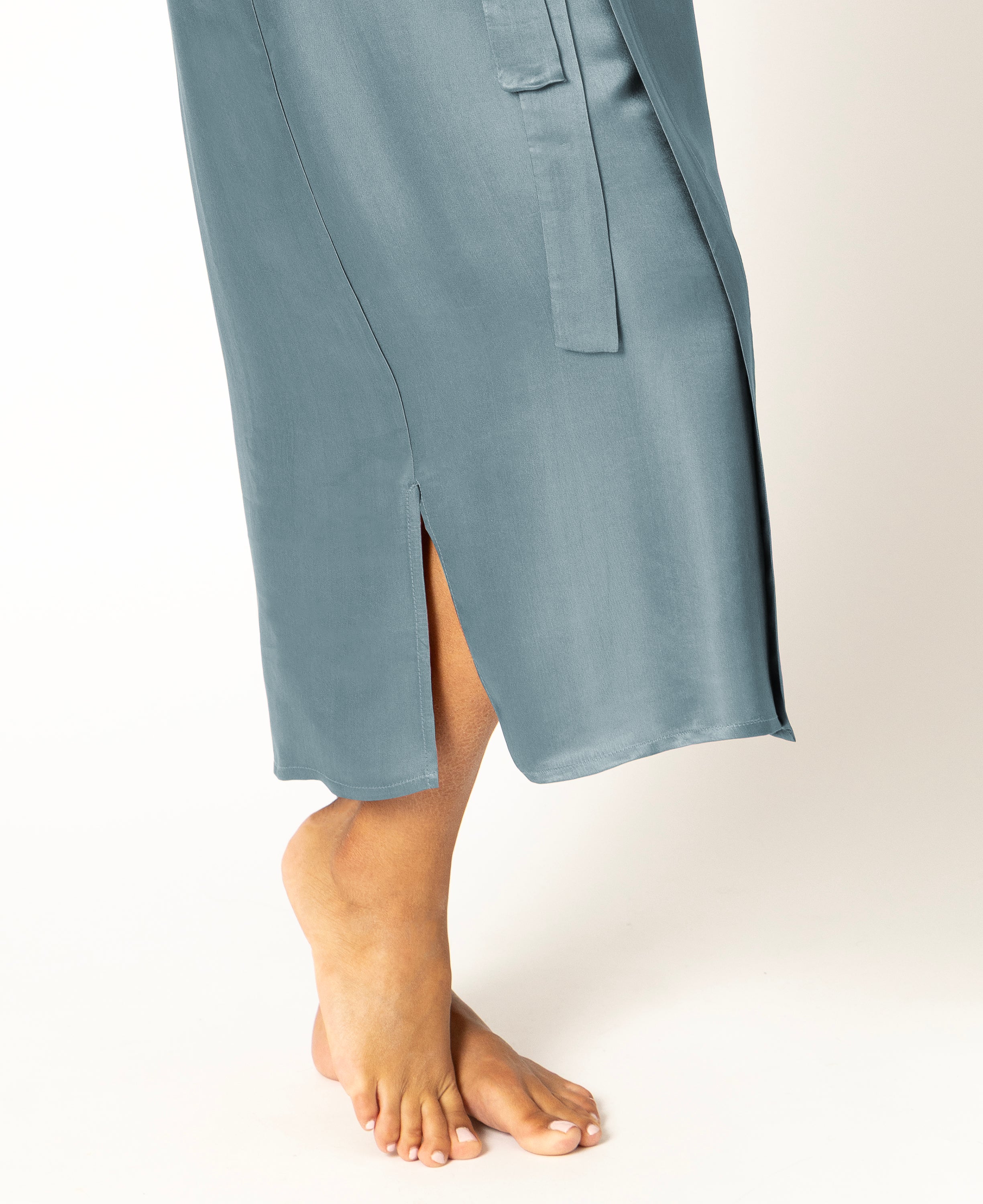
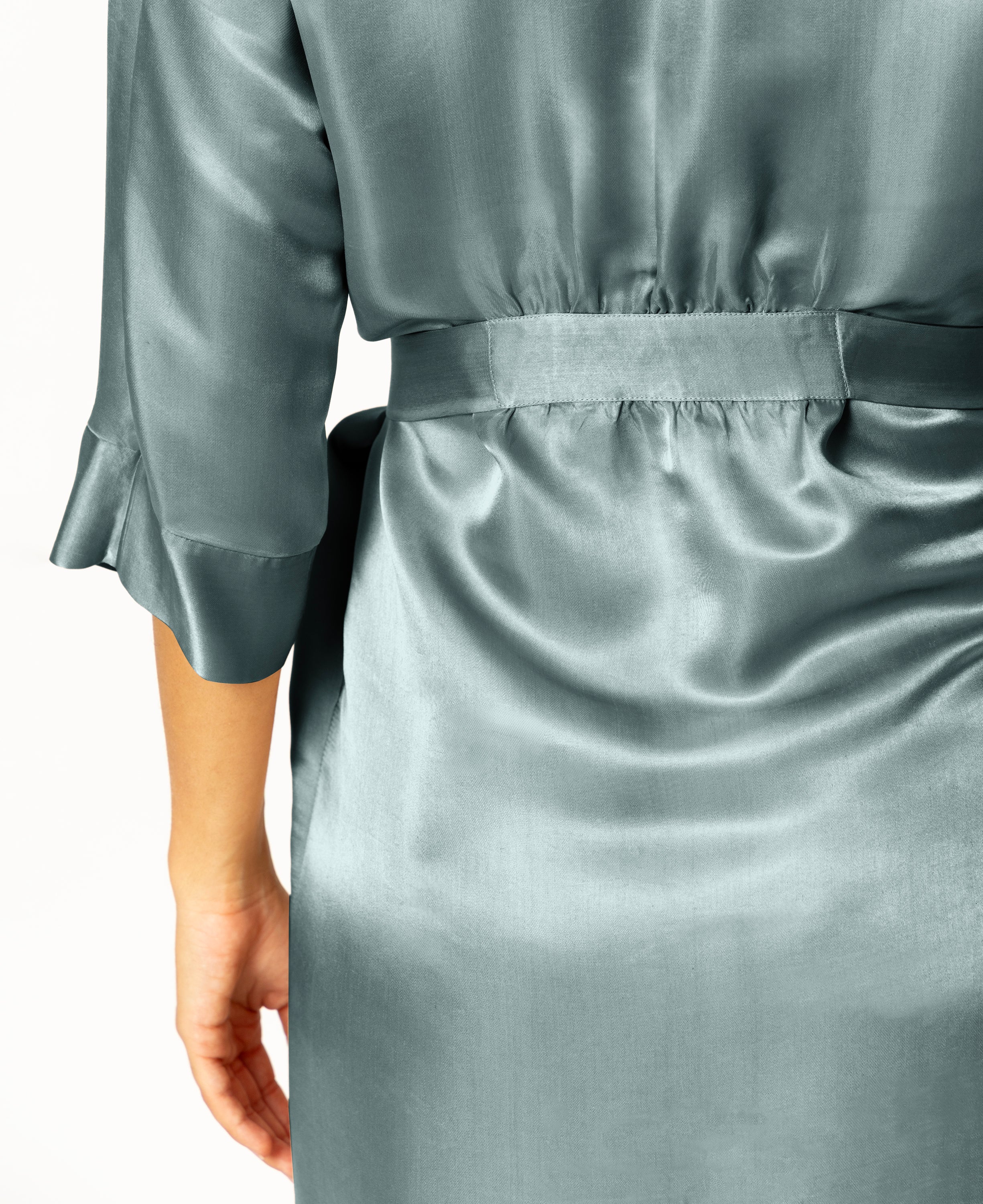
The classic silk robe is cut with a fitted shoulder line, a slim sleeve that follows the arm, and a slightly waisted body that closes with a sash at the natural waist. The drape falls close to the body. The robe reads as private clothing, the kind you wear before you change into your day clothes or after you change out of them. The classic is a robe in the strict sense.
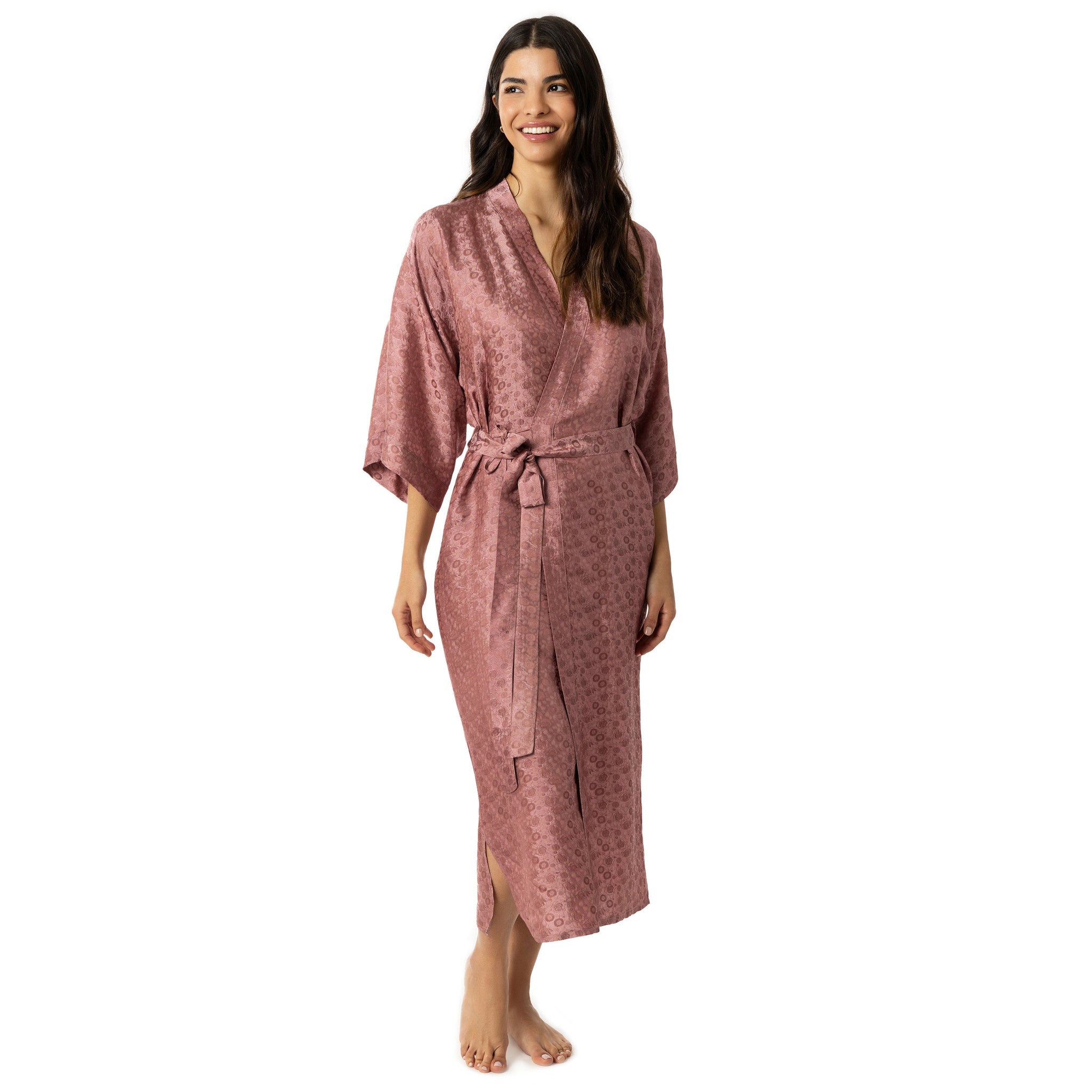
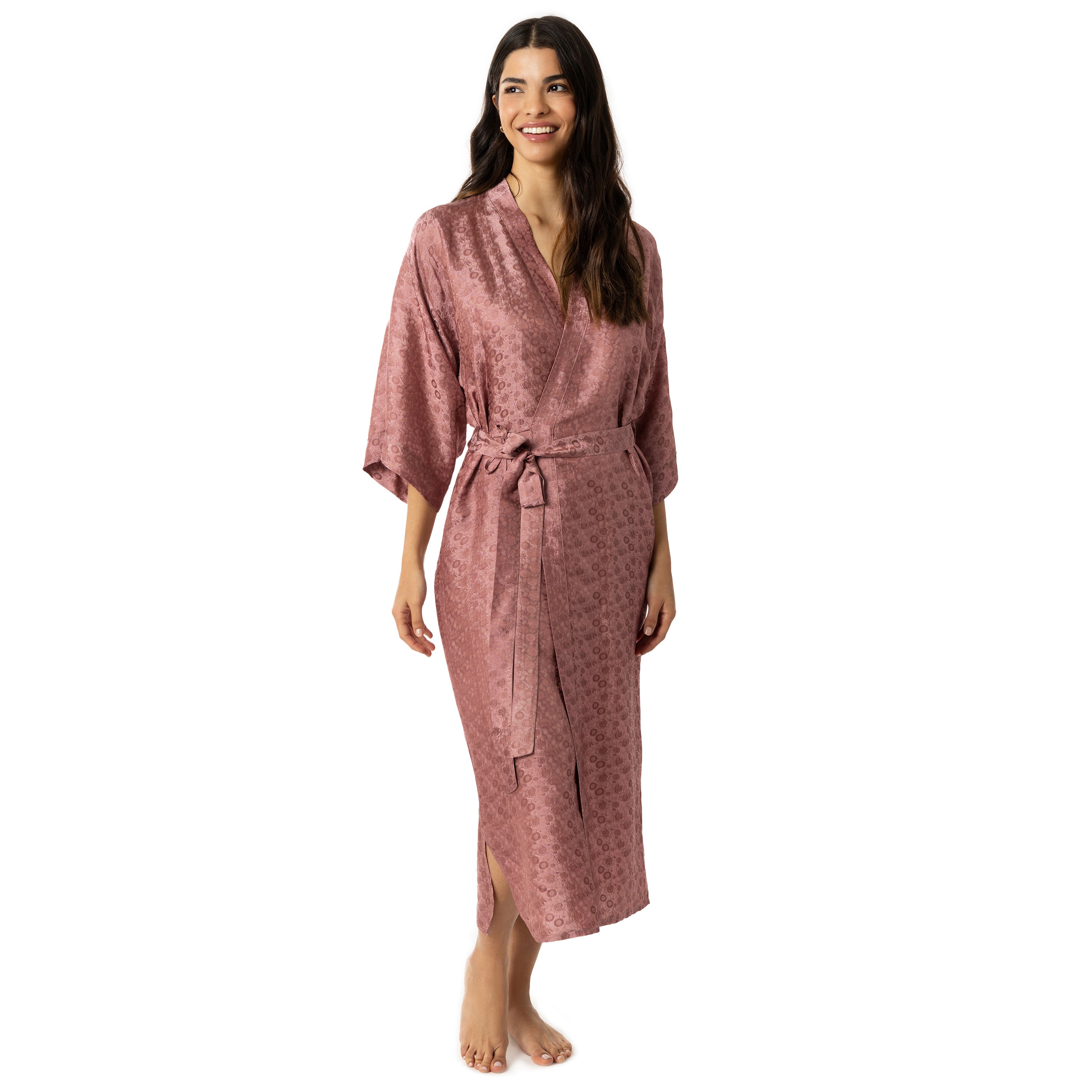
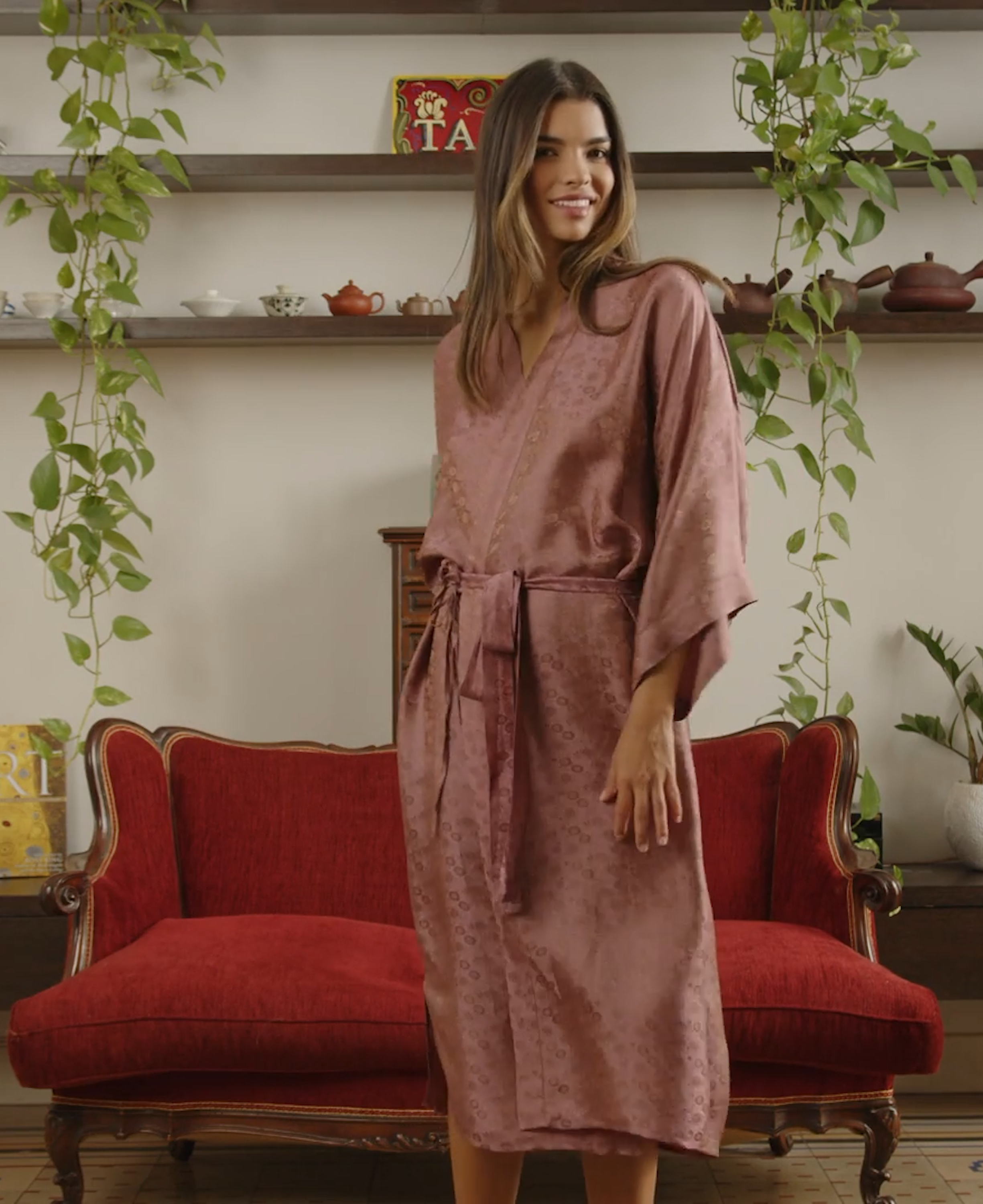
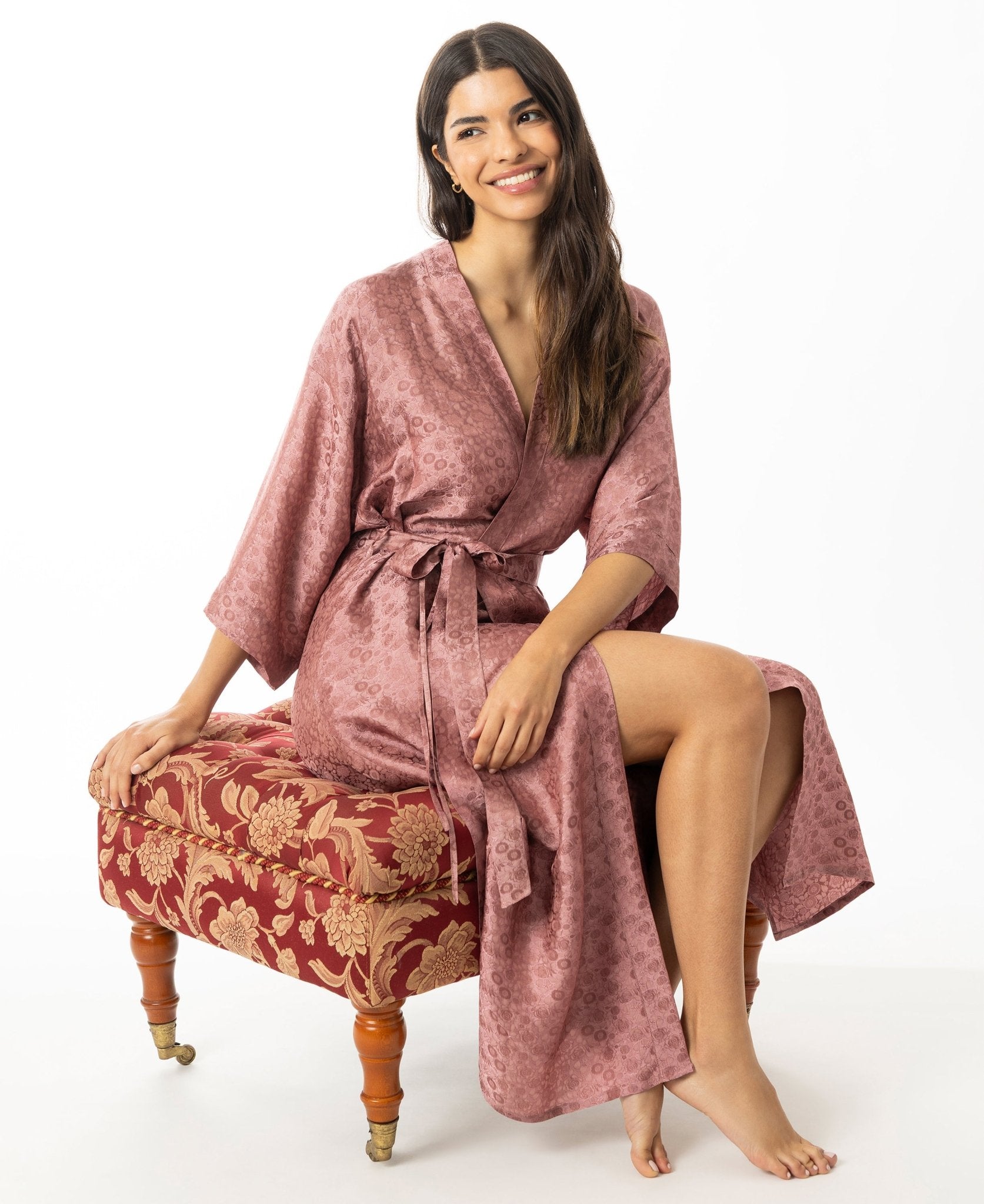
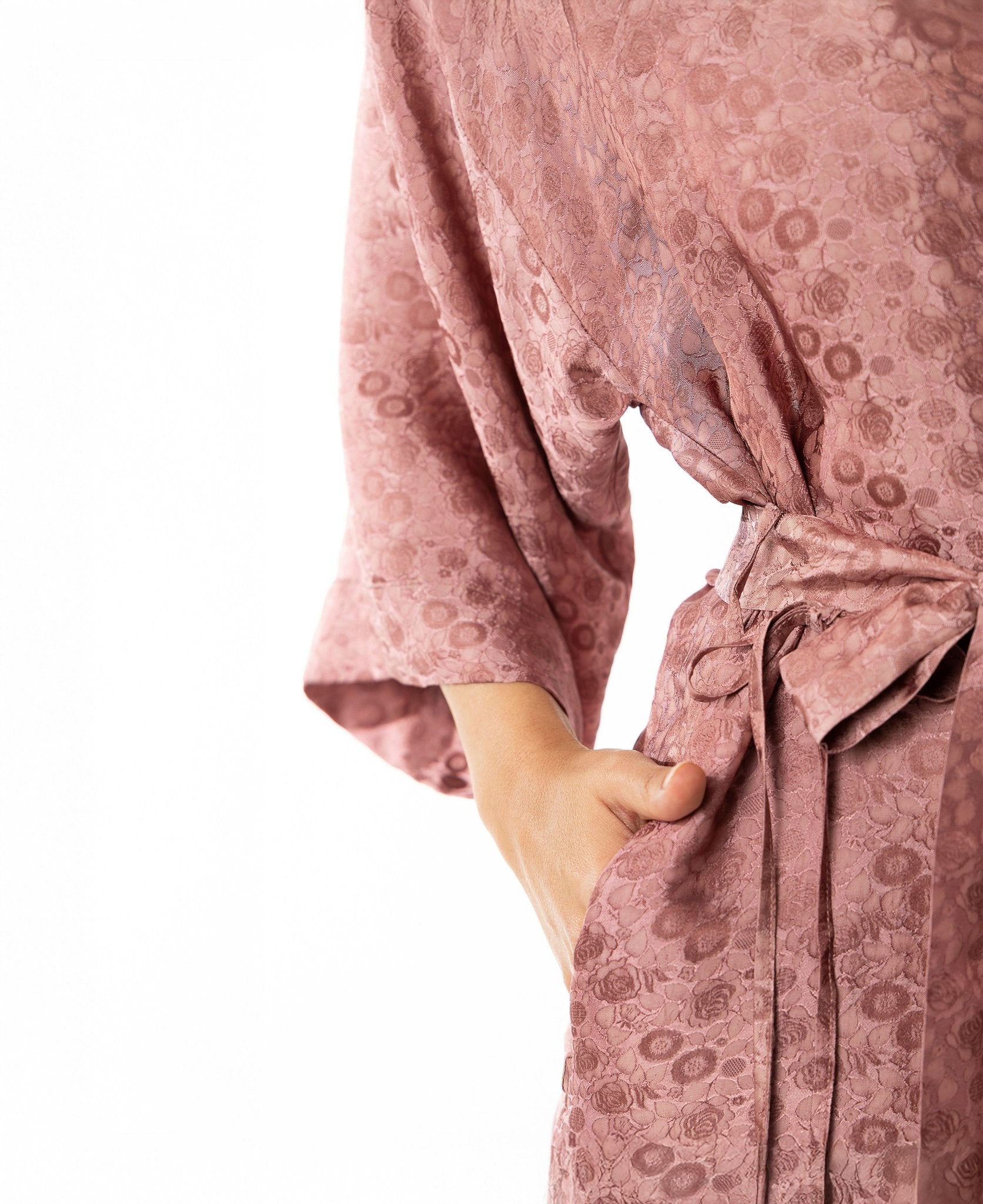
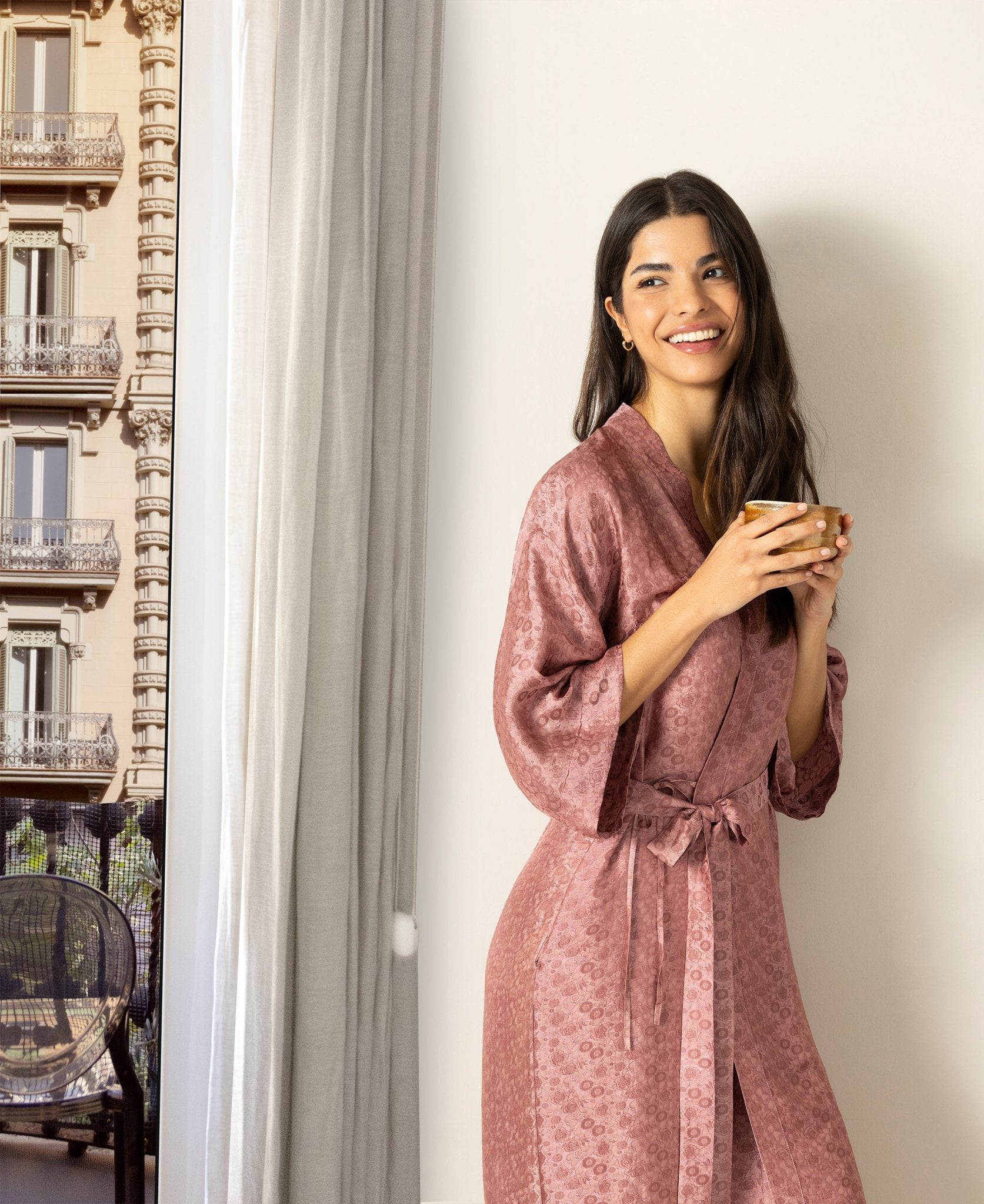
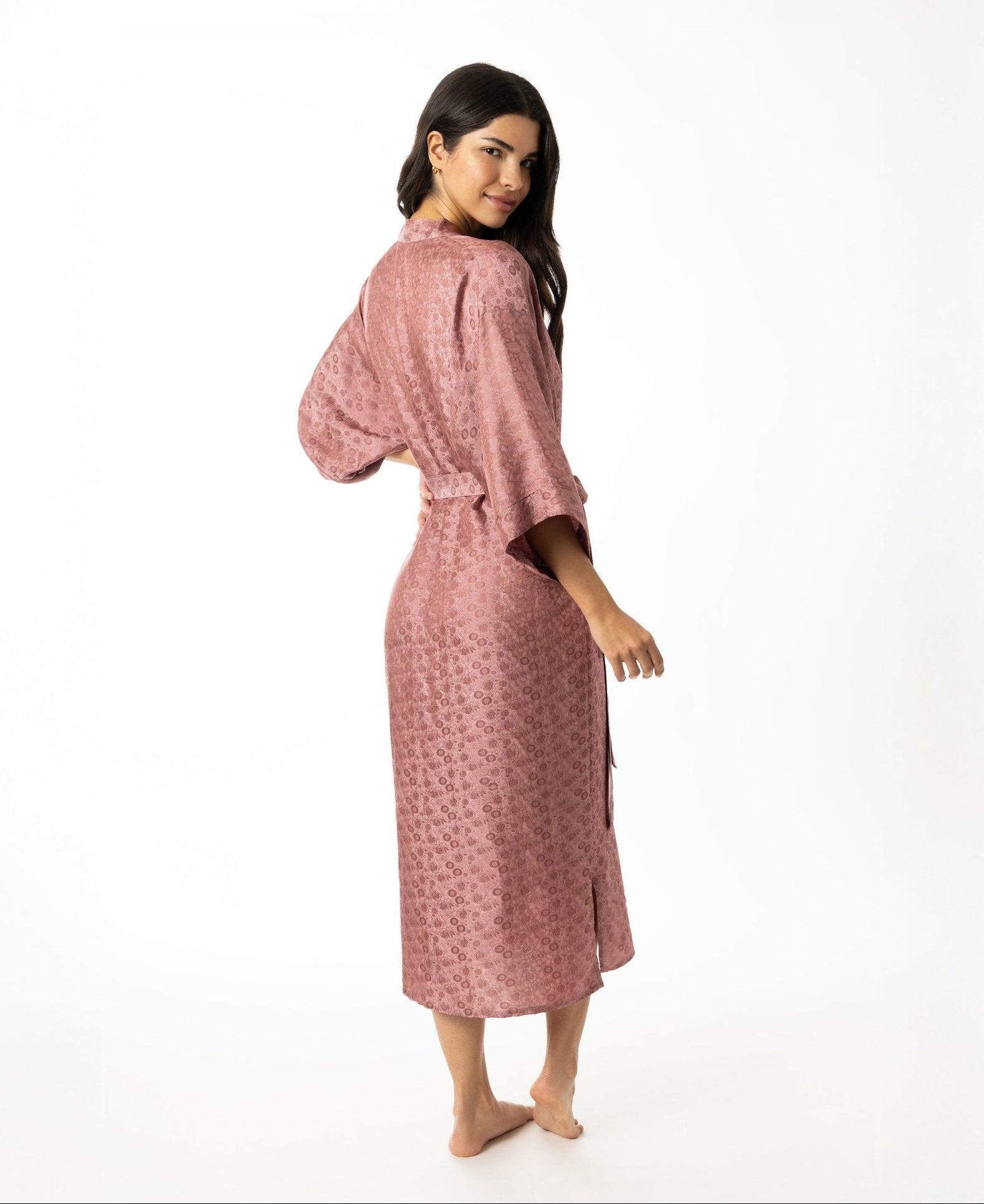
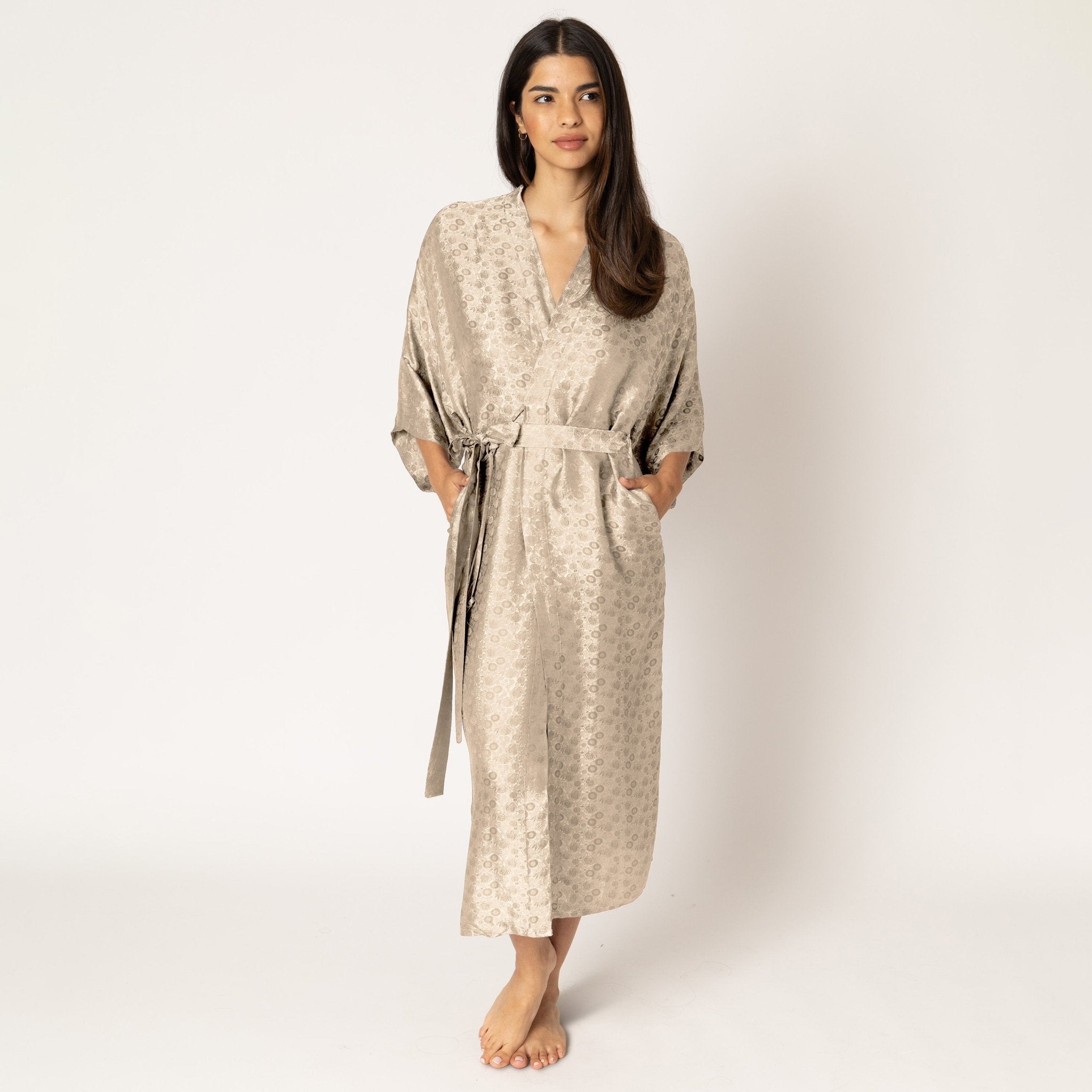
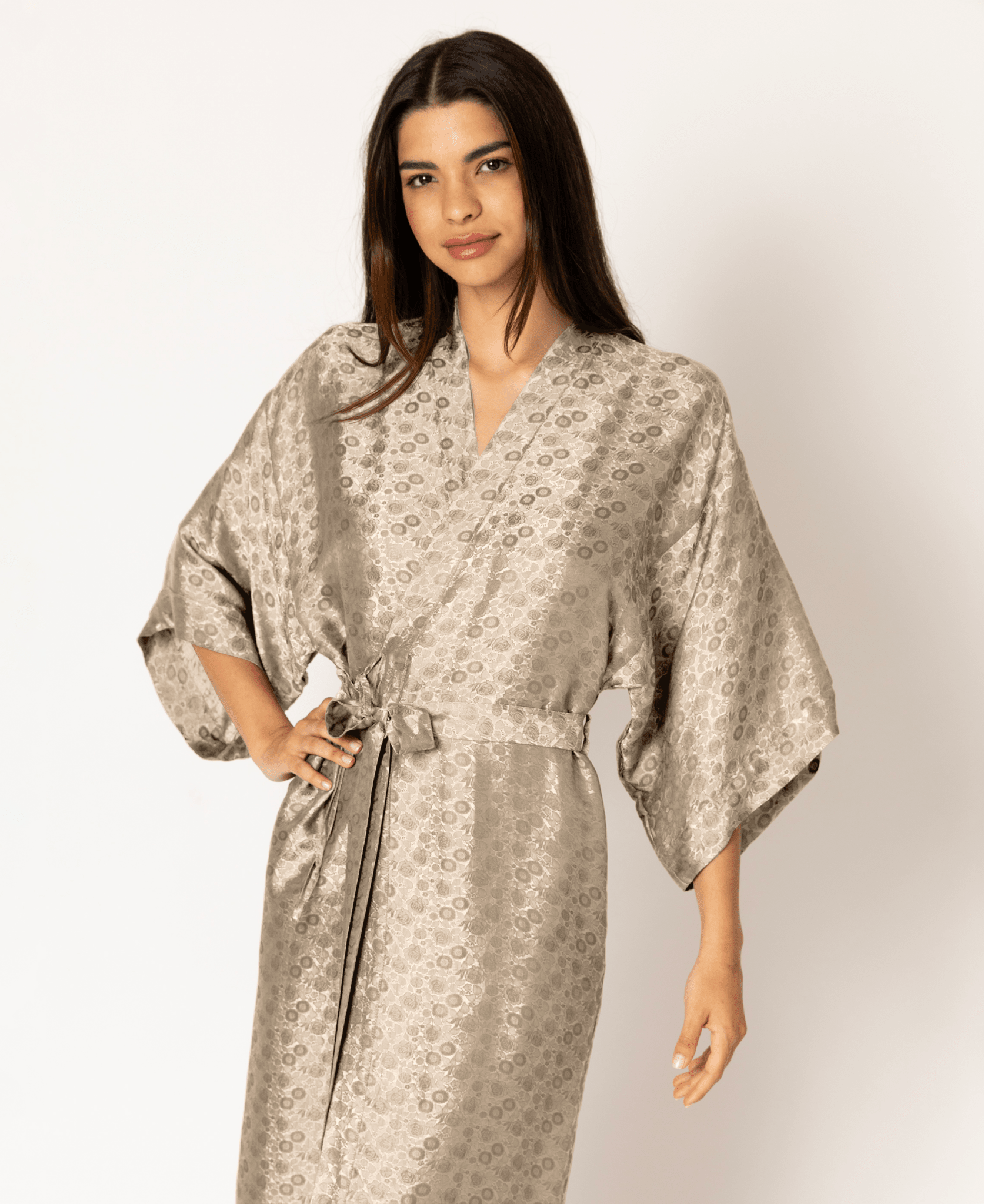
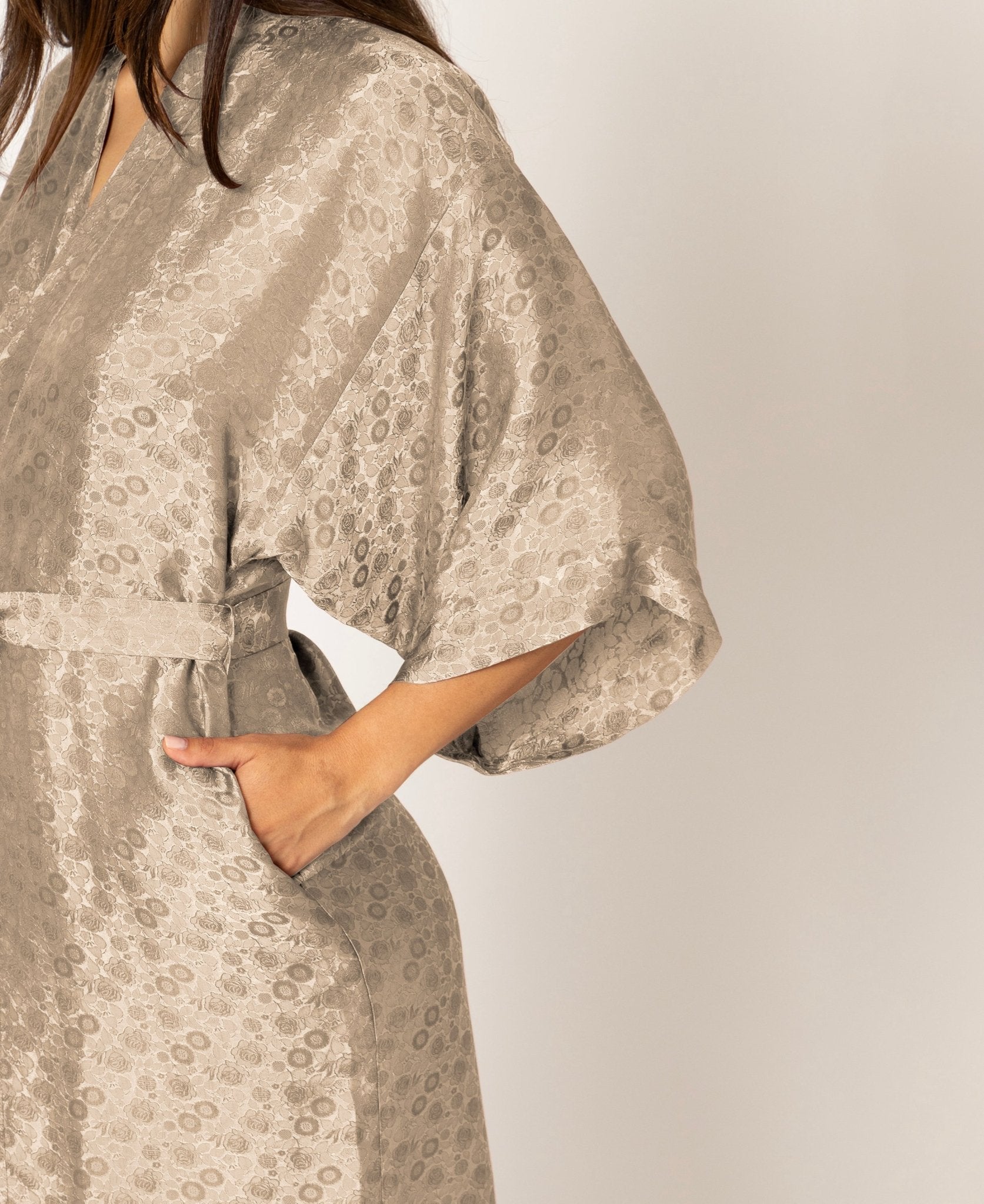
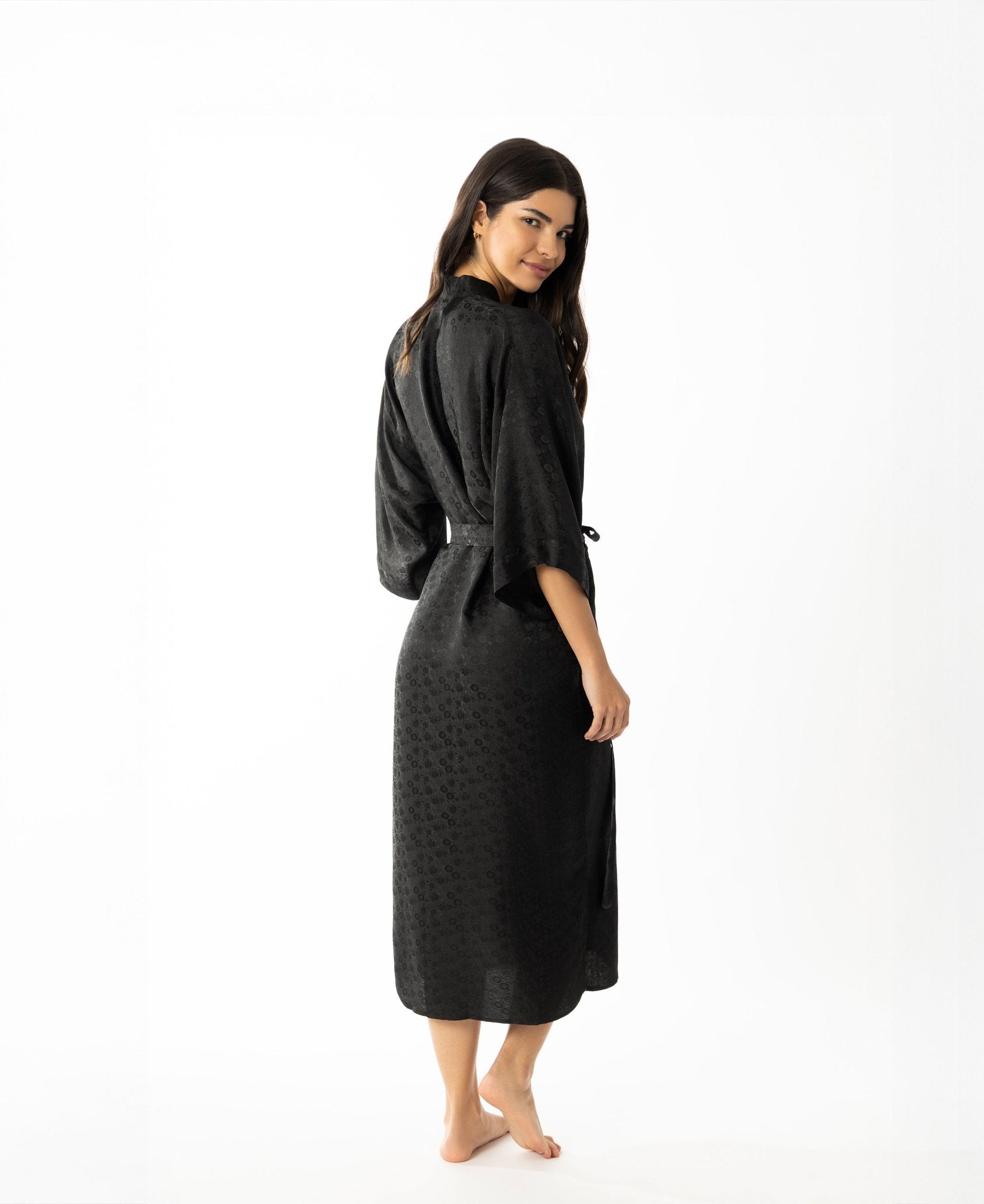
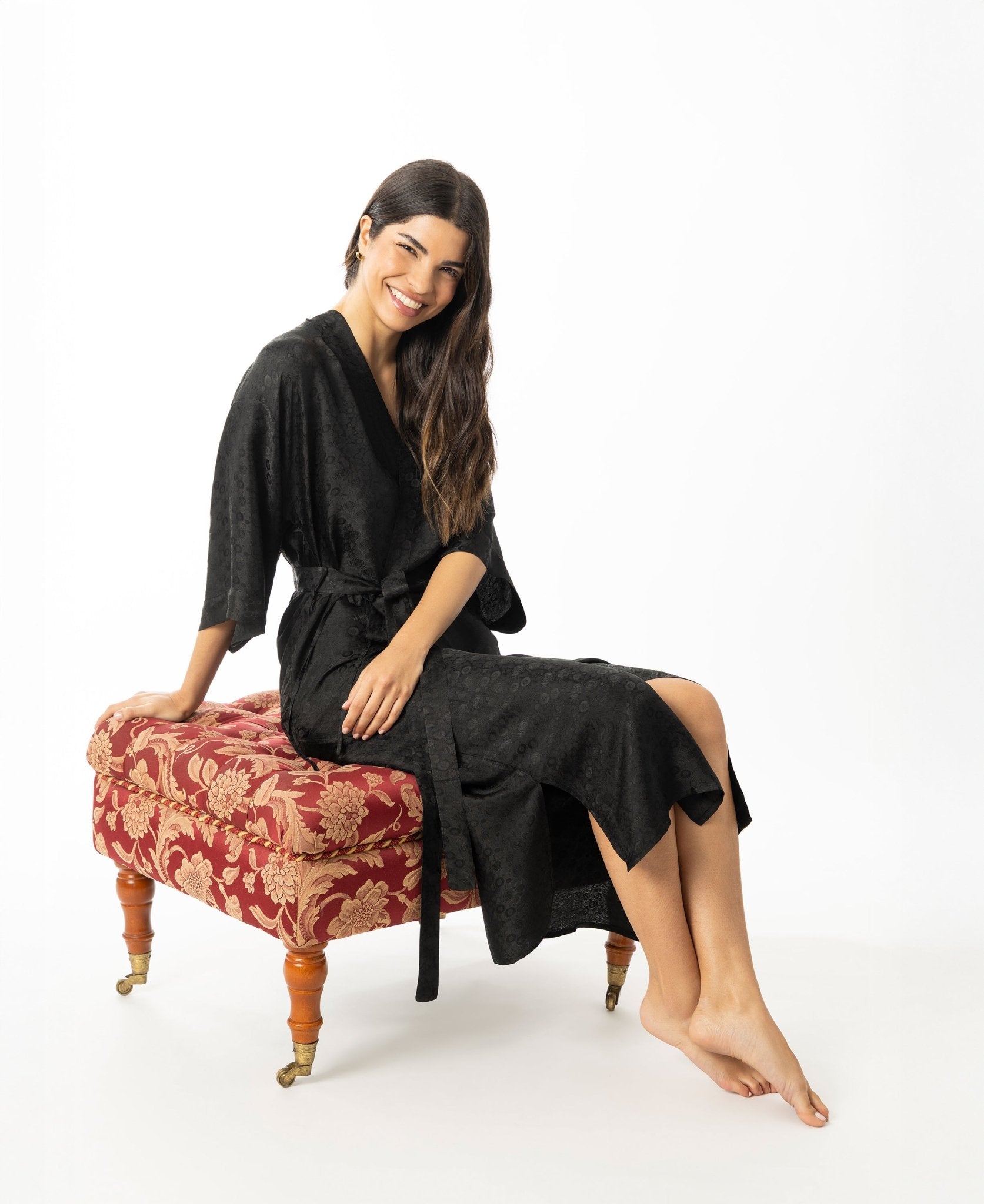
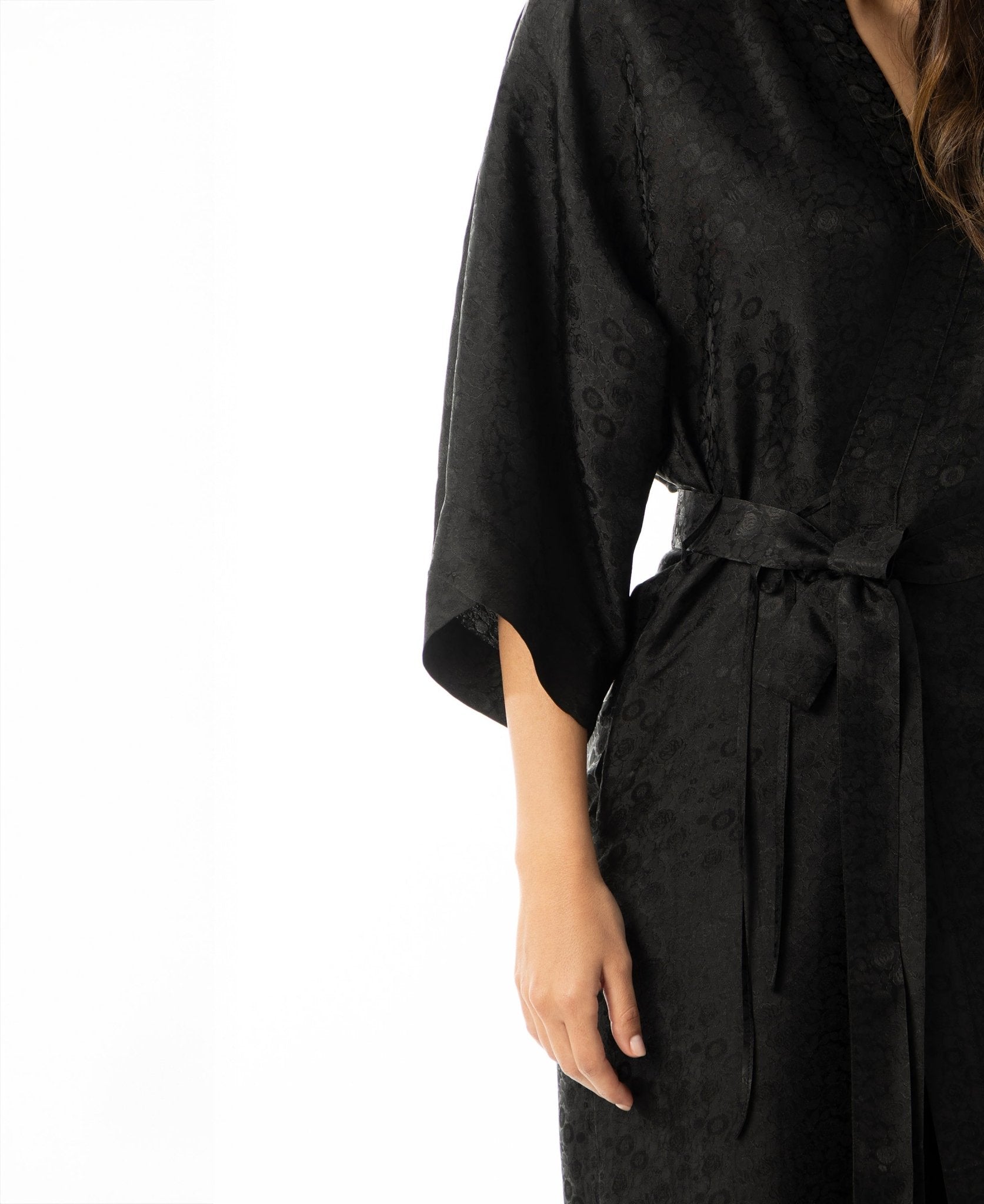
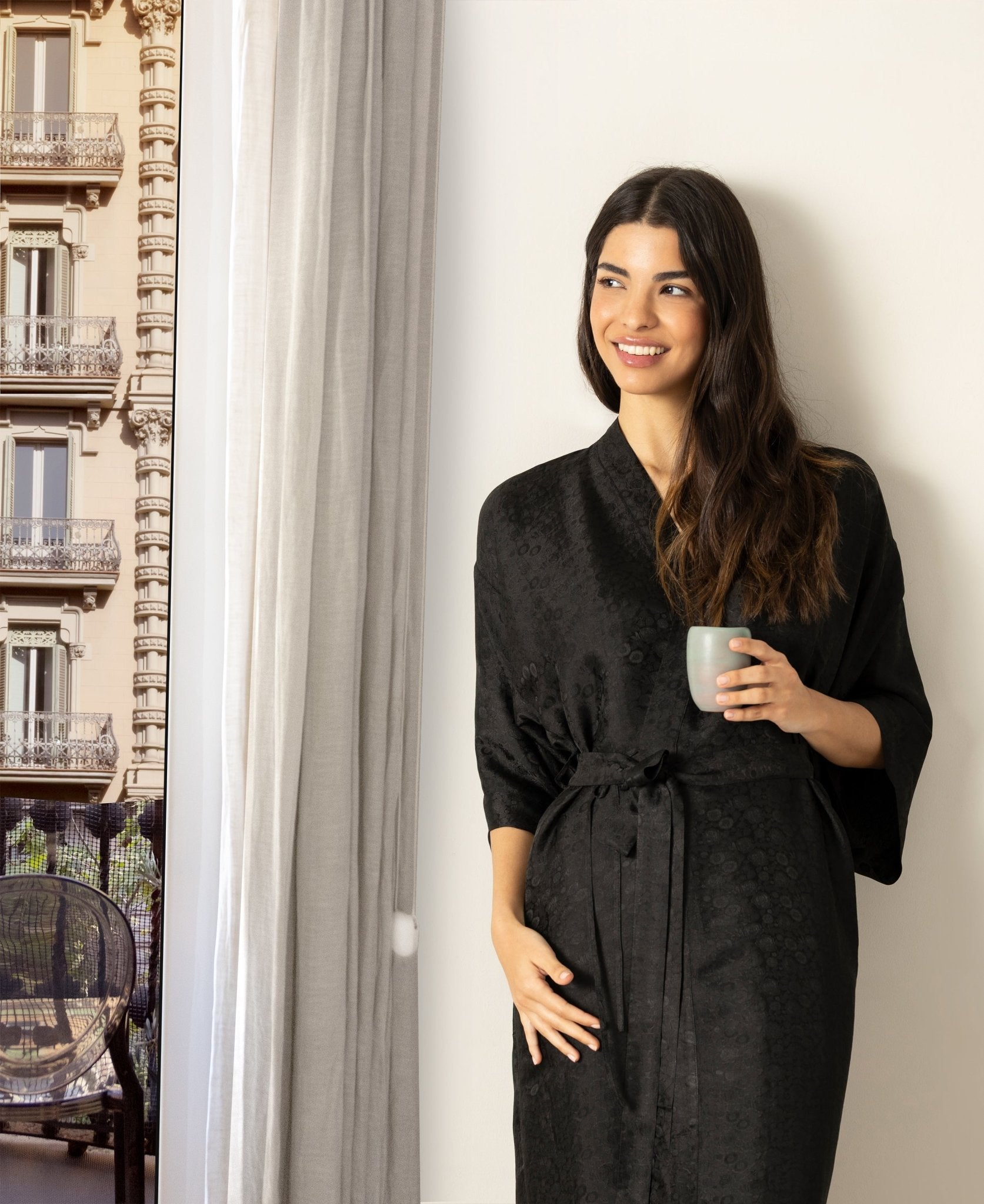
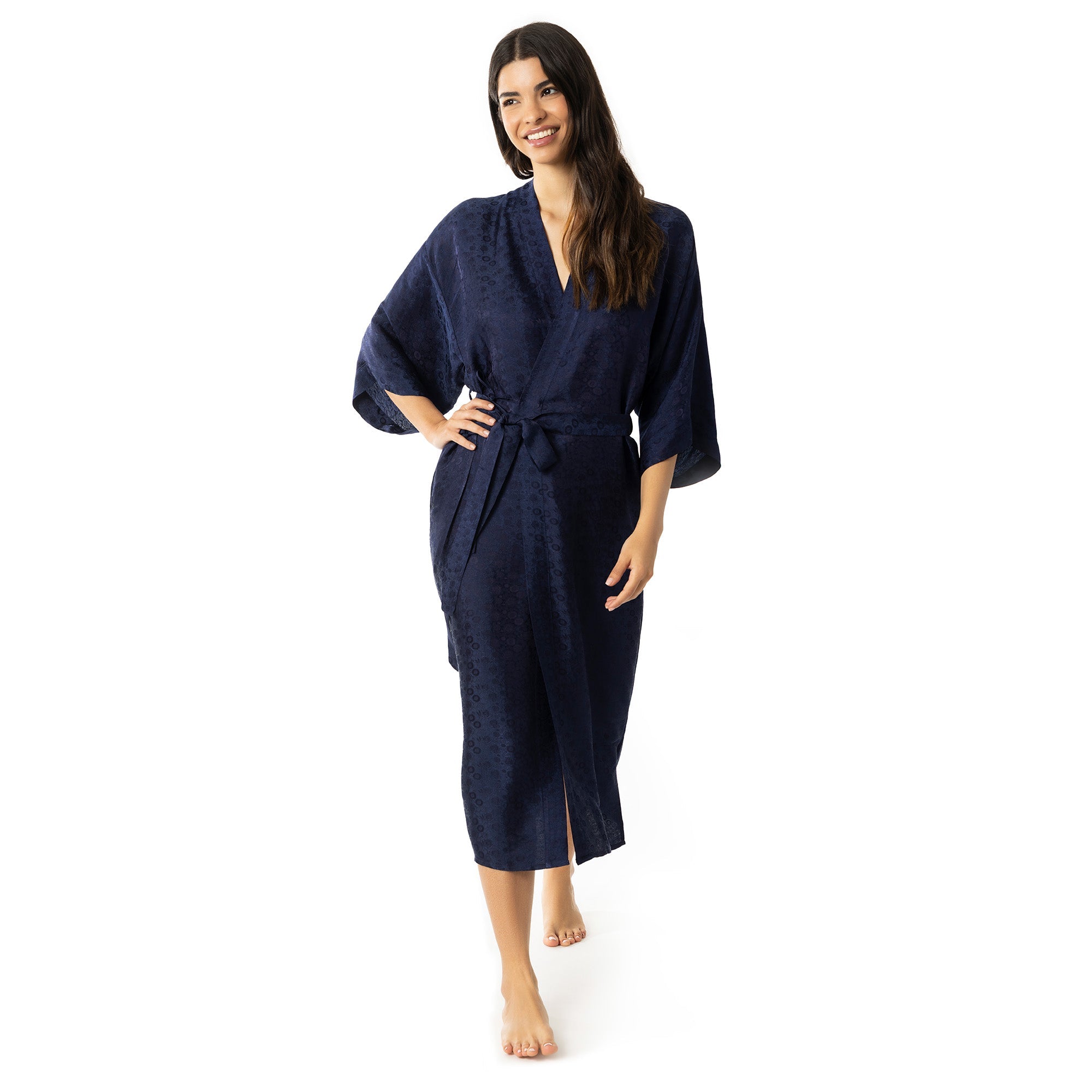
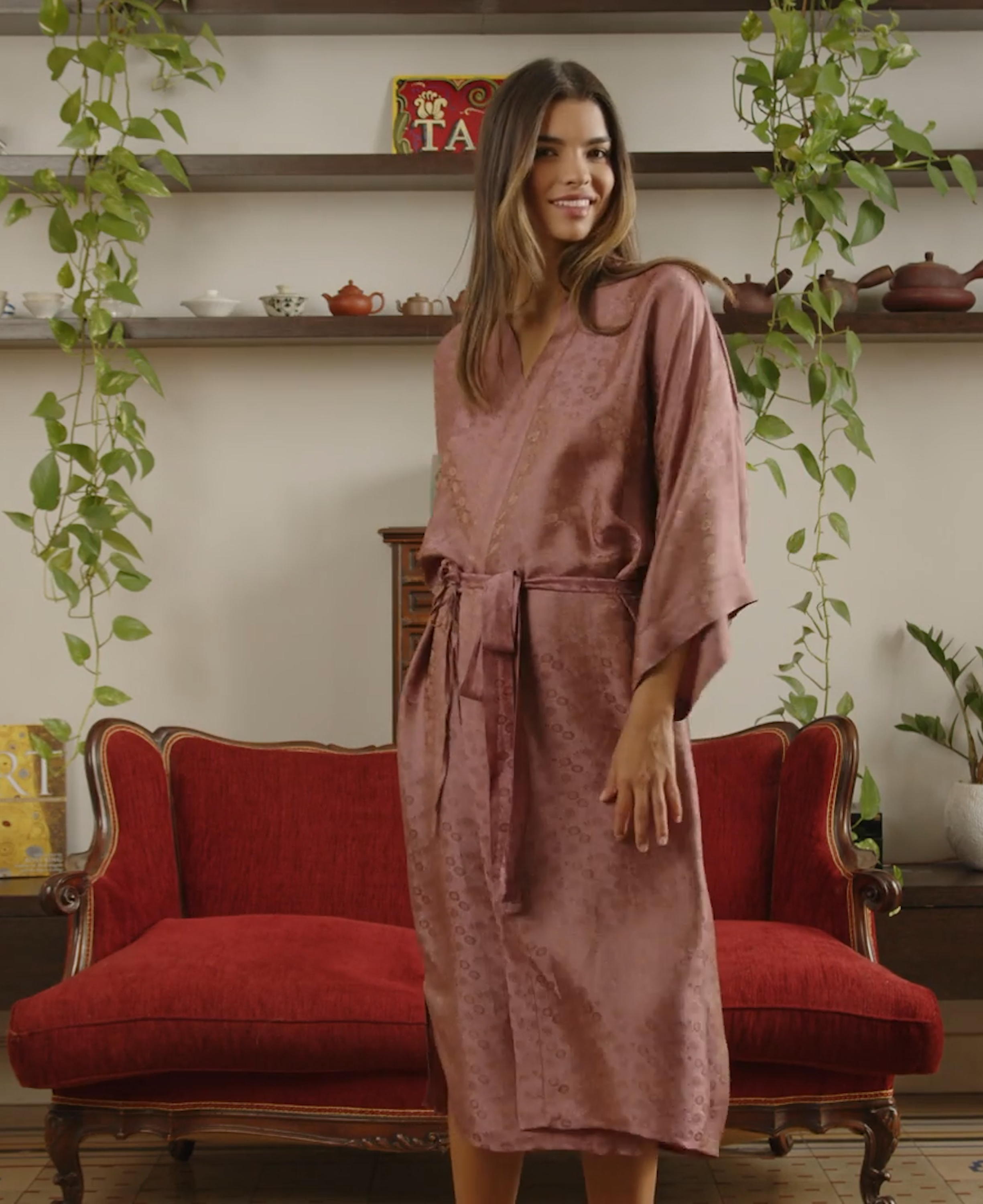
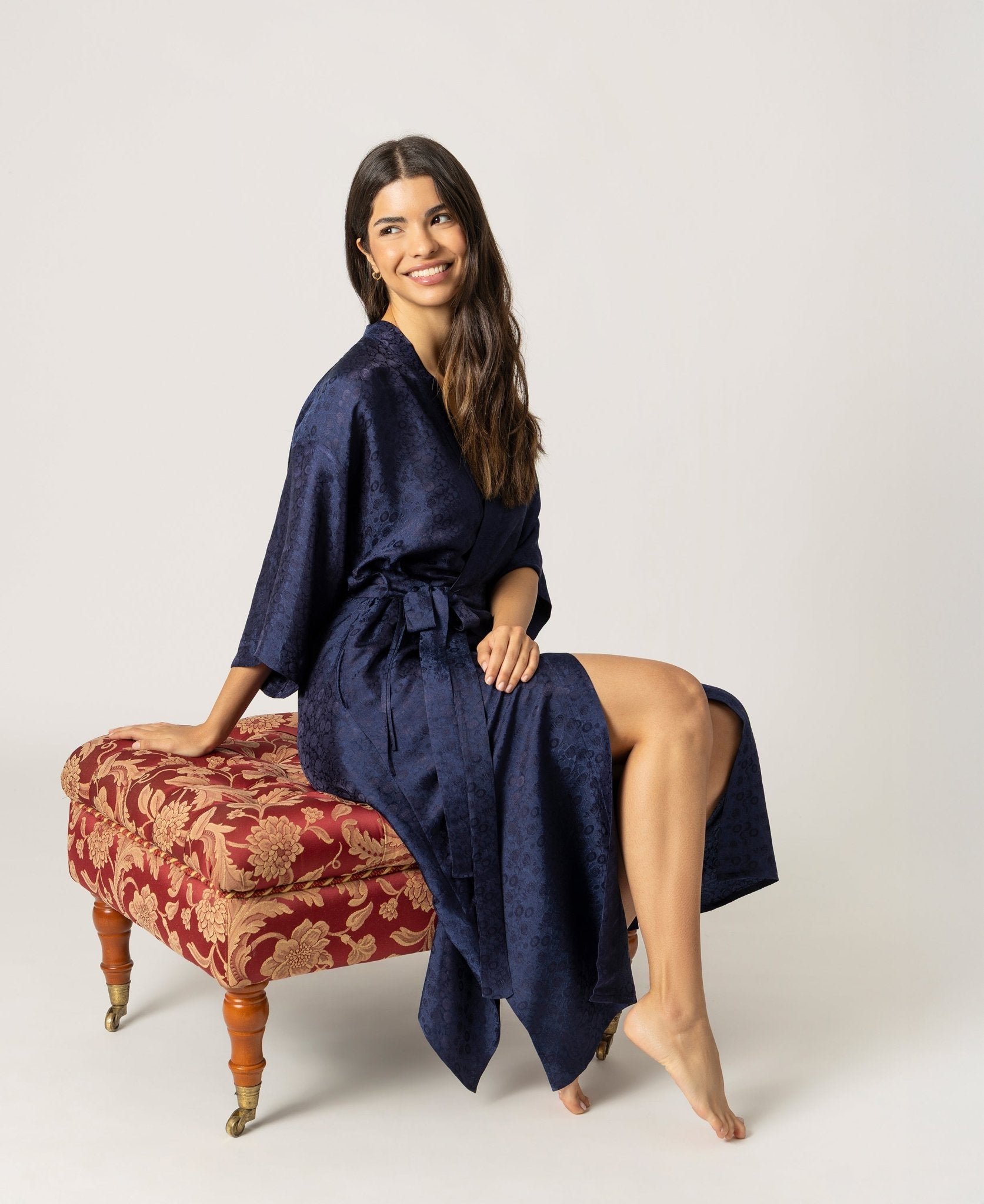
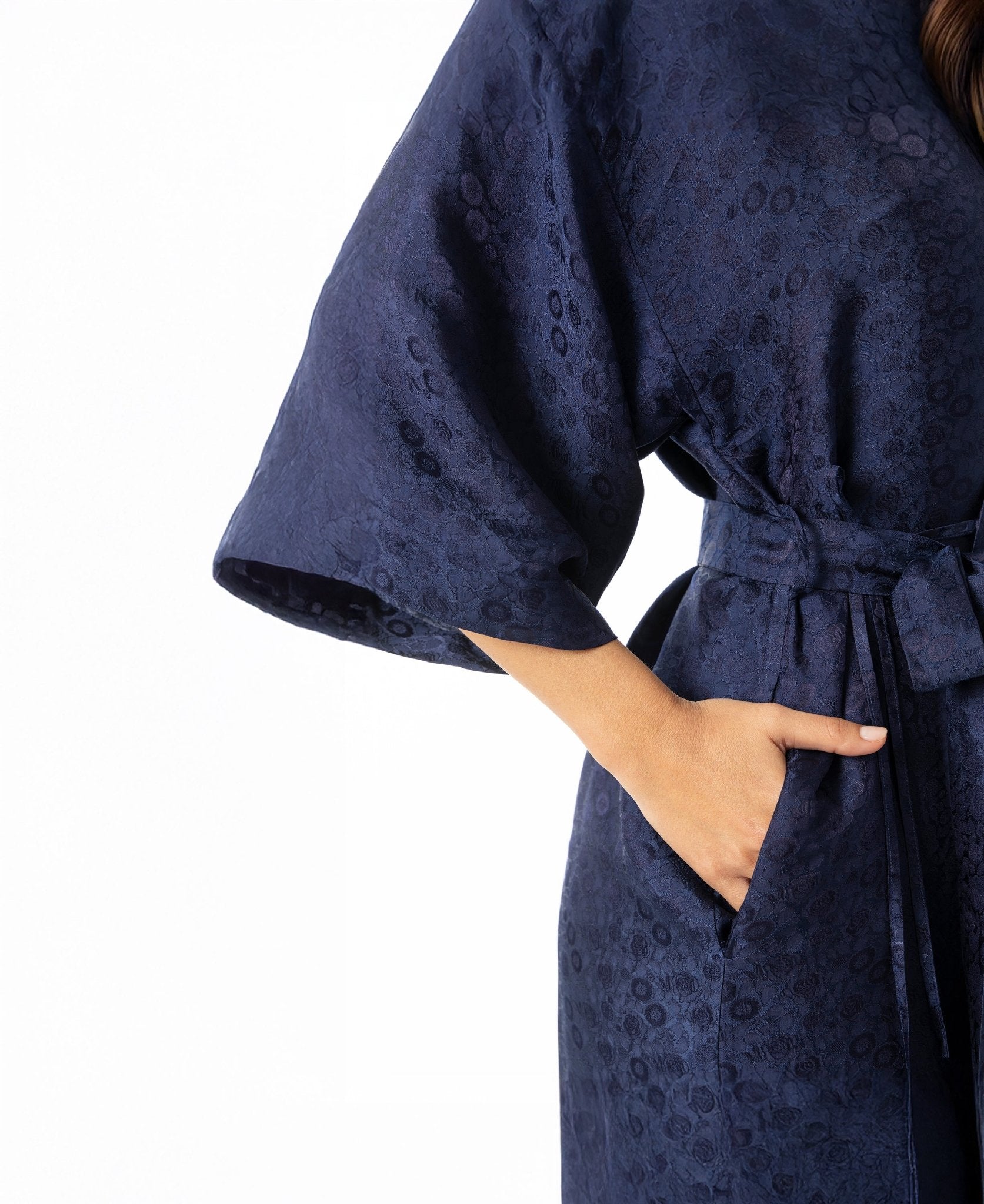
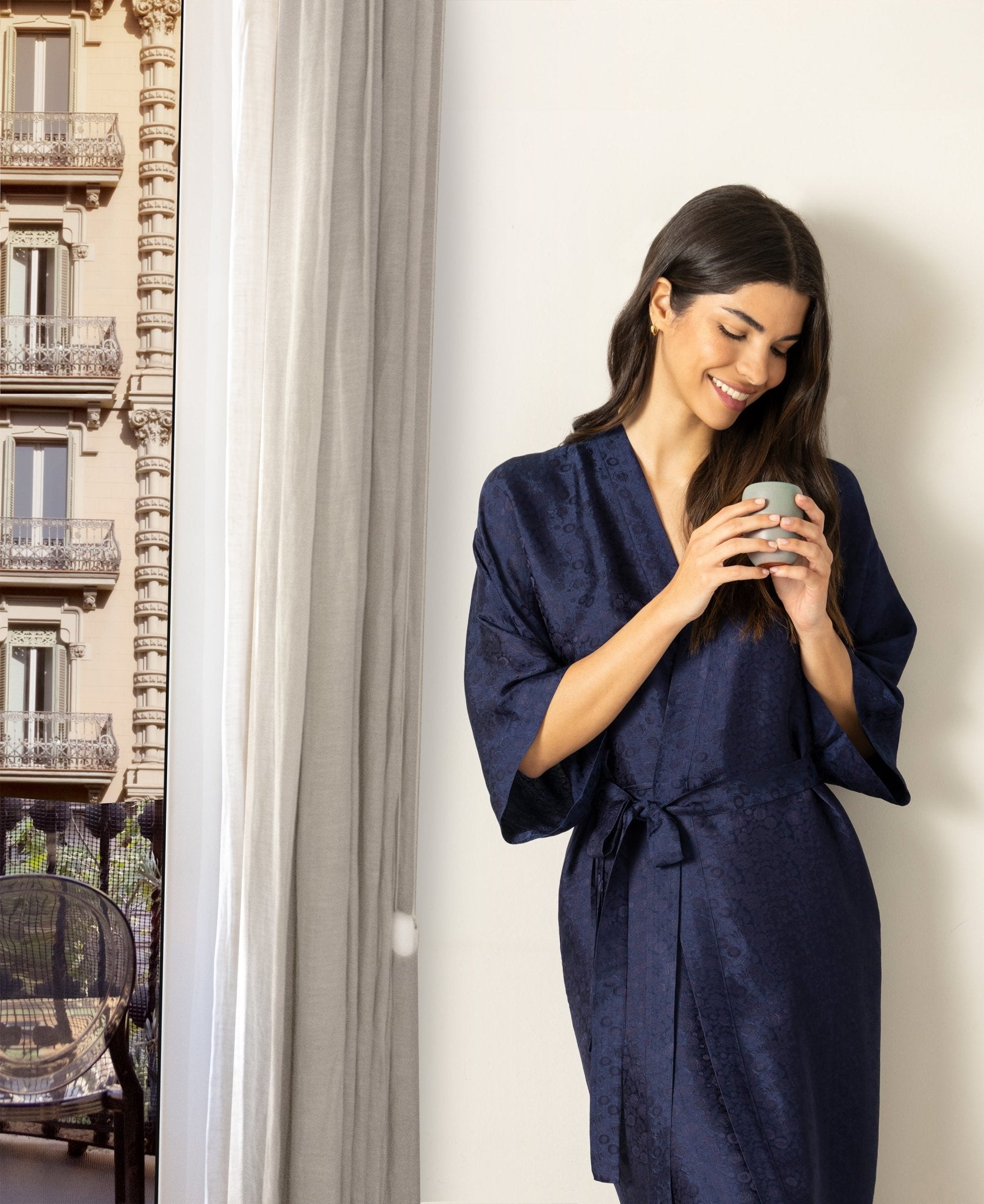
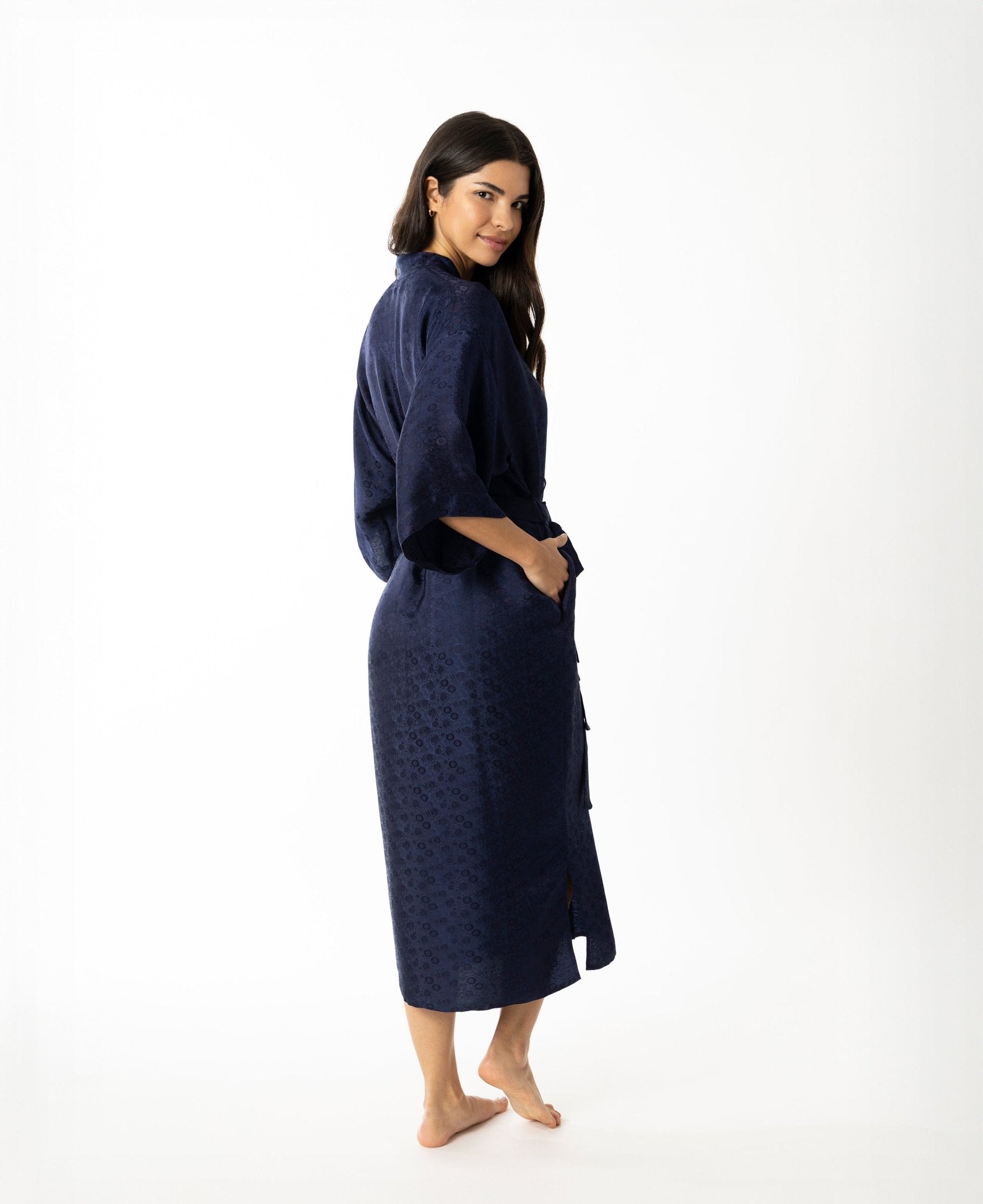
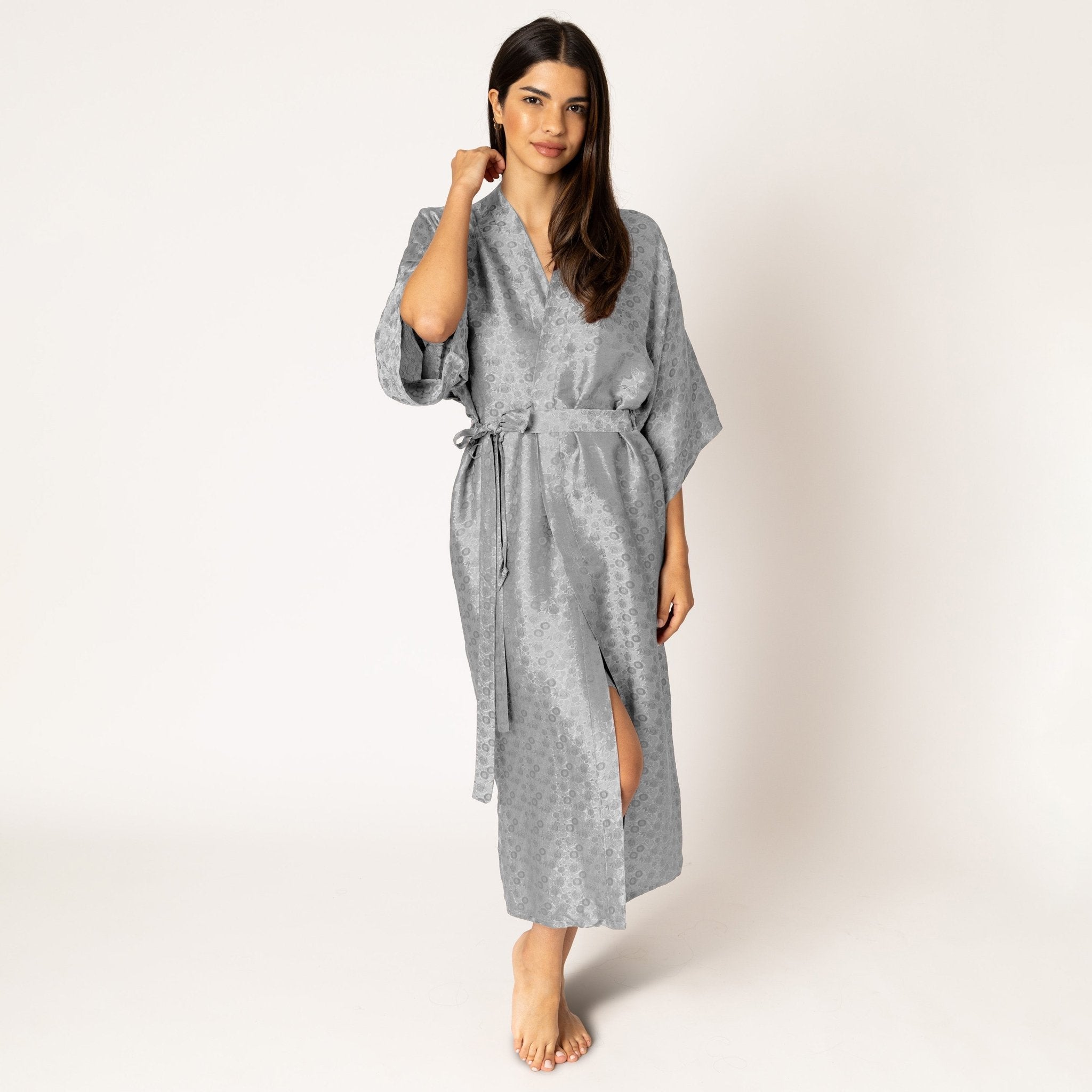
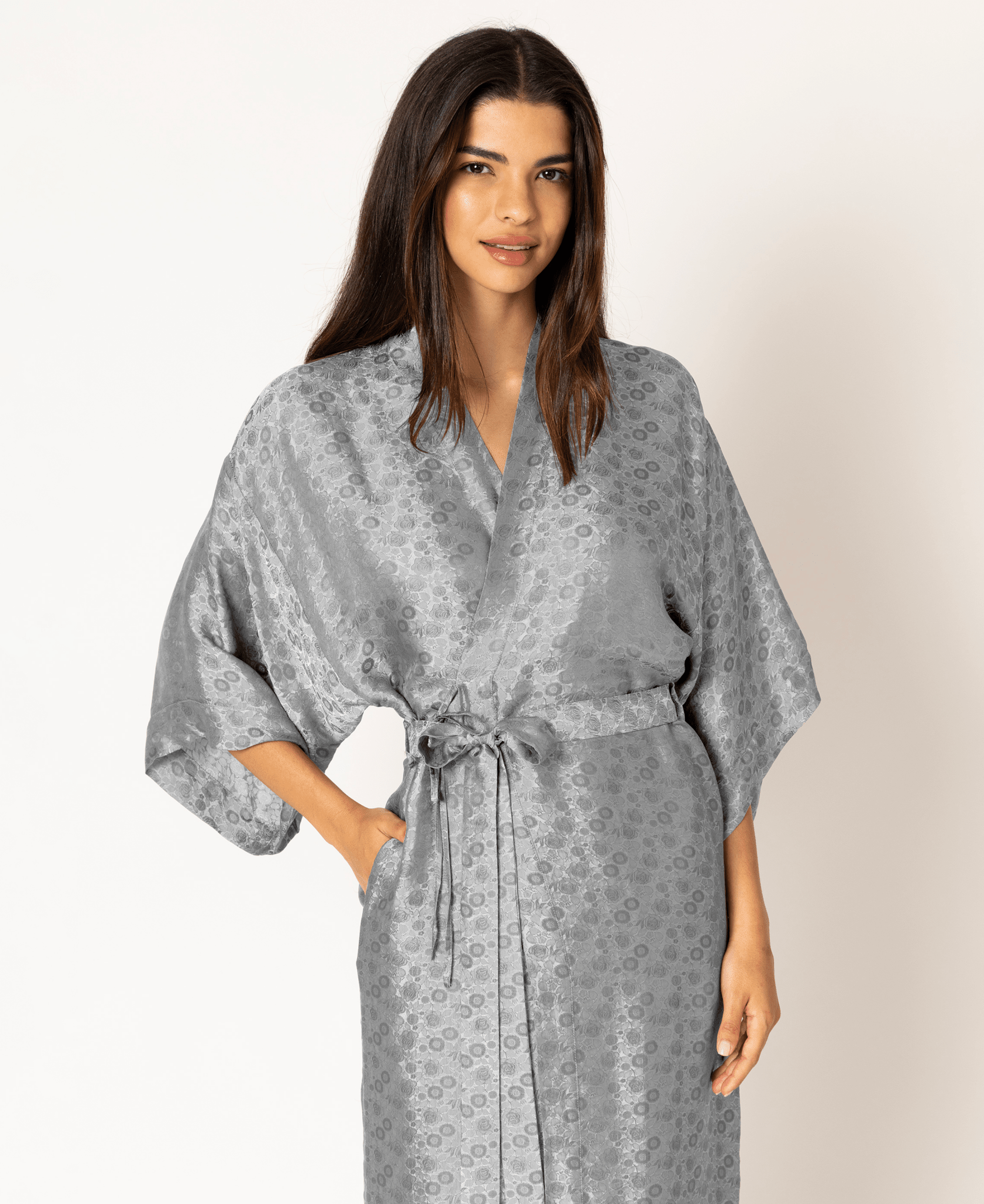
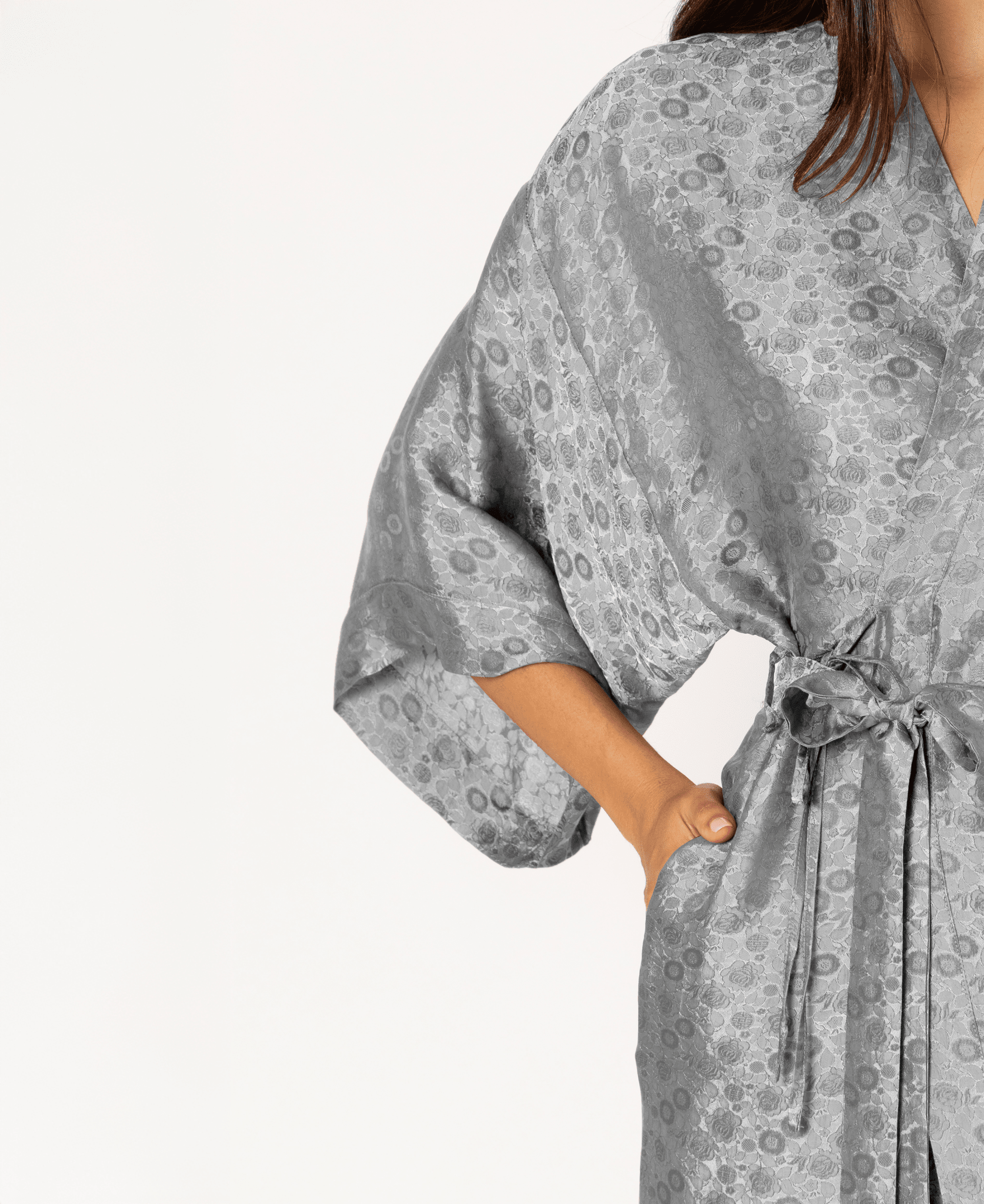
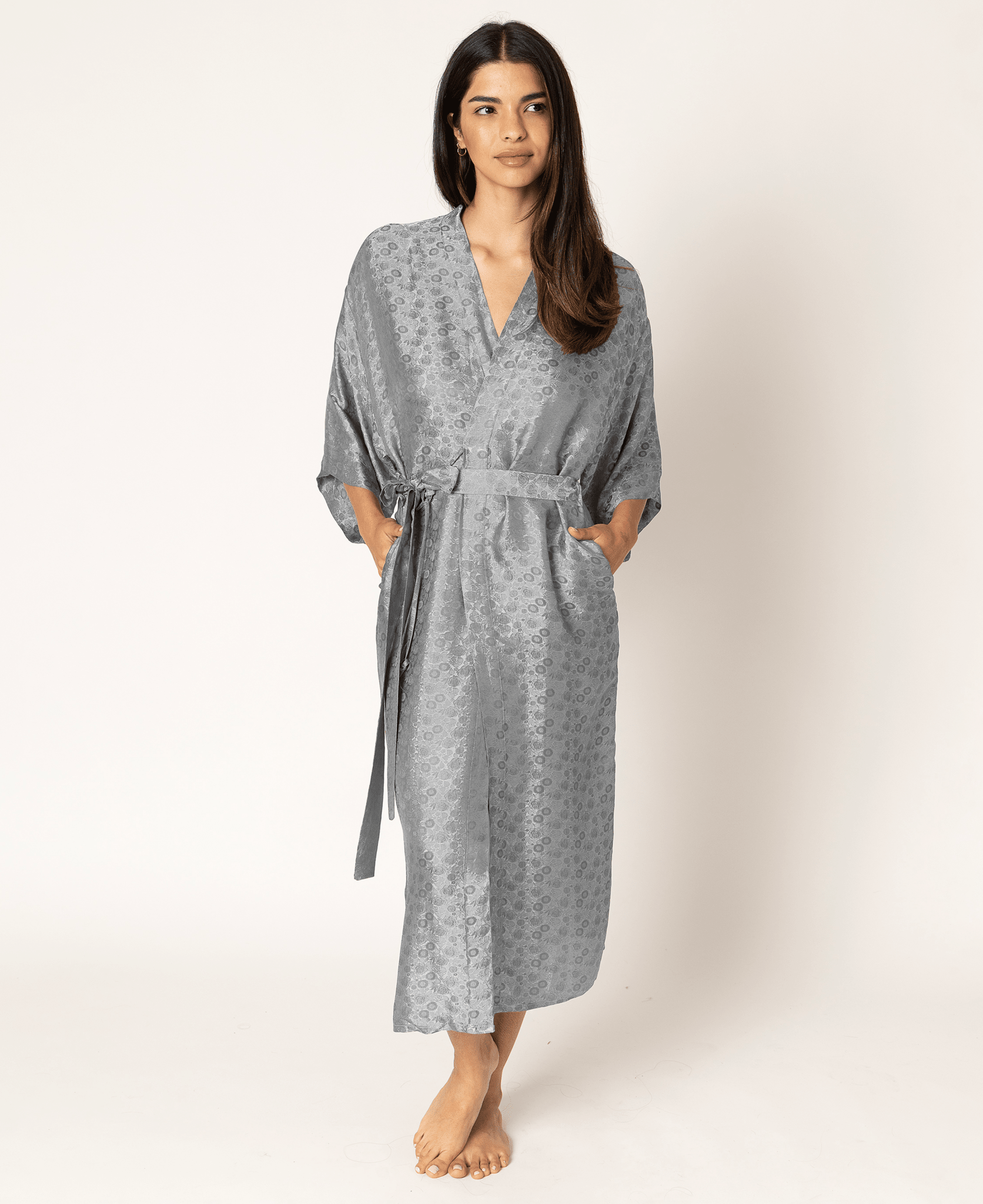
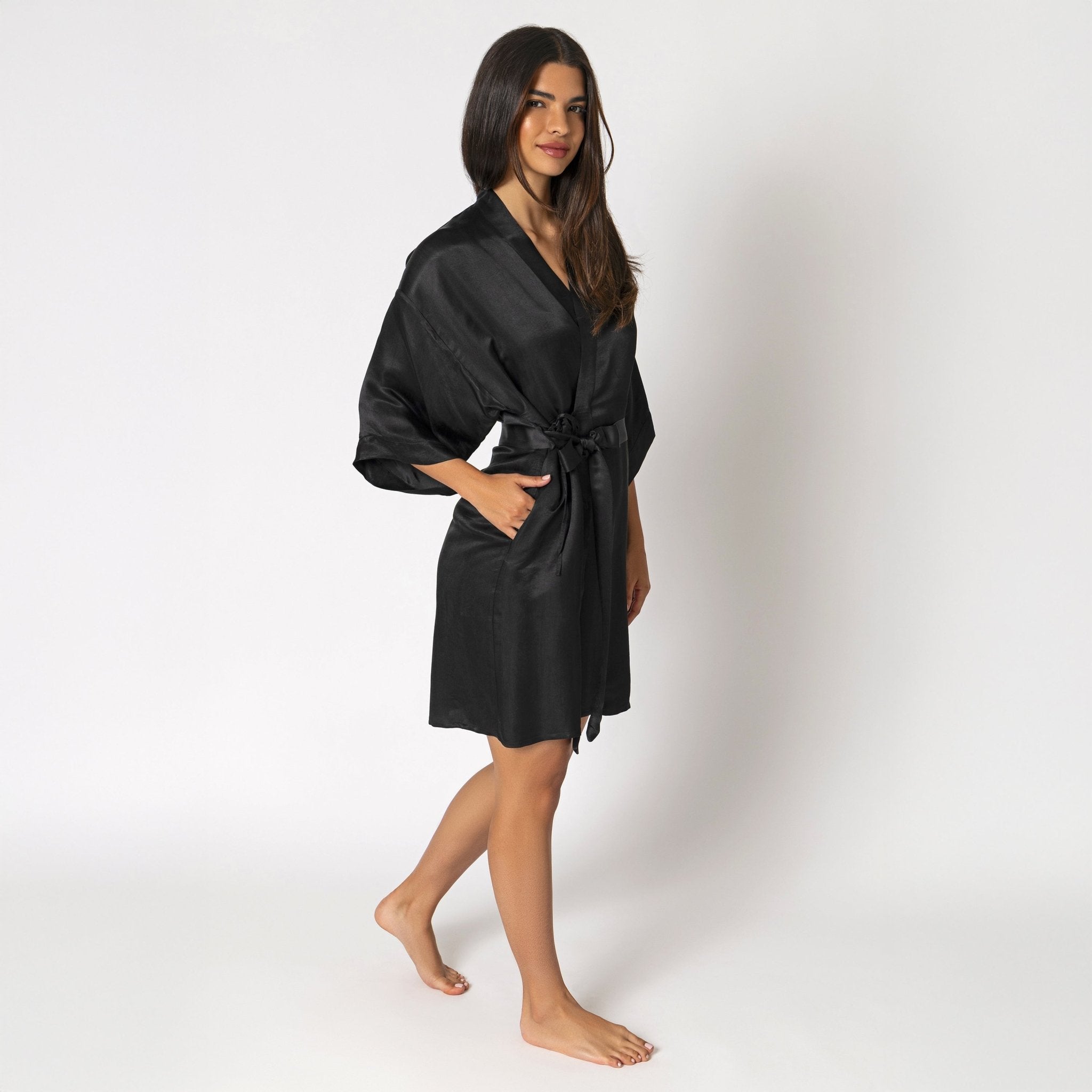
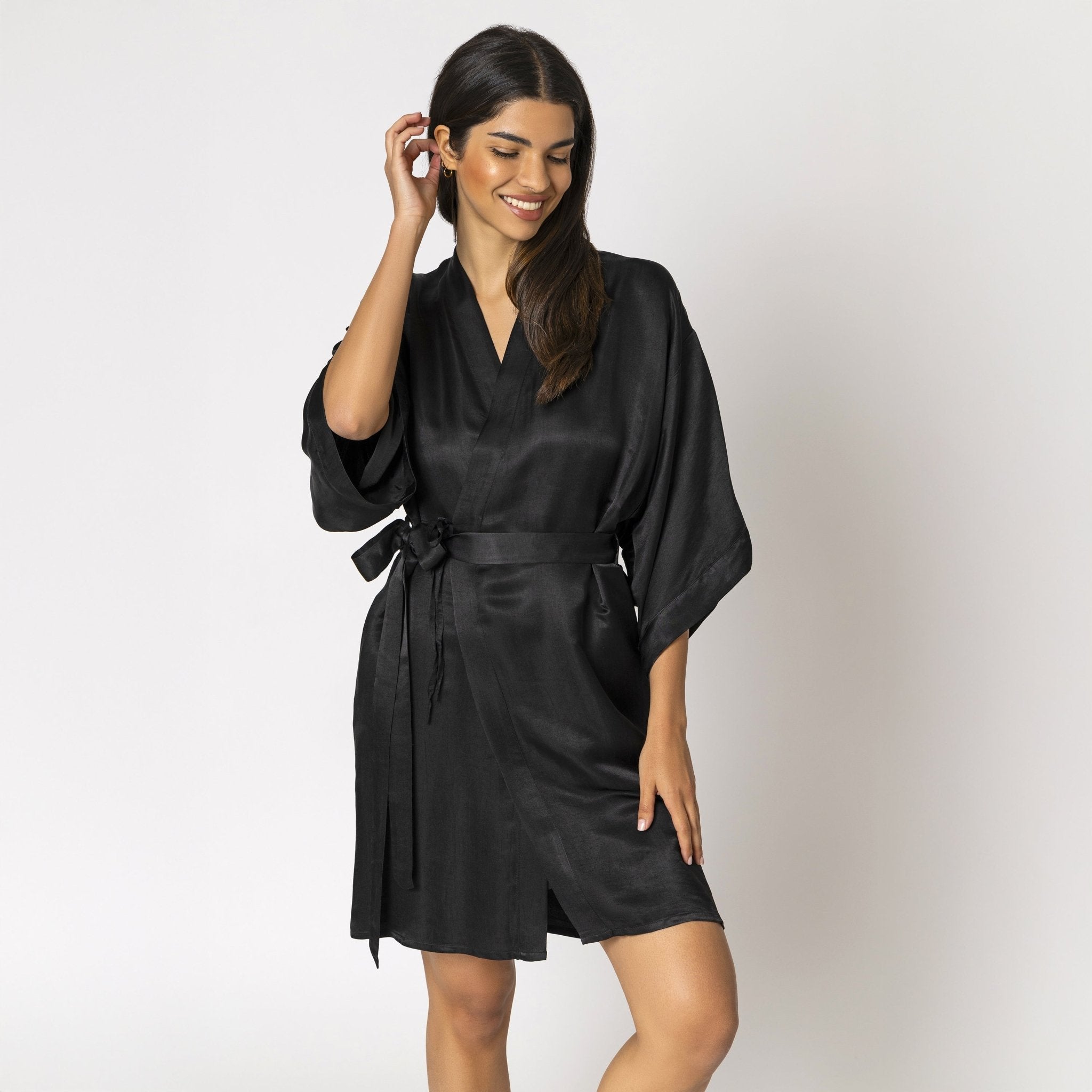
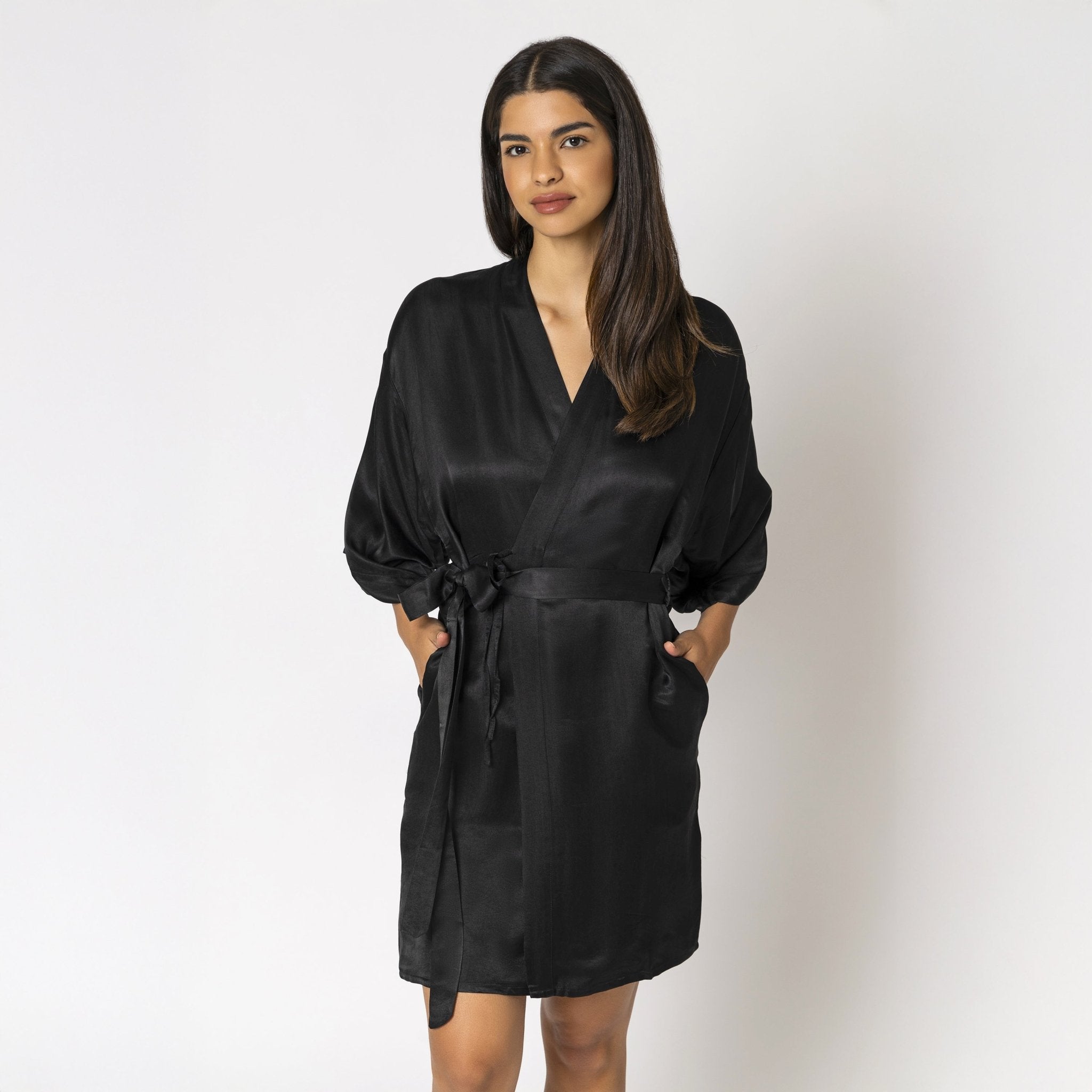
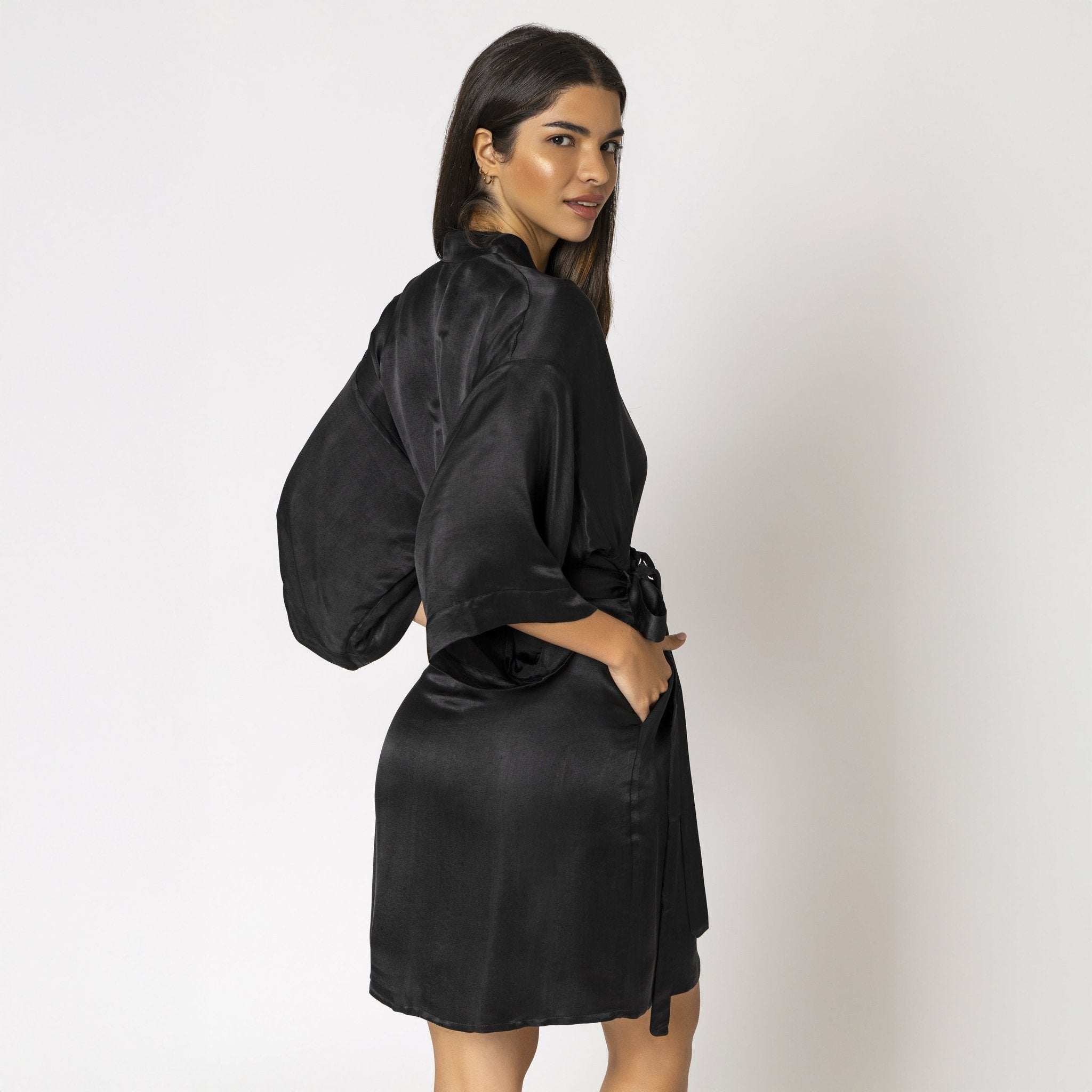
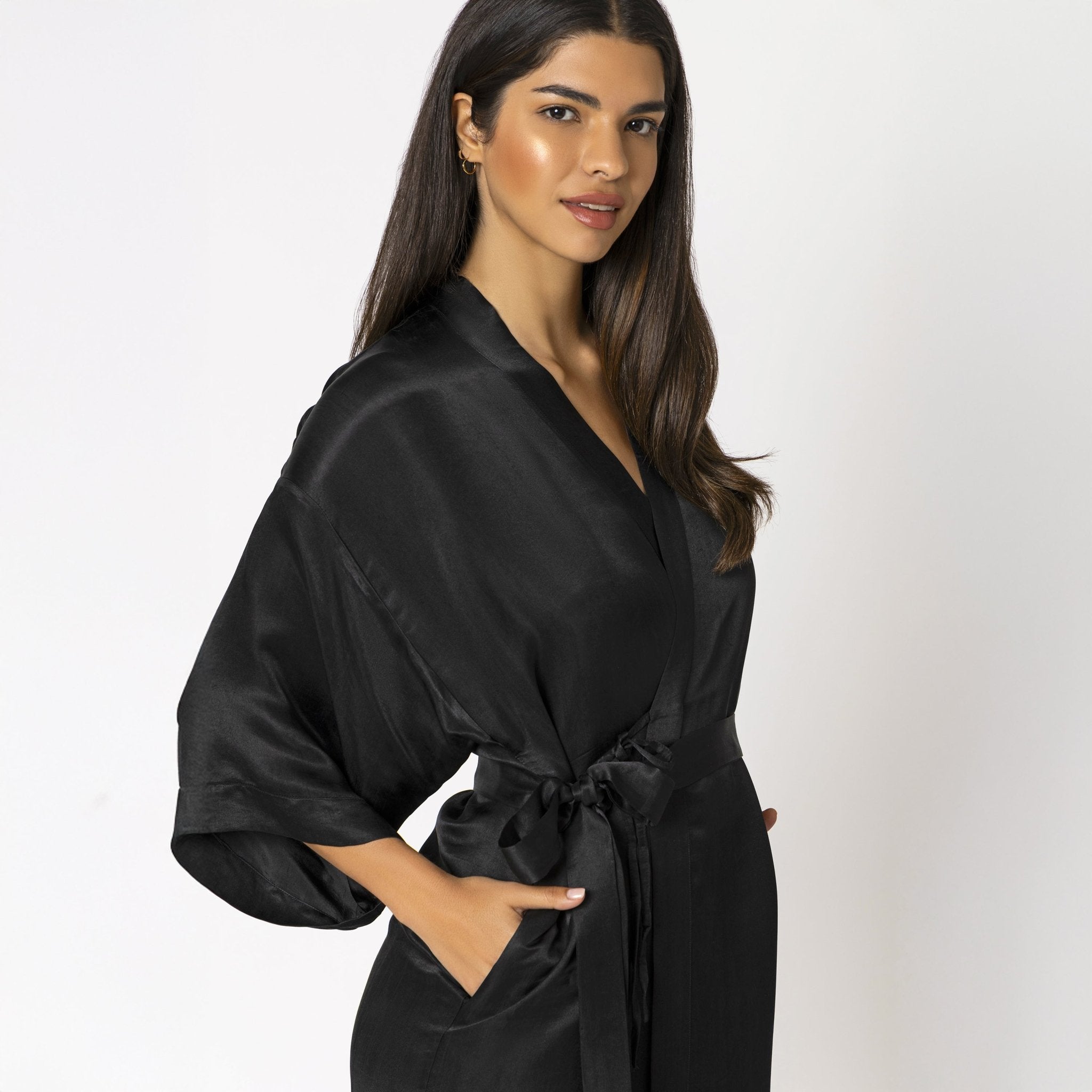
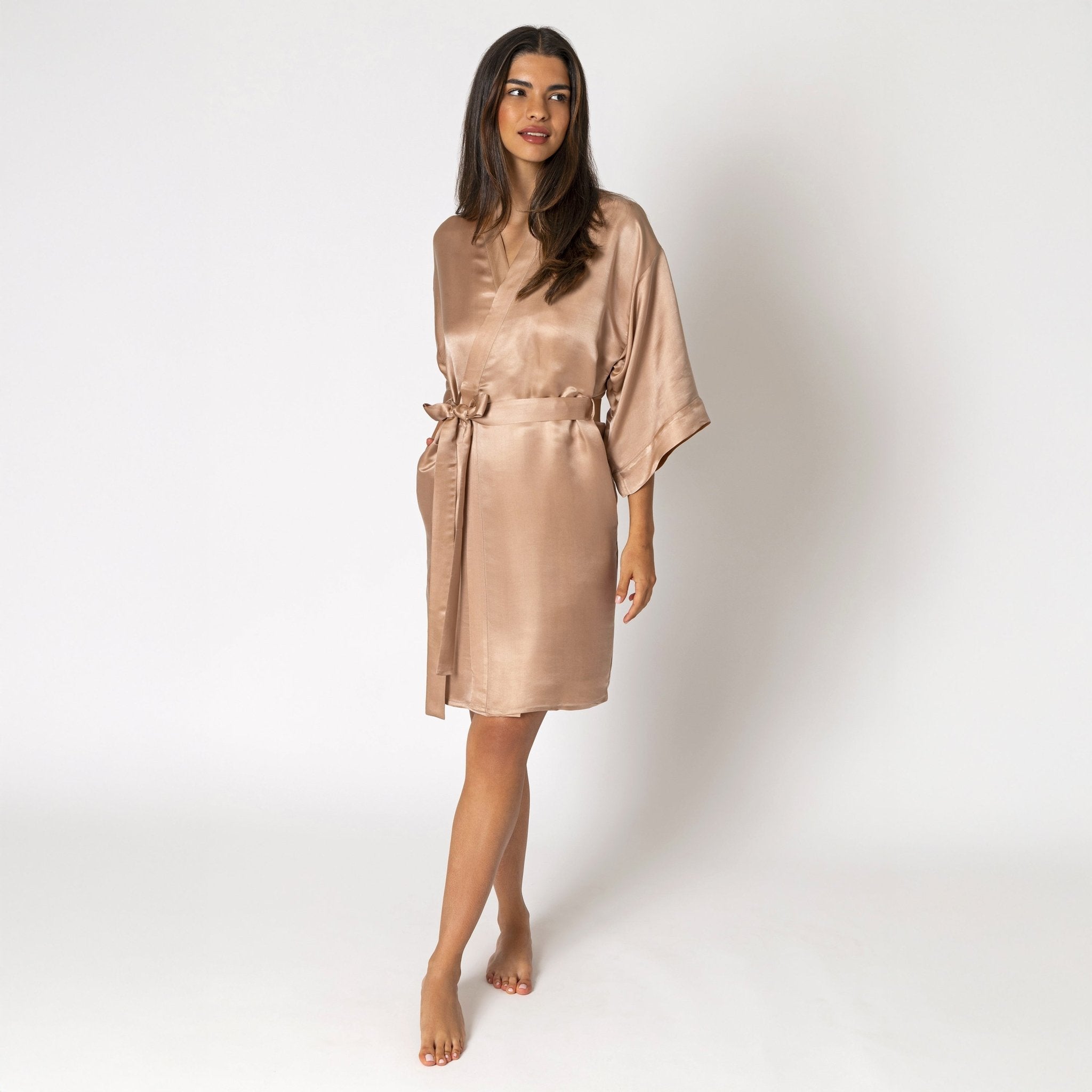
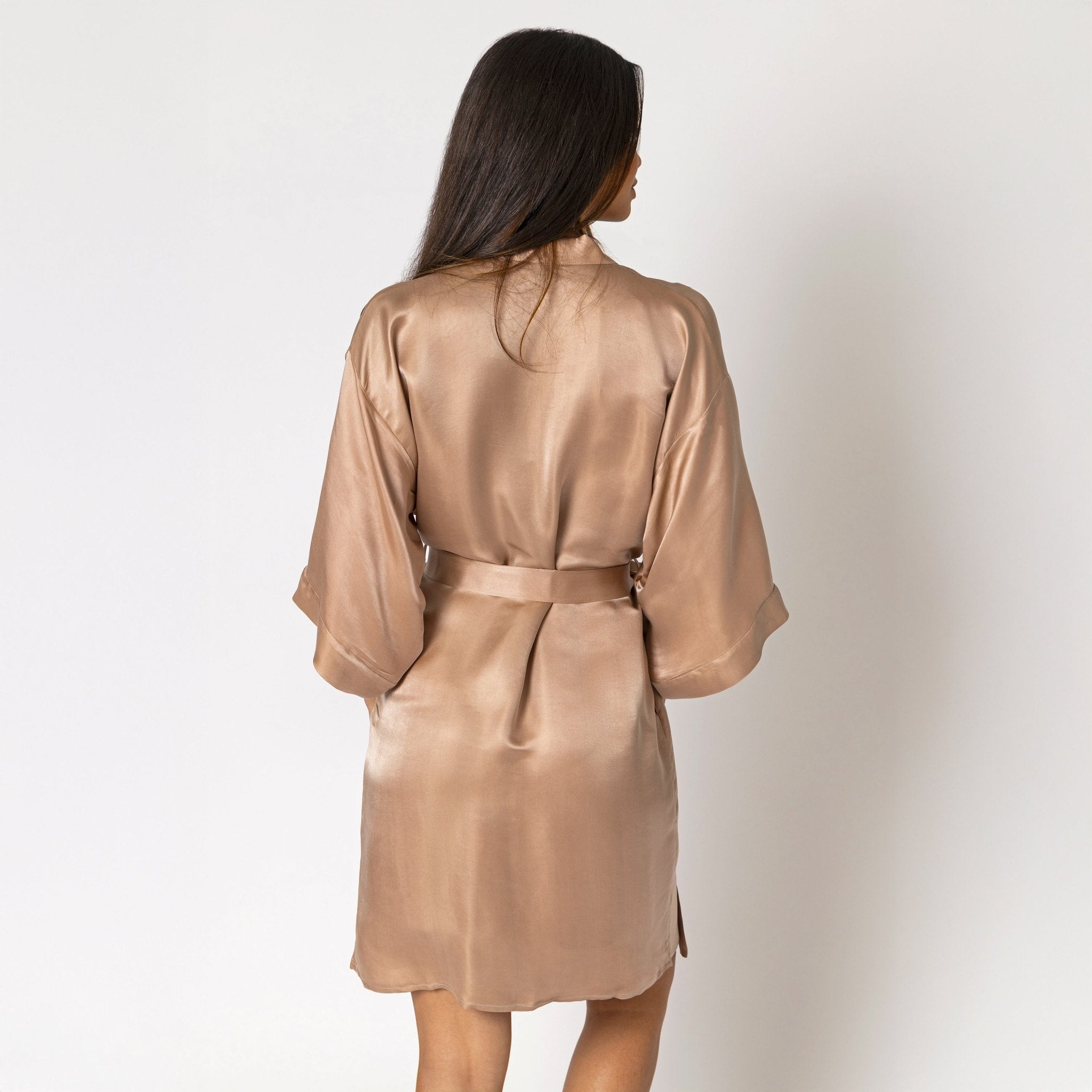
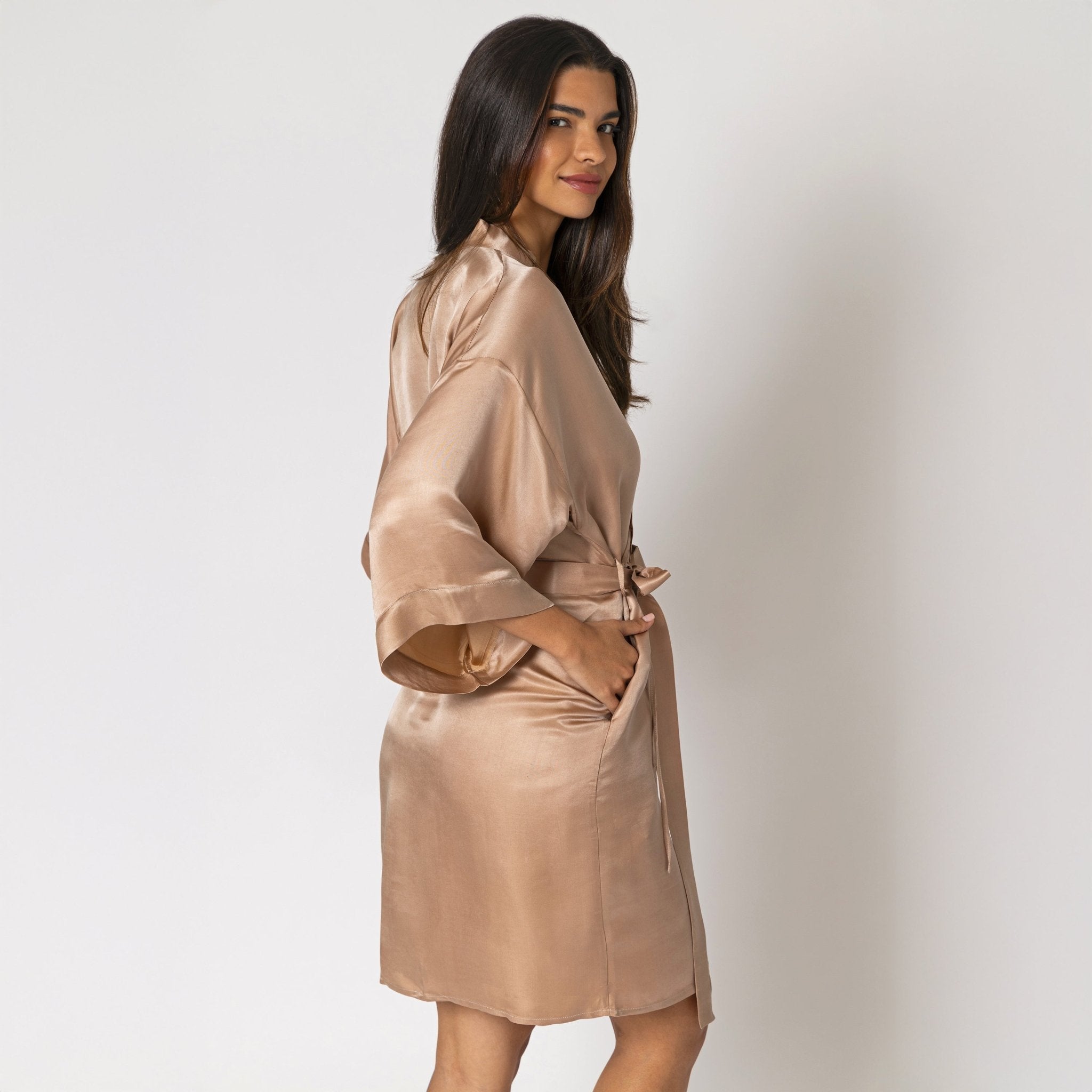
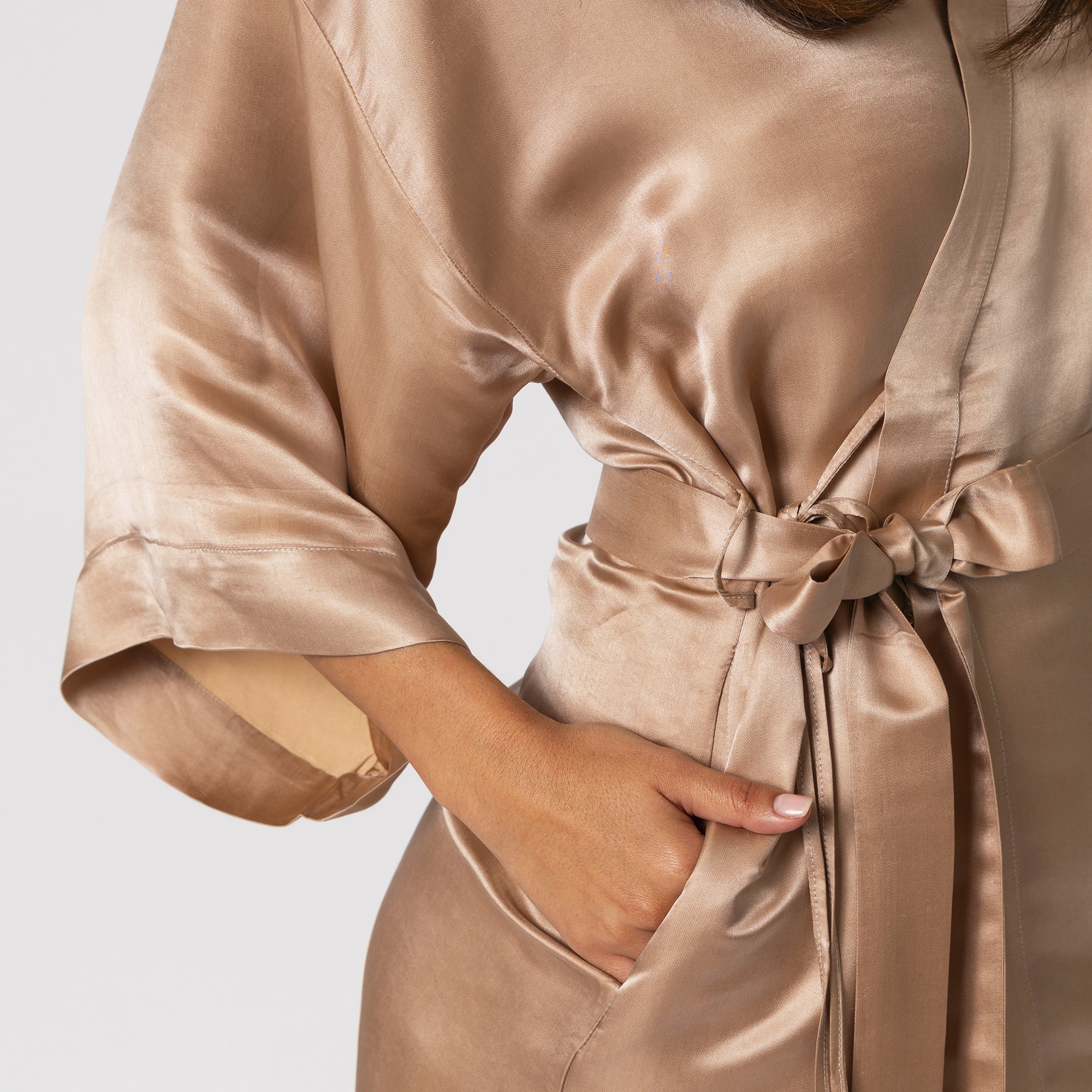
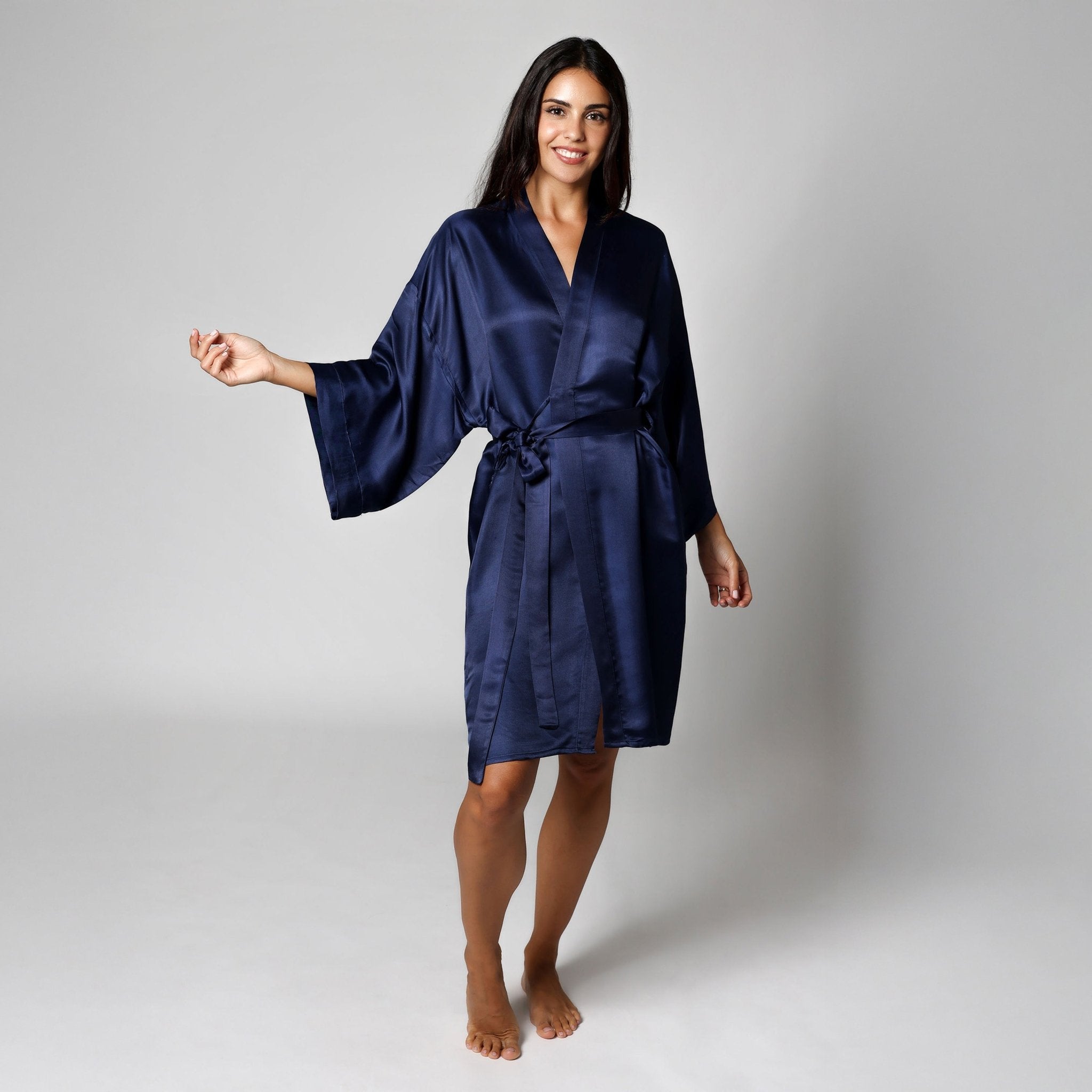
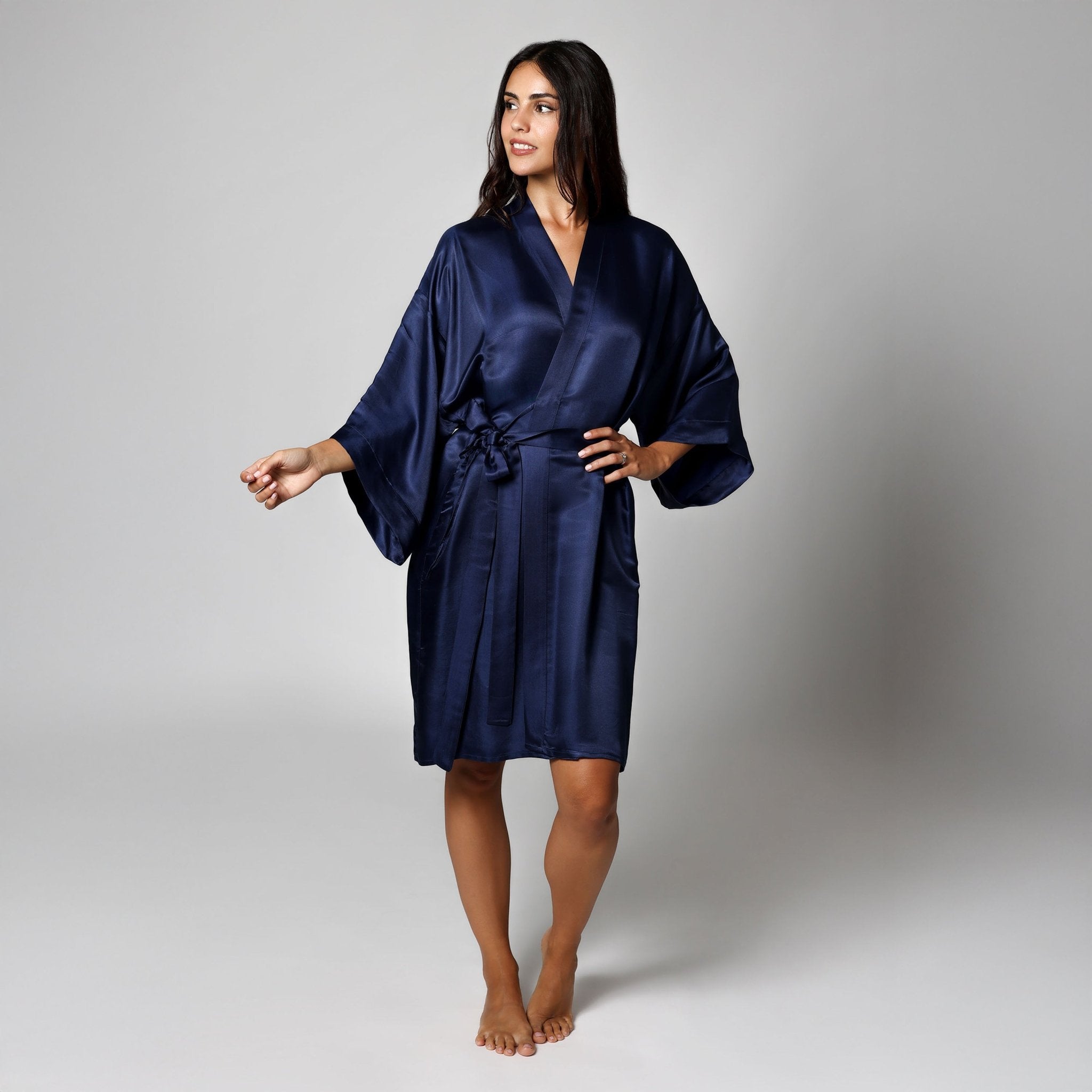
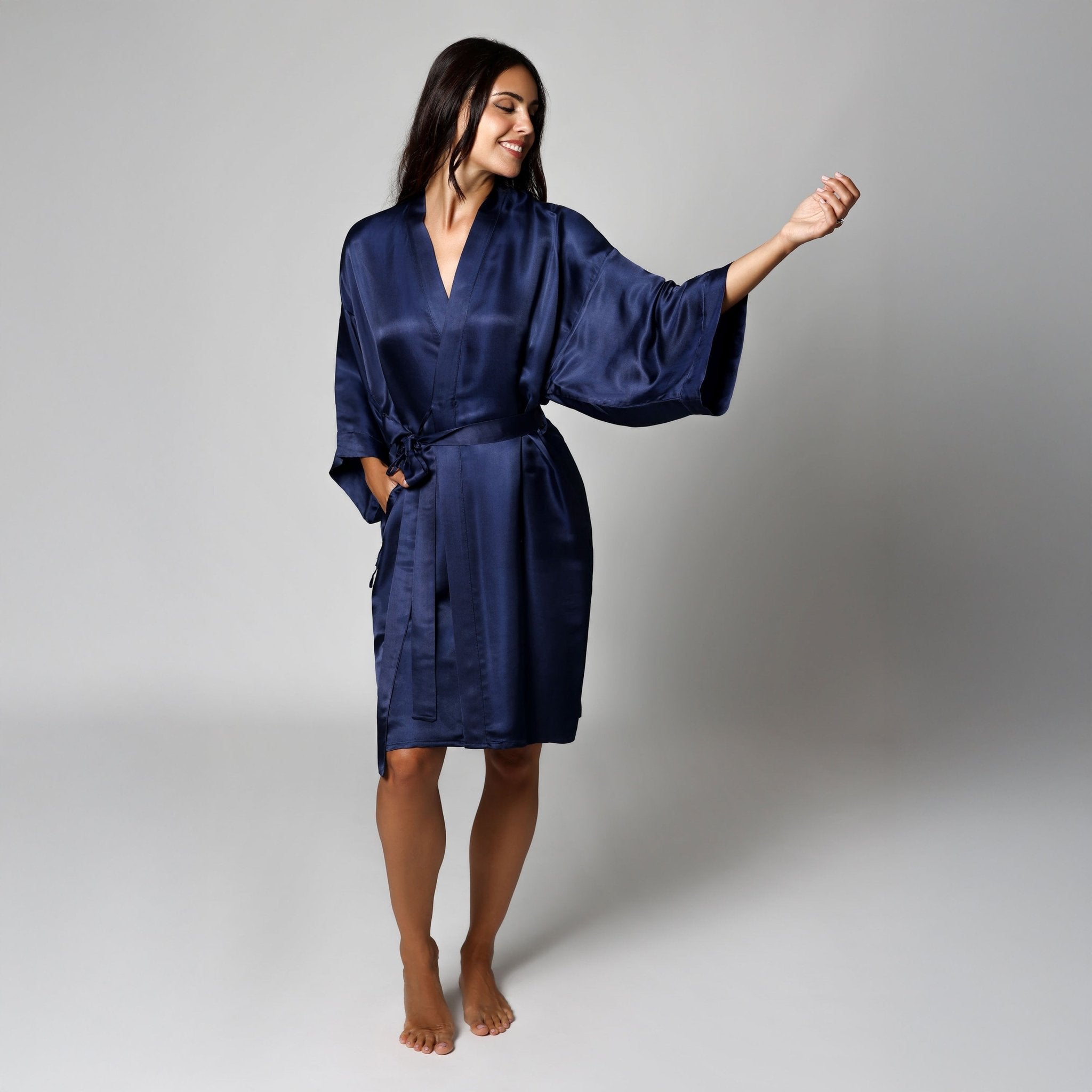
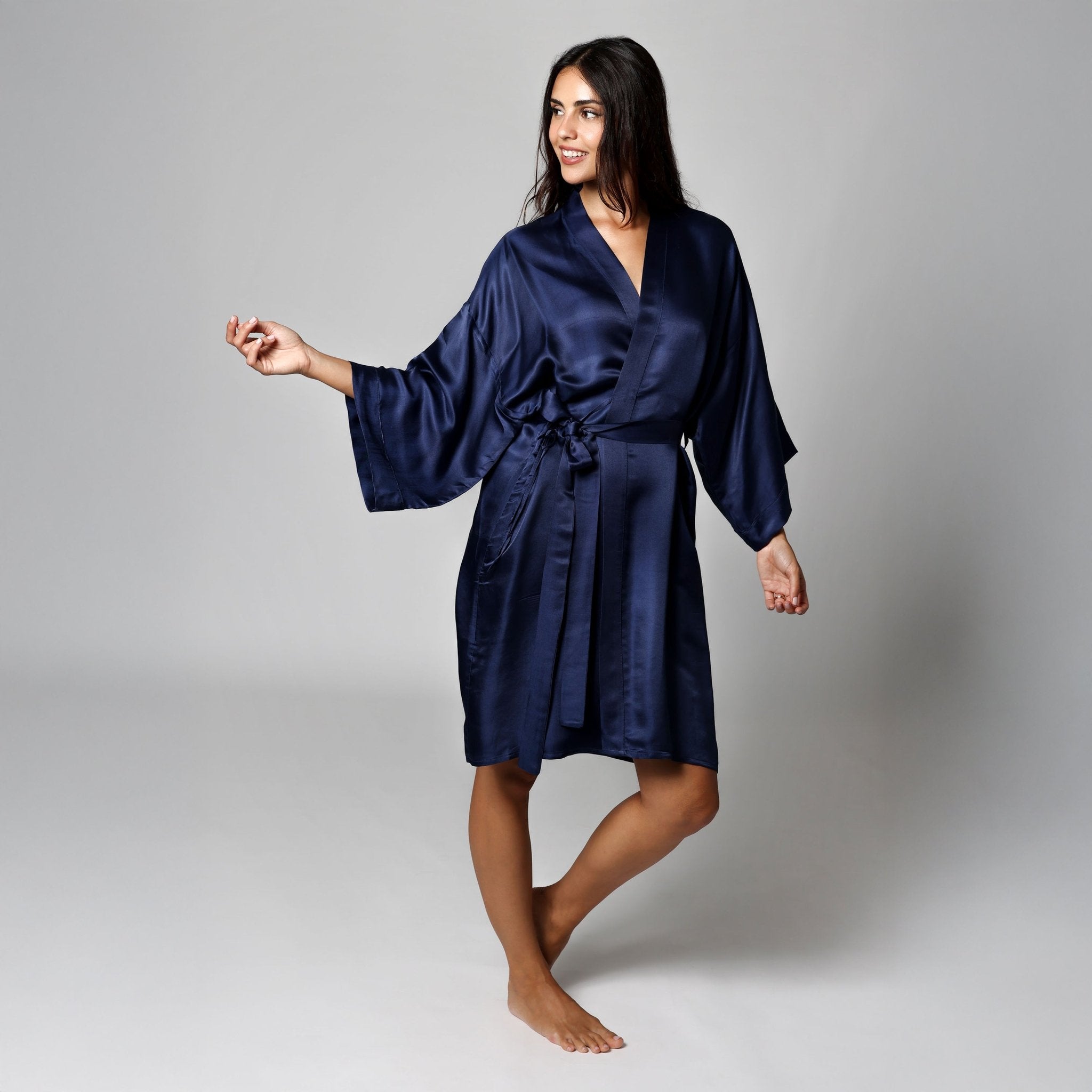
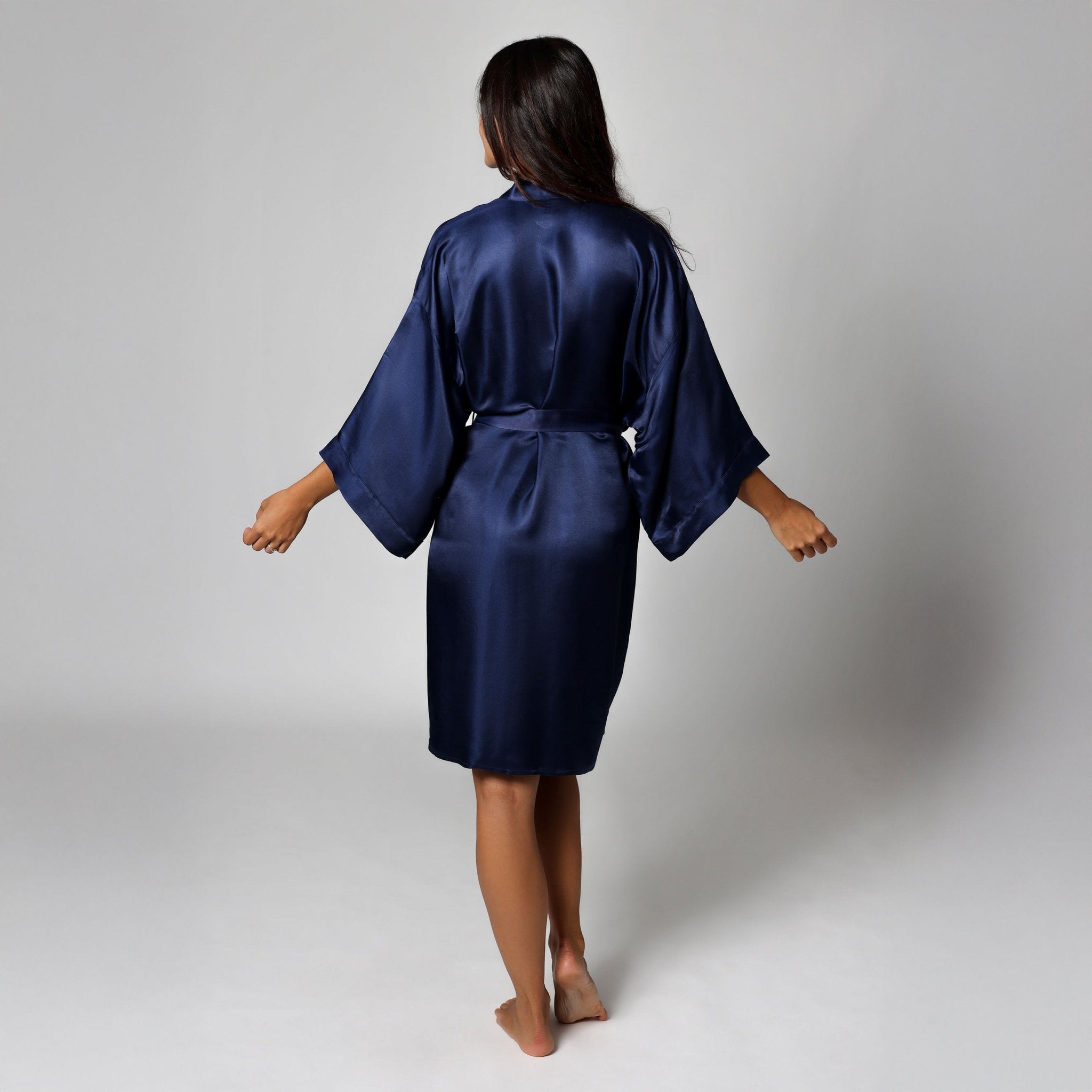
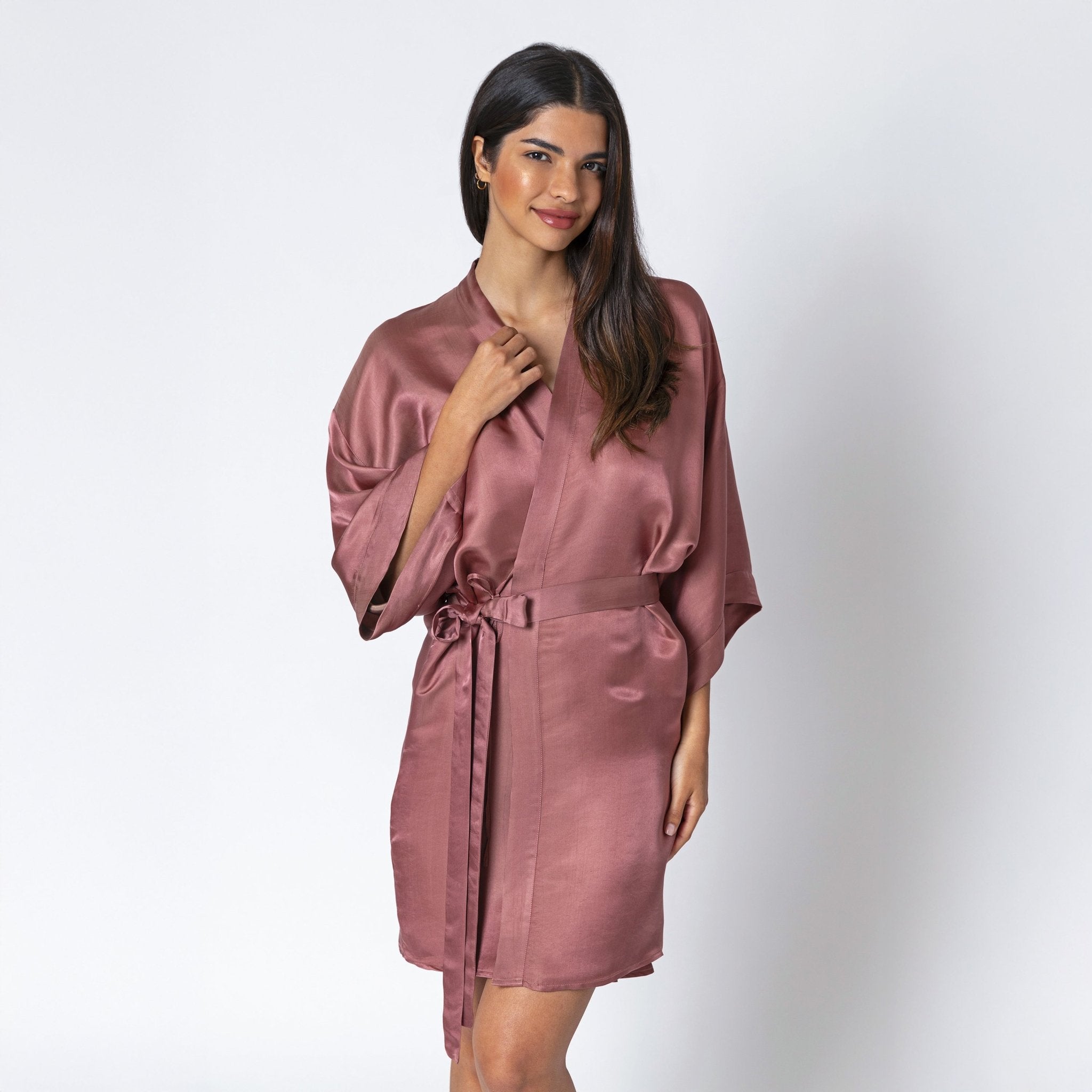
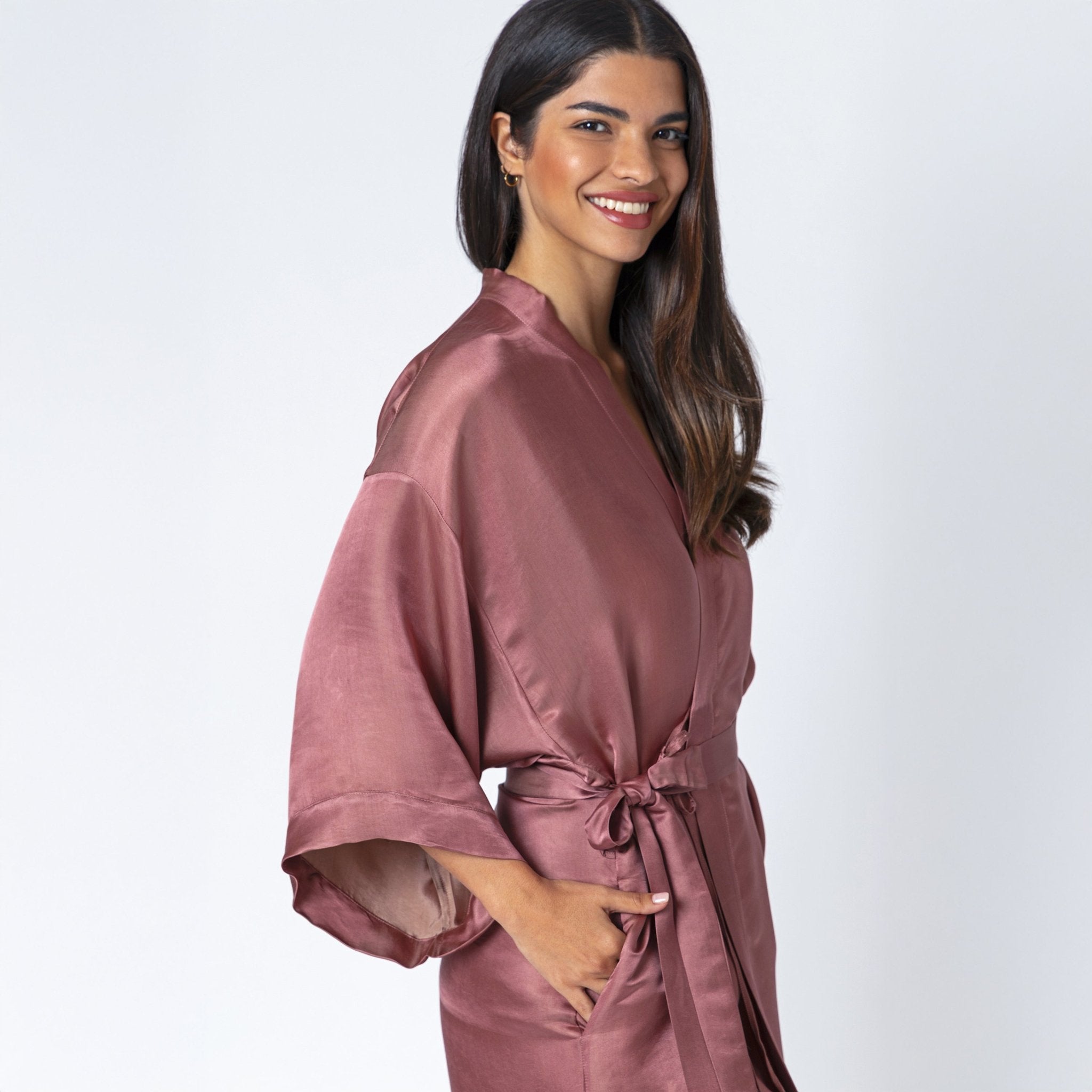
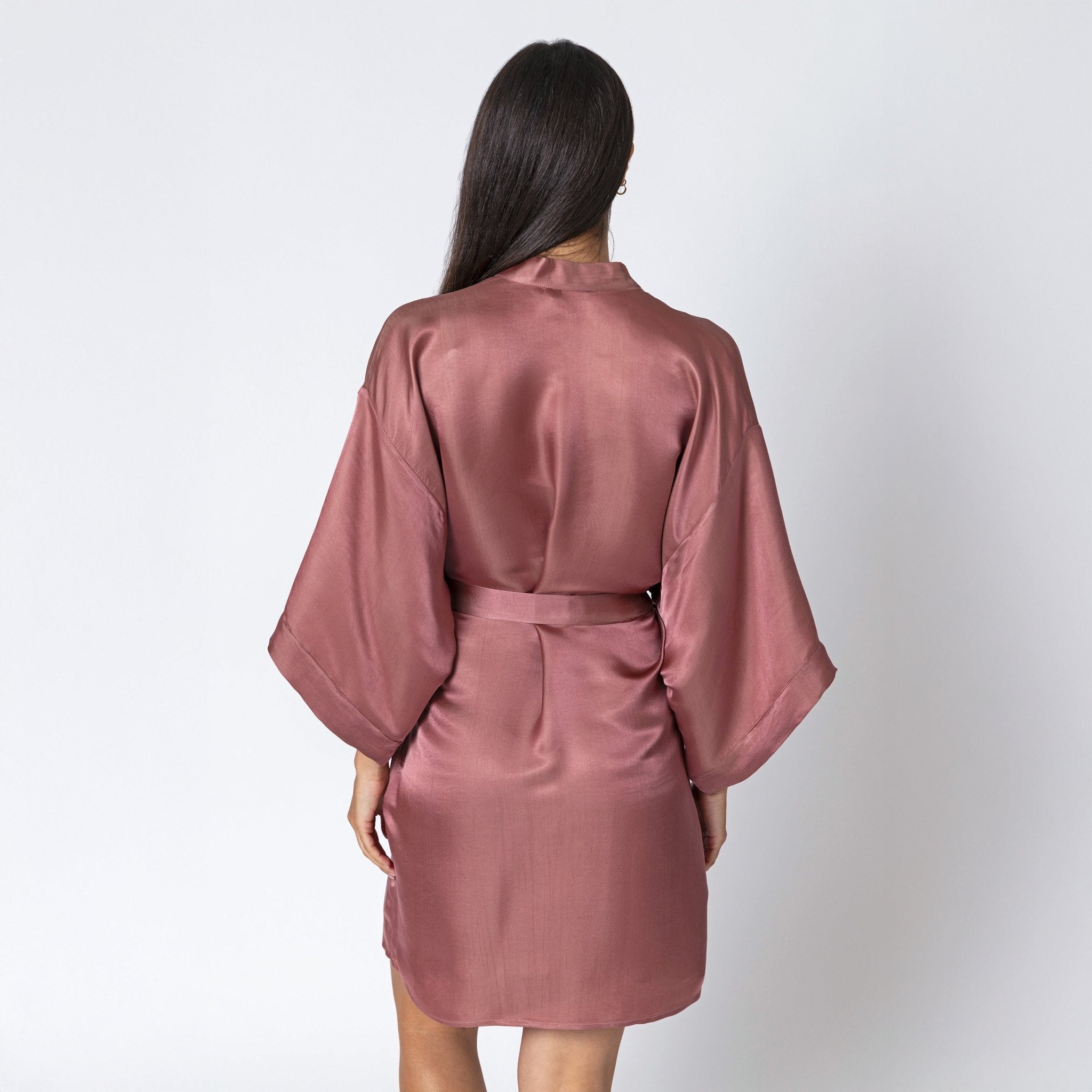
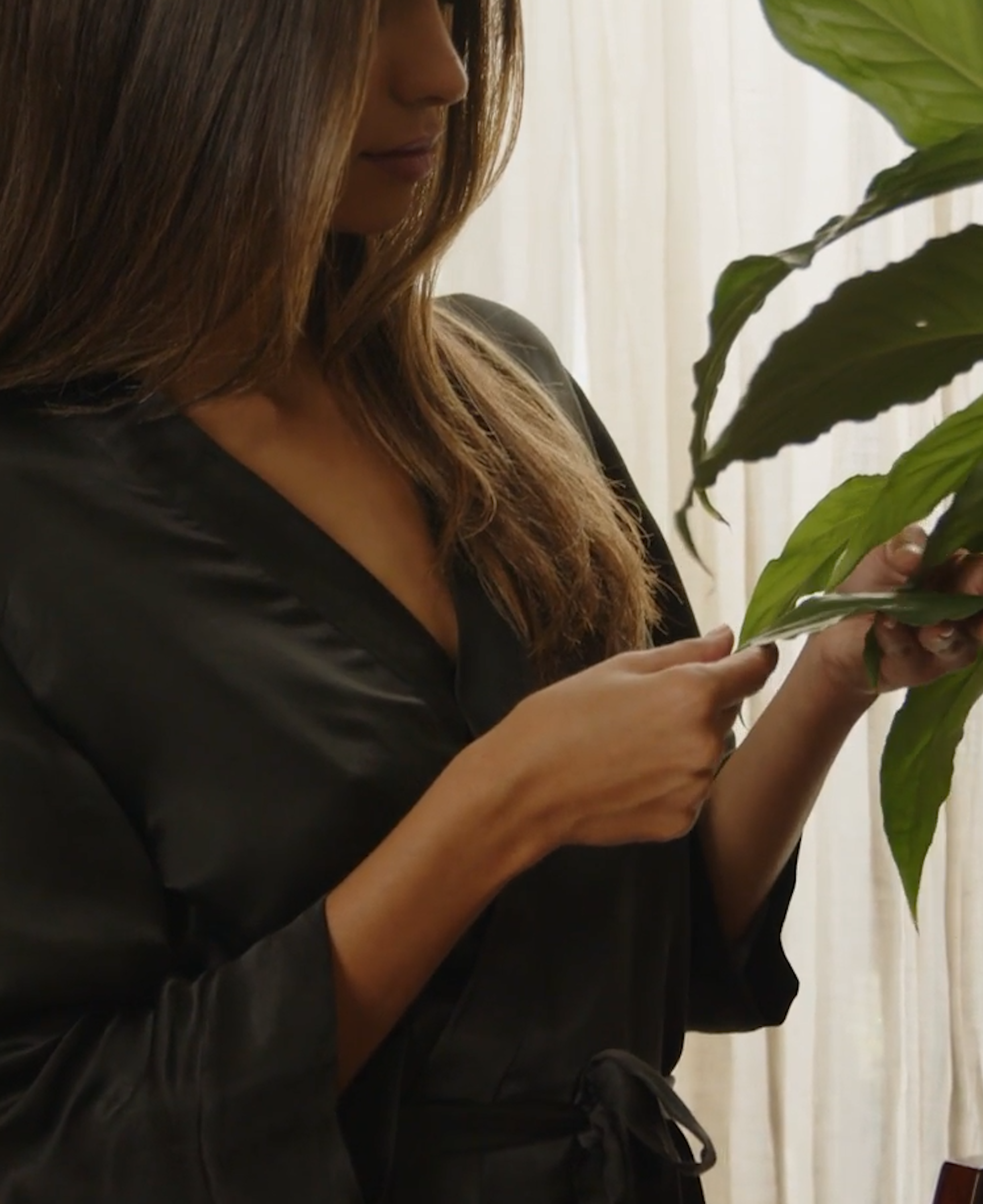
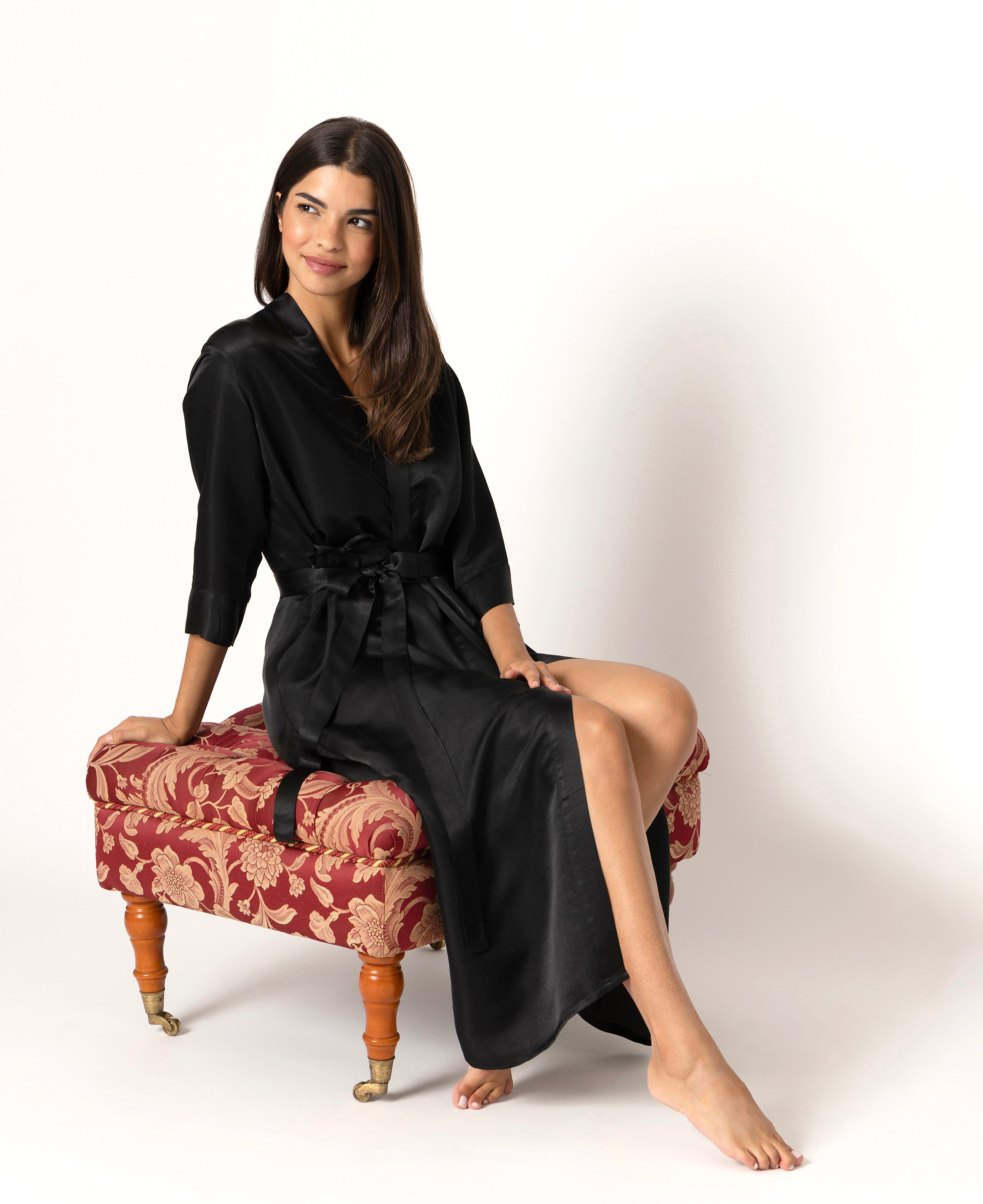
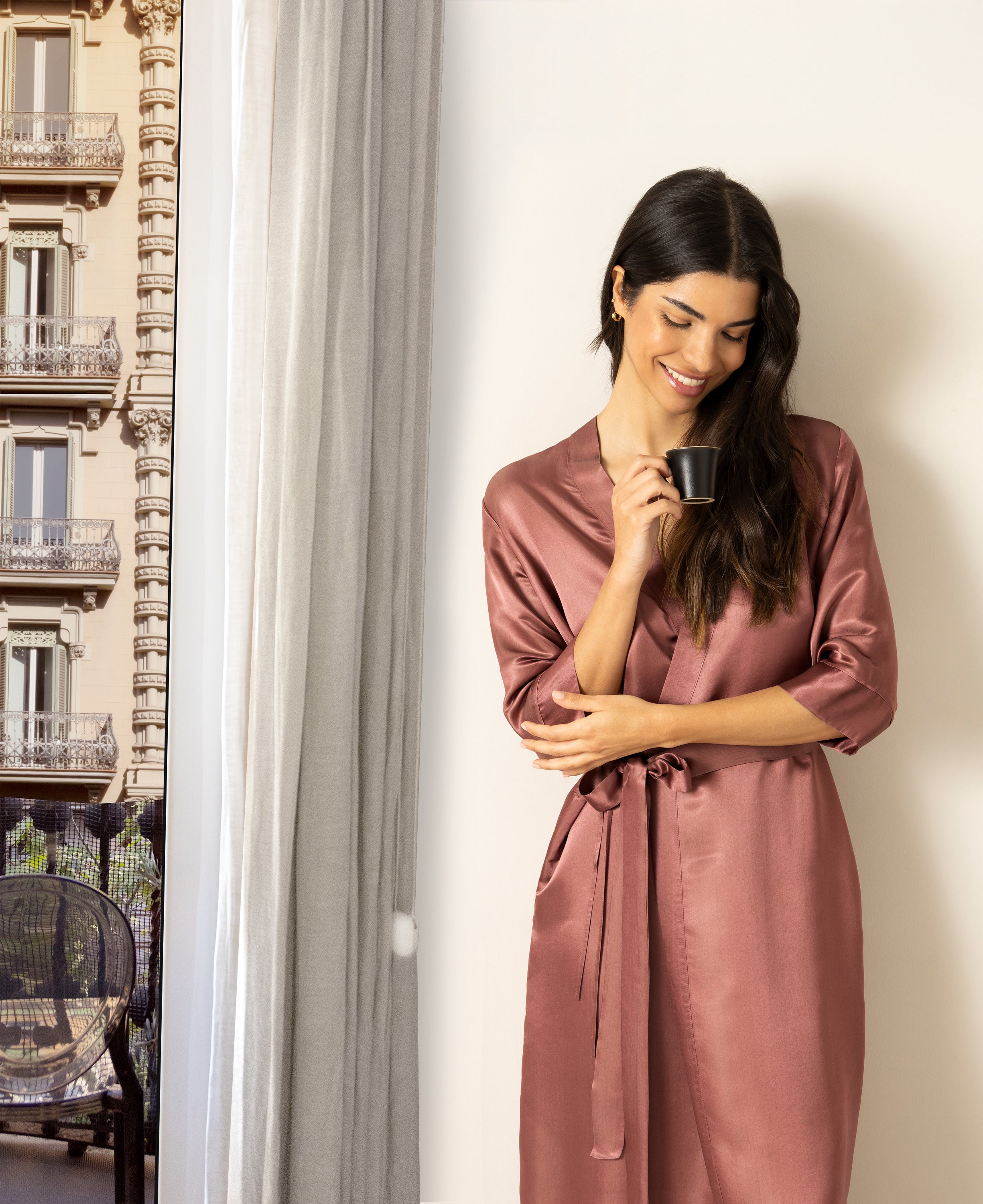
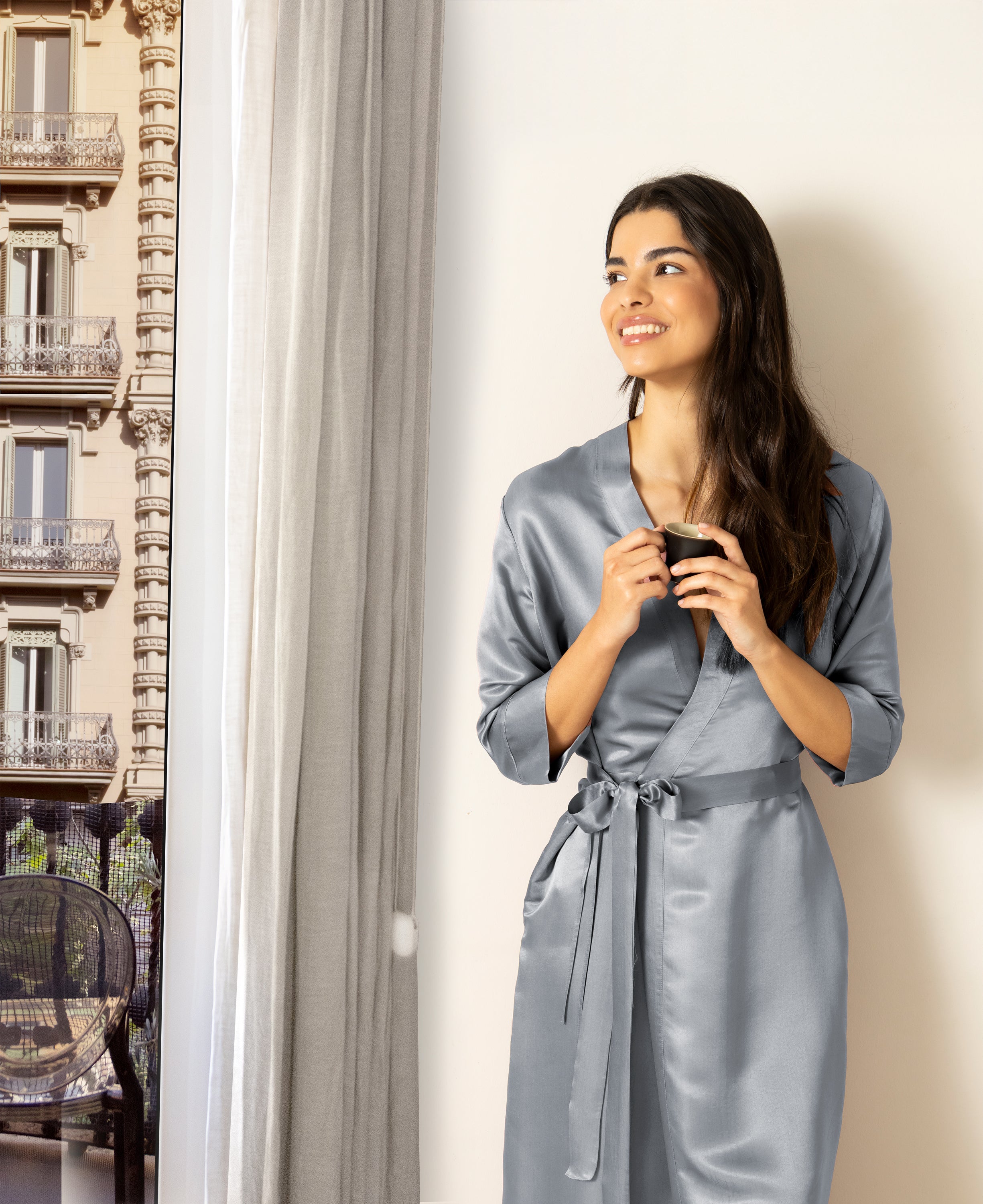
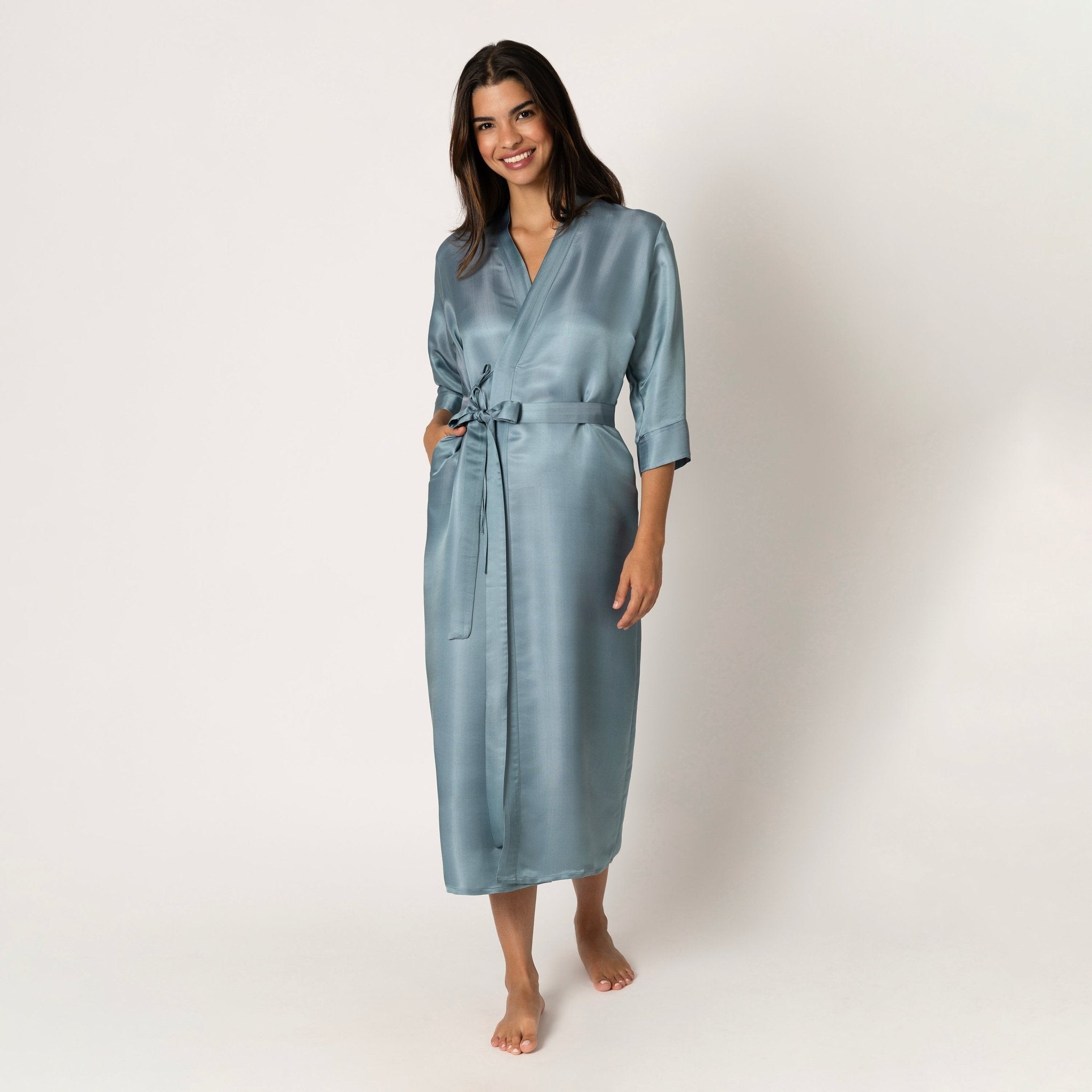
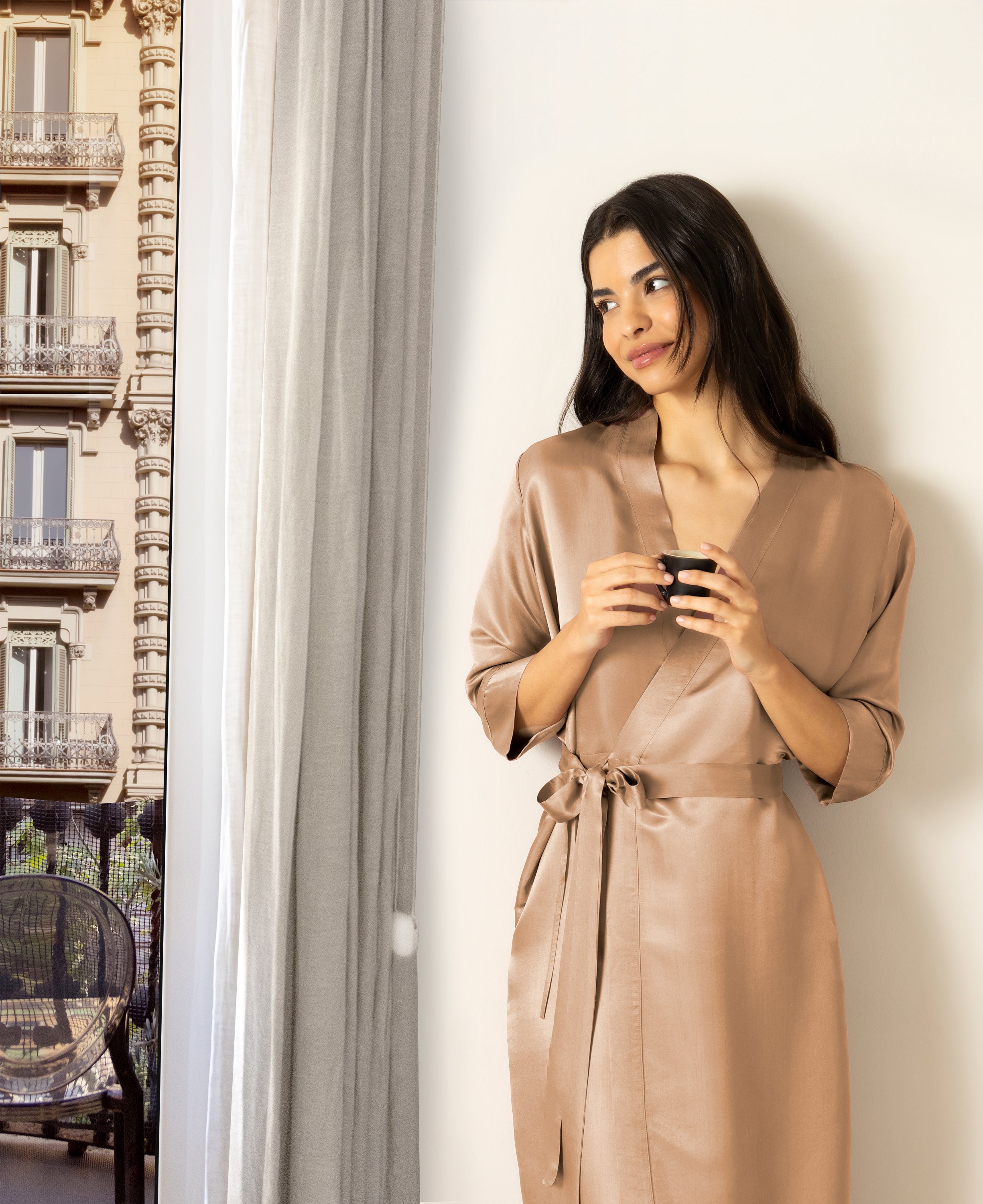
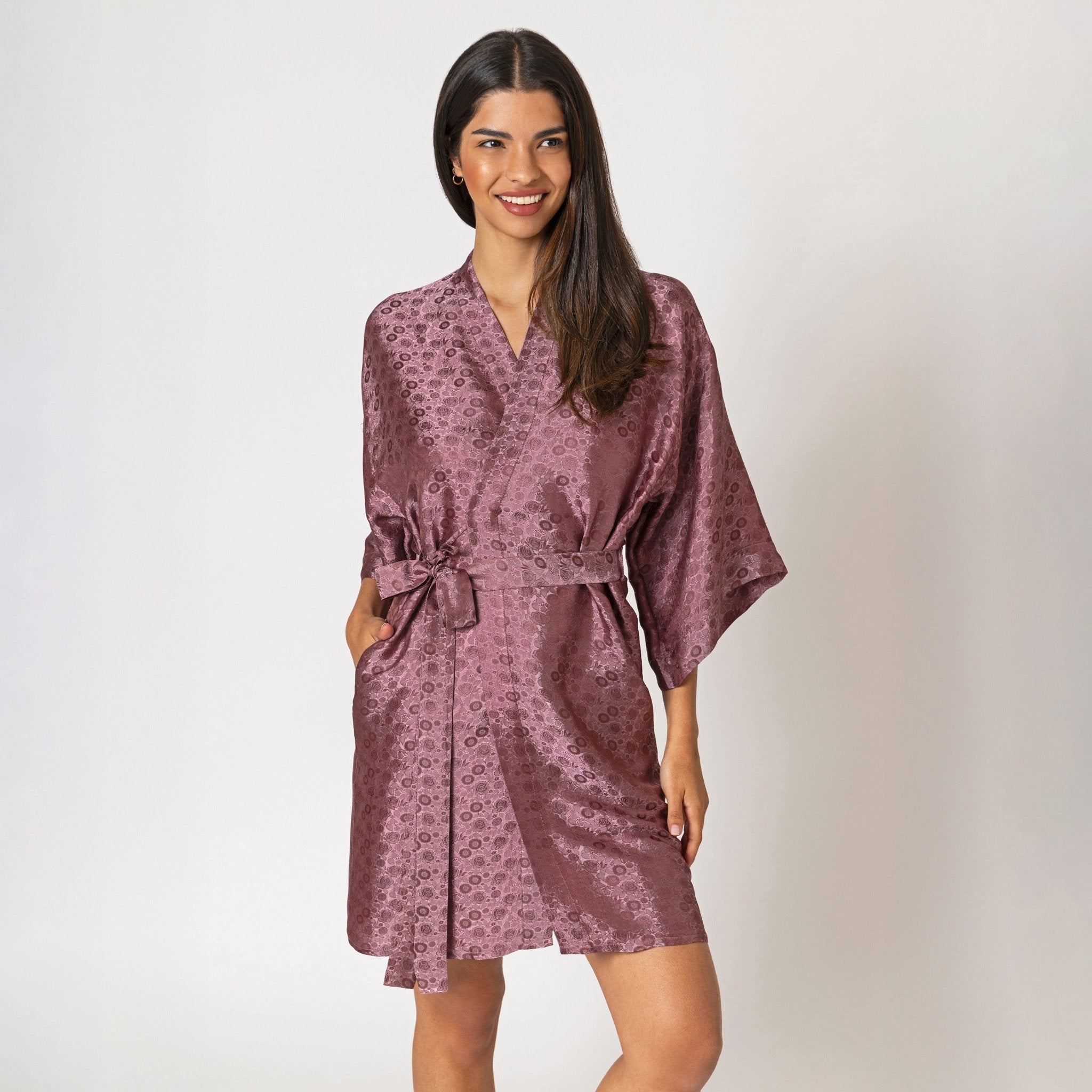
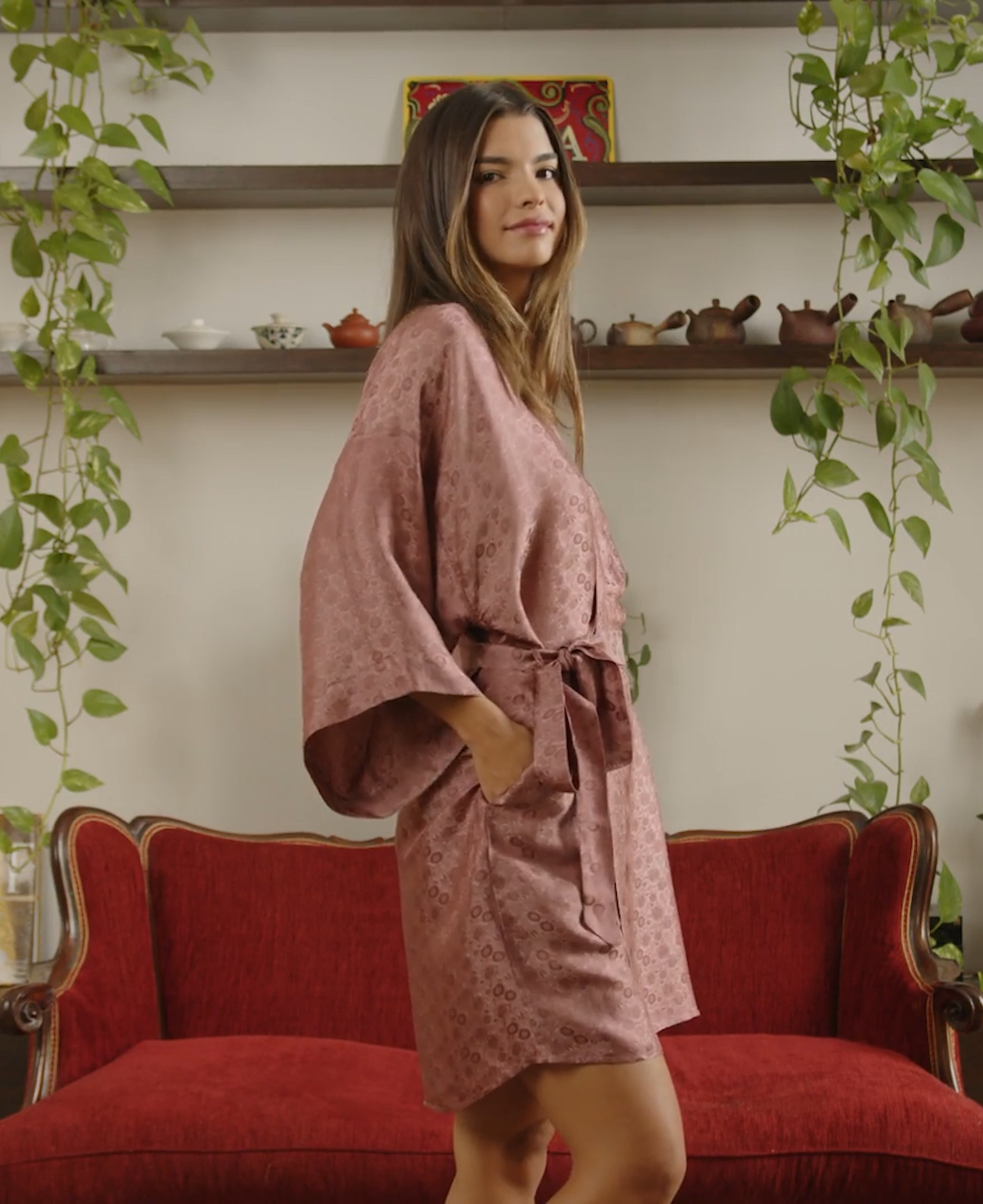
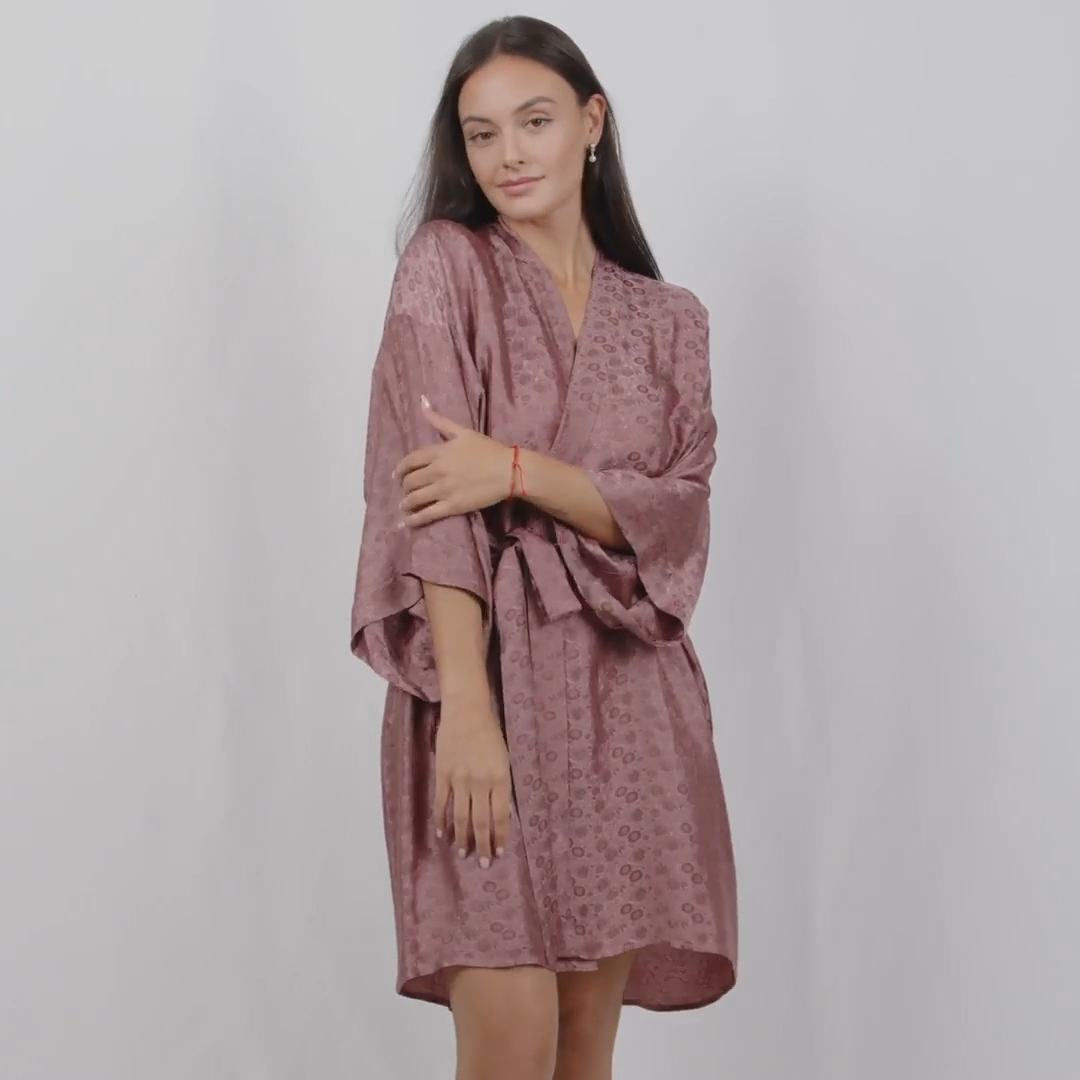
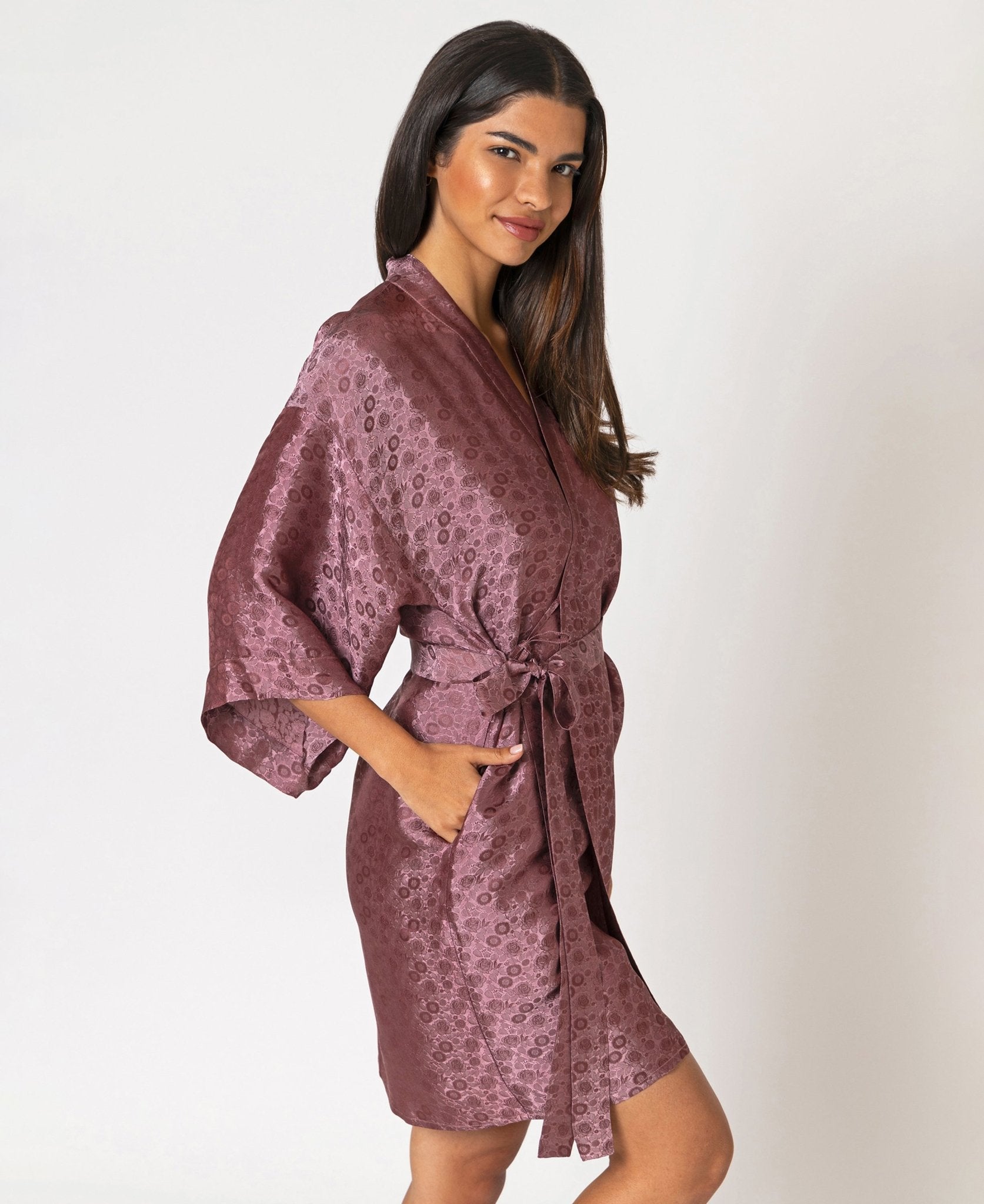
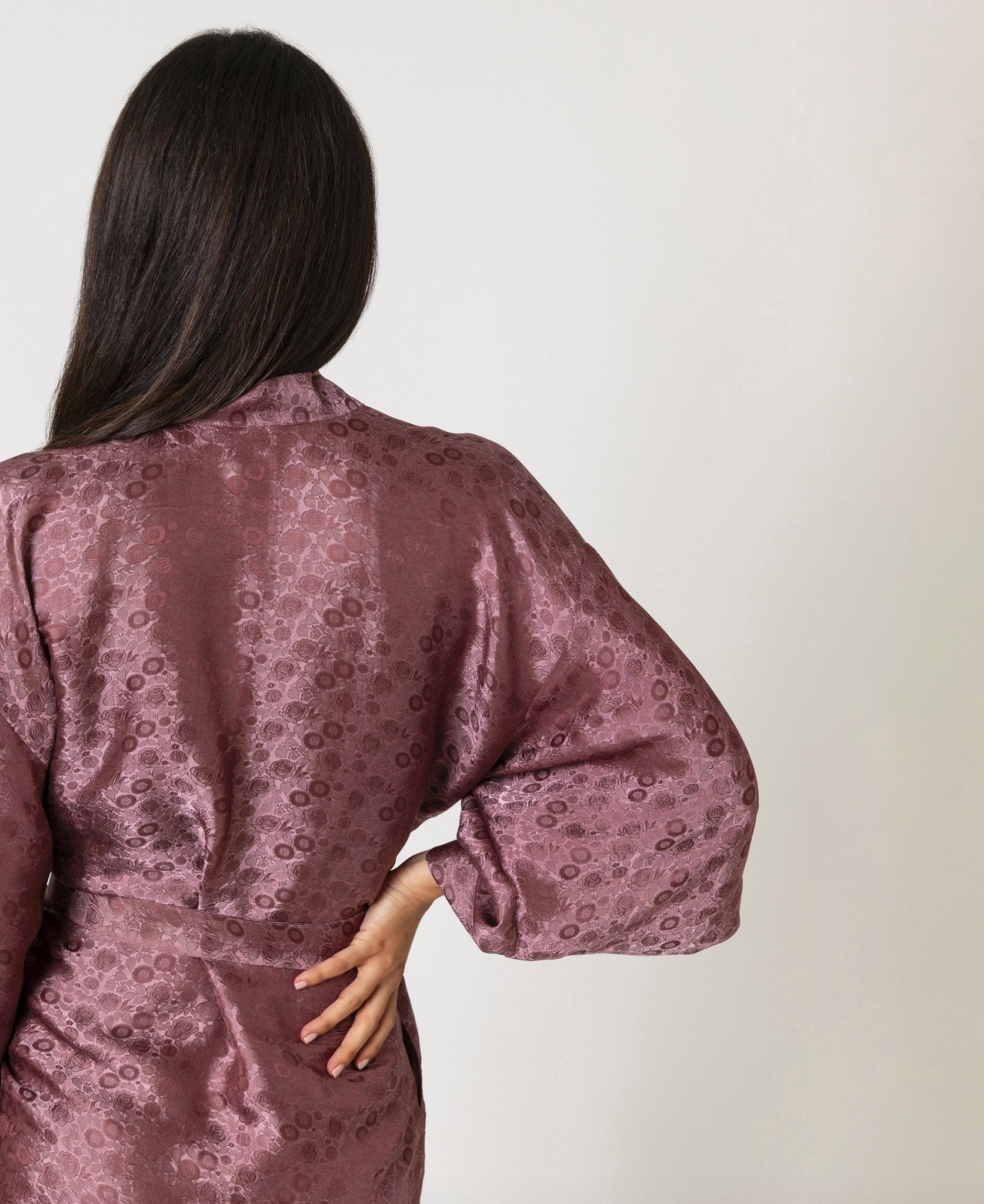
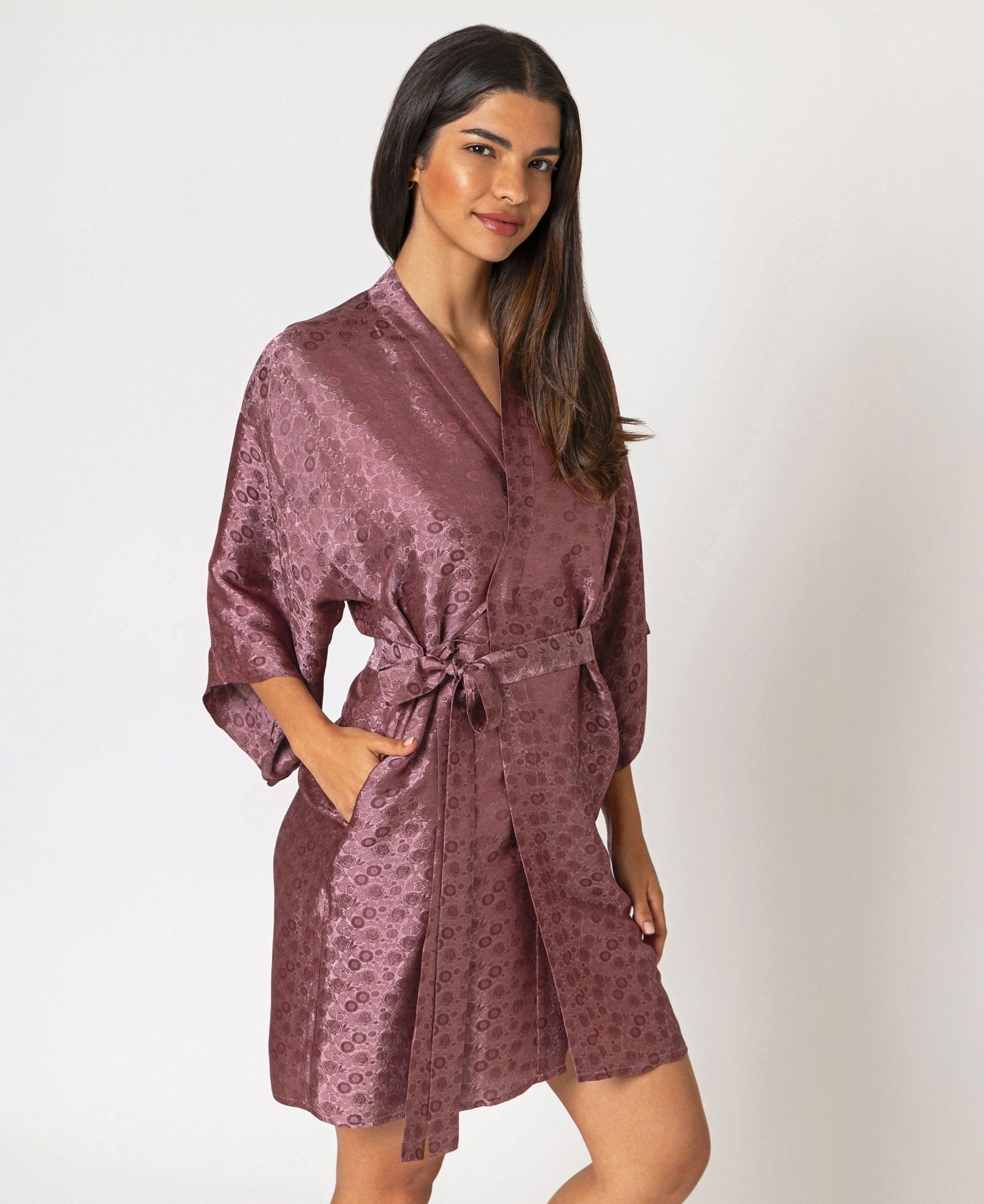
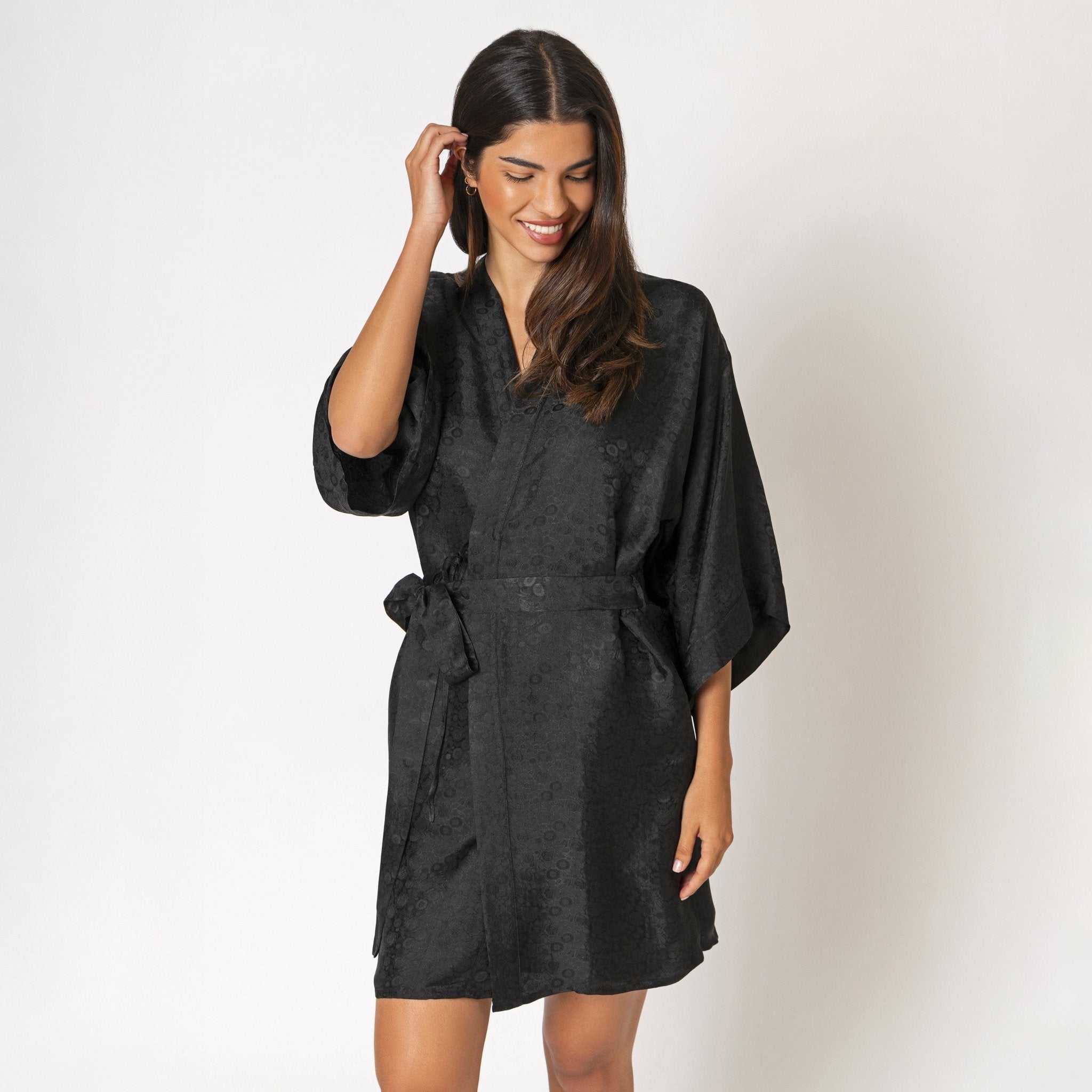
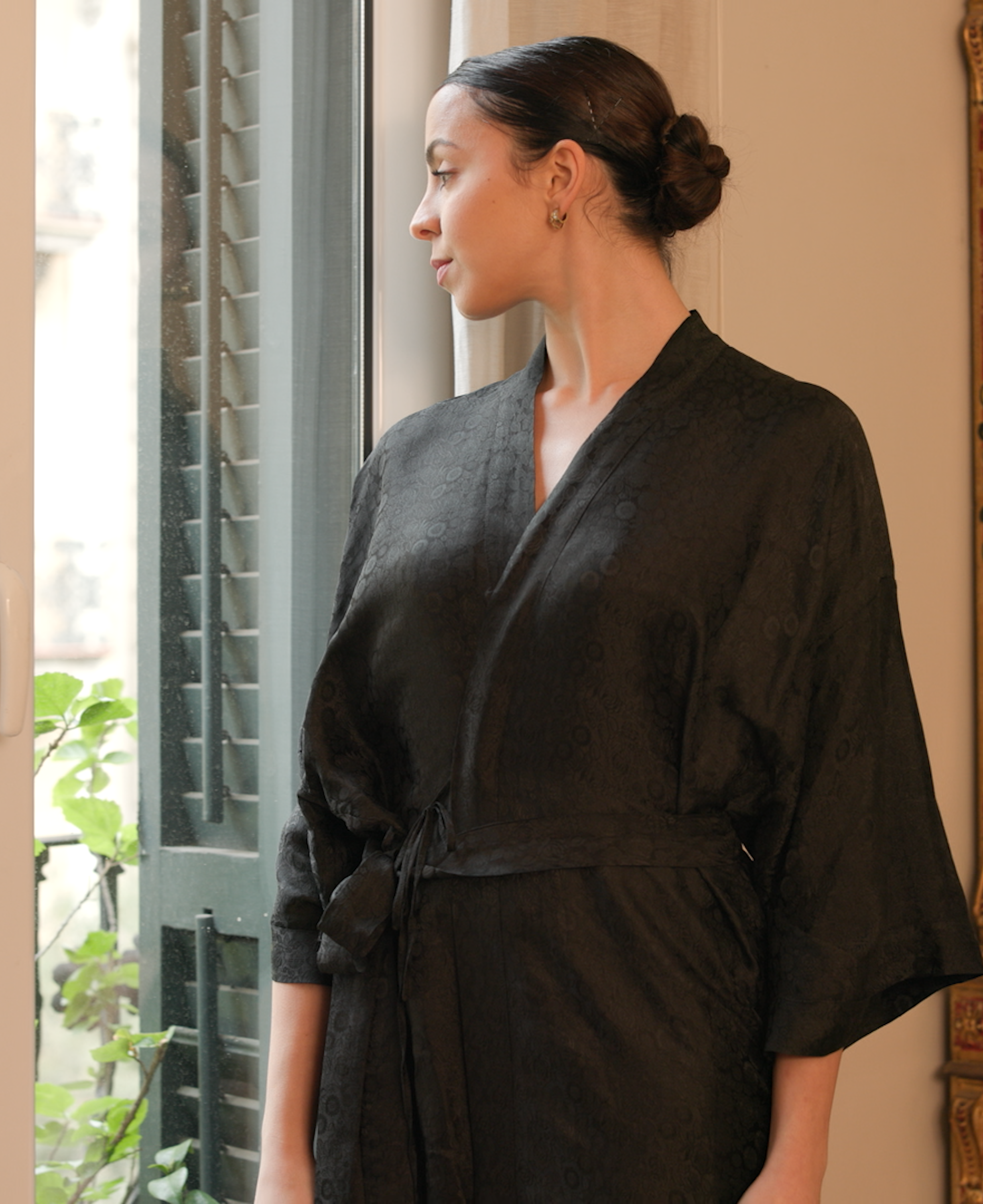
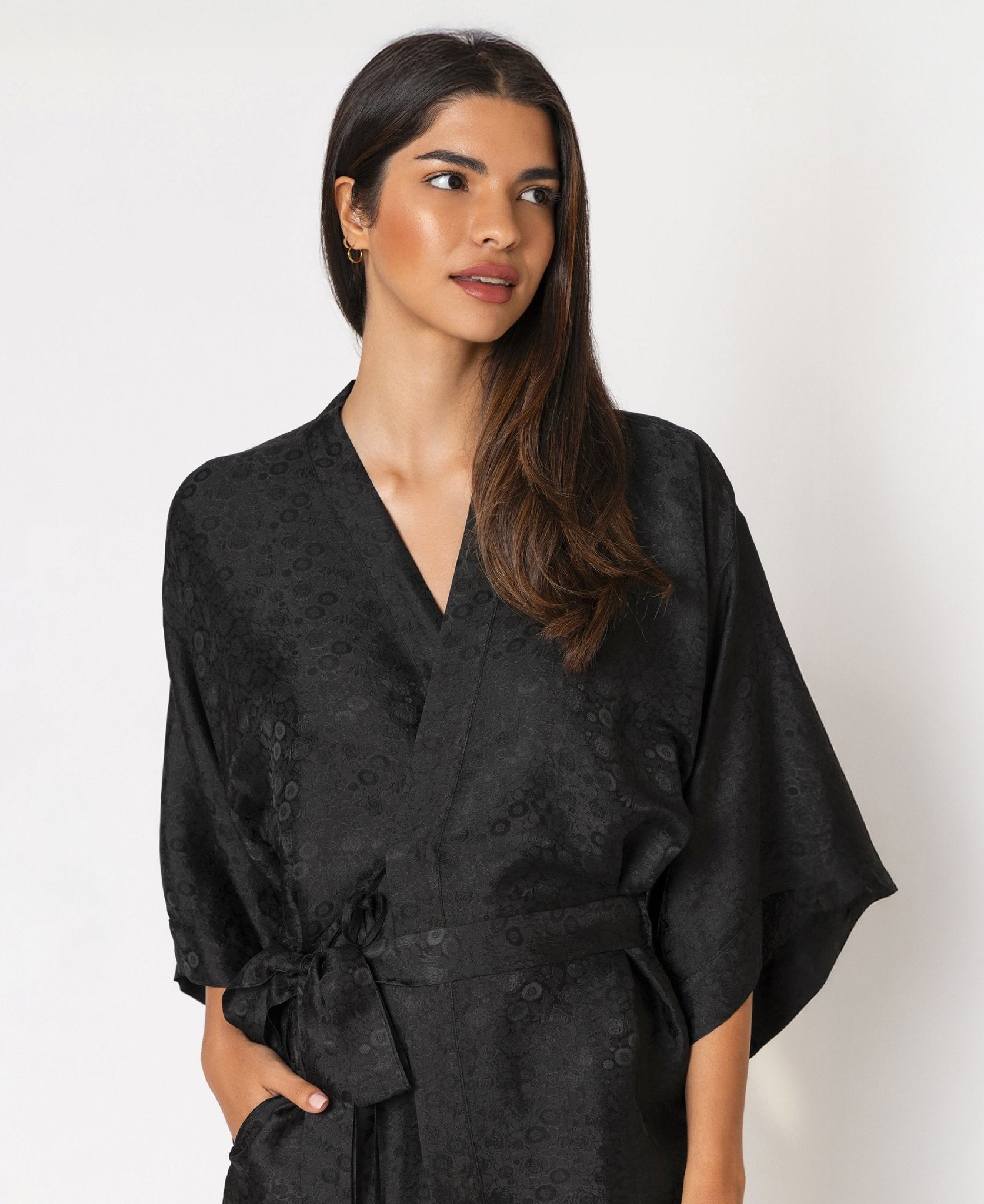
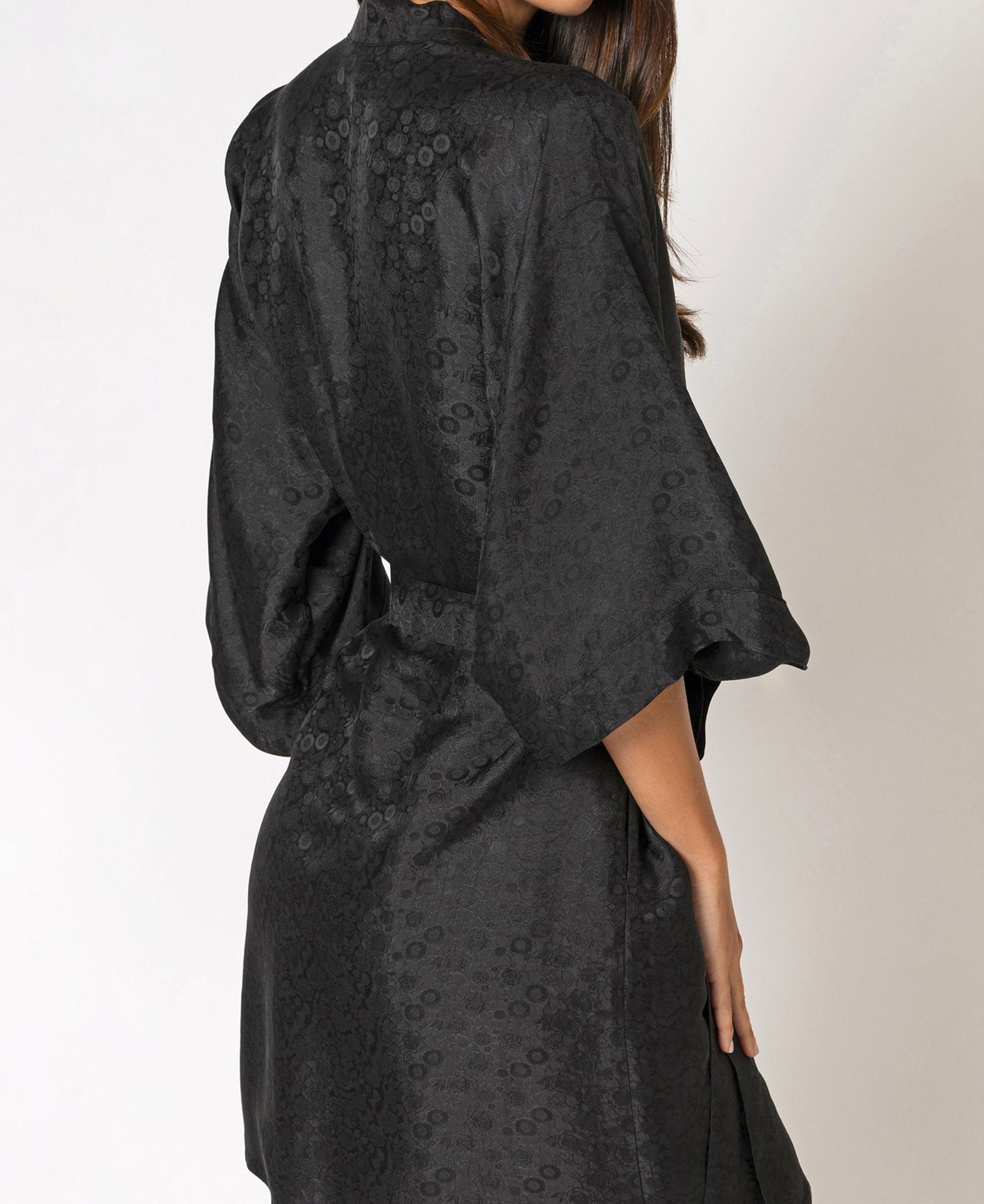
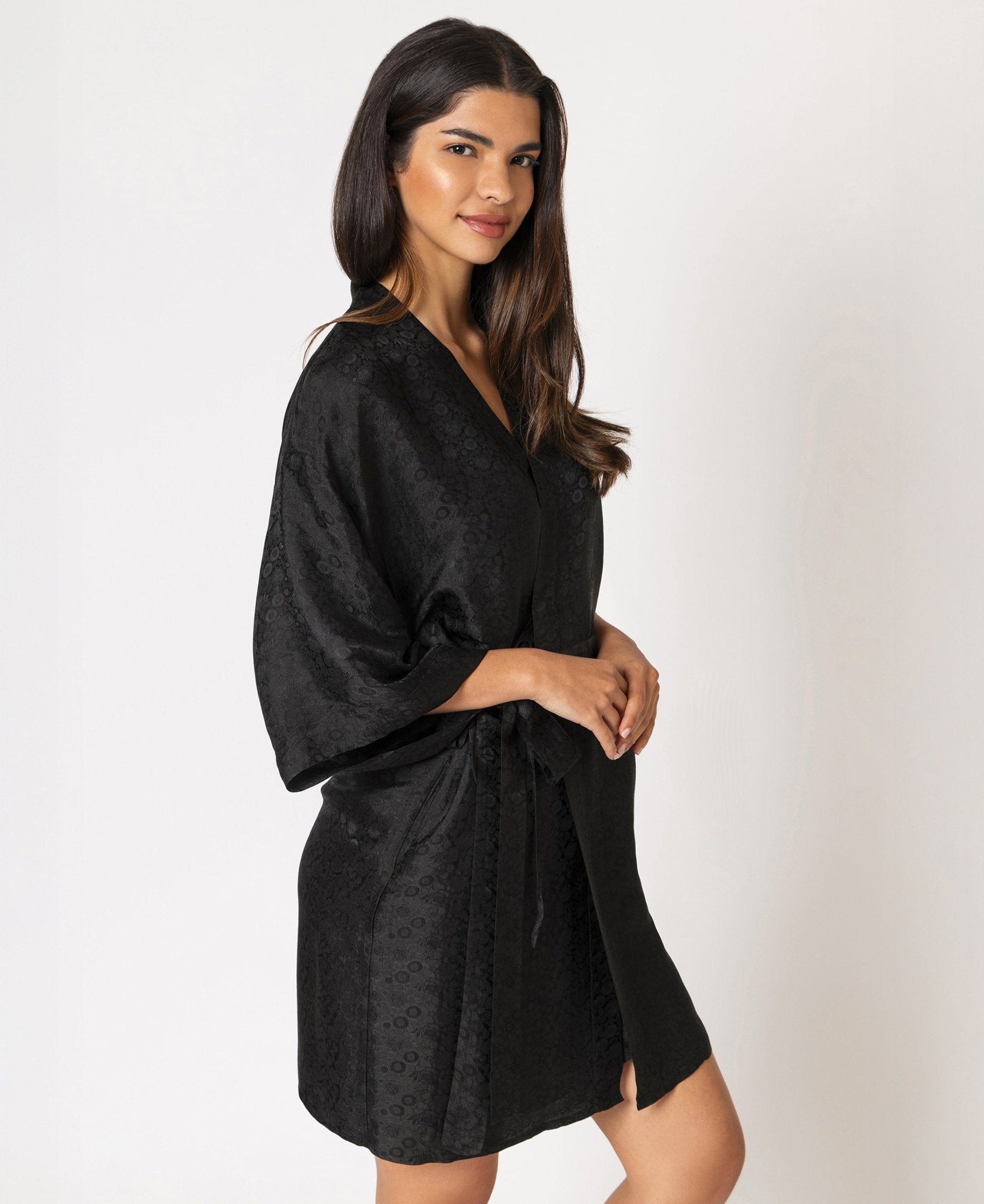
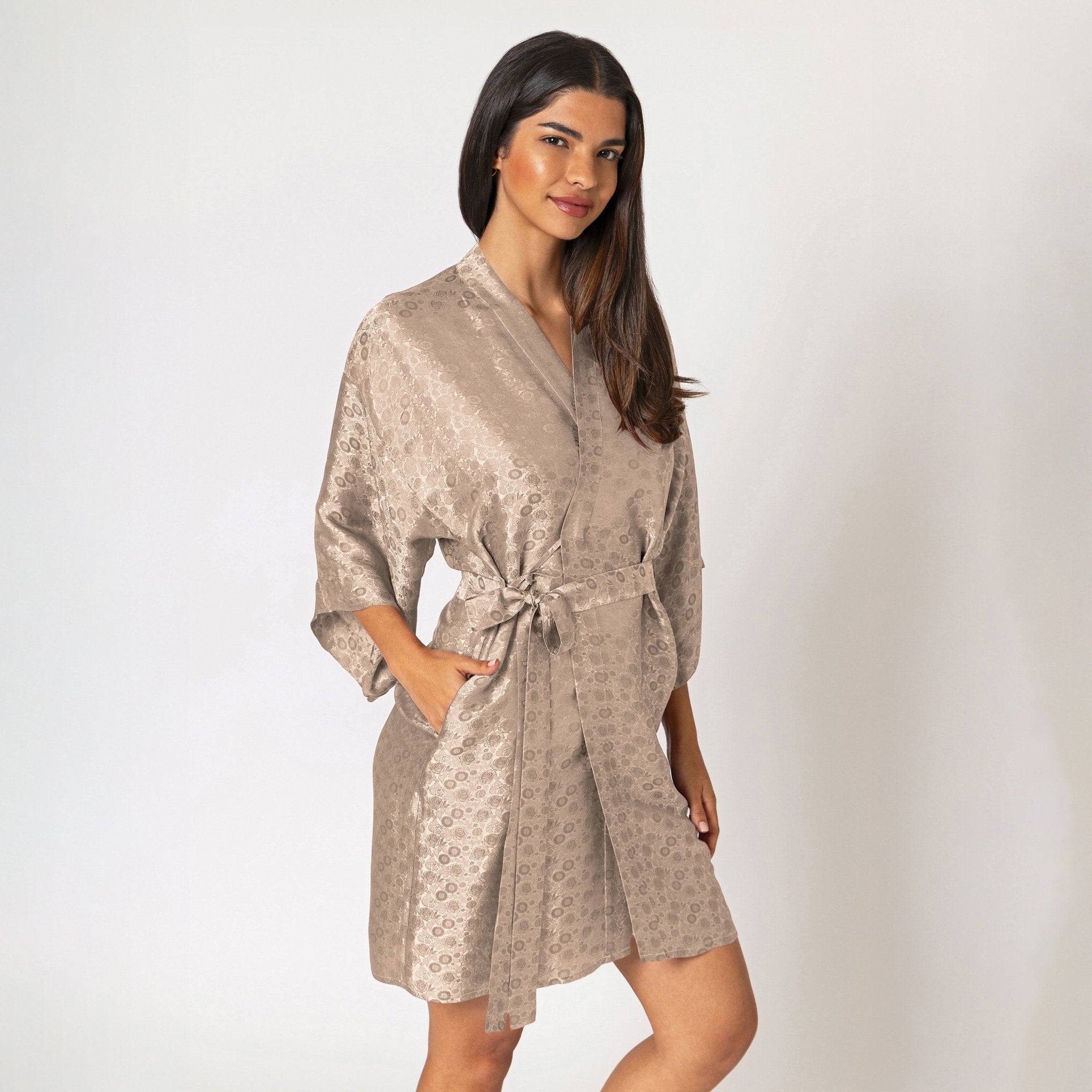
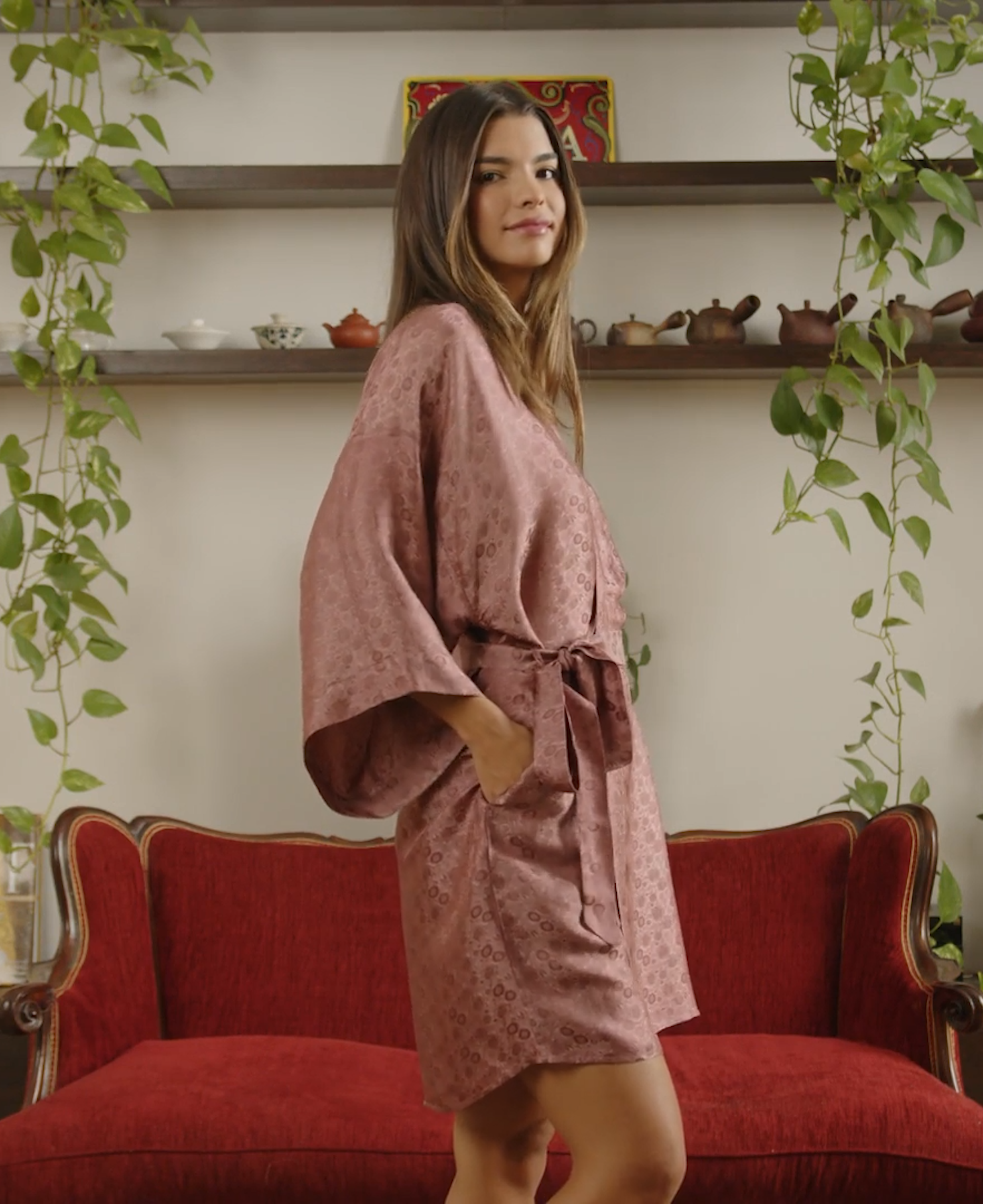
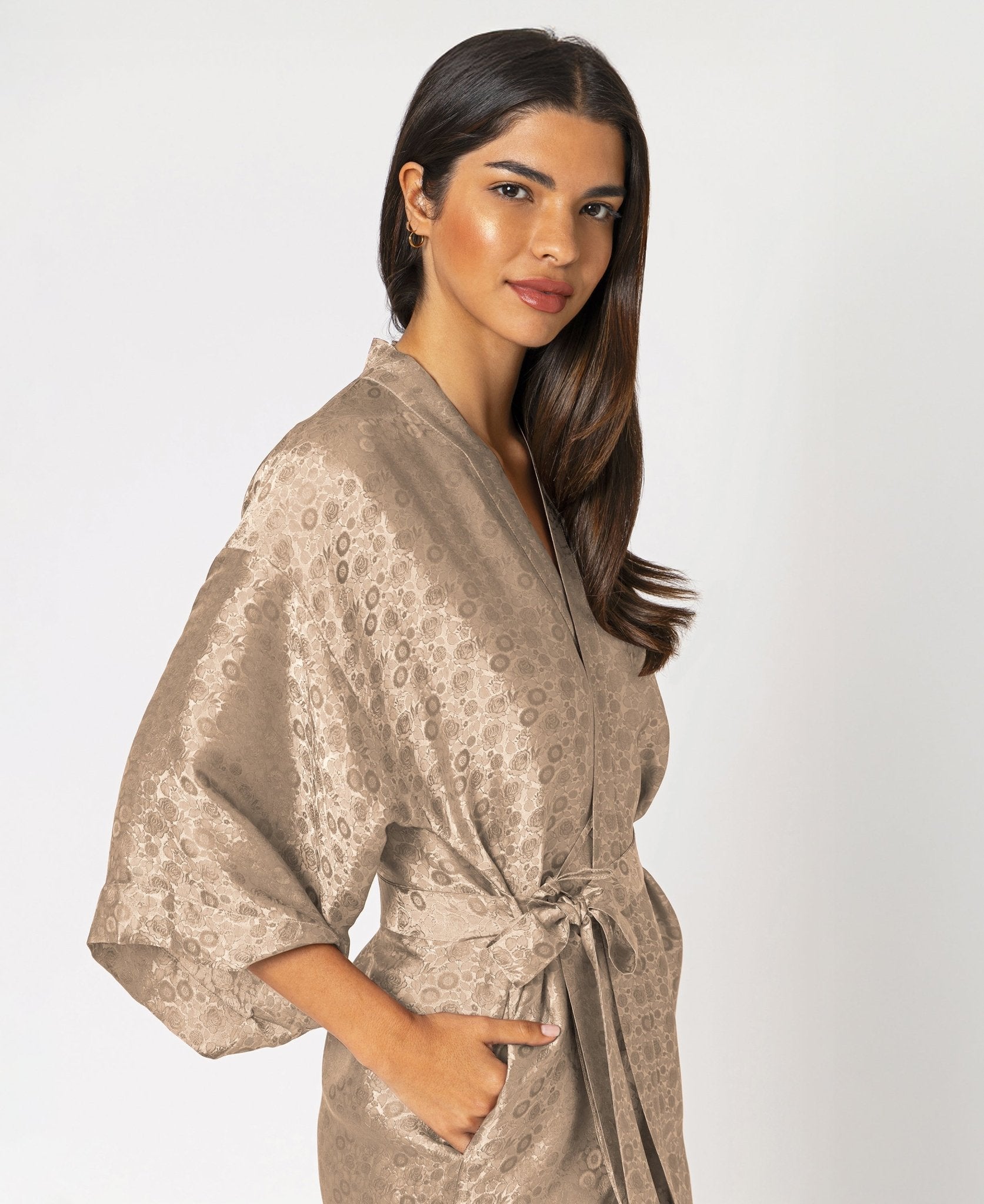
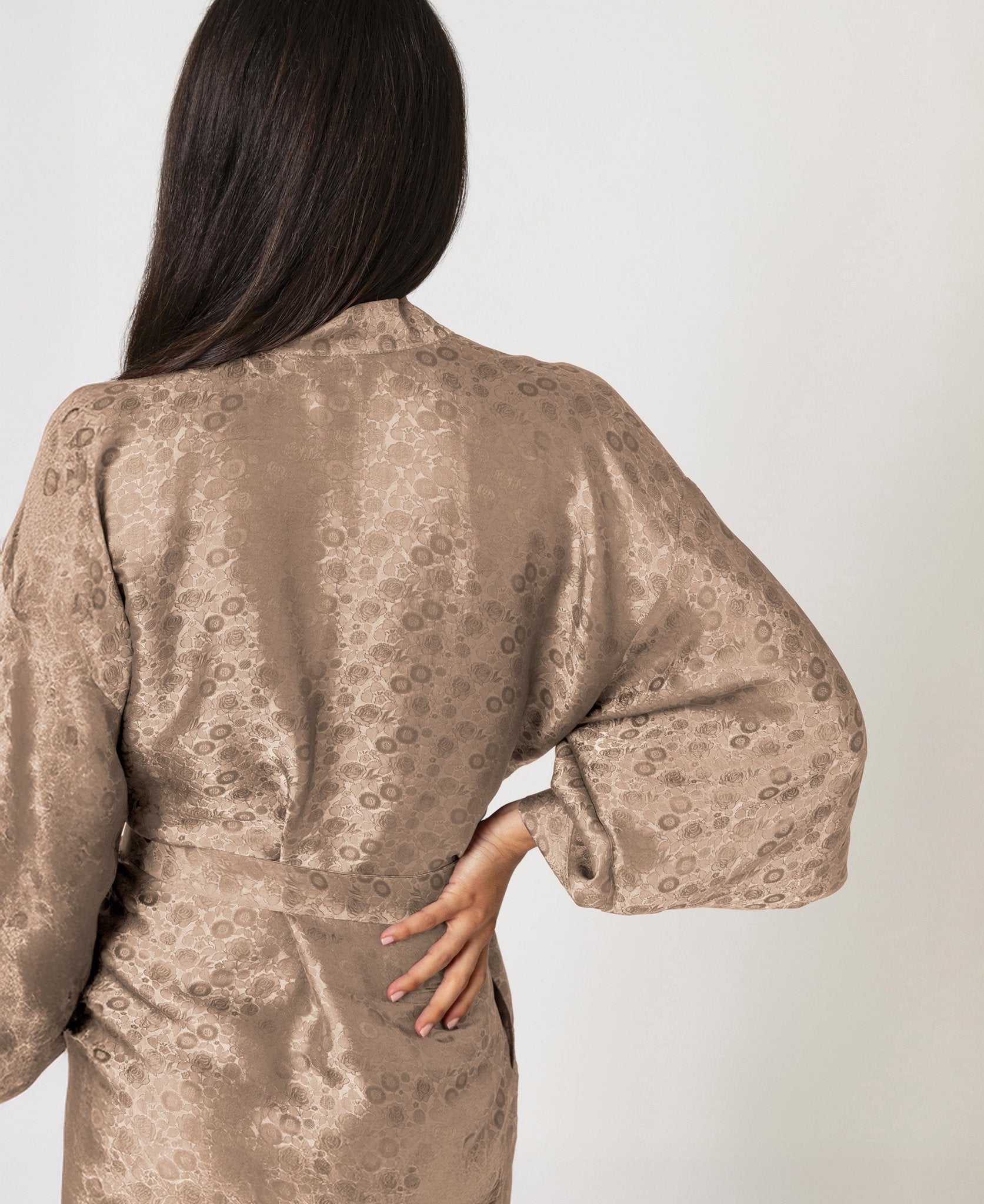
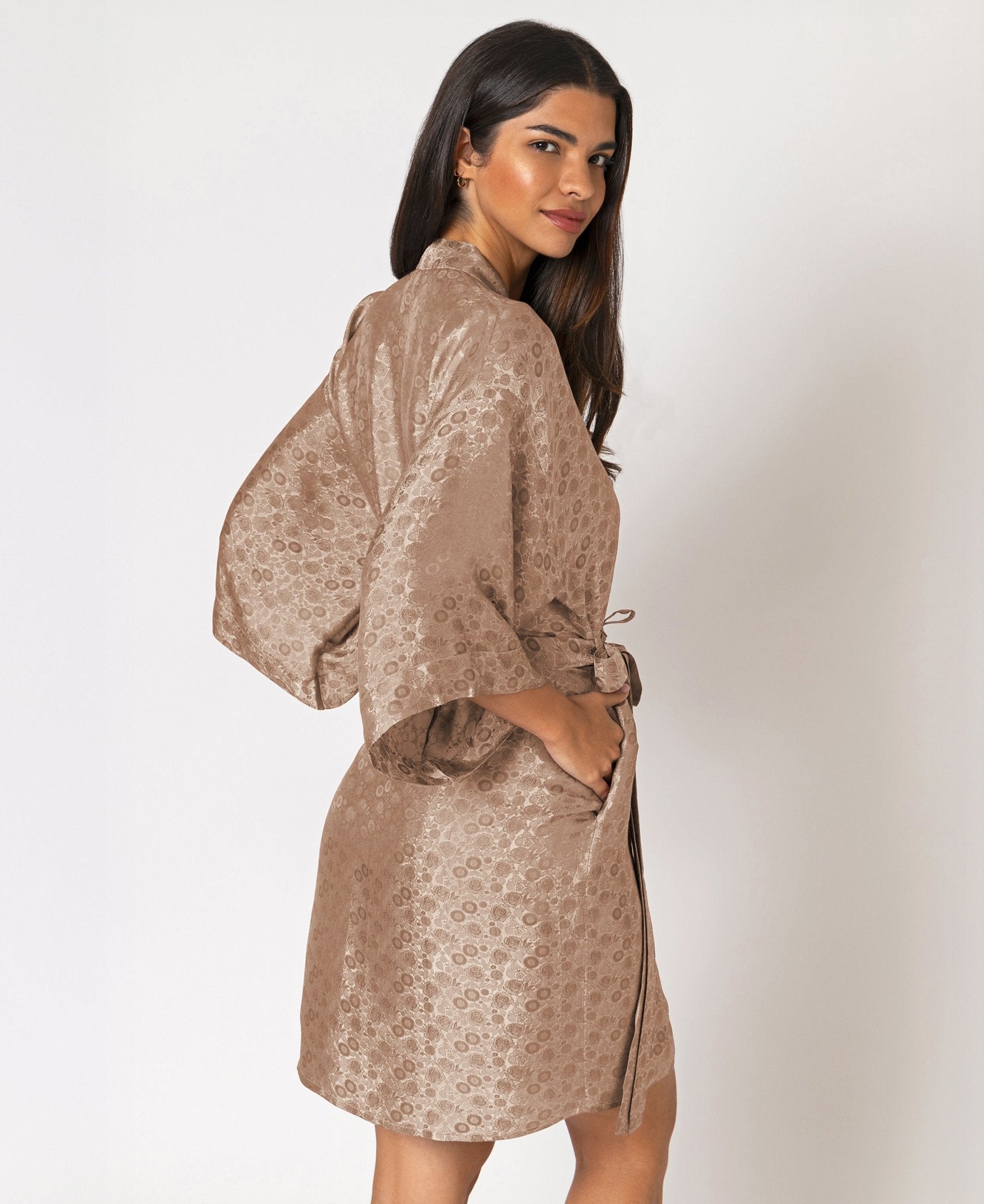
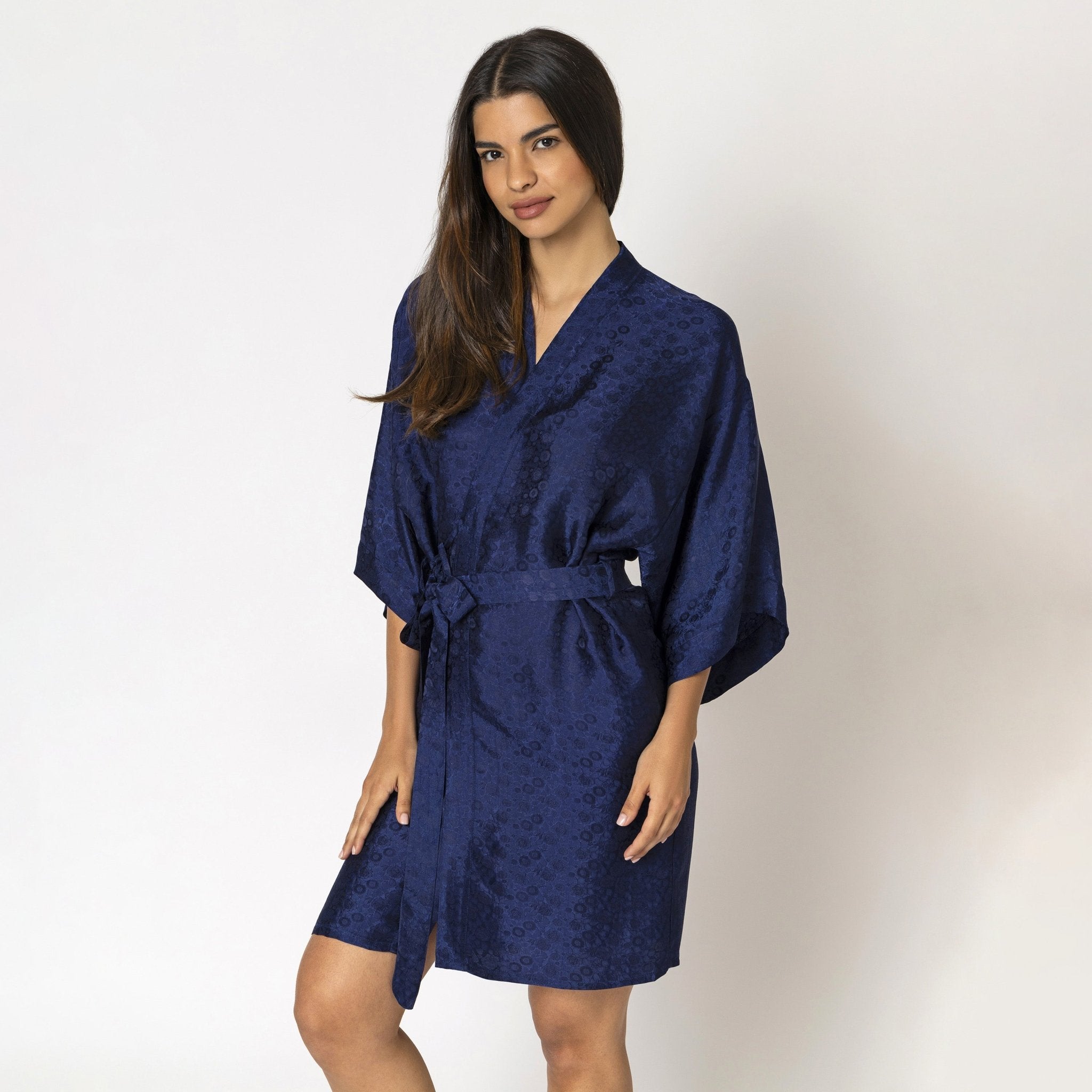
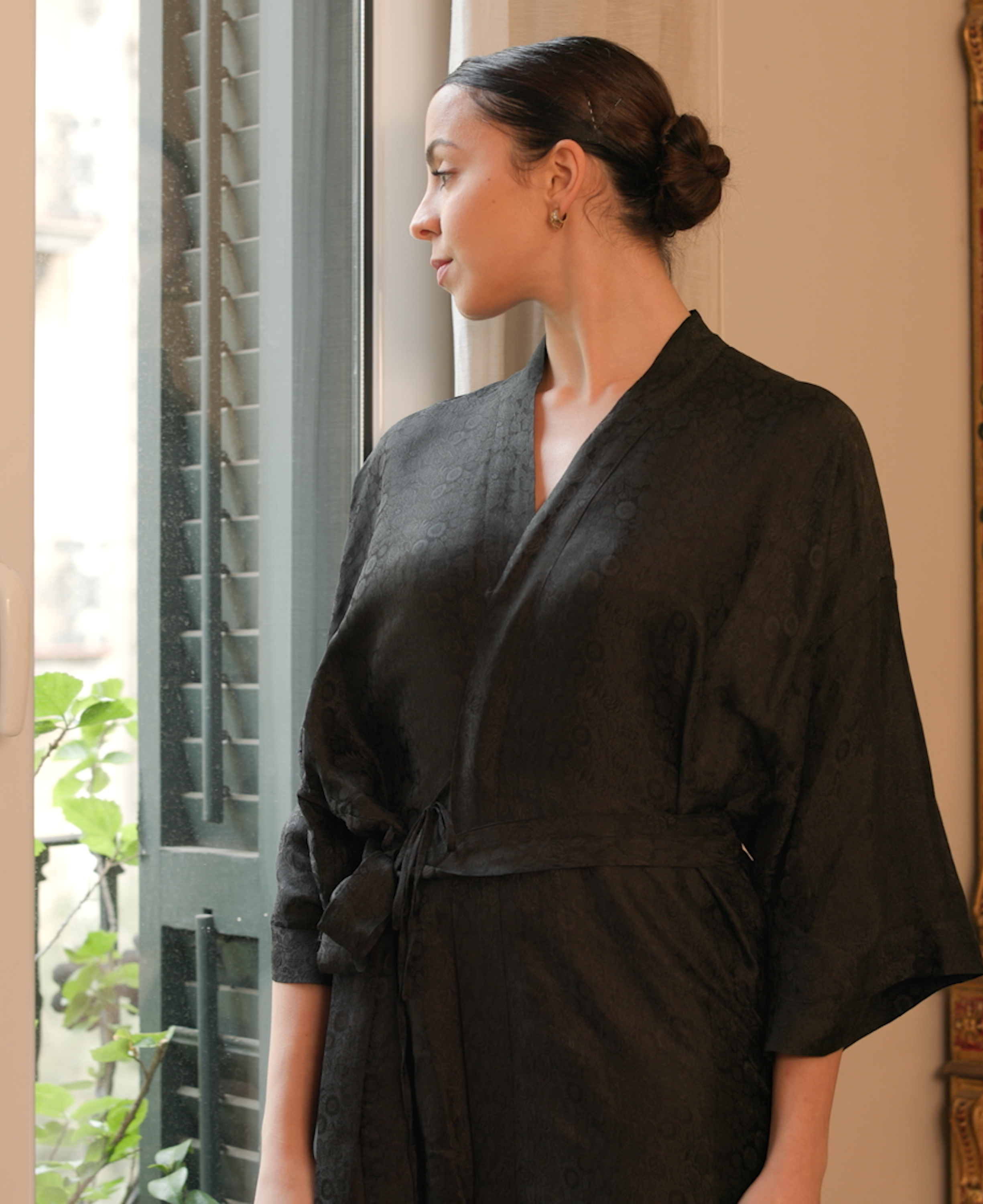
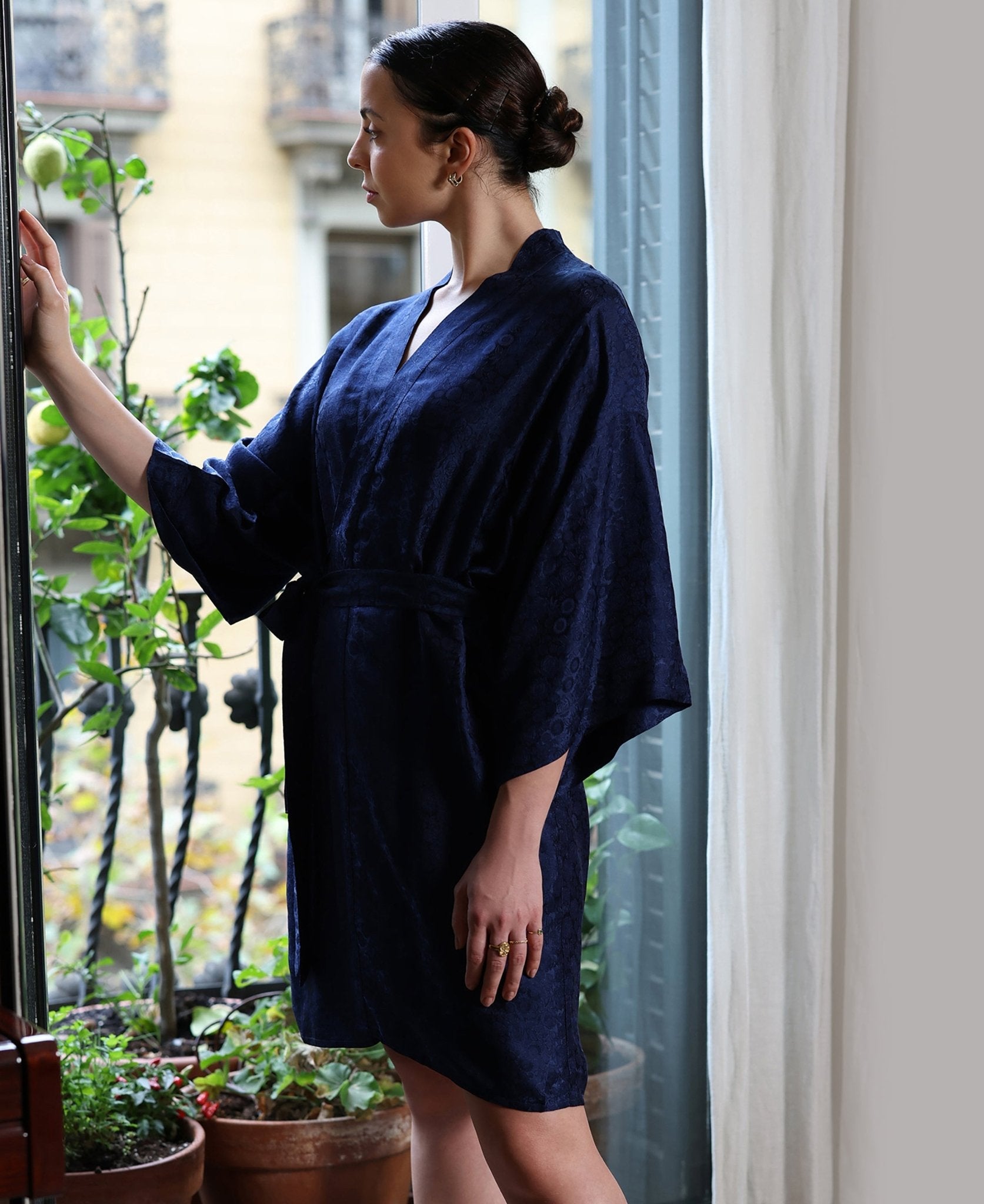
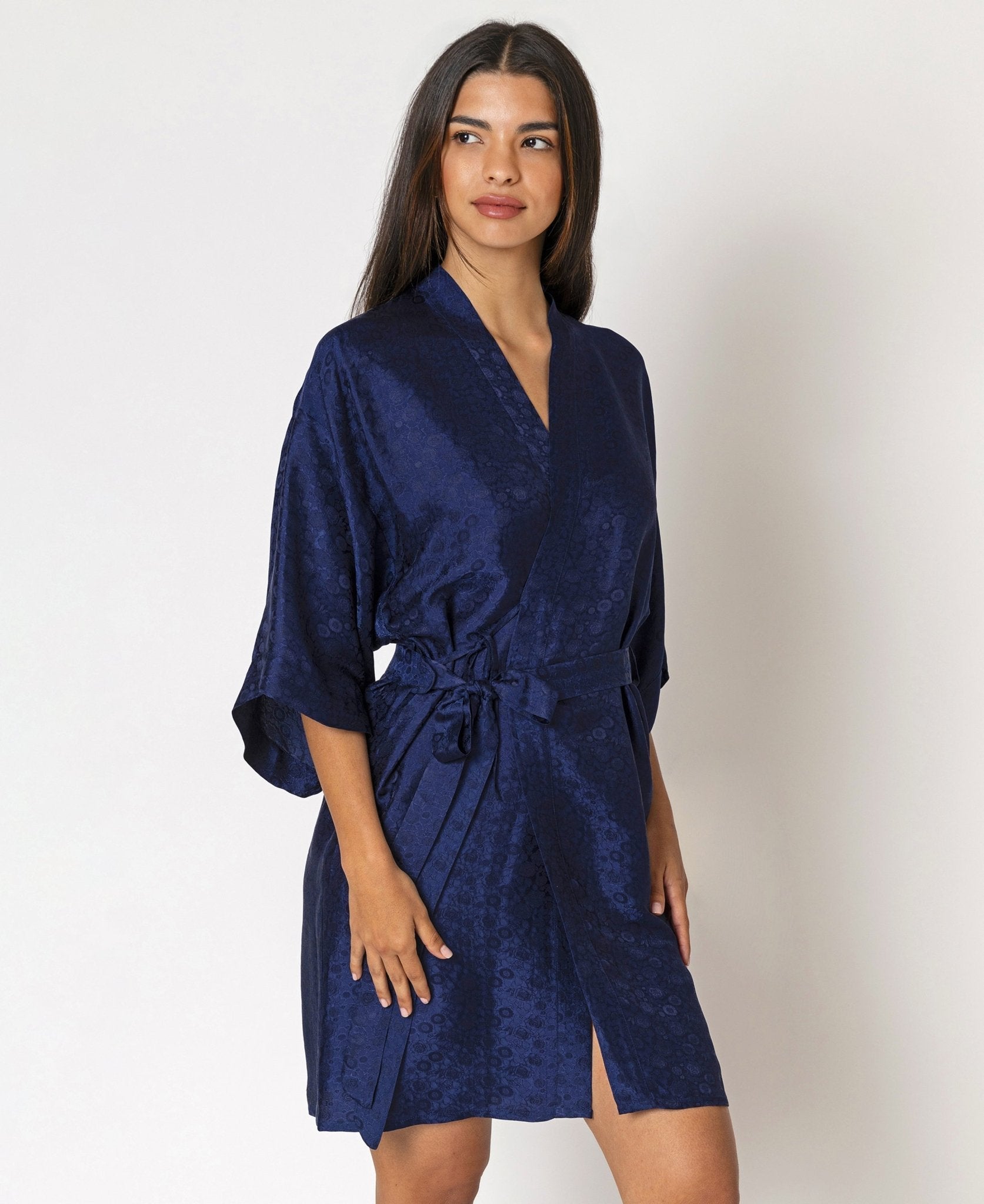
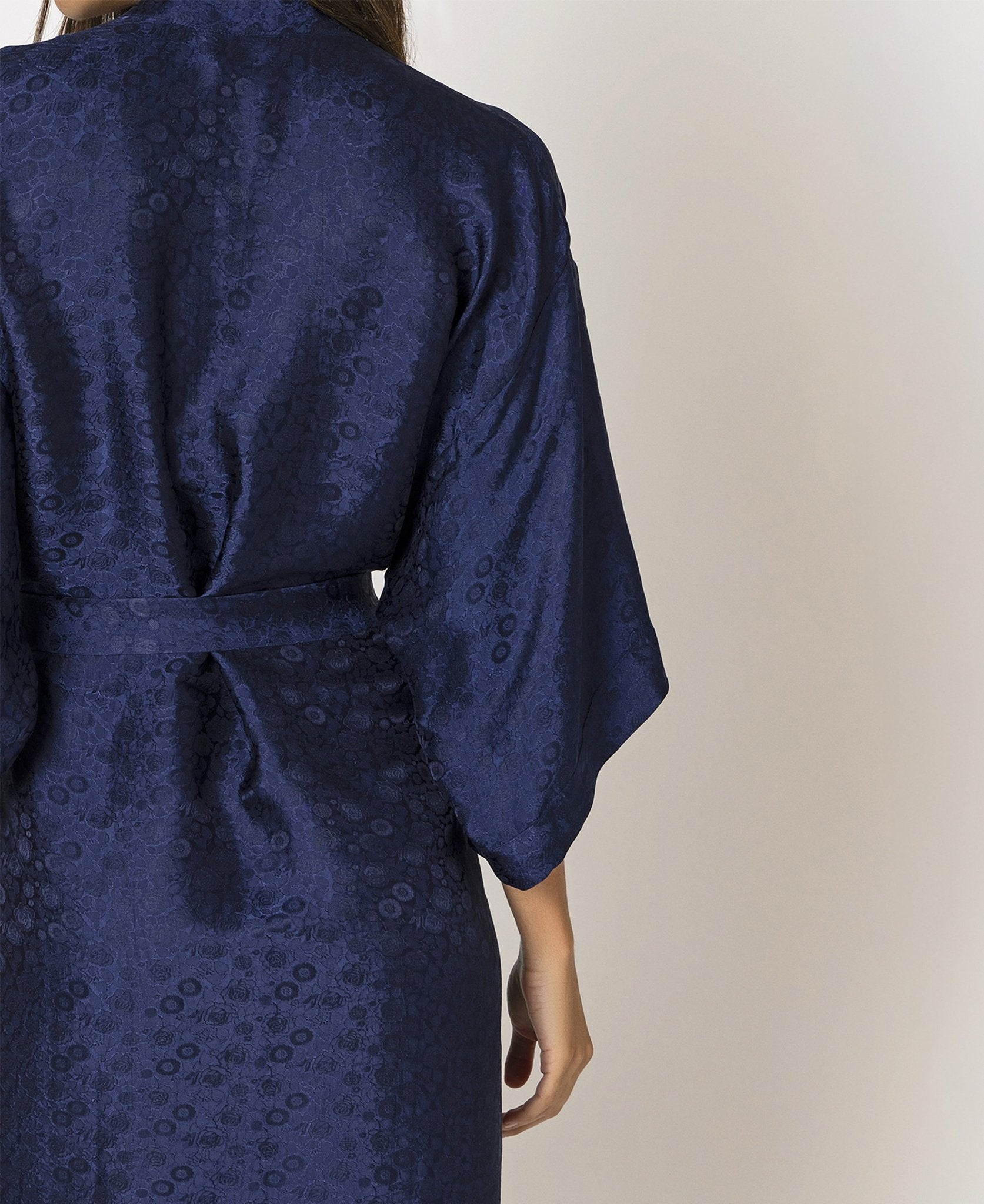
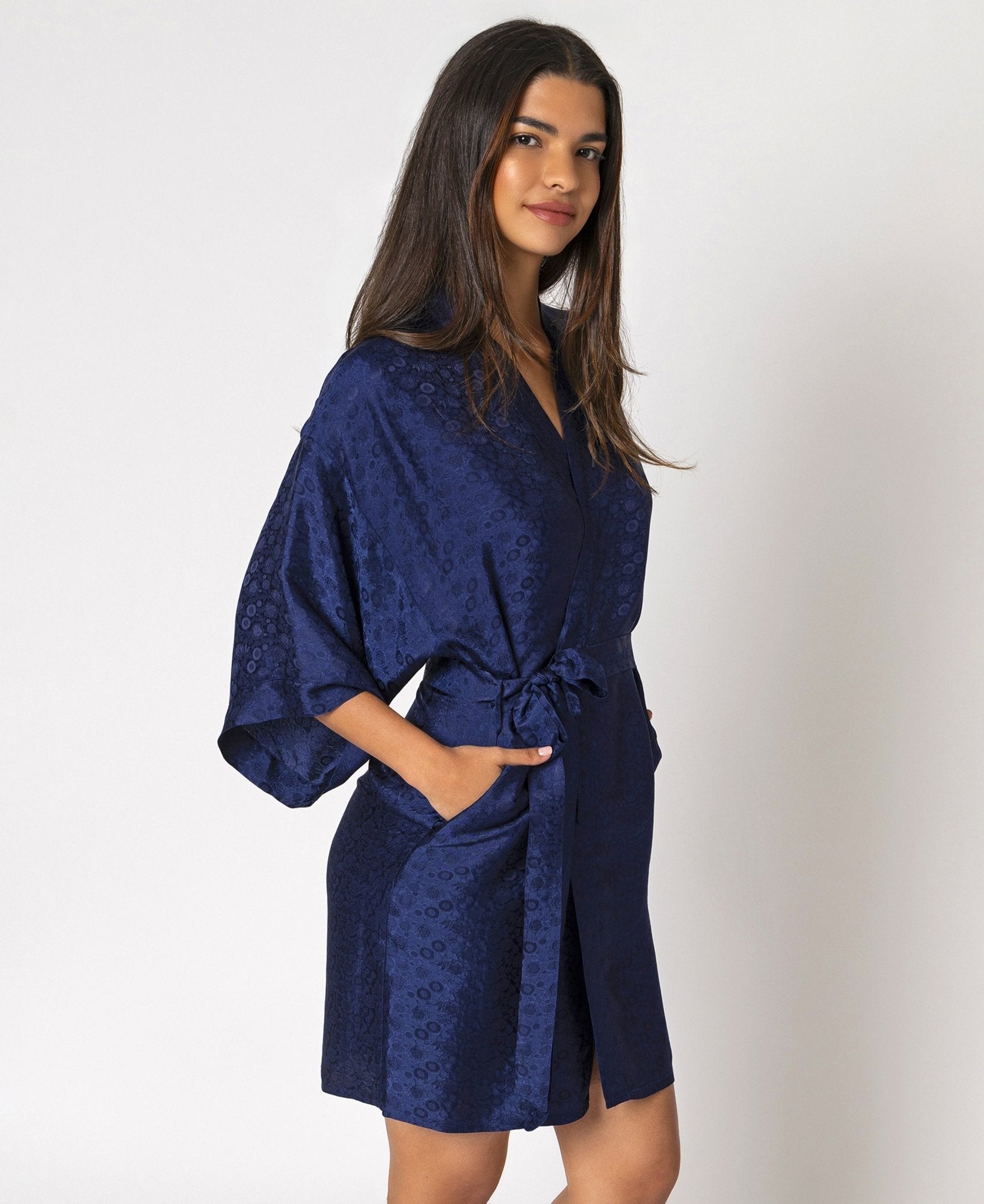
The kimono robe has a wider shoulder, an arm opening that is closer to a wing than a sleeve, and a straighter body that falls from the shoulder without much waist definition. The drape is more architectural. The fabric moves around the body rather than along it. The robe reads as garment, not loungewear. The kimono can be worn over silk pajamas without looking like you are still in your robe, which is the practical detail that separates it from the classic.
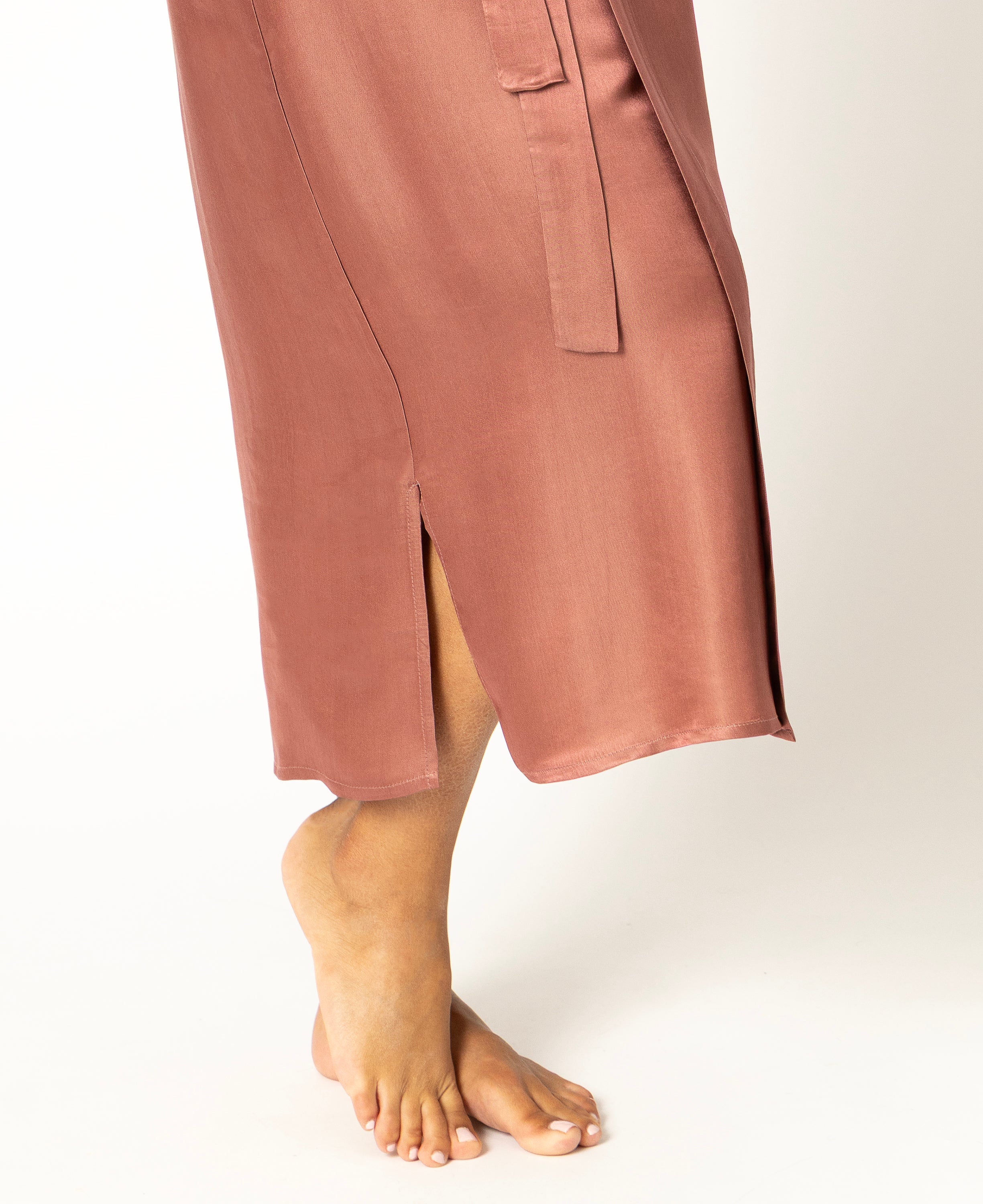
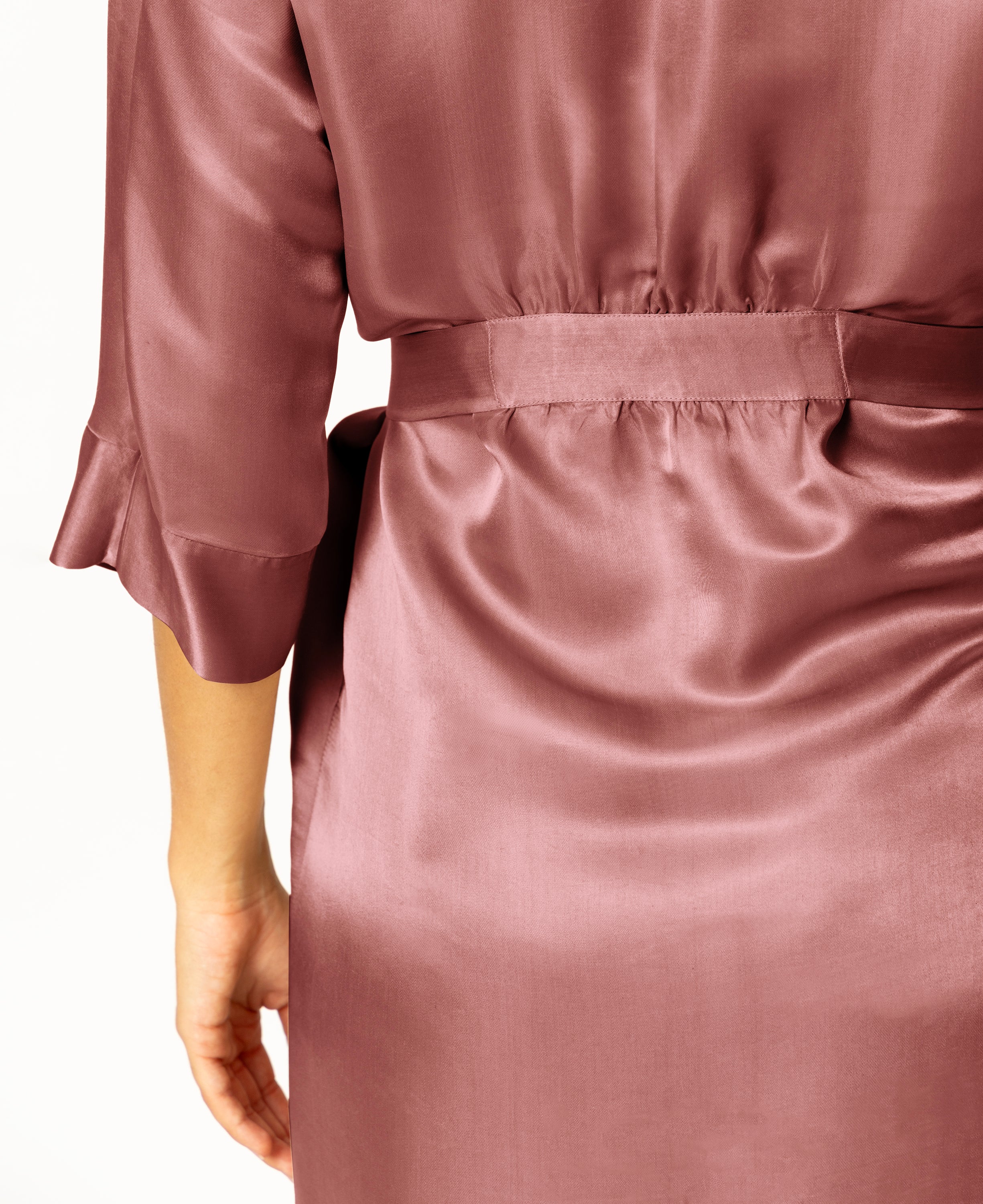
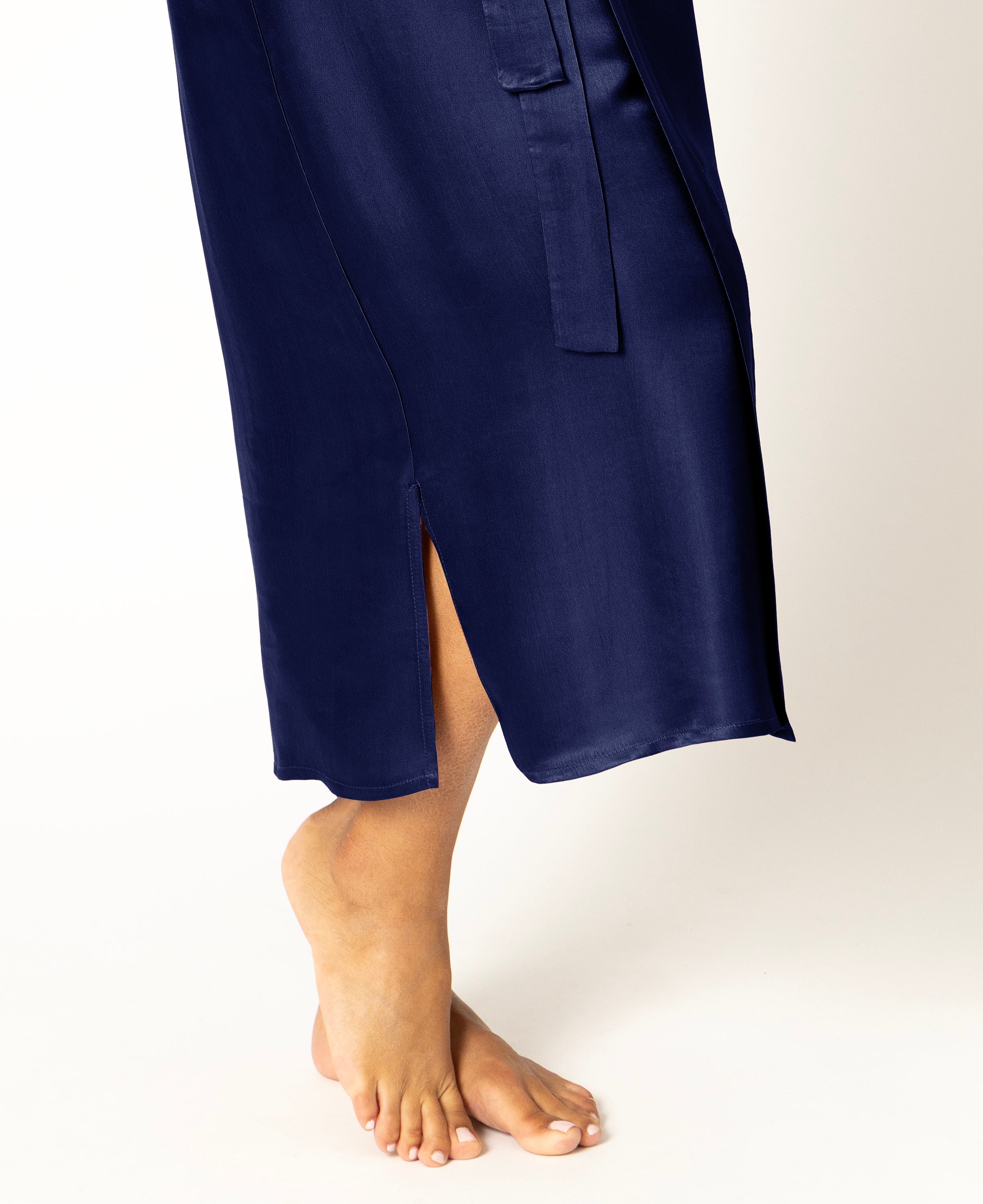
The construction is identical in both. Same 27 momme mulberry silk, same French seams, same heritage looms in Vietnam's historic silk villages. The cut is the only variable. The kimono uses slightly more fabric per garment, which is why it sometimes runs slightly higher in price.
Which One Feels More Like a Garment
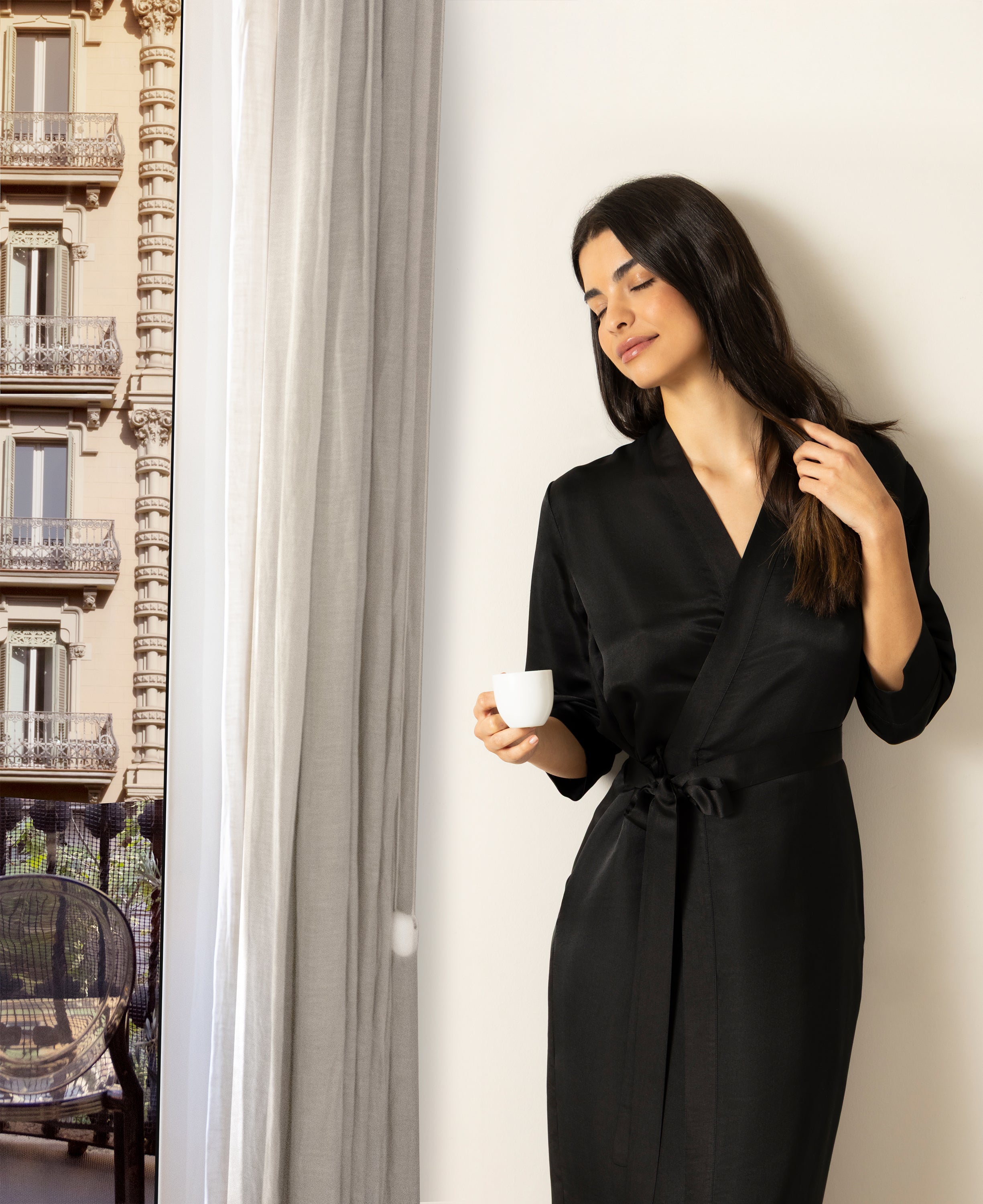
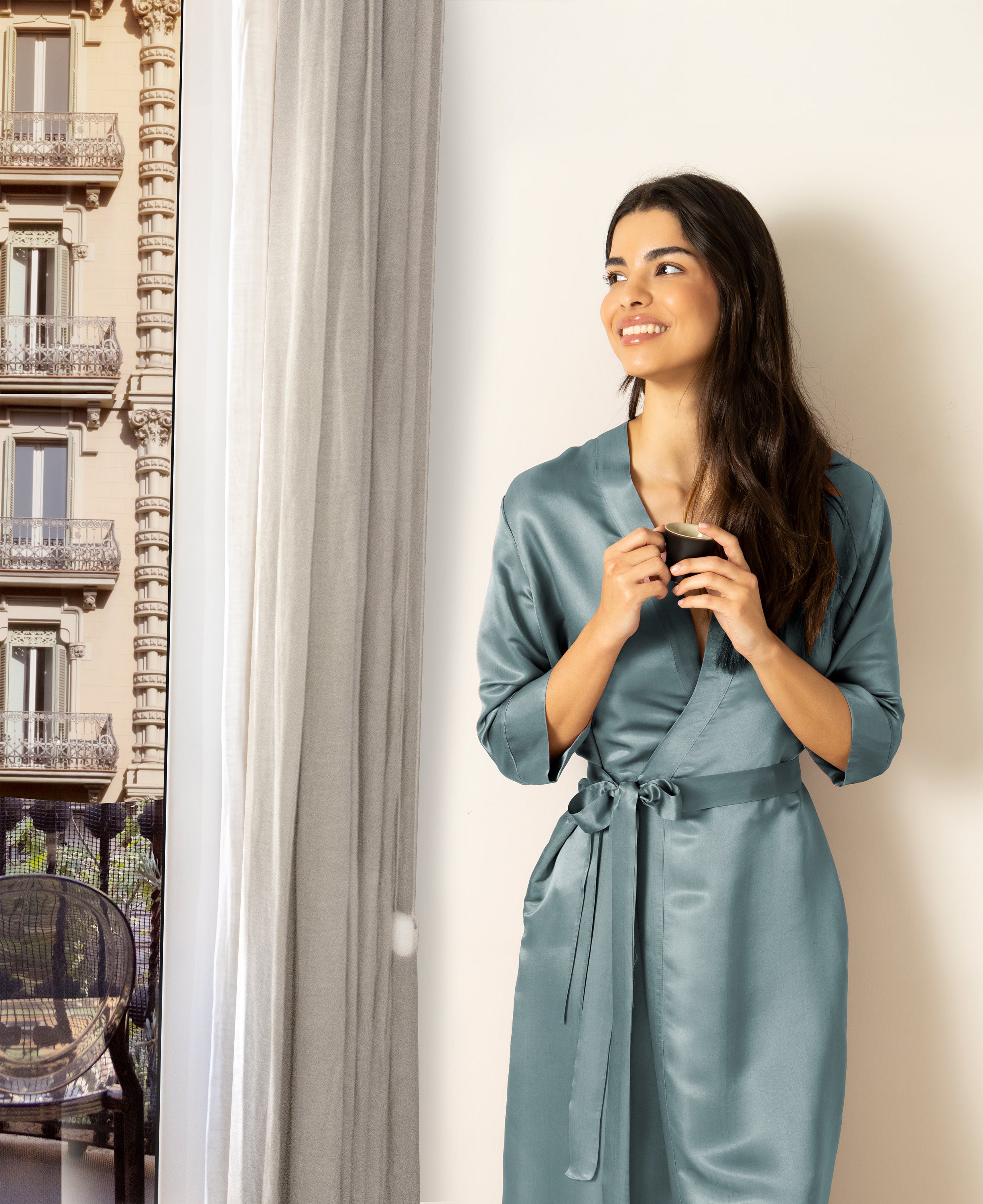
The kimono. This is the practical reason most customers who own both reach for it more often as the weeks go on. A classic silk robe is wonderful private clothing. A kimono robe is also a clothing item in the public sense, in the way a beautiful cardigan or a long open coat is a clothing item. You can wear the kimono with silk pajamas underneath and answer the door without feeling exposed. You cannot quite do this with the classic robe.
The kimono is also the better summer piece for women who do not wear bras at home in the warmer months. The looser cut at the chest and arms is more forgiving. The classic robe, with its closer cut, can feel like it is reading the body more closely than you want it to in a hot house.
The classic robe wins on the colder mornings. The fitted shoulder line holds the silk against the upper body, which traps the body's own warmth more effectively. The kimono, by design, releases warmth at the open shoulders and arms. In winter, the classic robe is the warmer piece even though both robes are the same fabric.





A Direct Comparison
| Quality | Classic Silk Robe | Kimono Silk Robe |
|---|---|---|
| Shoulder cut | Fitted, follows the shoulder line | Wider, more open |
| Sleeve shape | Slim, close to the arm | Wide, almost wing-like |
| Body cut | Lightly waisted | Straight from the shoulder |
| Drape | Falls close to the body | Architectural, moves around the body |
| Best for | Cooler mornings, after-shower | Warmer climates, over pajamas |
| Reads as | Private clothing | Garment |
| First-time silk buyer pick | Yes | Sometimes |
| Second silk piece for existing owners | Less common | Very common |
| Fits range of bodies in a single size | Wide | Even wider |
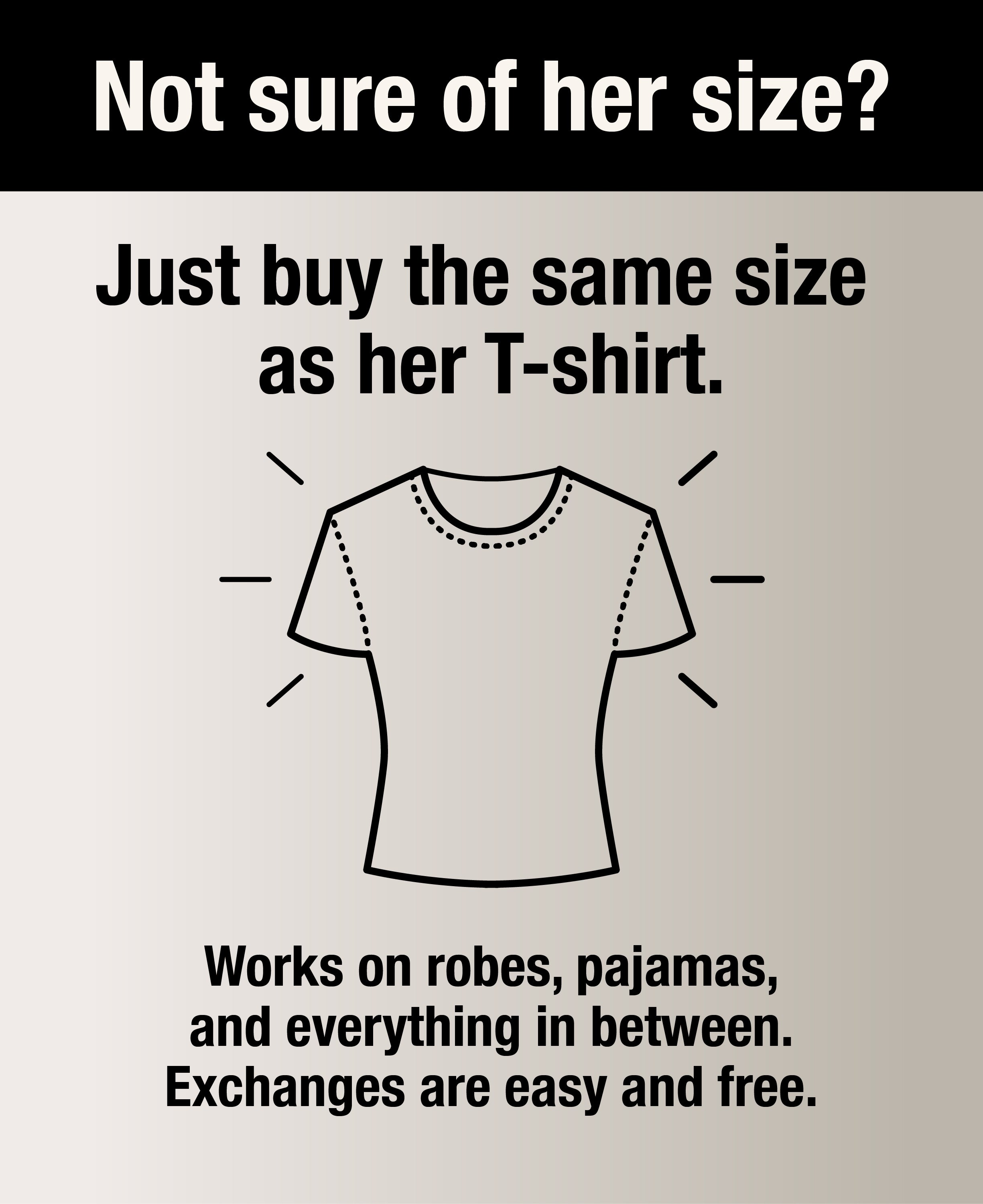
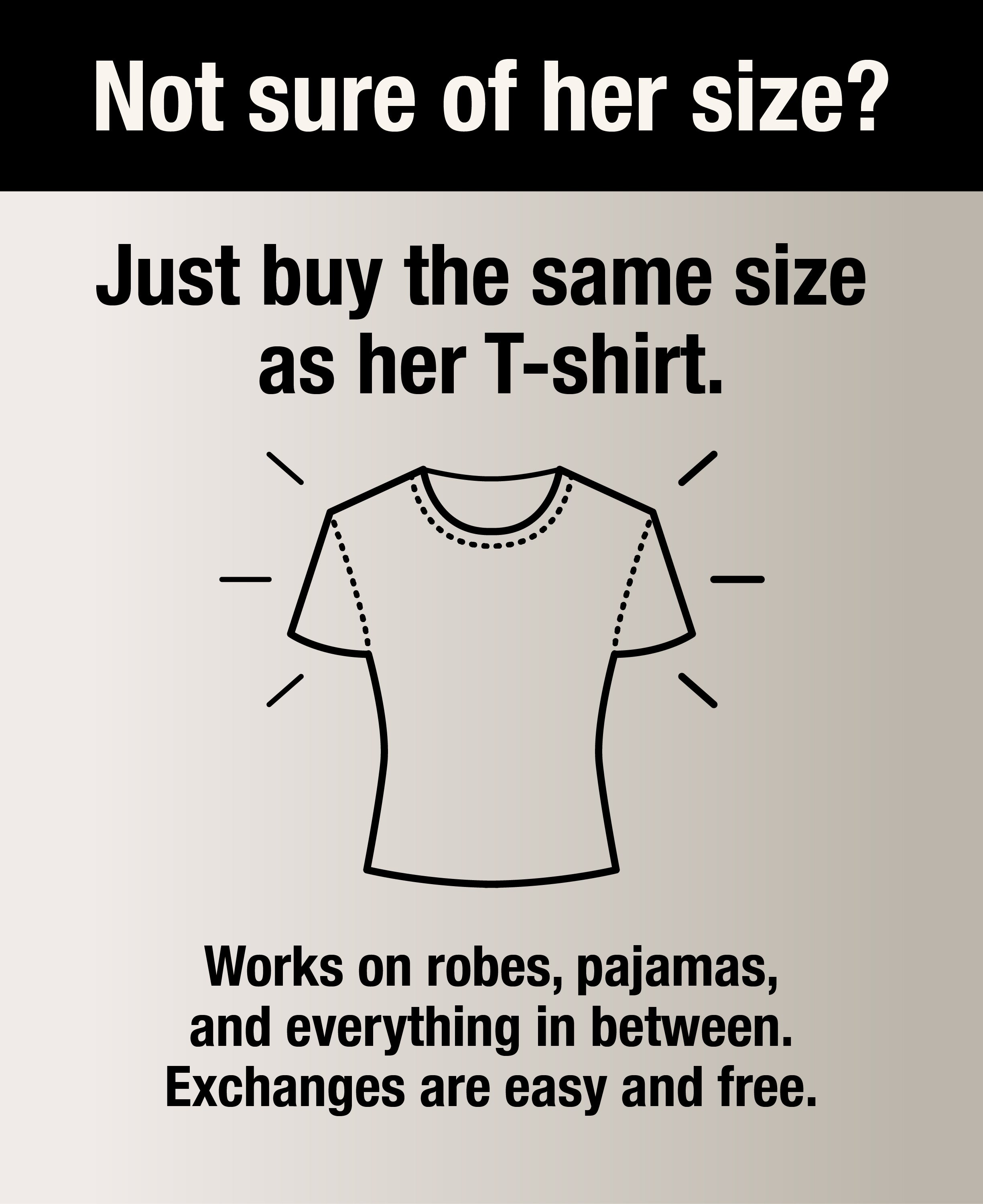
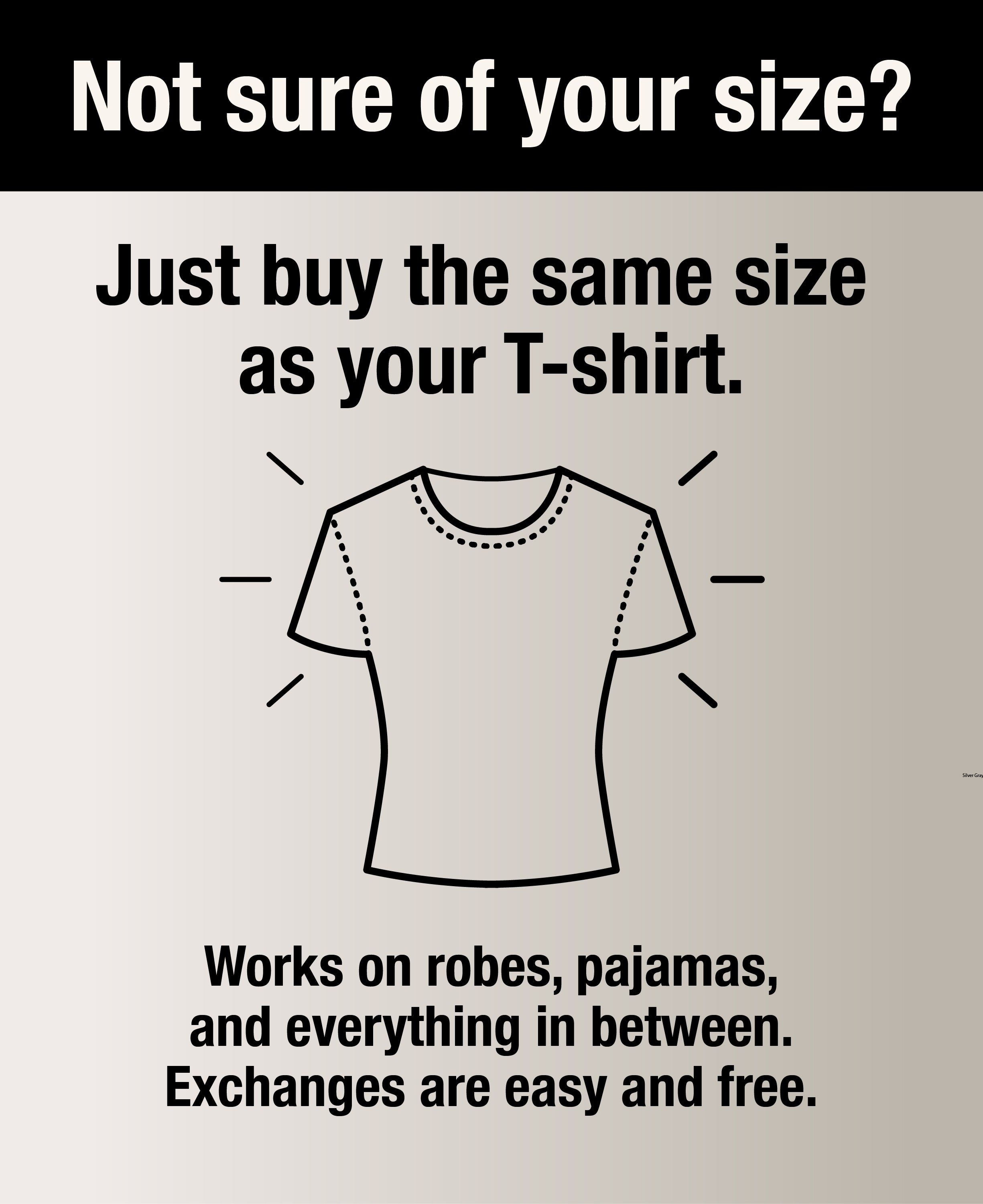
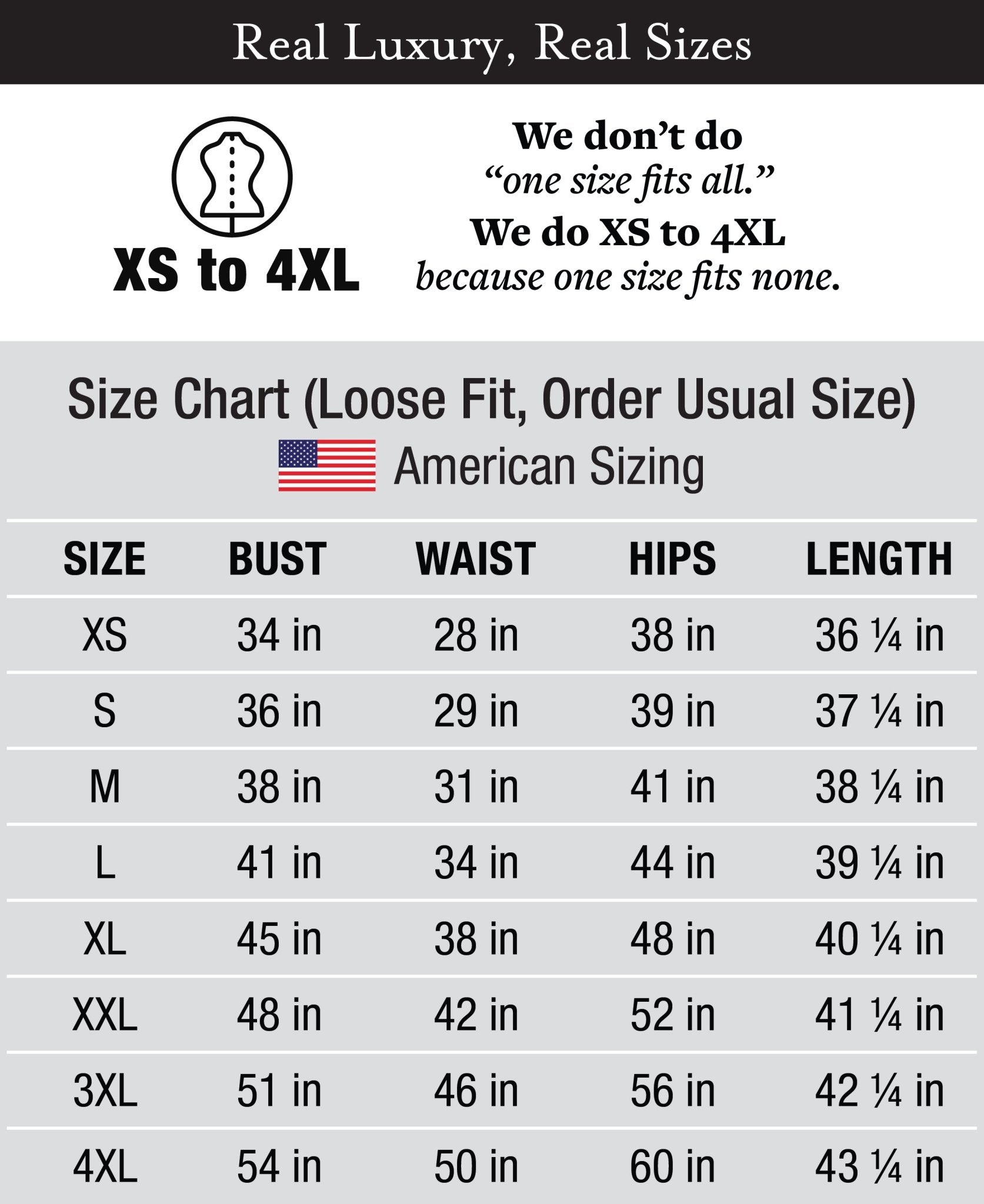
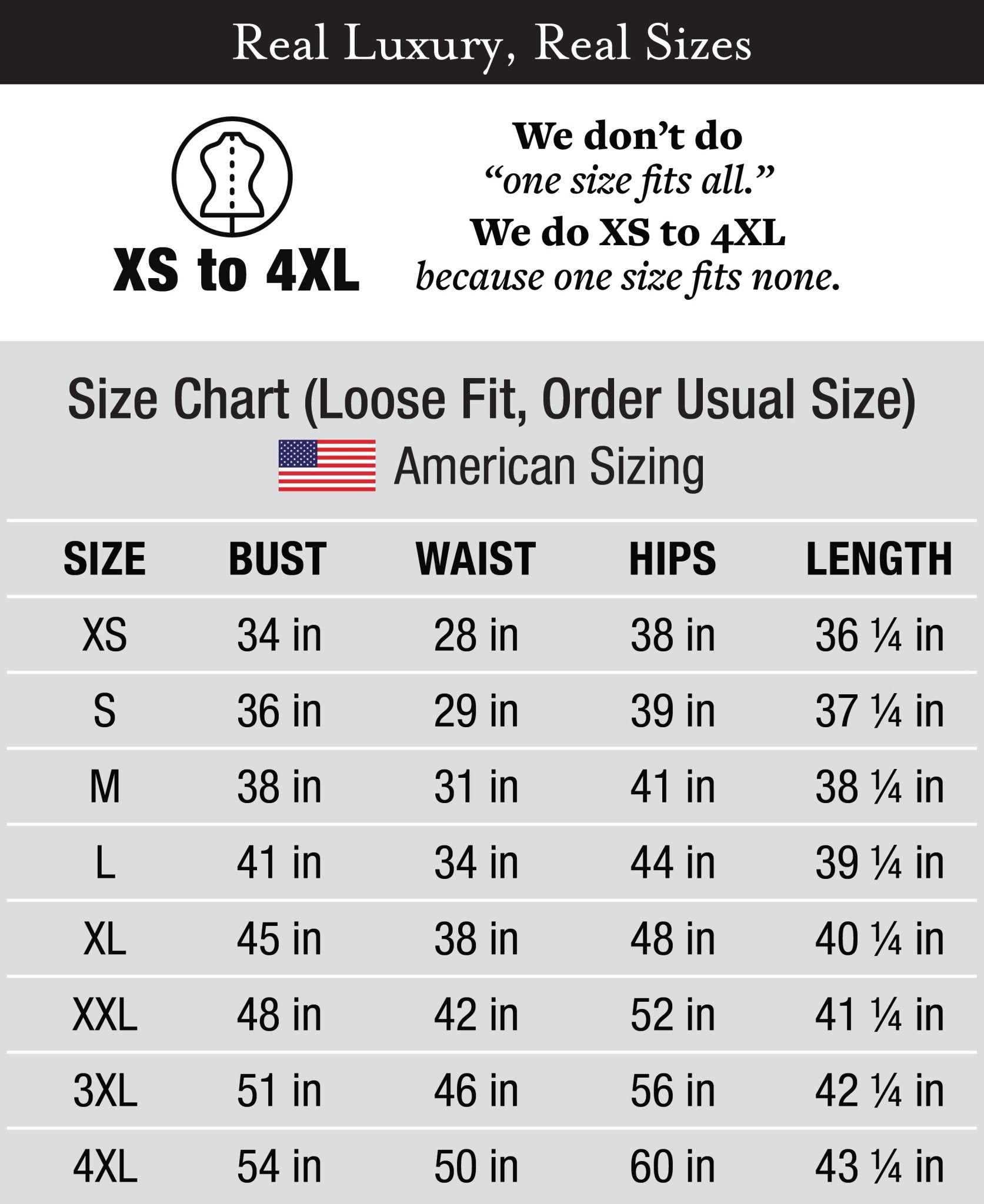
The fit forgiveness is the part most people do not anticipate. A kimono robe in 27 momme silk is the most size-forgiving silk piece we make, because the cut is intentionally loose at the shoulders and the chest. A kimono sized one up still looks correct. A kimono sized one down still closes. The classic robe is also forgiving but slightly less so, because the cut is closer to the body.
When the Classic Robe Is the Right Choice
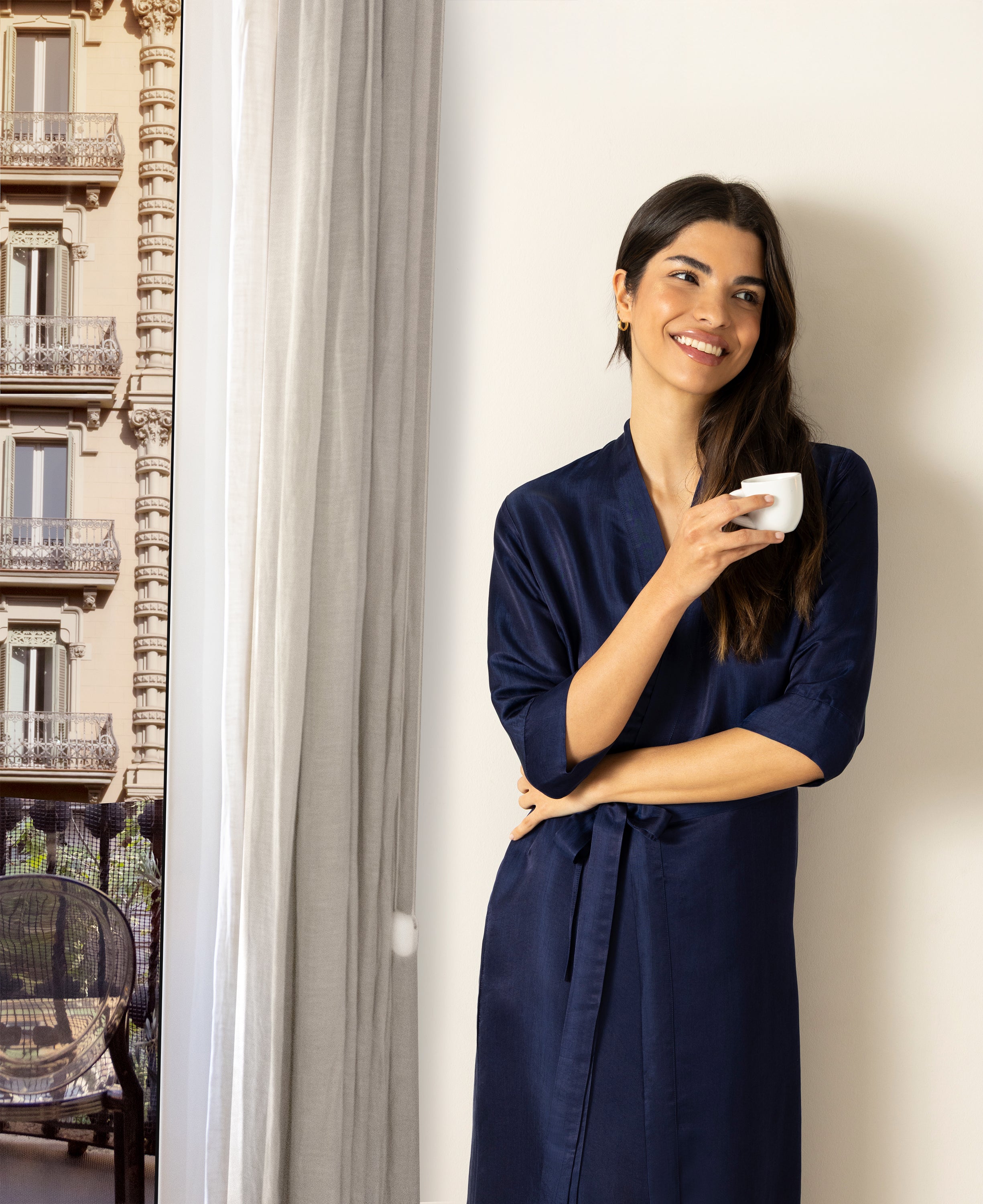
The classic robe is the right first silk piece if you are buying for everyday morning use, if you want the robe to function as private clothing rather than garment, and if your climate runs cool enough that the closer cut is welcome. The classic is the robe you put on after a shower, wear through coffee and breakfast, and then change out of into your day clothes. It is the most-purchased first silk robe in the women's collection, and it has the lowest return rate of any silk piece we make. The forgiveness in the cut is part of the reason.
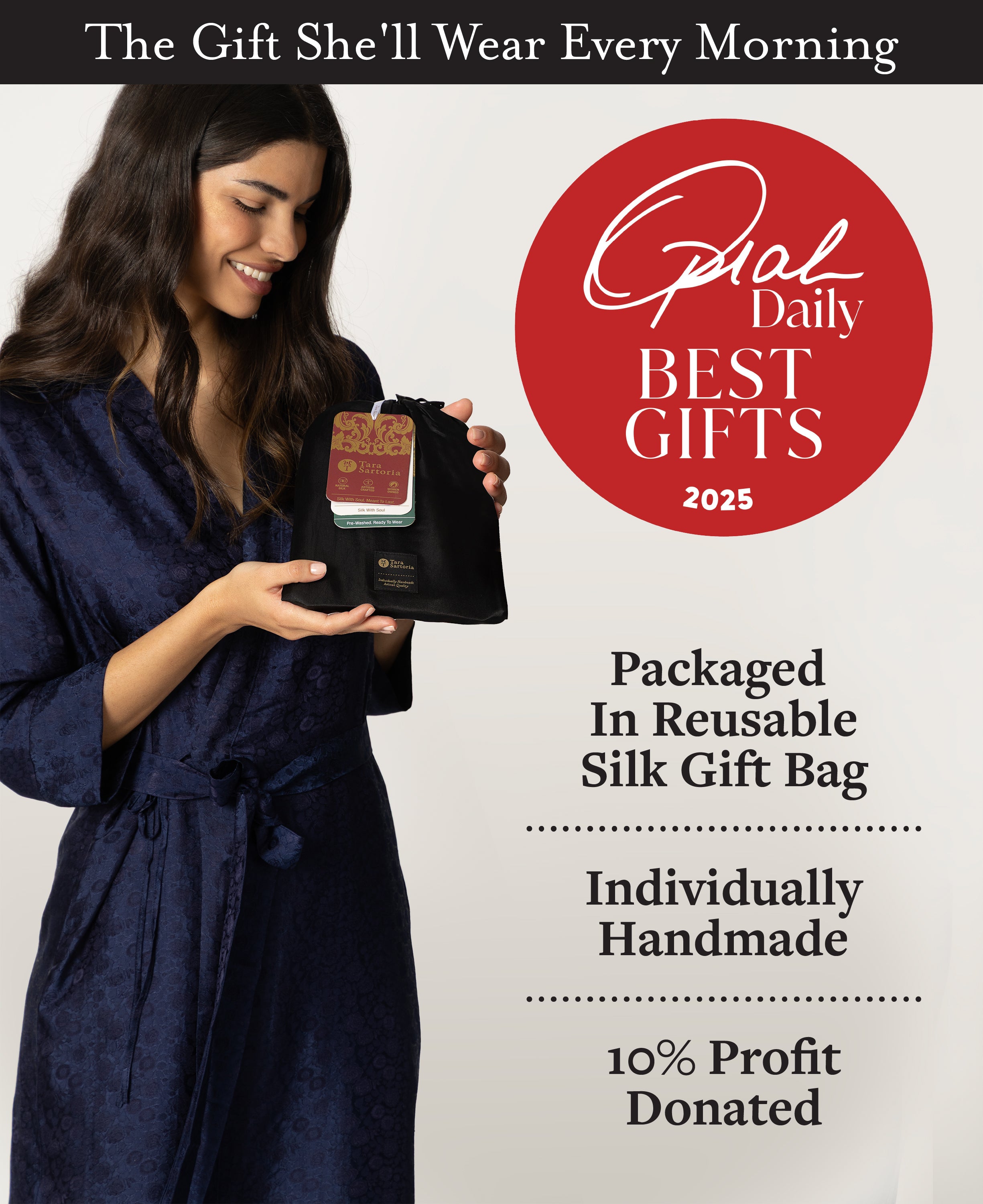
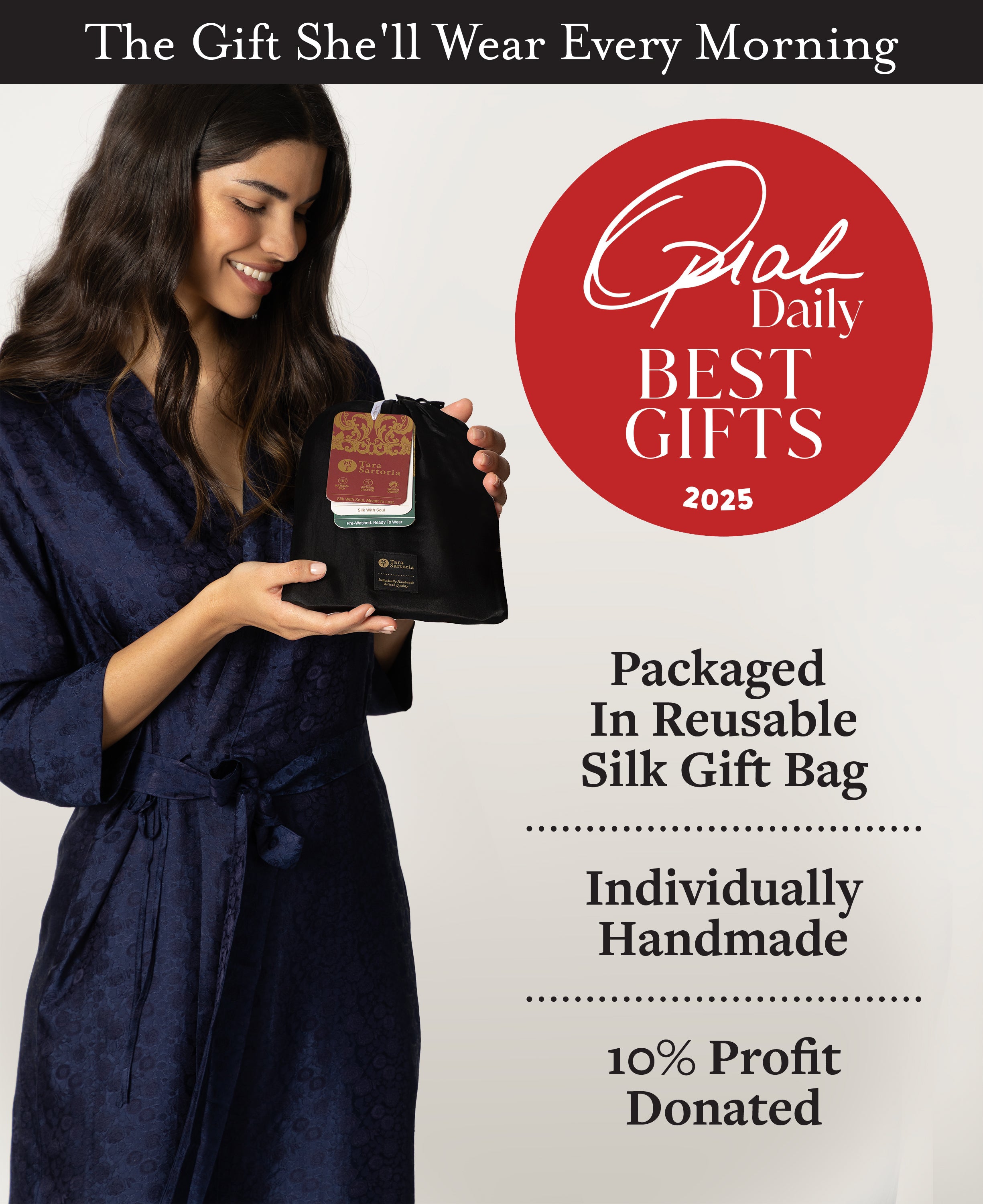
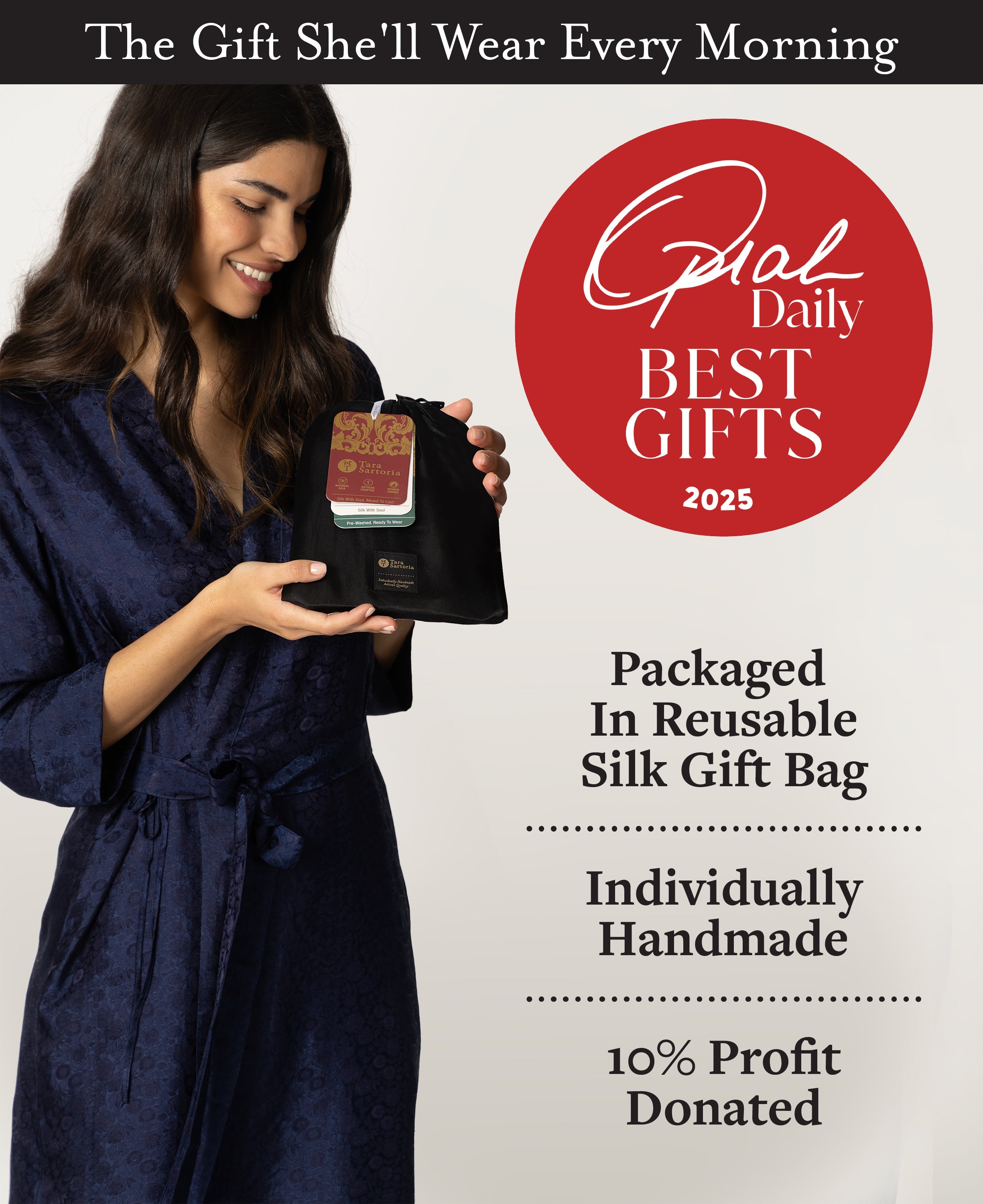
The classic is also the safer gift if you do not know the recipient's taste in detail. The silhouette is the one most people recognize, the colors that work best in the classic (charcoal, deep navy, ivory) are quietly versatile, and the cut flatters most bodies. The kimono is a more specific garment, and a more specific gift, and slightly riskier when you are buying for someone whose style you are guessing at.








When the Kimono Robe Is the Right Choice
The kimono is the right choice if you already own a silk robe and want something that does different work. It is the right choice if you live in a warm climate and want a robe that breathes more at the shoulders and arms. It is the right choice if you wear silk pajamas and want a robe that layers over them without doubling up. It is the right choice if you want a silk piece with more visual personality, particularly in the jacquard versions where the pattern is woven into the fabric and reads as architecture from a distance.
The kimono is also the right choice if you have a body that the classic robe does not quite fit. Customers with broader shoulders, larger bust sizes, or proportions that the standard robe cut does not flatter often find the kimono is a better-fitting silk piece. The open shoulder and wider sleeve forgive a wider range of bodies.

A Note on Naming and Respect
We call our kimono robe a kimono robe because the silhouette borrows from the kimono tradition. It is not a kimono in the formal sense. A formal kimono is a specific Japanese garment with specific rules about cut, layering, and occasion, made by craftspeople with generations of training in that specific tradition. Our kimono robe is a Vietnamese silk robe whose cut takes inspiration from that East Asian design legacy without claiming to be the original article.
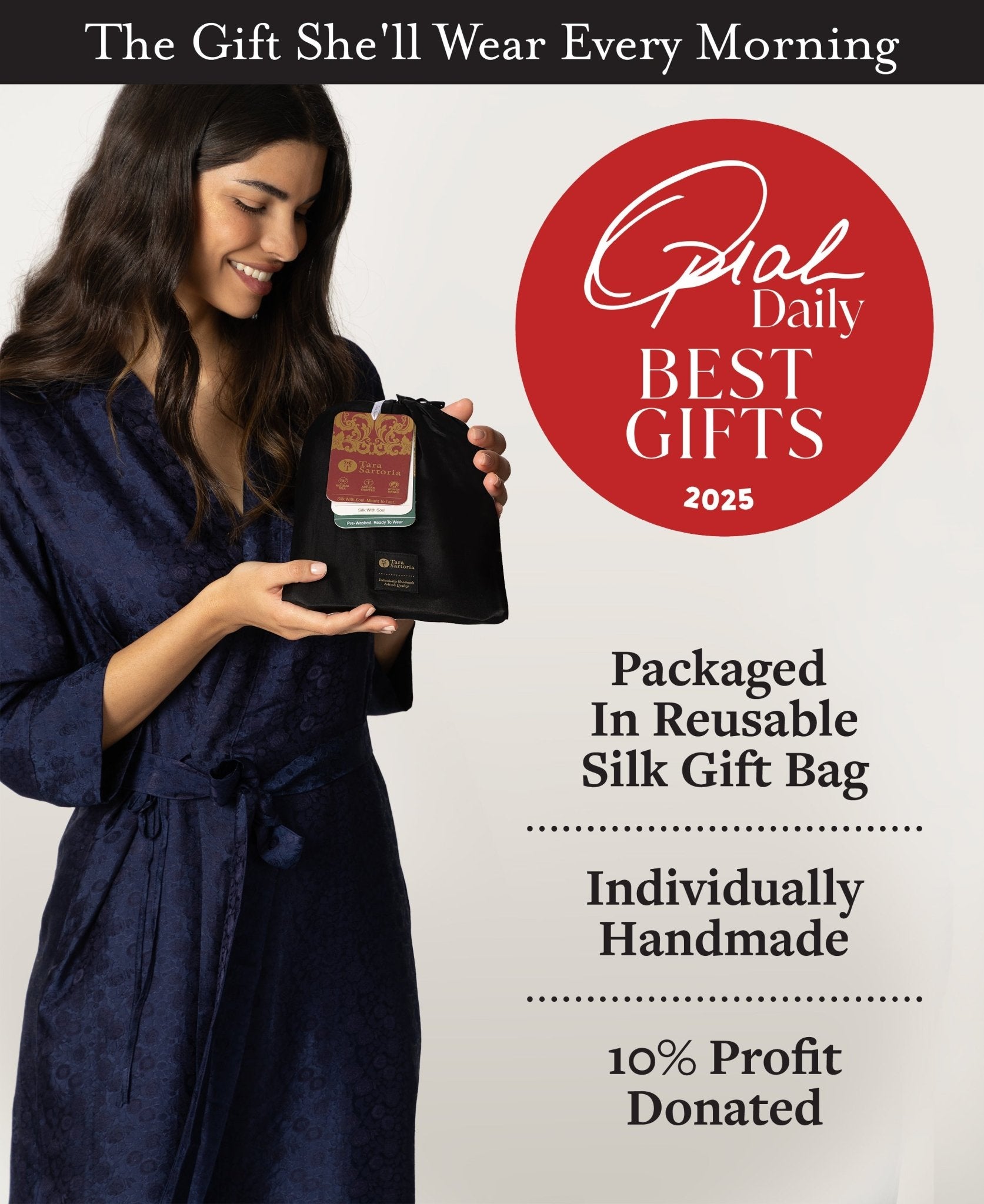
I think this distinction matters, because the brand was built on the idea that the people who actually made things should be named. The kimono robe at Tara Sartoria is made by artisans in Vietnam's historic silk villages, in the same workshops that make our classic robes. The silk is Vietnamese mulberry silk, woven on heritage looms. The cut acknowledges its inspiration. The work belongs to the people who do it.
The Takeaway
The classic silk robe is the everyday piece, the cooler-morning piece, the safer first silk purchase. The kimono is the more architectural piece, the warmer-climate piece, the better second silk to own once you already know what silk feels like to live in.
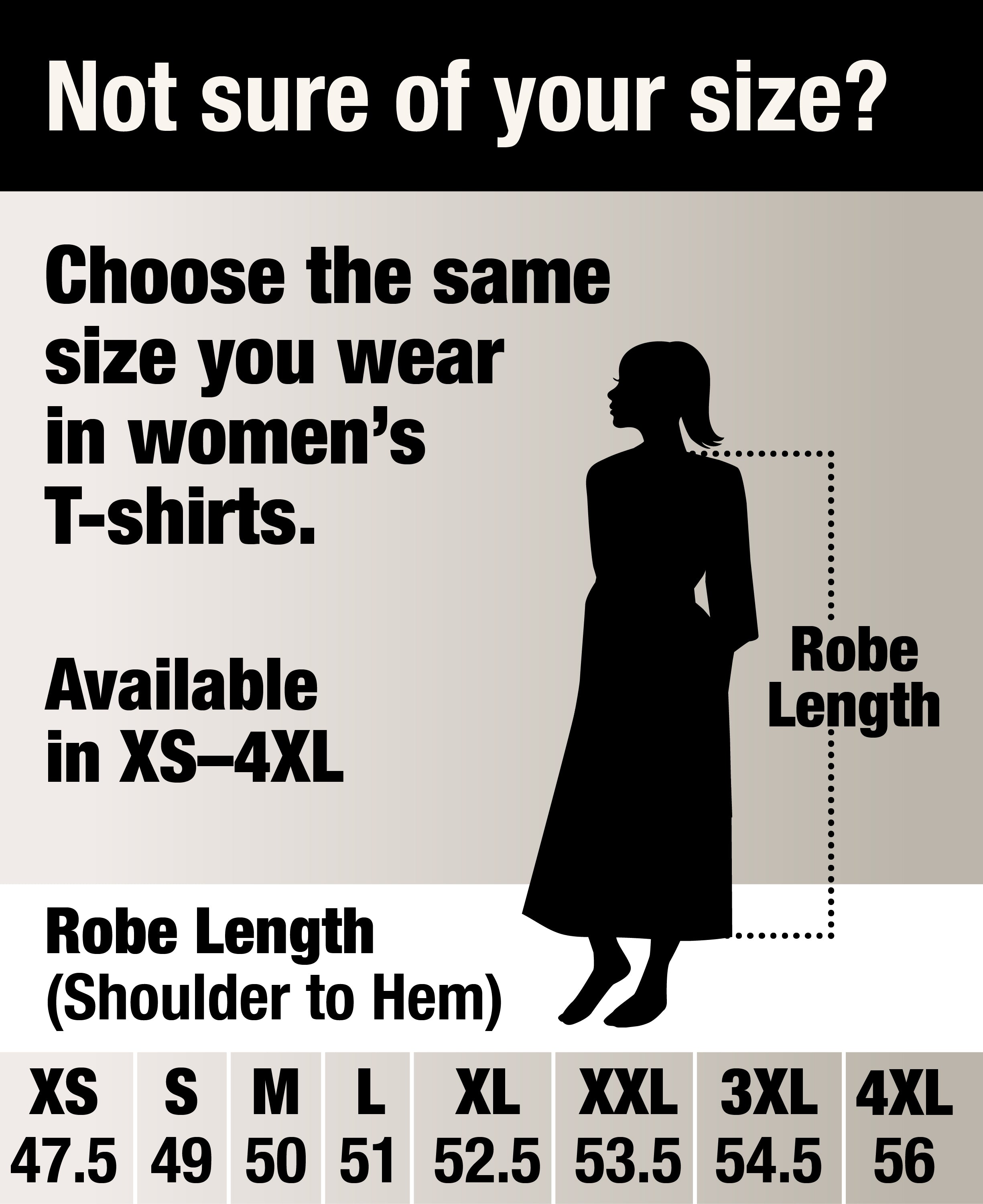
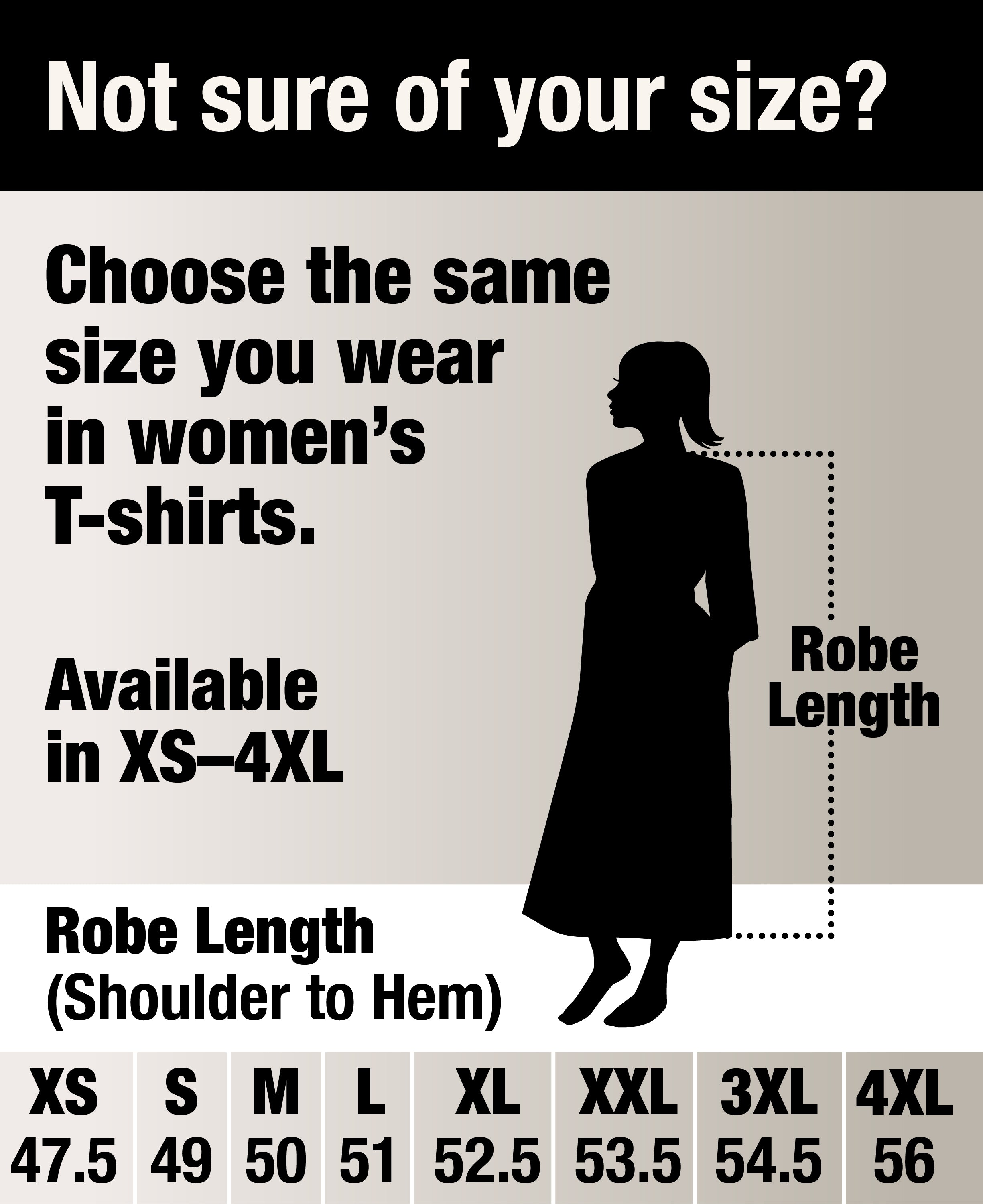
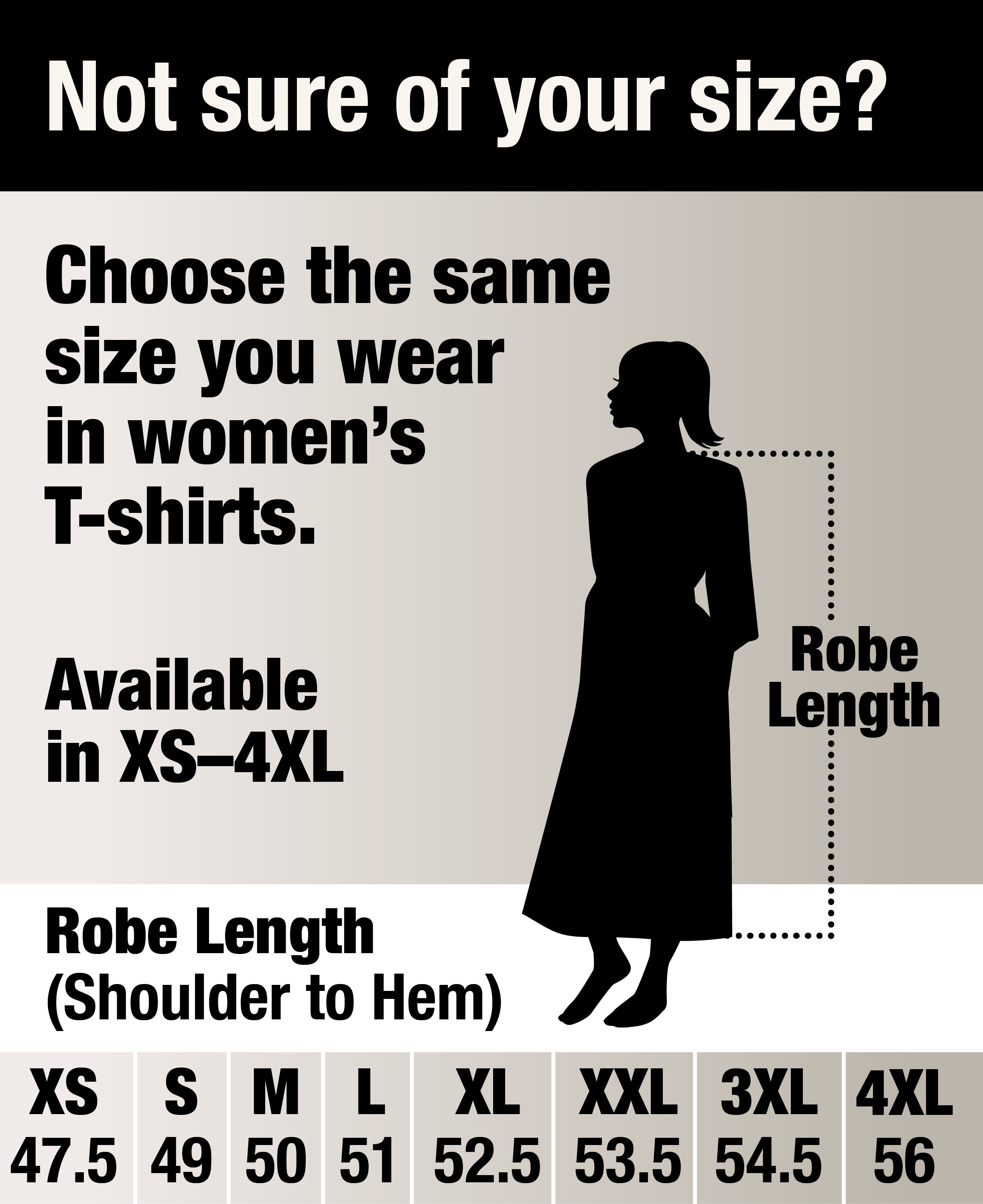
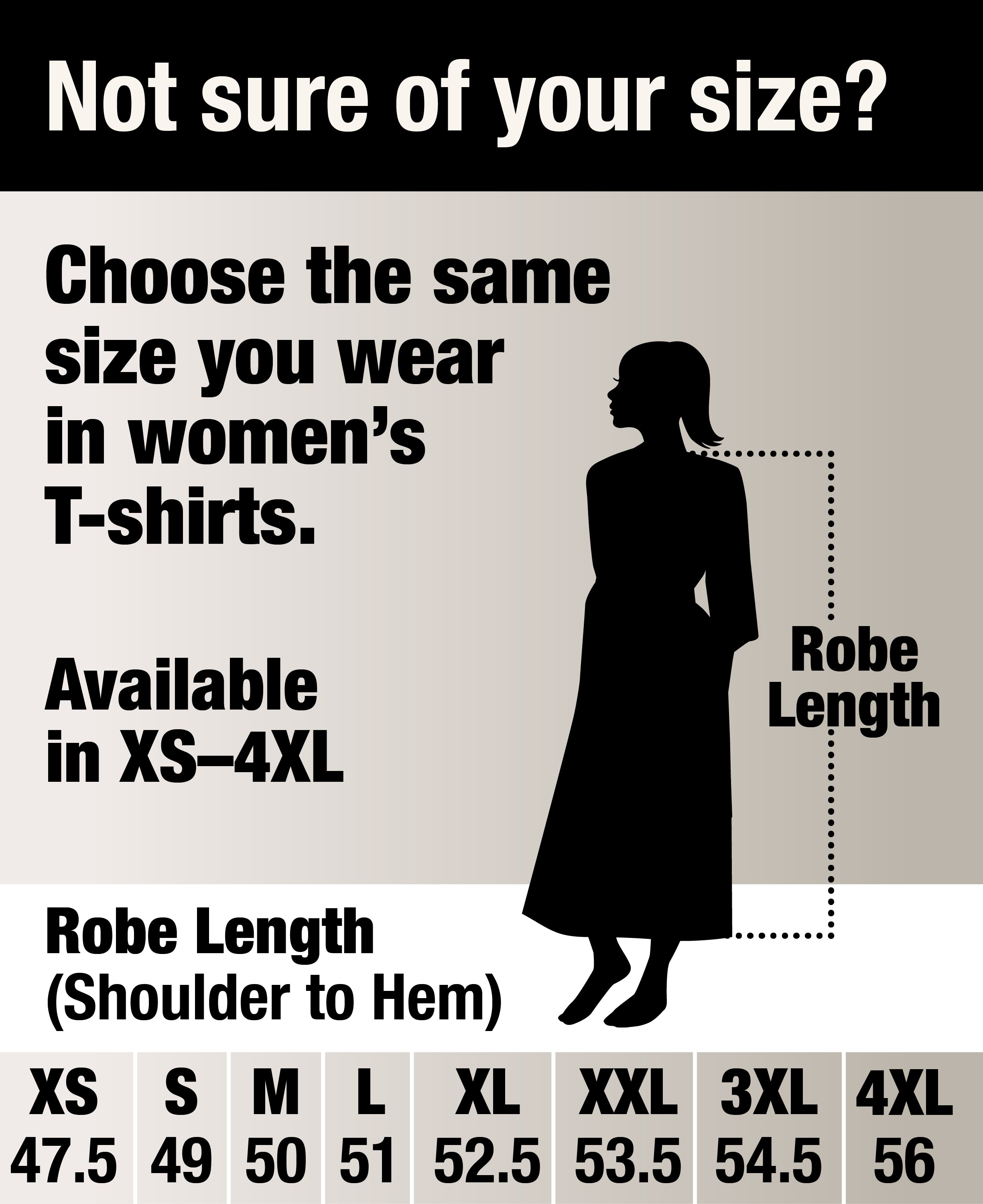
If you are buying one robe to start, the classic in charcoal, deep navy, or ivory is the safest place to begin. If you already own a classic and want a piece that does different work, the jacquard kimono is the natural second step. Find your size when you are ready.
Frequently Asked Questions
Is the kimono robe an actual kimono?
No. A formal kimono is a specific Japanese garment with strict rules about cut, layering, and occasion, made by craftspeople trained in that tradition. The Tara Sartoria kimono robe is a silk robe whose cut takes inspiration from that East Asian design legacy. It is made in Vietnam by Vietnamese artisans, in Vietnamese mulberry silk, on heritage looms. We use the word kimono to describe the silhouette, not to claim the formal tradition.
Which is more comfortable, the classic robe or the kimono?
It depends on the climate and the use. The classic is more comfortable in cooler weather because the fitted shoulder holds the silk against the upper body. The kimono is more comfortable in warm weather because the open shoulder and wider sleeve release heat. Both are the same 27 momme silk and the same French seam construction. Comfort is about cut and climate, not about quality.
Is the kimono robe harder to wear?
No, slightly easier. The wider cut is more forgiving across bodies, and the architectural drape means the kimono can be worn over silk pajamas as a layer without looking like loungewear. The classic robe is private clothing. The kimono can also function as garment. If you want a silk piece that crosses from morning into the rest of the day, the kimono is the easier one to wear longer.
Which is the better gift?
The classic robe is the safer gift if you do not know the recipient's taste in detail. The silhouette is recognizable, the cut flatters most bodies, and the safest colors (charcoal, deep navy, ivory) work across most wardrobes. The kimono is the better gift if you know the recipient already wears silk and you want to give them a piece with more visual personality. For a first silk gift, the classic carries less risk.
Can the kimono robe fit larger or differently proportioned bodies?
Often, yes. The kimono cut is intentionally loose at the shoulders and the chest, which makes it the most size-forgiving silk piece we make. Customers with broader shoulders, larger bust sizes, or proportions that the standard robe cut does not flatter often find the kimono is a better fit. Both robes are sized XS to 4XL as standard, with custom sizing available when needed.
