


Why Heritage Looms Matter in Silk
By Tara Nguyen, Ph.D., Founder and Creative Director, Tara Sartoria
The loom is the part of silk production that almost no brand will tell you about. I understand why. Most modern silk is woven on high-speed industrial looms that shoot the weft through the warp at six hundred picks a minute. The fabric comes out fast, cheap, and thin. You can run a factory line on a margin of pennies per meter and call the result silk. What you cannot do is build a silk garment that lasts ten years out of it.
The reason I keep talking about heritage looms is not nostalgia. It is the only honest explanation for why our silk feels and behaves the way it does, and why the silk on the other side of the price line does not.
A Short Answer for the Person Skimming
A heritage loom is a slower, mostly traditional weaving loom used in Vietnam's historic silk villages. It runs at a fraction of the speed of a modern industrial loom, which means the weave is tighter, the tension on each thread is more consistent, and the resulting fabric is denser and more durable.
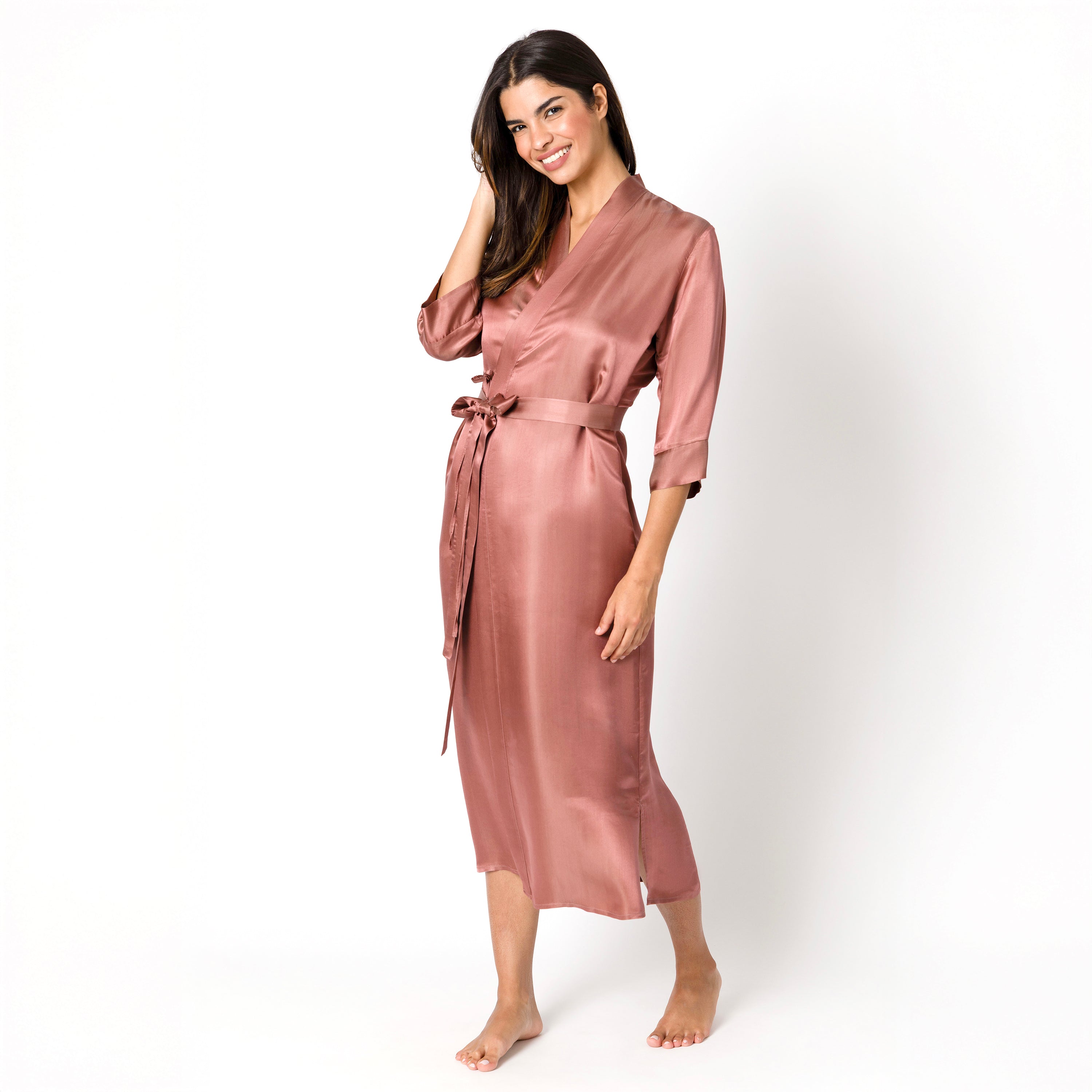
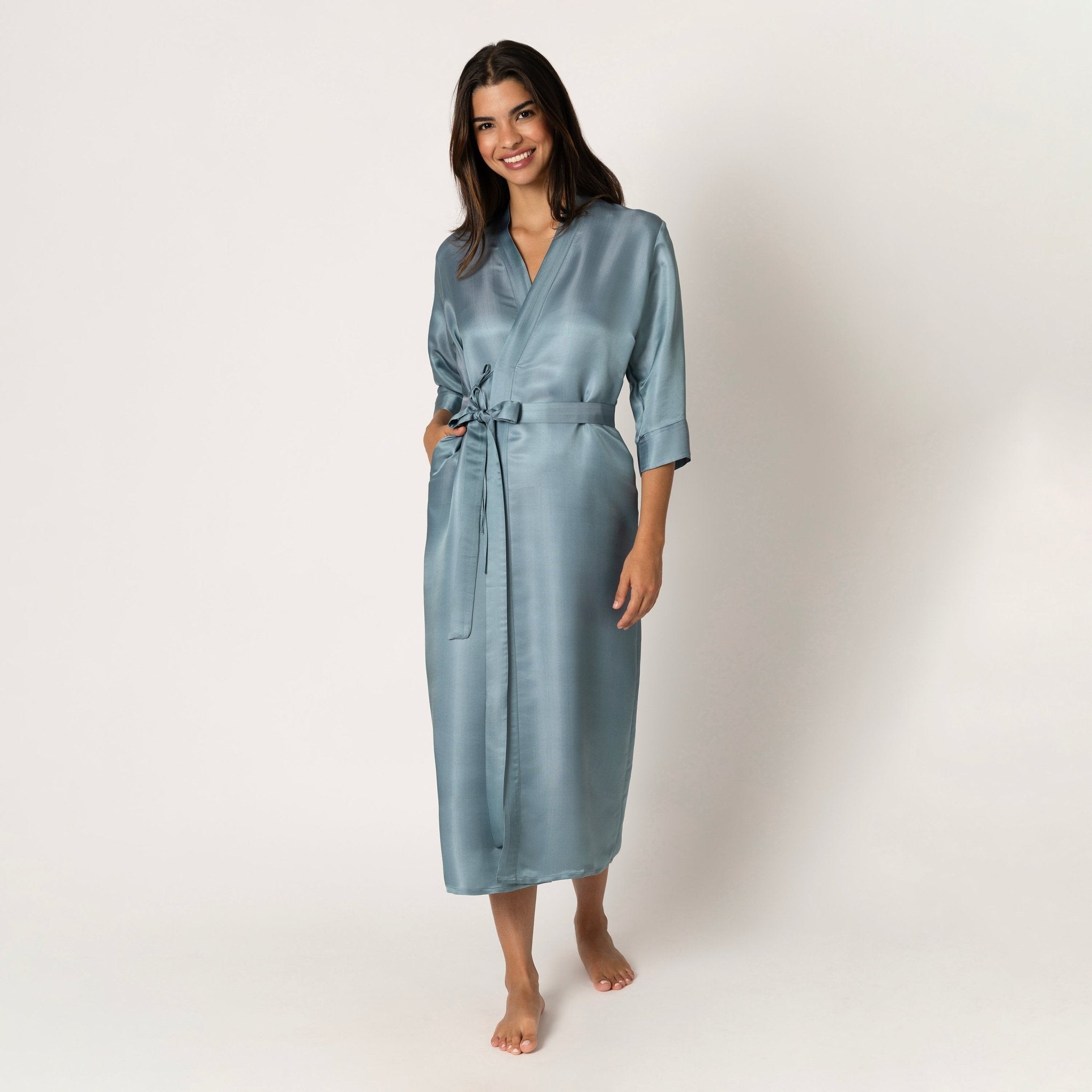
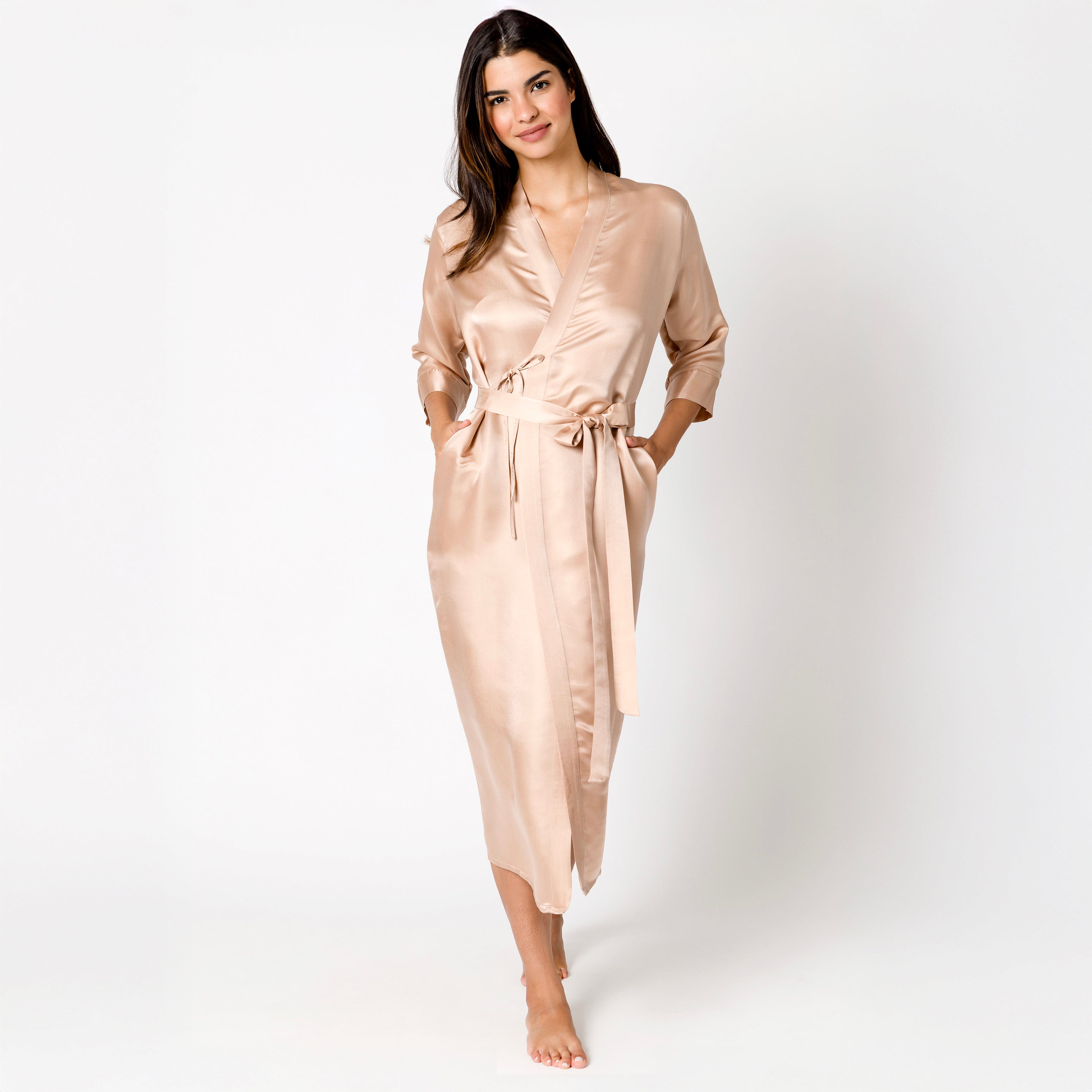
Tara Sartoria silk is woven on heritage looms in 27 momme mulberry silk, then made one piece at a time by master artisans, finished with French seams, sized XS to 4XL, and machine washable. The loom is not the marketing story. It is the reason the silk holds up.
What Most People Picture When They Hear "Silk Production"
Most people picture either a hand-painting station in a museum or a glossy factory floor in a corporate video. Neither is quite right. The actual production floor where most commercial silk is woven sits somewhere in the middle. It is a large room with industrial looms running in rows. A single operator monitors many looms at once. The looms run at high speed and produce silk at low cost per meter. This is the silk that ends up in most "silk" pajamas under two hundred dollars, and in a great deal of the silk above two hundred dollars too.
There is nothing wrong with this system as engineering. It is impressive. It can also produce a reasonable silk for certain uses, like linings and scarves where the fabric is not asked to carry weight or survive many washes. The problem is when this same silk is used for sleepwear and robes that the customer expects to wear for years. The fabric was not woven with that life in mind.
A heritage loom solves a different problem. It is not trying to maximize output per hour. It is trying to produce a meter of silk that holds together under daily wear for a decade. The trade-off is speed. The benefit is the fabric itself.
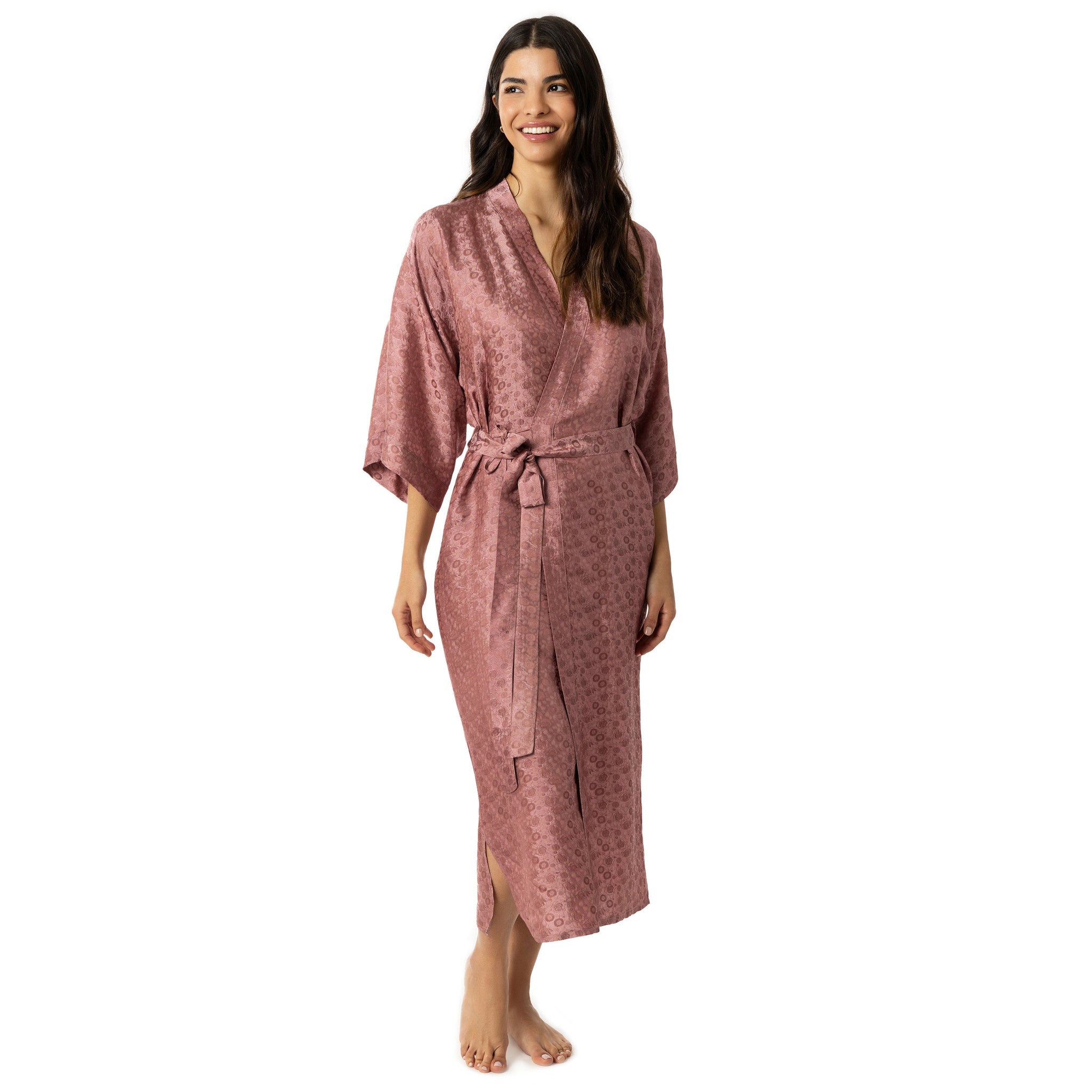
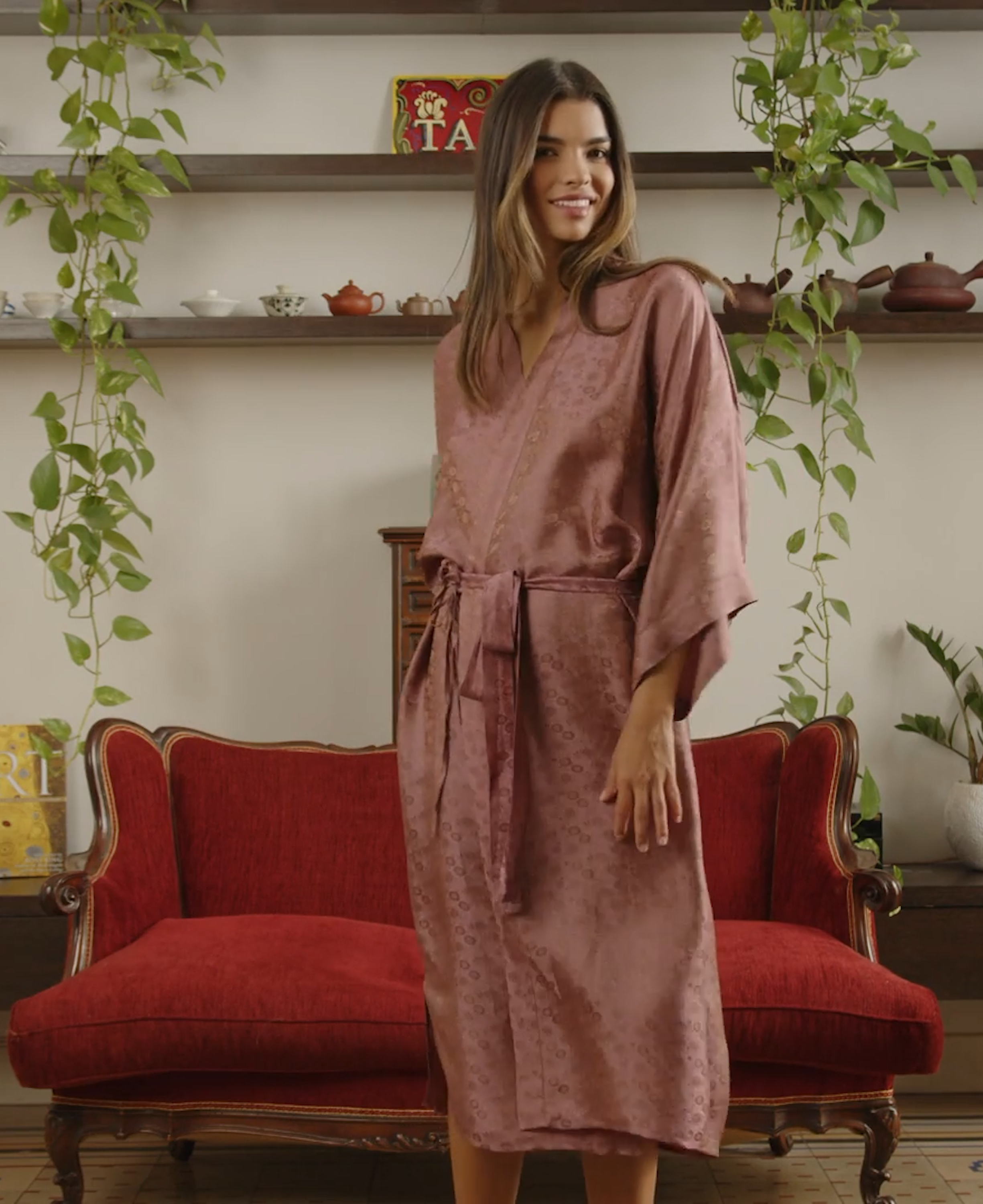
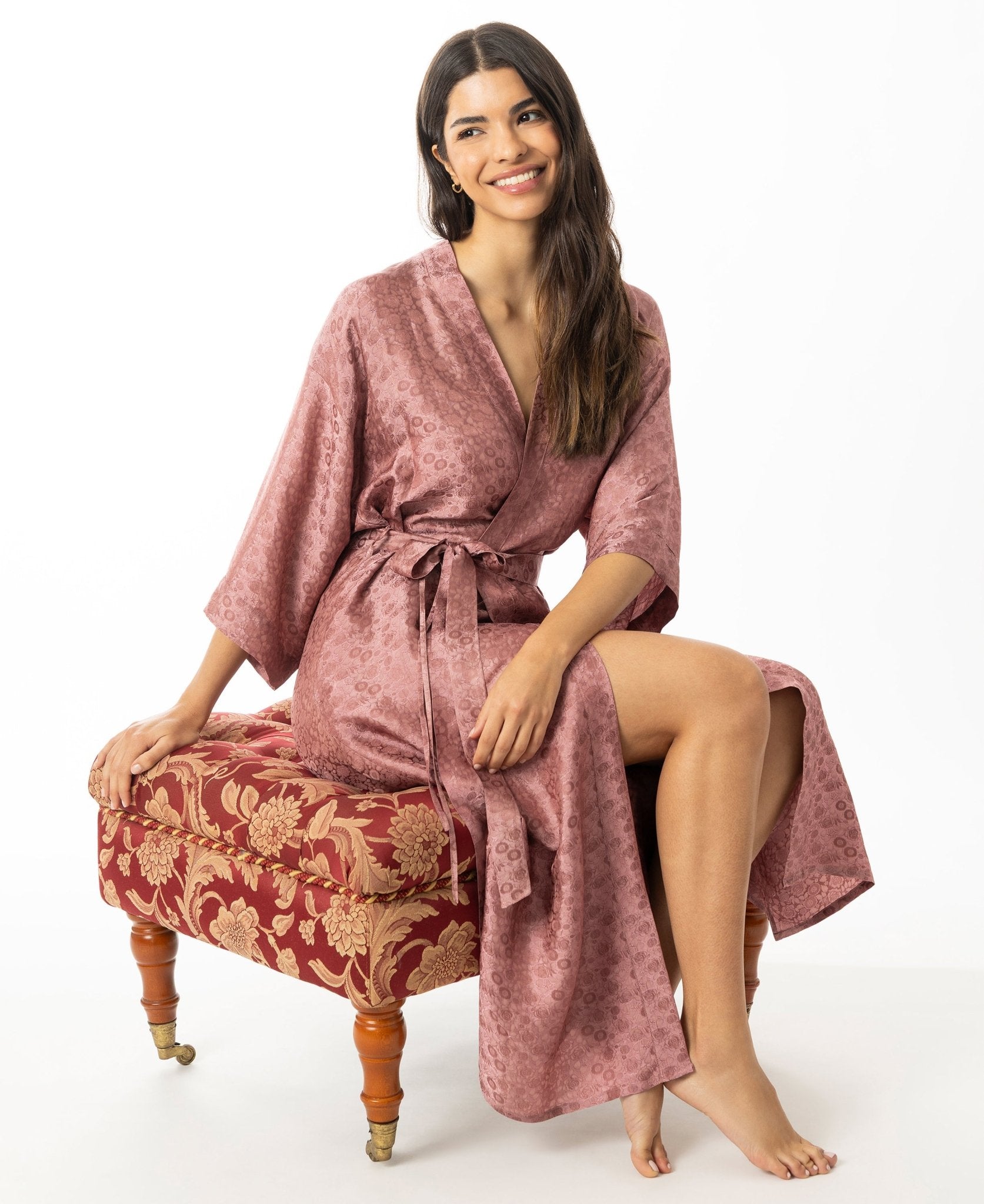
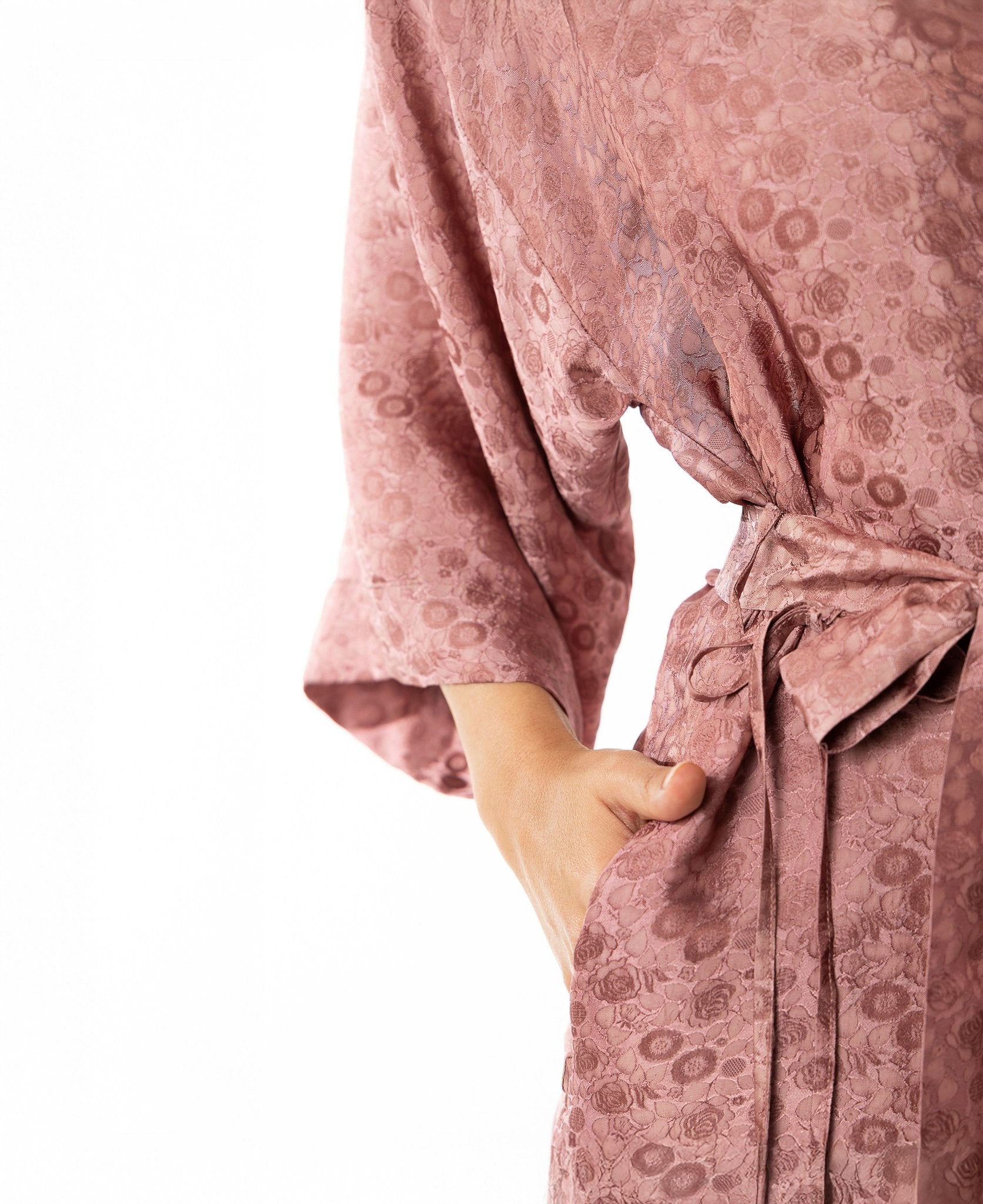
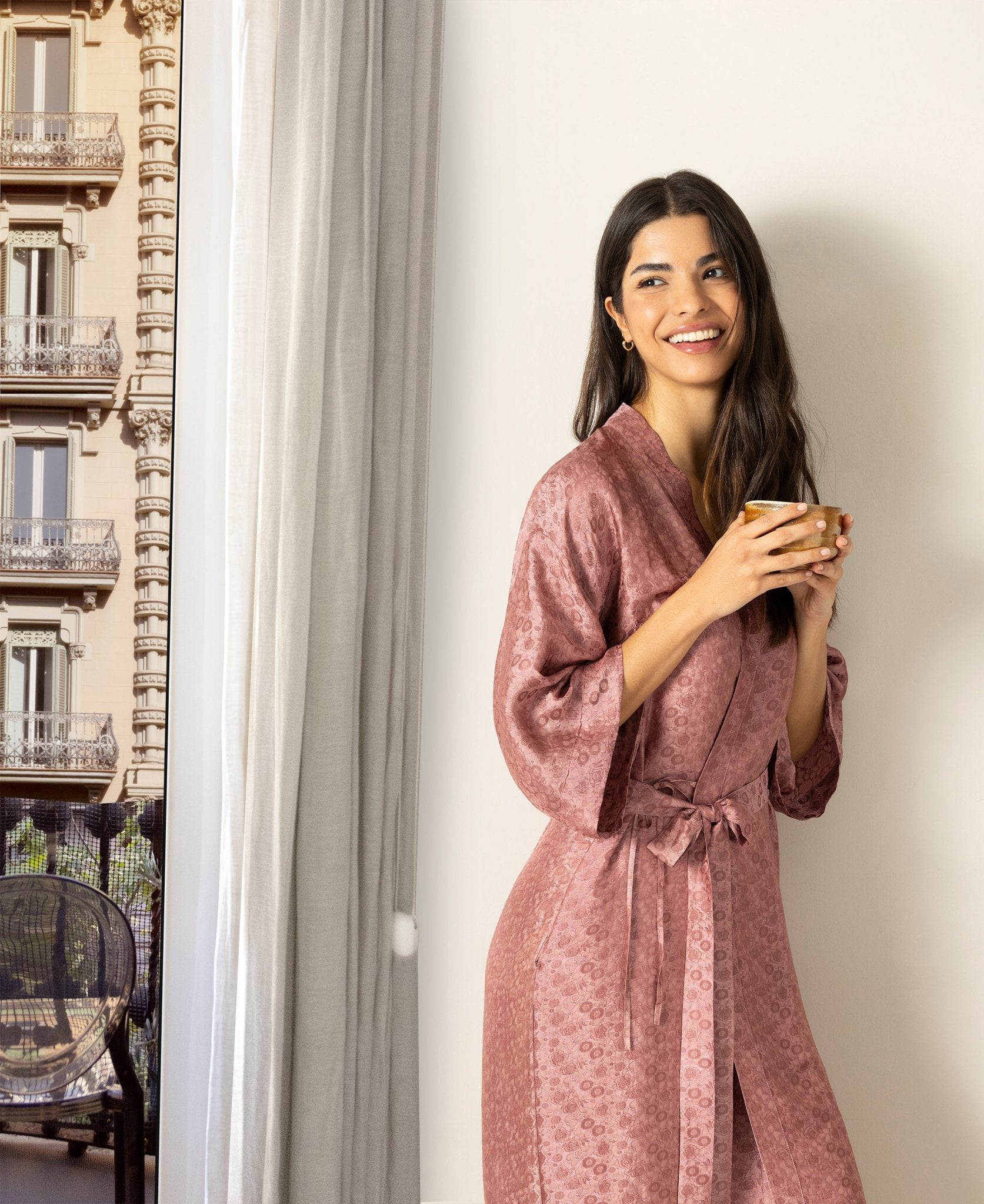
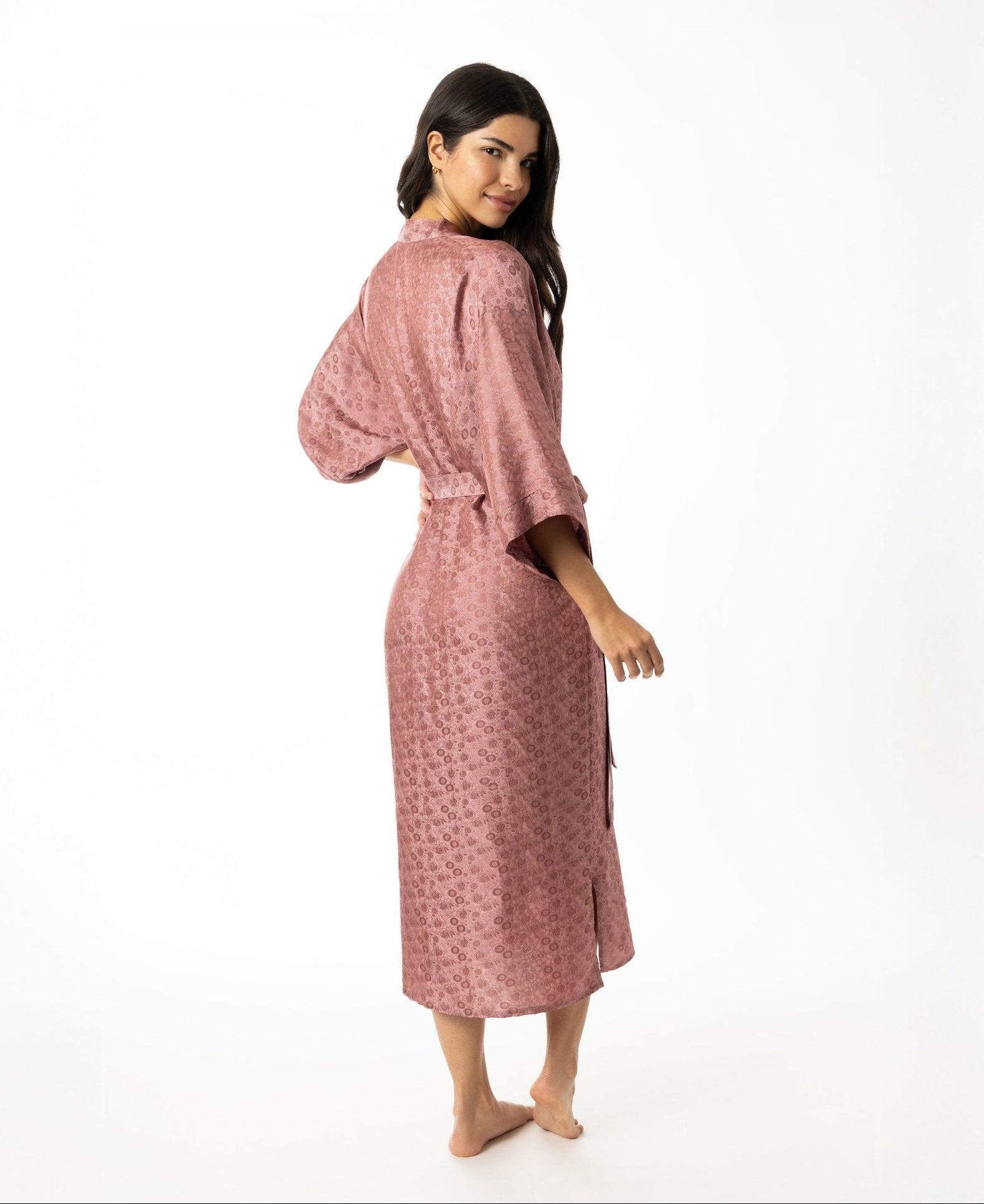



What a Heritage Loom Actually Does Differently
The honest mechanical answer is that a heritage loom runs slower, with more consistent thread tension, and gives the silk time to settle into its own structure as it is being woven. A modern industrial loom achieves speed by running the warp threads at higher tension, firing the shuttle faster, and using mechanical beat-up systems that hit the weft hard against the previous pick. The fabric is technically silk. It is also slightly compressed and slightly stressed at the thread level, and it tends to relax in the wash in ways that show up as drape changes and pilling over time.
A heritage loom produces fabric that has not been stressed. The warp is held at a lower, more even tension. The shuttle moves at a speed a human hand can correct if something goes wrong. The beat-up is firmer but less violent. The weft sits where the artisan put it, not where a machine drove it. The fabric leaves the loom denser, with the threads sitting properly against each other, and with the internal structure that lets the silk drape correctly and survive washing.
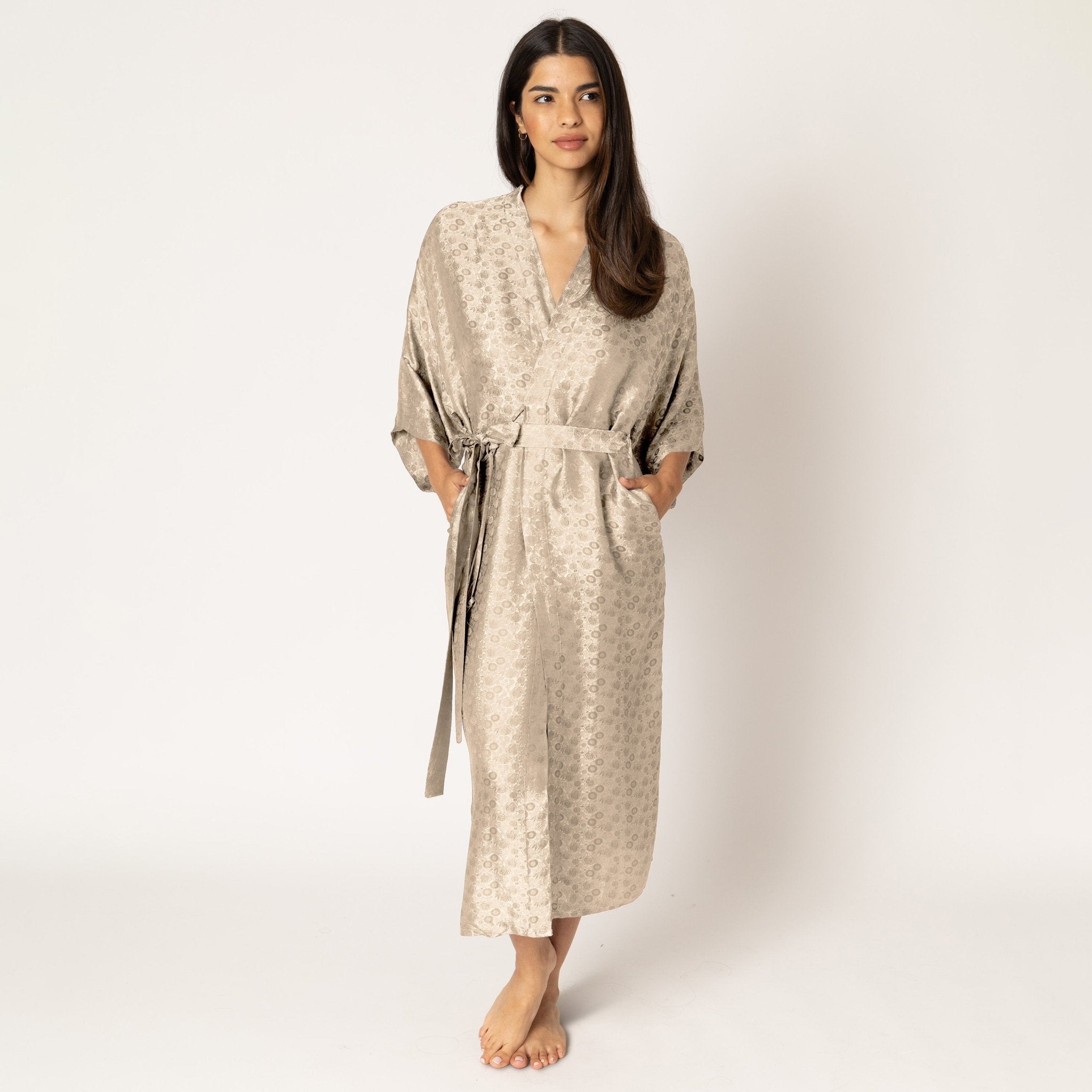
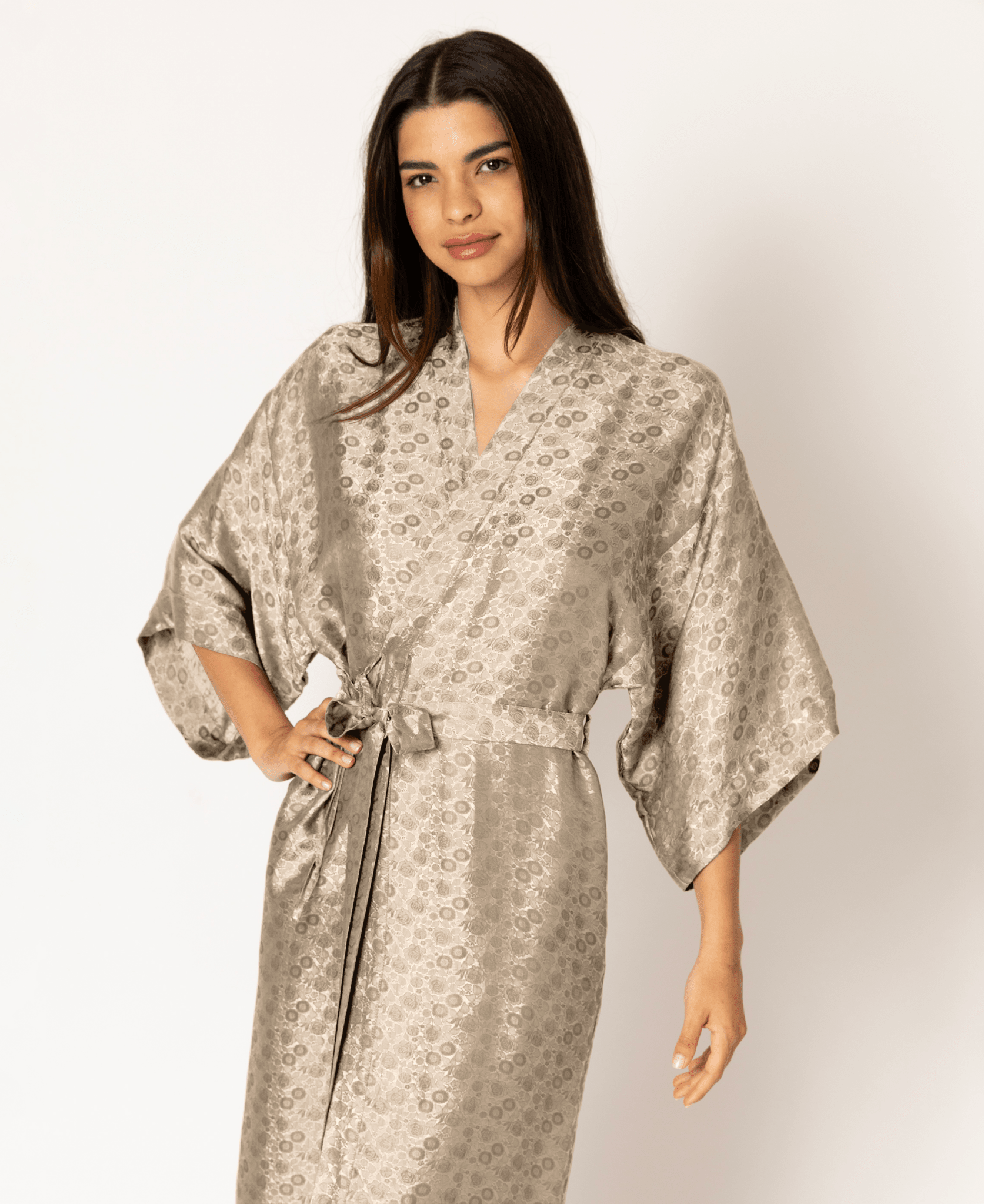
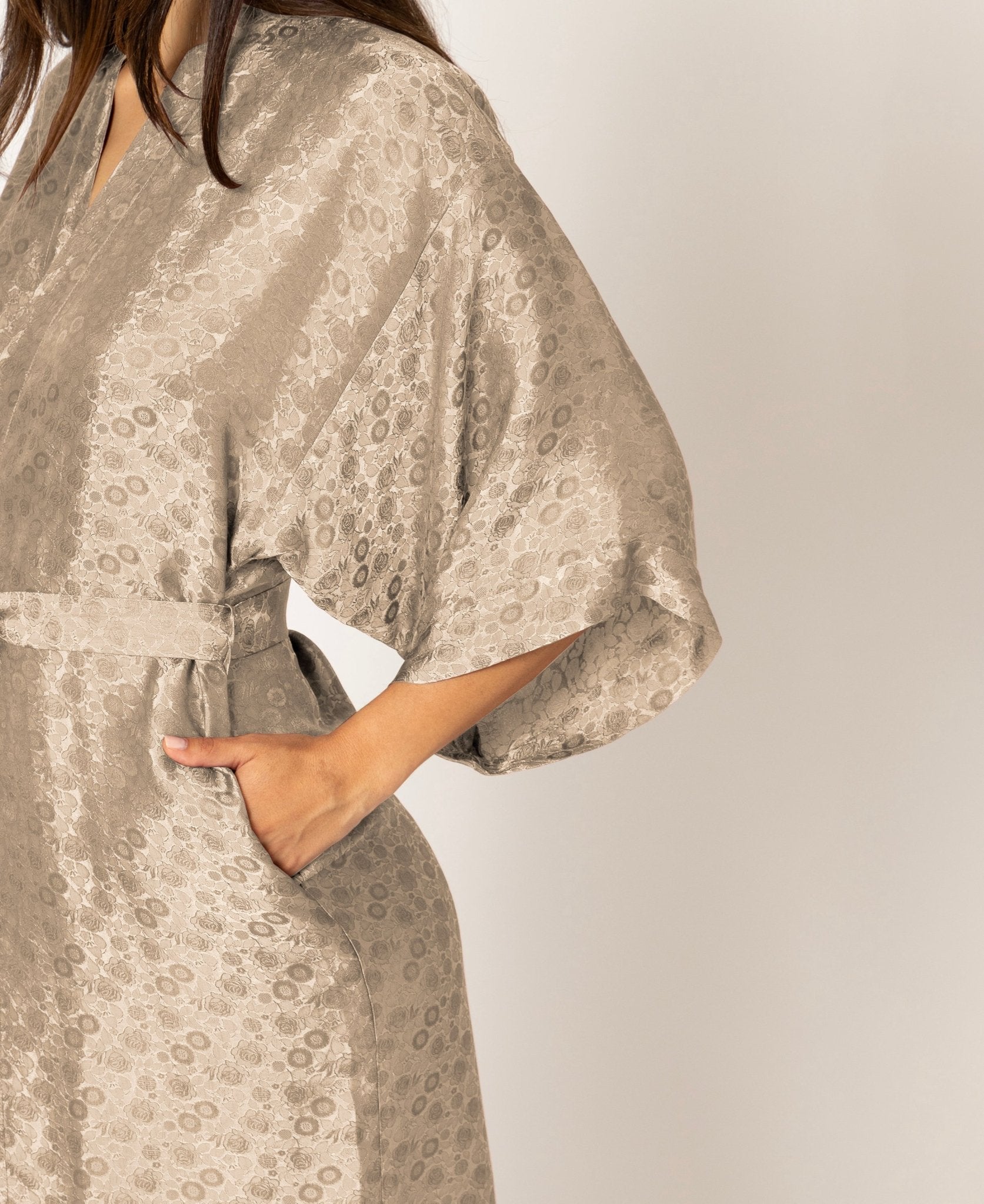
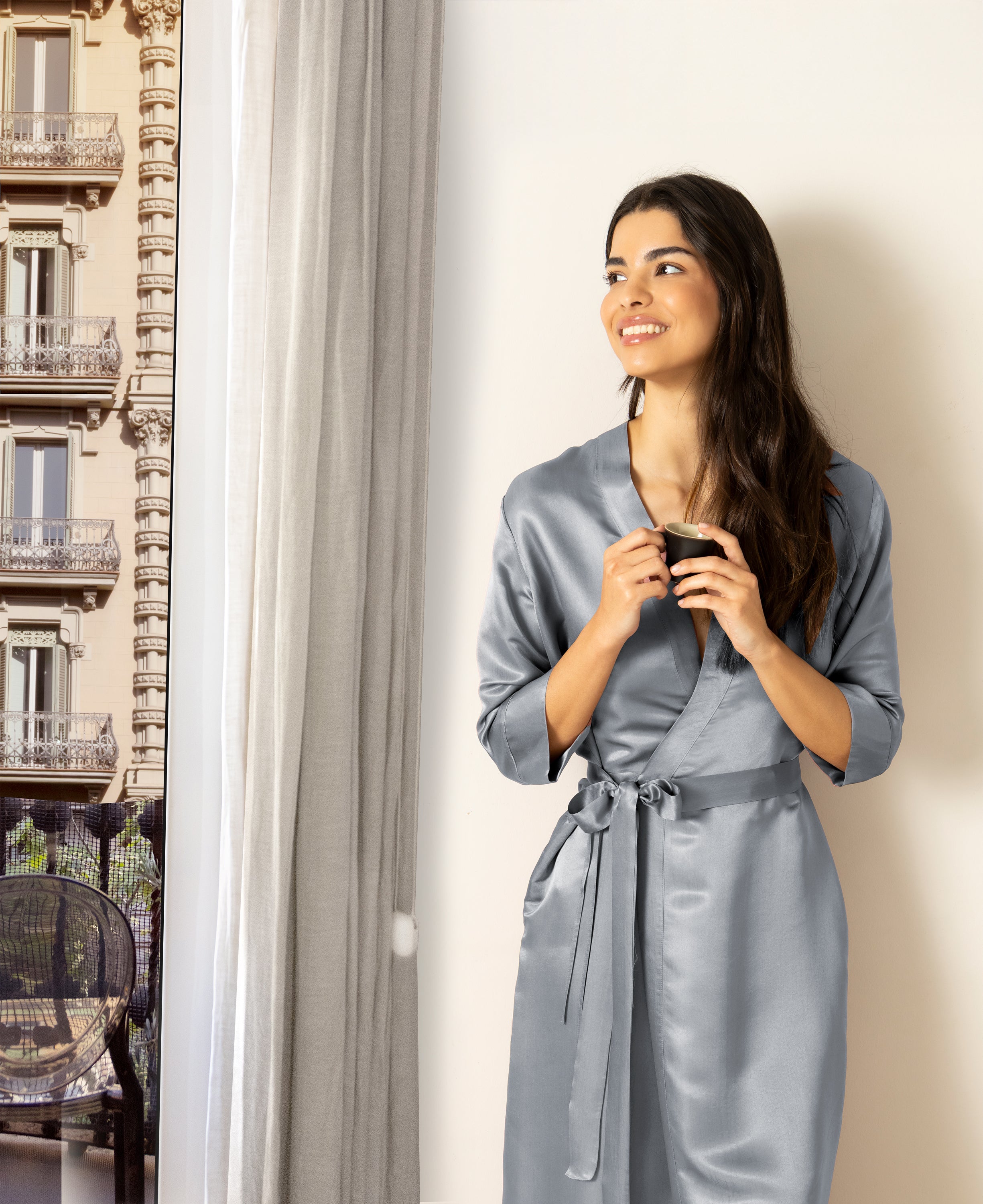
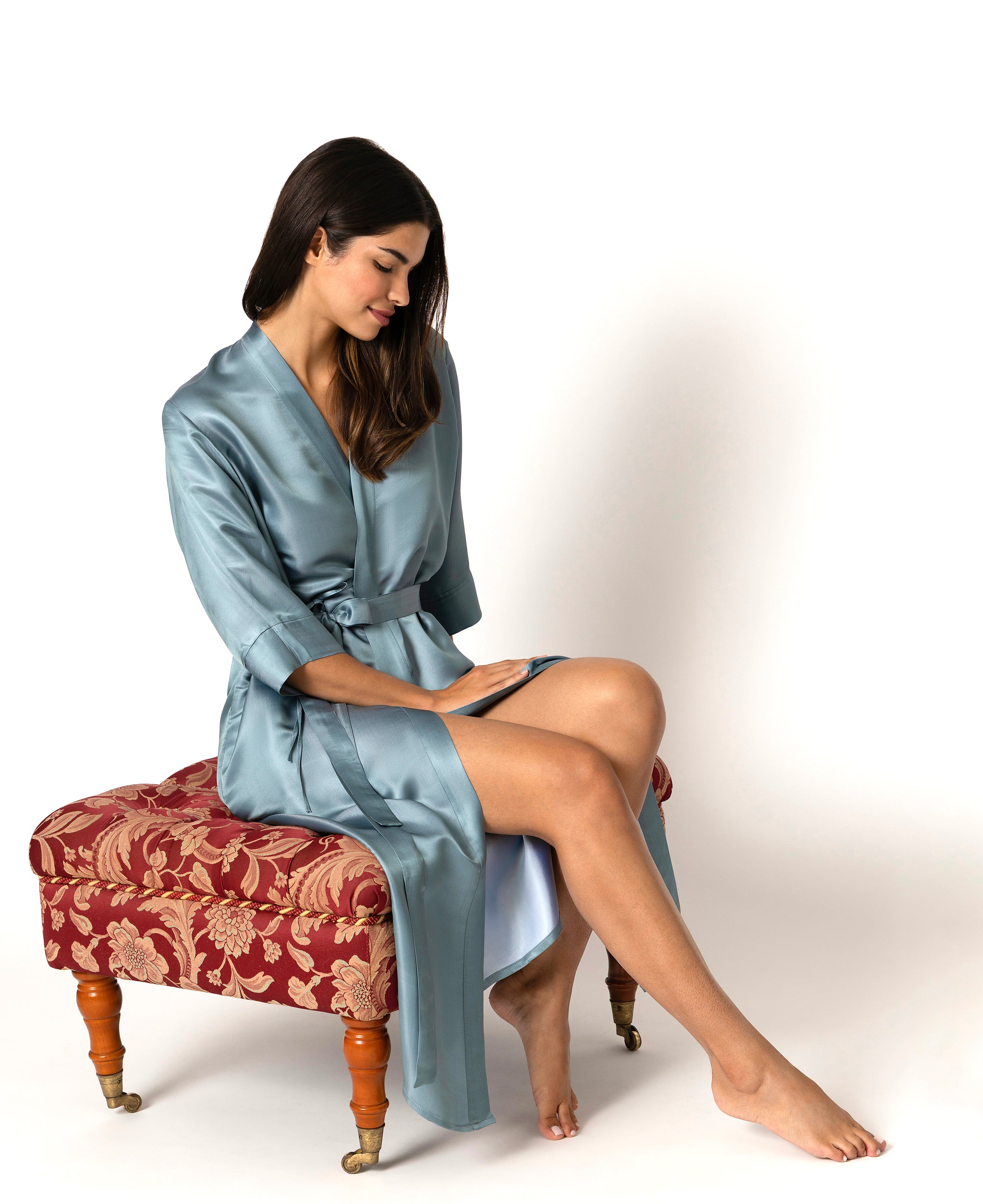
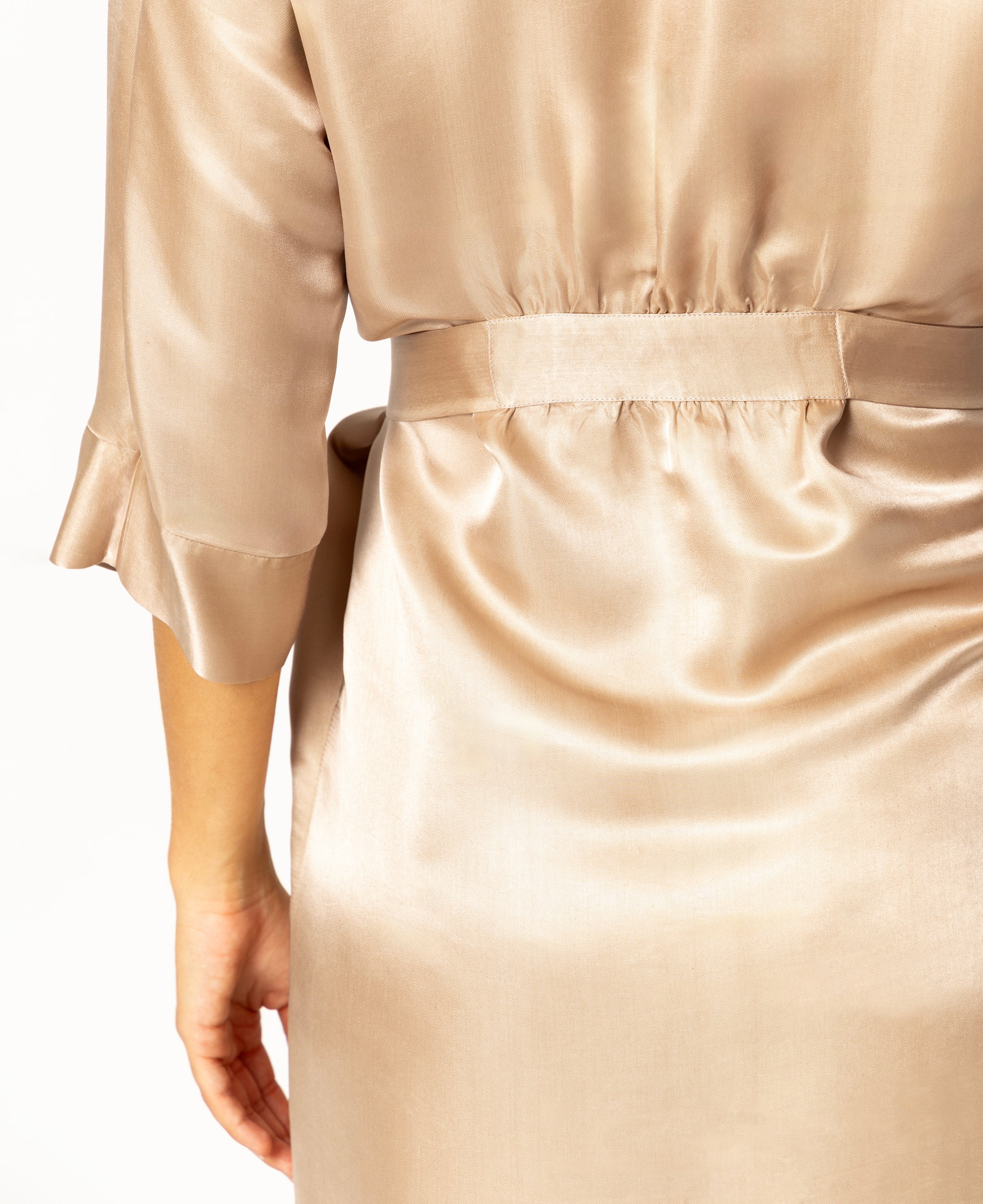
You can feel the difference within about thirty seconds of touching the fabric. Heritage-loom silk has a substantial hand. It moves like a fluid rather than fluttering like a flag. The drape sits on the body. It does not lift away. This is most of what people mean when they say silk feels expensive, although the cause is the loom, not the price.
Why the Loom Matters for the Garment
The loom is the foundation. Everything that happens after the loom is conditional on the quality of the fabric the loom produced.
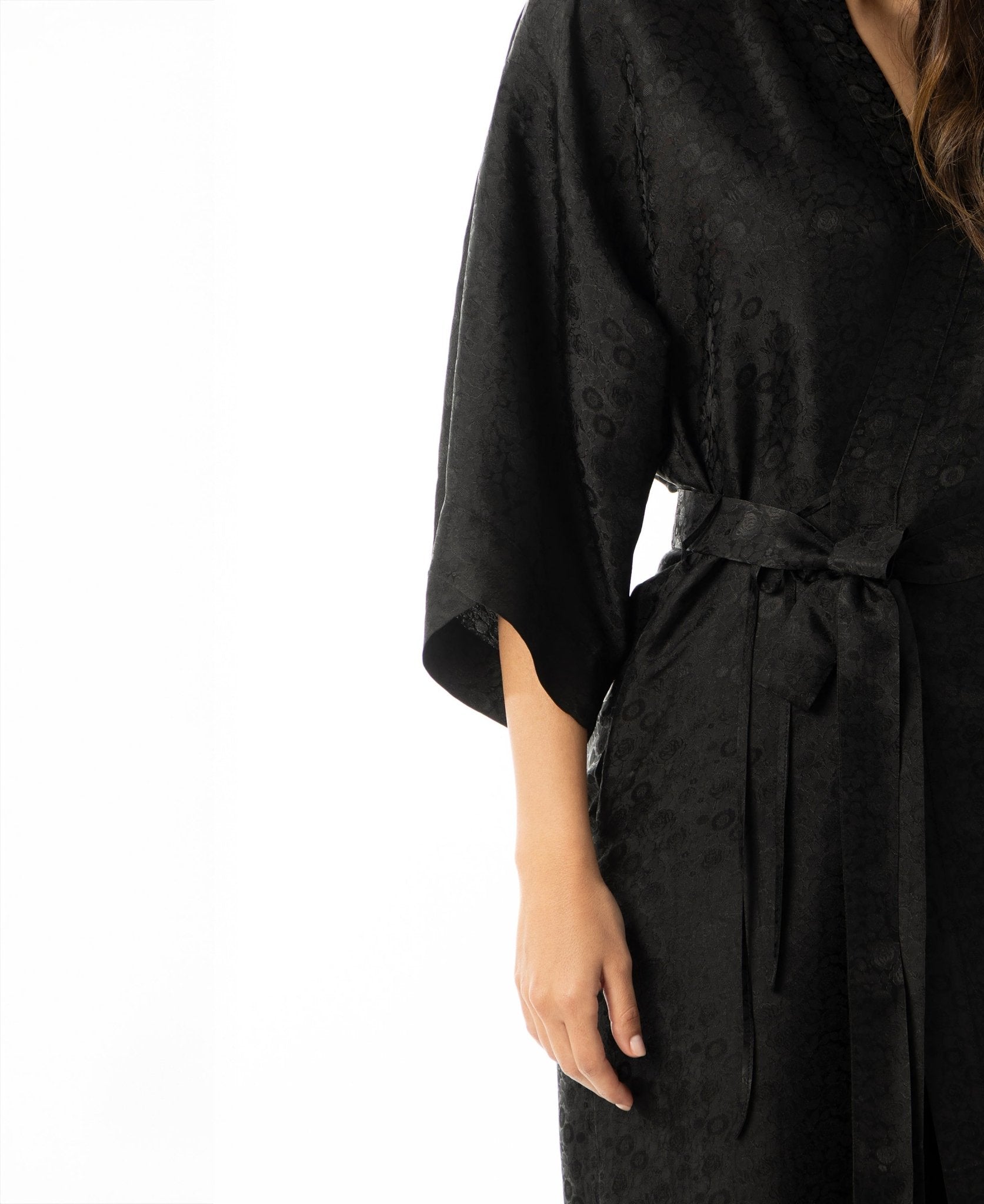
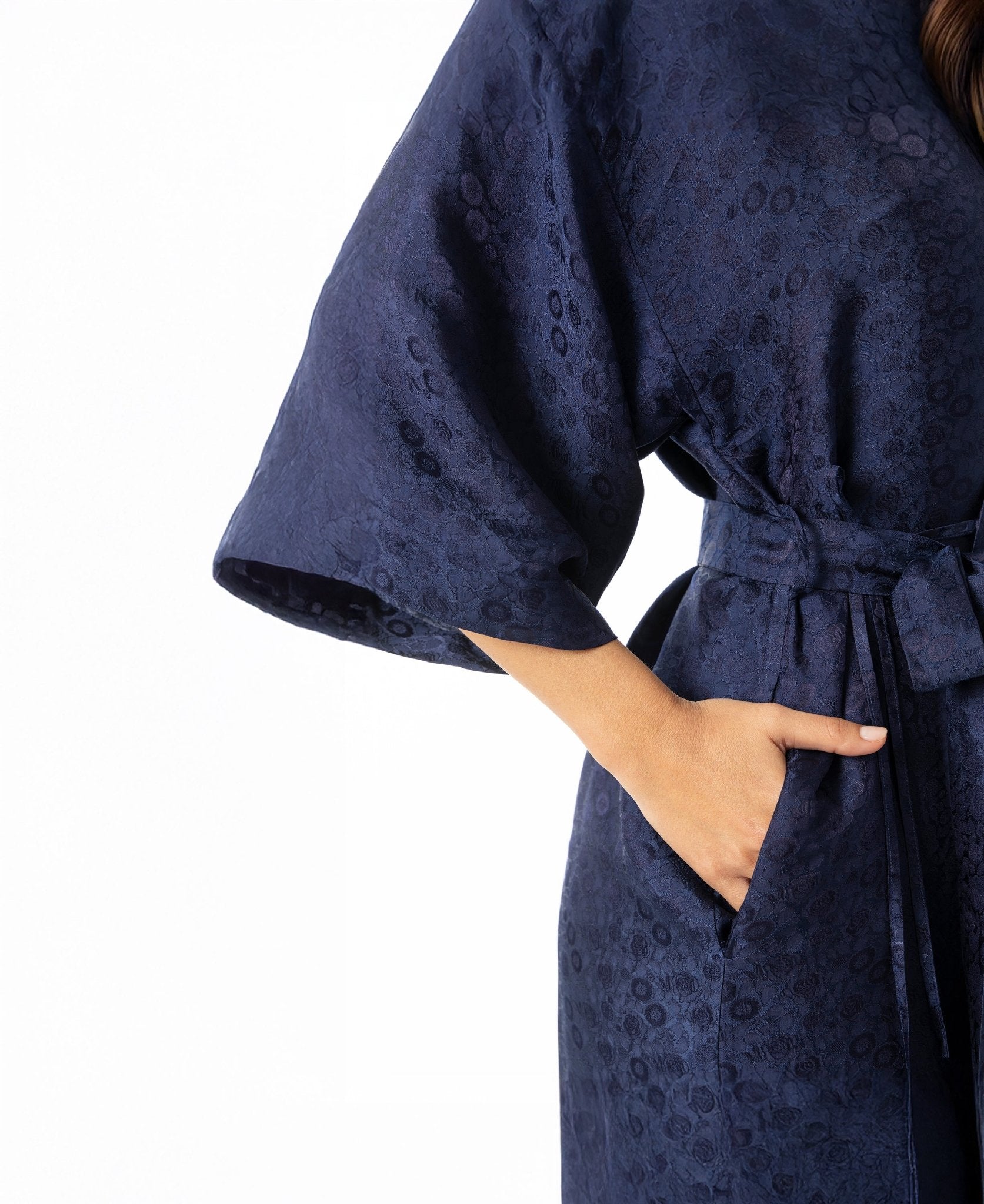
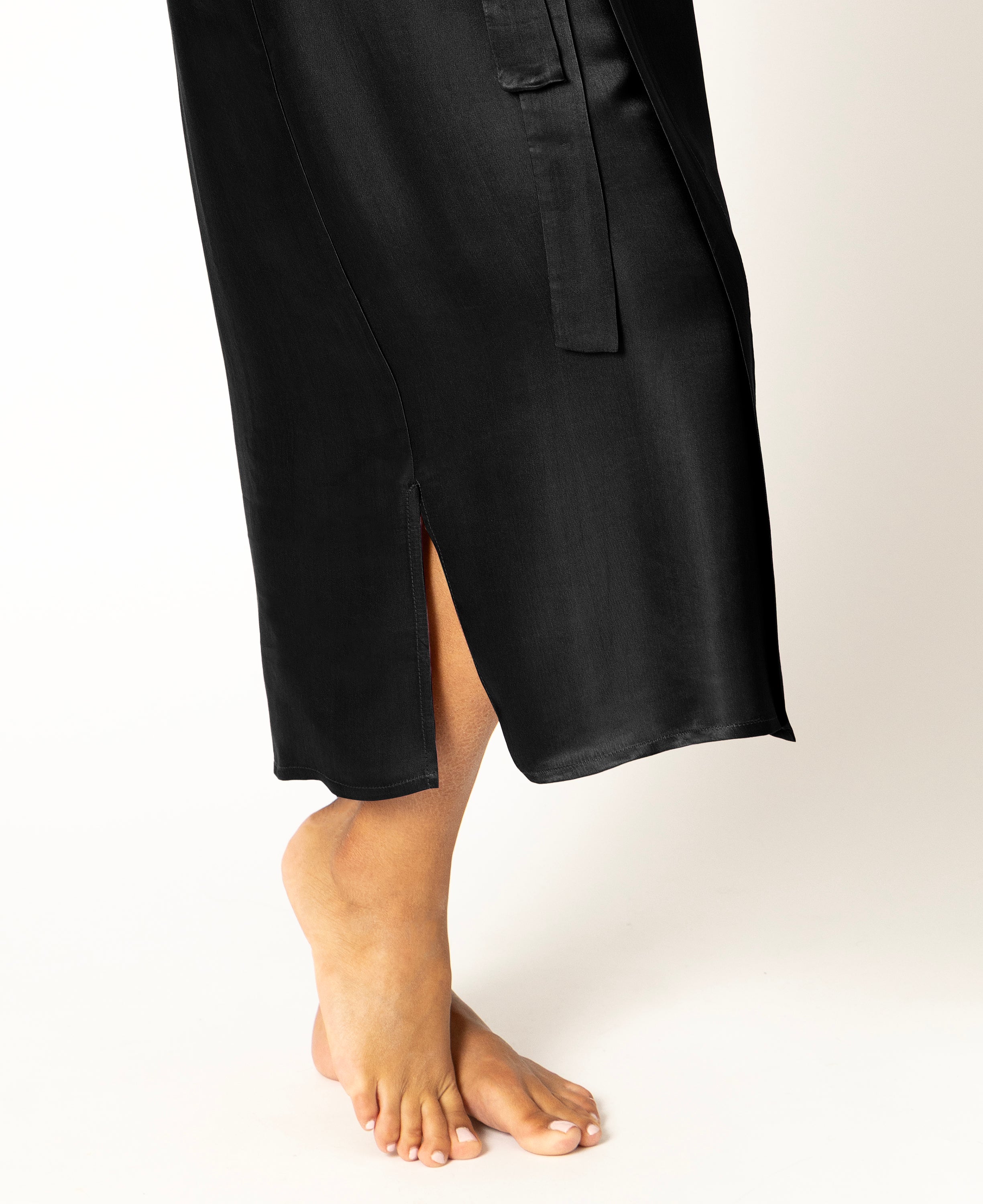
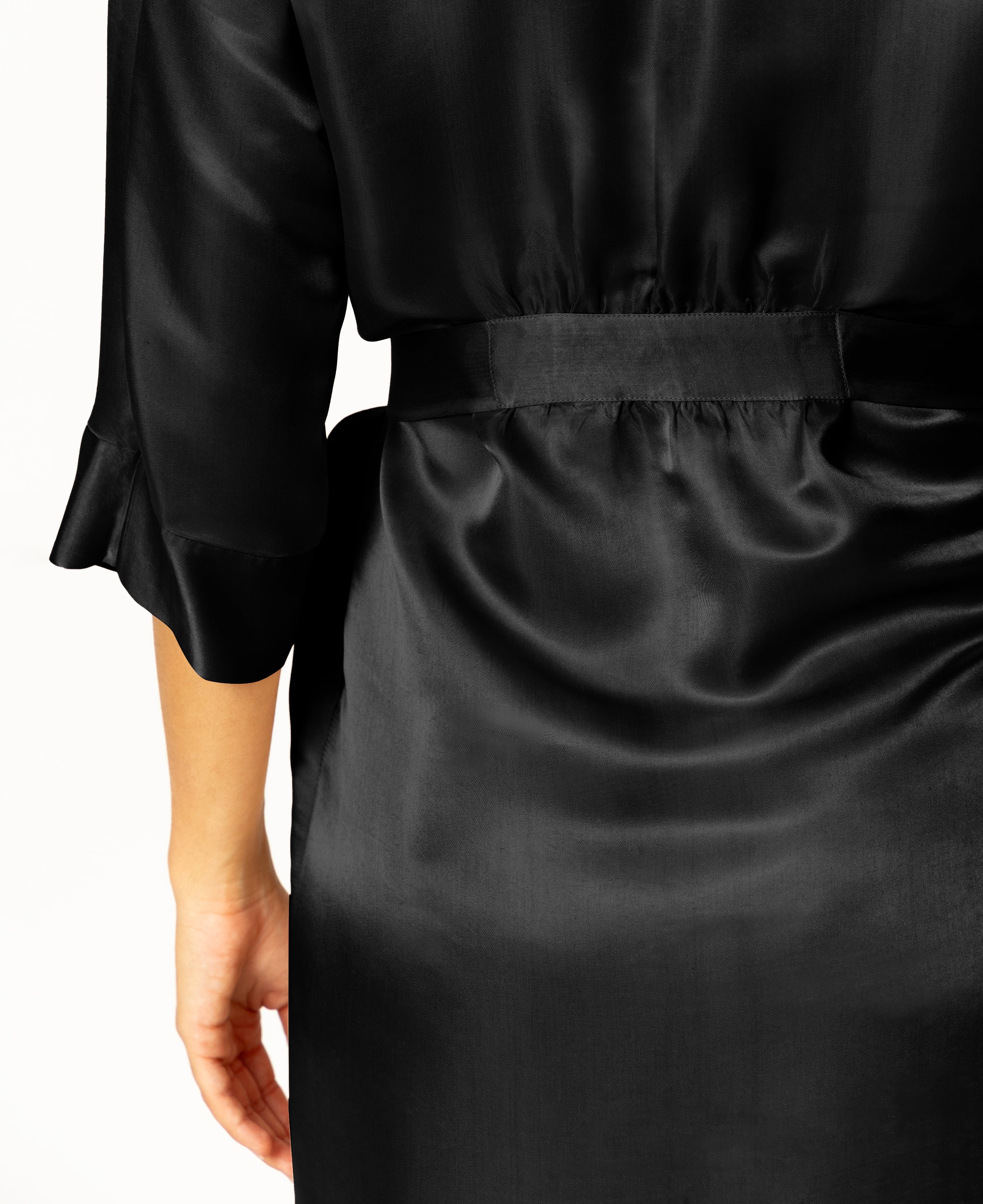
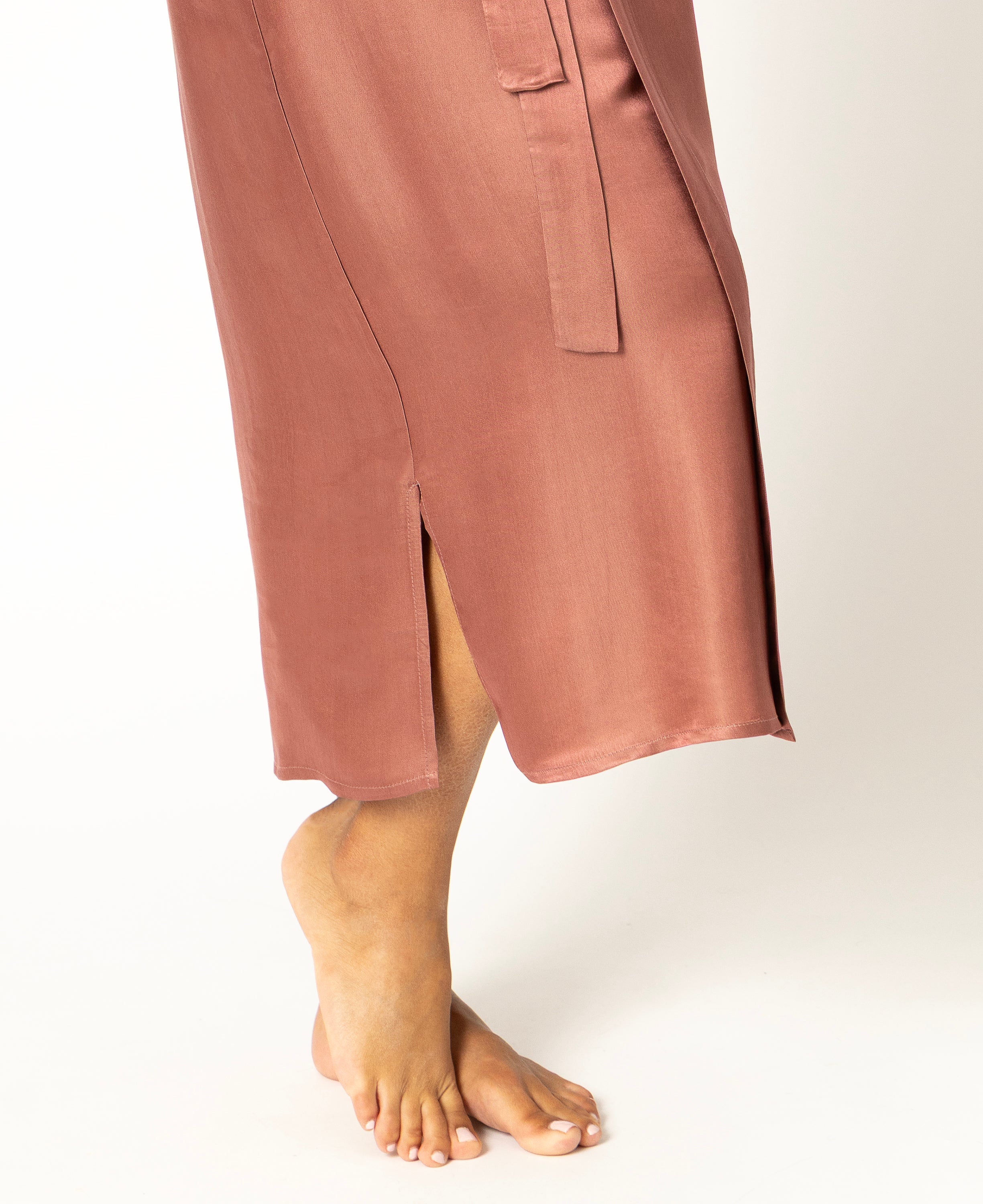
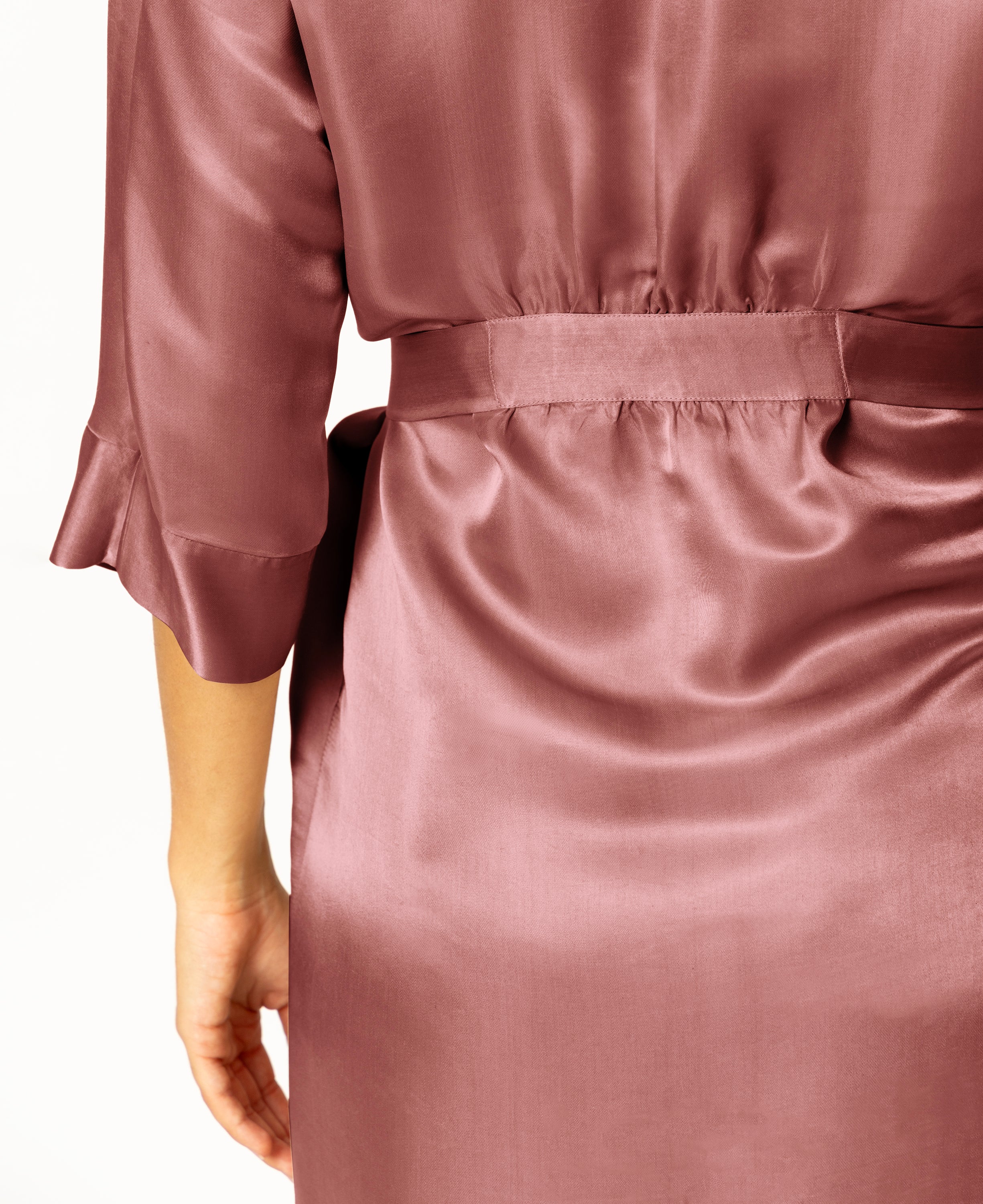
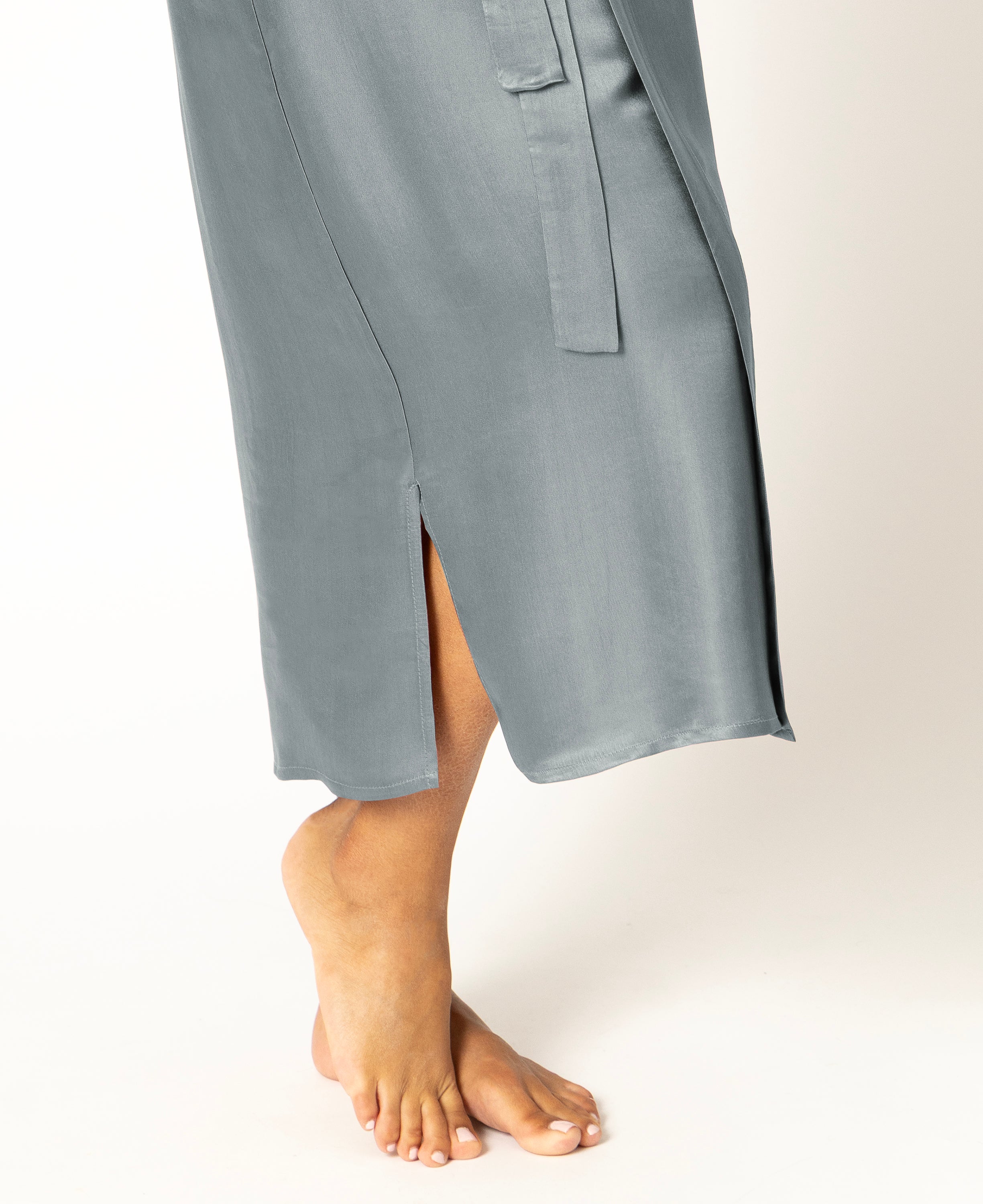
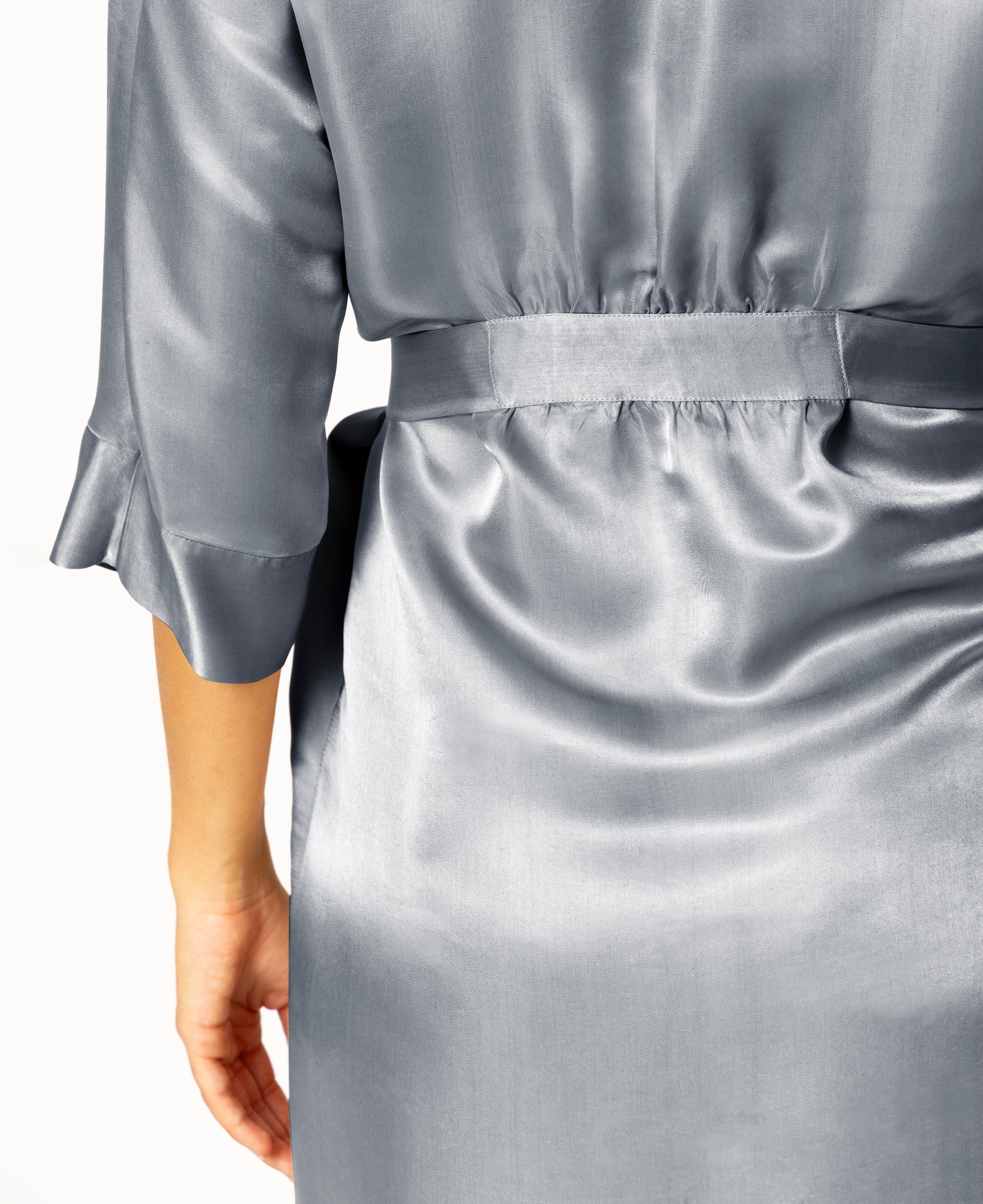
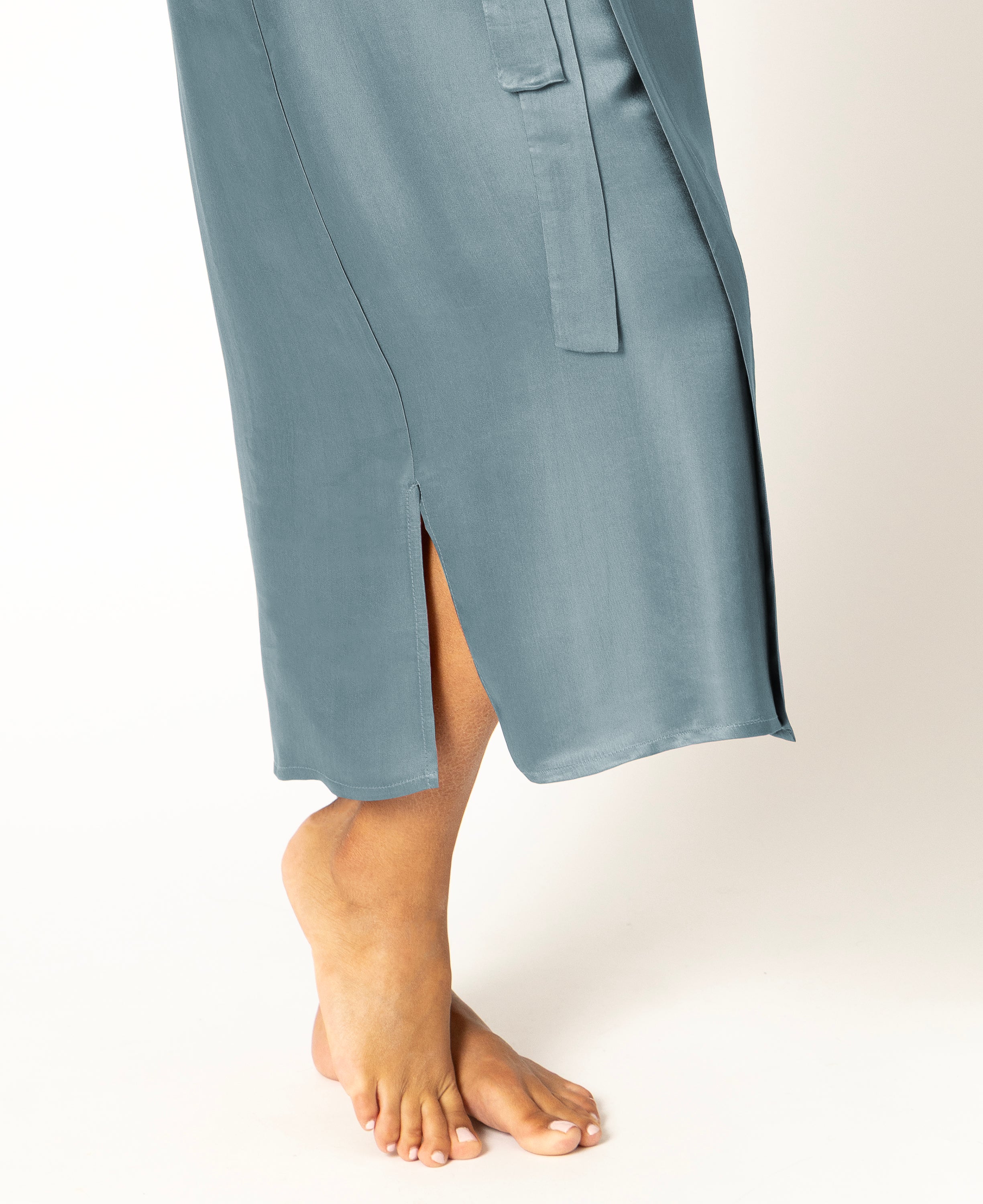
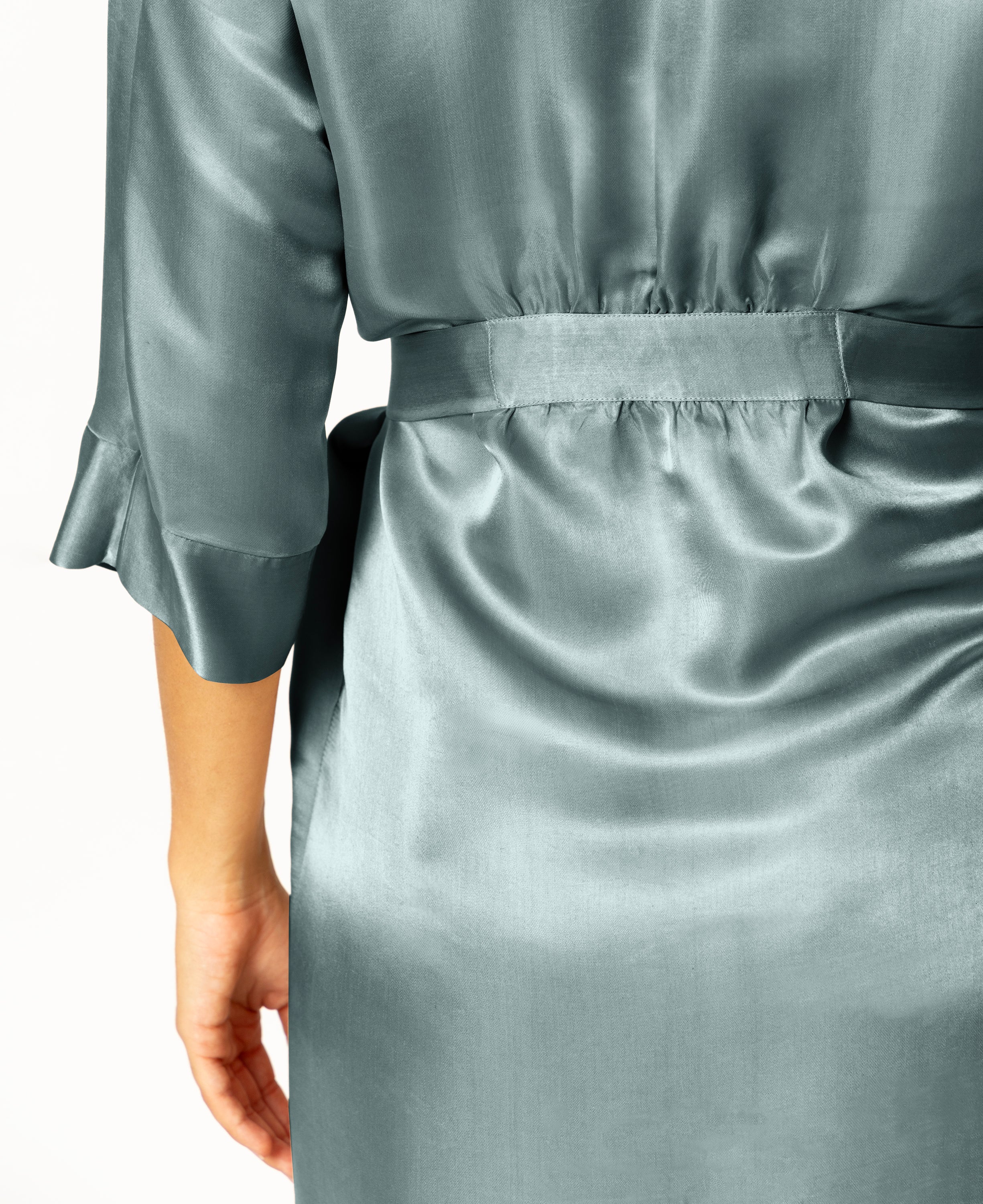
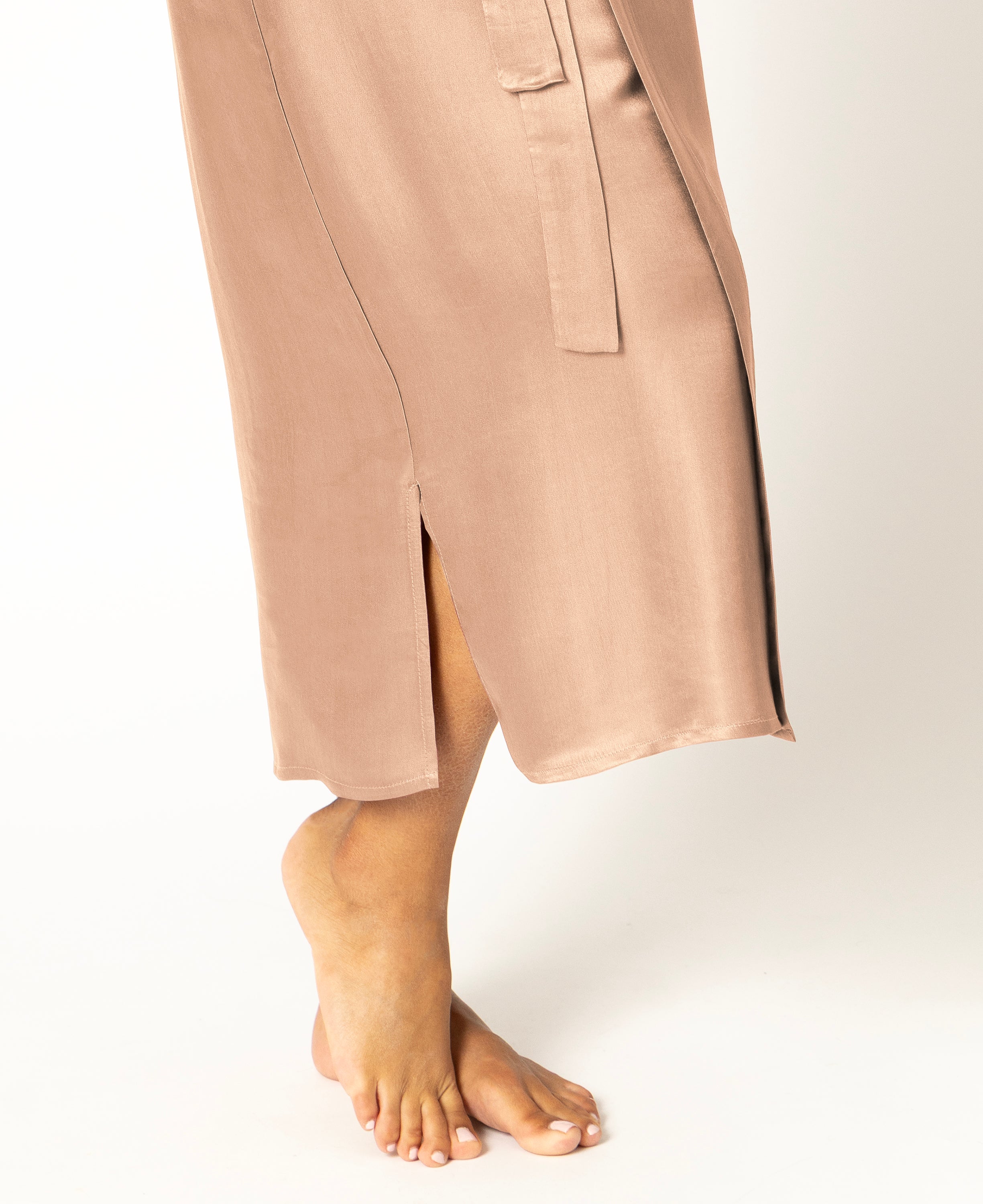
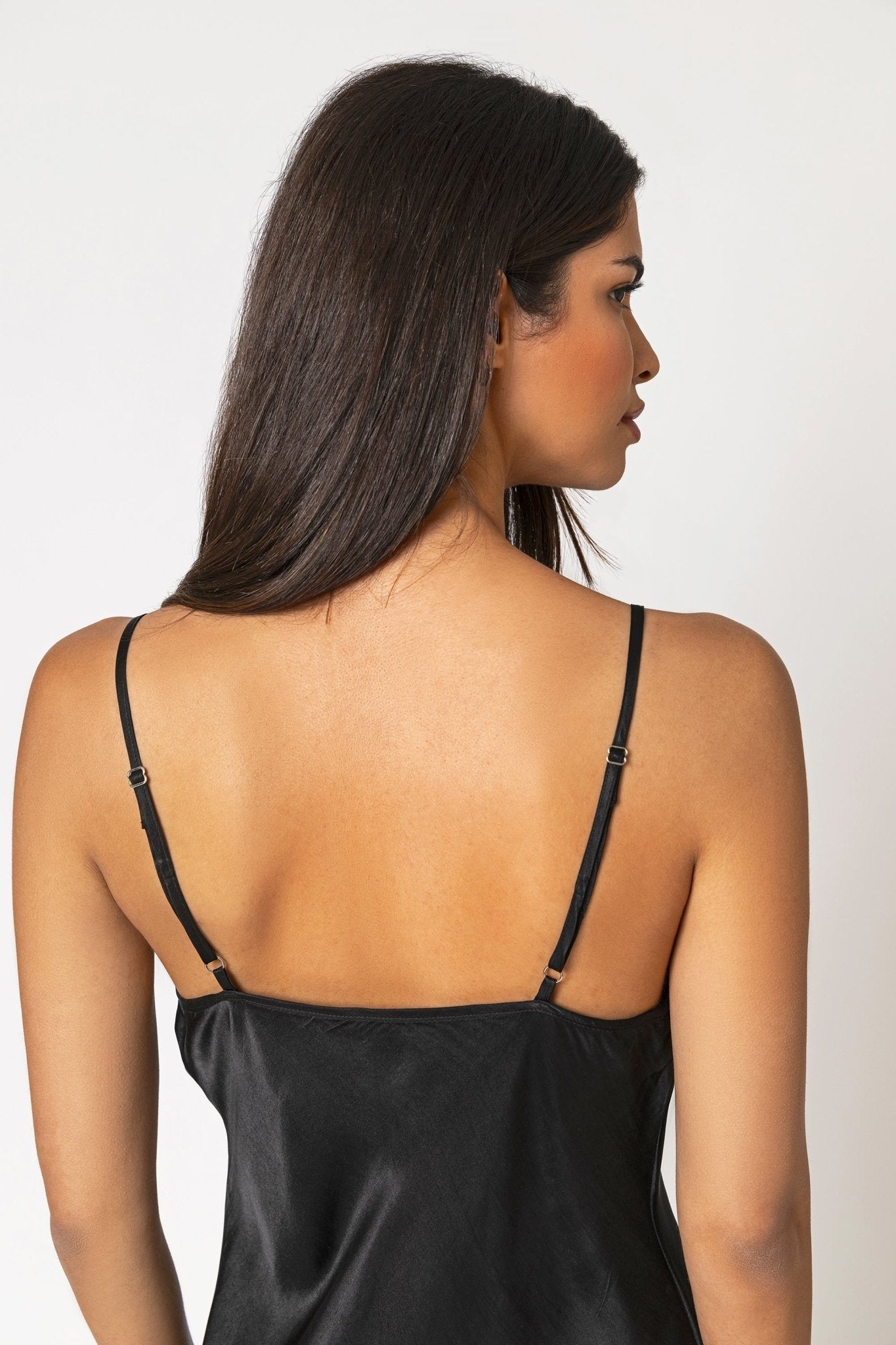
A French seam will only hold up if the silk it is sewn into has enough thread density to anchor the stitches. On thin industrial silk, French seams can be sewn, but the fabric on either side of the seam thins under wear and the seam survives a fabric that is already failing. On heritage-loom silk, the seam is stronger than the fabric, which is what you want.
Machine washability depends on the same thing. A heritage-loom silk at 27 momme survives the delicate cycle indefinitely because the thread structure is not compromised. A thinner silk on a fast loom does not. This is why most silk brands tell you to dry clean. The cleaner is the workaround for a fabric that cannot take a wash. We do not tell you to dry clean because we do not need that workaround.
Drape and longevity are loom-dependent. The reason our robes still fall correctly after eight years is that the silk left the loom with the right structure. The reason cheap silk robes start to lift and flutter at the shoulders within a year is that the silk left the loom slightly stressed and slowly returns to the structure it actually has.
What "Heritage" Means in Vietnam's Silk Villages
The phrase "heritage loom" can mean a few different things in different parts of the world, so it is worth being specific. In the historic silk villages of northern Vietnam, where our silk is woven, a heritage loom is a small-batch loom that has been in continuous use for generations. Most are wooden frame looms with mechanical assists added at some point in the twentieth century, run by one weaver who knows that loom intimately. Some looms are entirely mechanical. None of them are the industrial high-speed looms that produce mass-market silk.
The villages themselves have a thousand-year history of sericulture, the practice of raising silkworms and producing silk. The skill set is passed down through families. The looms are maintained by the people who use them. The weavers are not anonymous operators. They are specialists who know what their loom does well and what fabric it produces best.
I grew up close to one of these villages. The silk my grandmother kept came from looms like these. The fabric that survived three children, two wars, and weekly hand washing in her kitchen was woven this way. That is the actual reason I started Tara Sartoria with heritage-loom silk. I had seen the proof of what this fabric does over time. I did not want to make silk that was not built to do the same thing.







What This Costs and Why We Still Pay It
A heritage loom produces roughly a tenth of the fabric per day that a modern industrial loom produces. The math is brutal. To make a thousand meters of heritage-loom silk, you need ten times the loom hours and ten times the weaver hours. The cost per meter is multiples of what the industrial alternative would cost. This is the largest single reason a Tara Sartoria robe costs what it does.
I still pay it because the alternative is a robe that lasts two years instead of ten. The cost-per-wear math tilts heavily in favor of the more expensive fabric once you carry the calculation out far enough. A two hundred and forty-eight dollar robe worn three times a week for eight years is about twenty cents per wear. A ninety dollar "silk" robe worn three times a week until it pills out at eighteen months is about thirty cents per wear, and you have a worse robe the whole time. The numbers are not close.
The other reason is that I would not be comfortable selling silk I did not believe would last. My grandmother's silk lasted. My customers' silk should last. The loom is the part of the chain that makes that possible. There is no industrial shortcut that produces the same result.
How to Recognize Heritage-Loom Silk When You're Shopping
Most brands do not name their loom. If a brand says "luxury silk" without telling you how the silk was woven, the silk was almost certainly woven on an industrial loom. The omission is the information.
A brand using heritage looms has every reason to mention them, because the production is the differentiator and the cost has to be justified to the customer. Specific signals to look for: explicit mention of the village or region of weaving, the loom type, the artisan model, the momme weight, and the seam type. A brand that can describe all five honestly is making real silk. A brand that can describe none is selling polyester satin and using the word silk in the title.
The hand test works too, although it requires having the fabric in front of you. Heritage-loom silk at 27 momme has a substantial drape. It hangs from the shoulder. It does not lift in still air. It feels cool against the wrist and stays cool. Industrial silk feels lighter, lifts more readily, and tends to feel warmer faster against the skin because the weave is looser and the fabric is thinner.
How Our Silk Is Built, Start to Finish
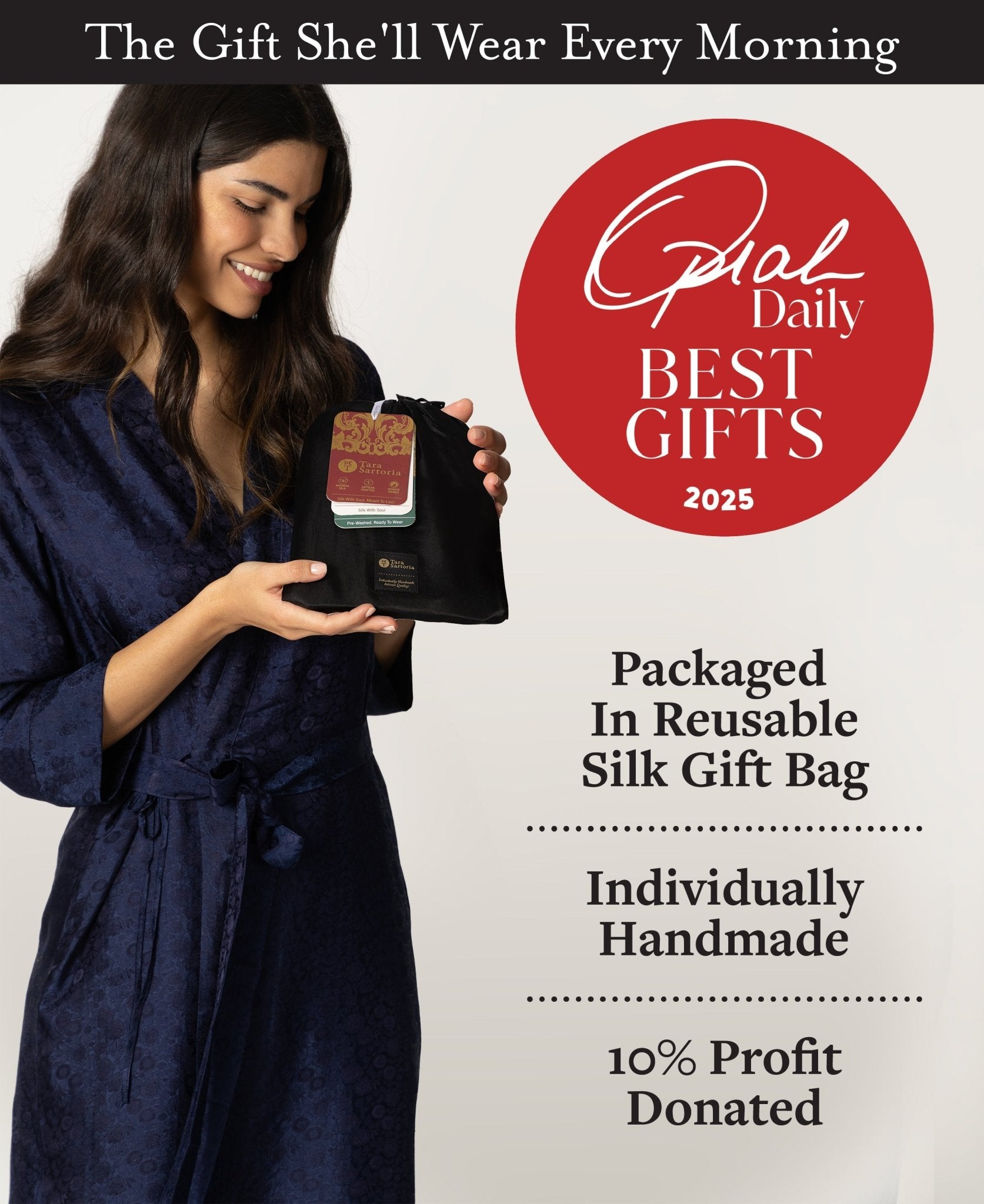
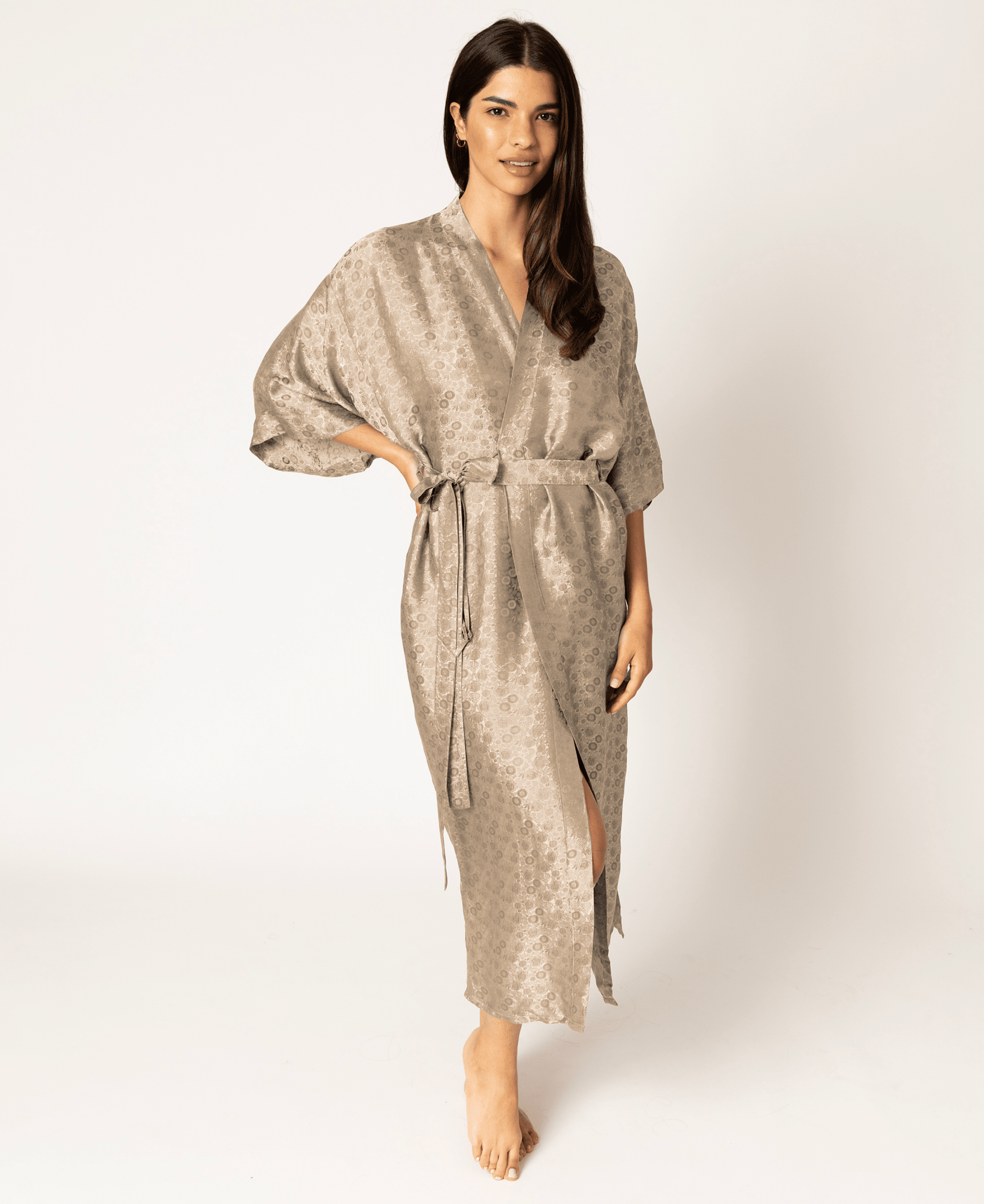
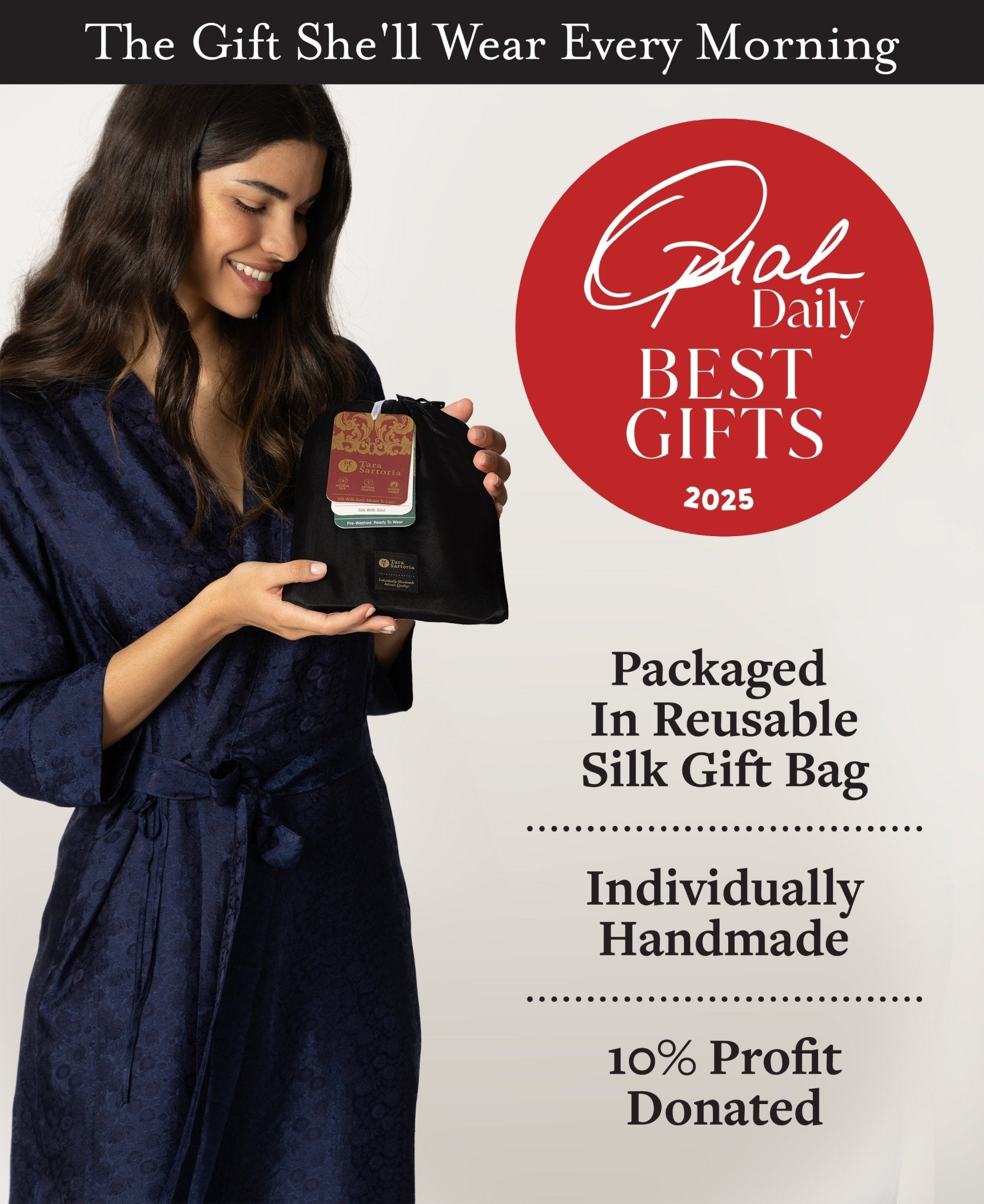
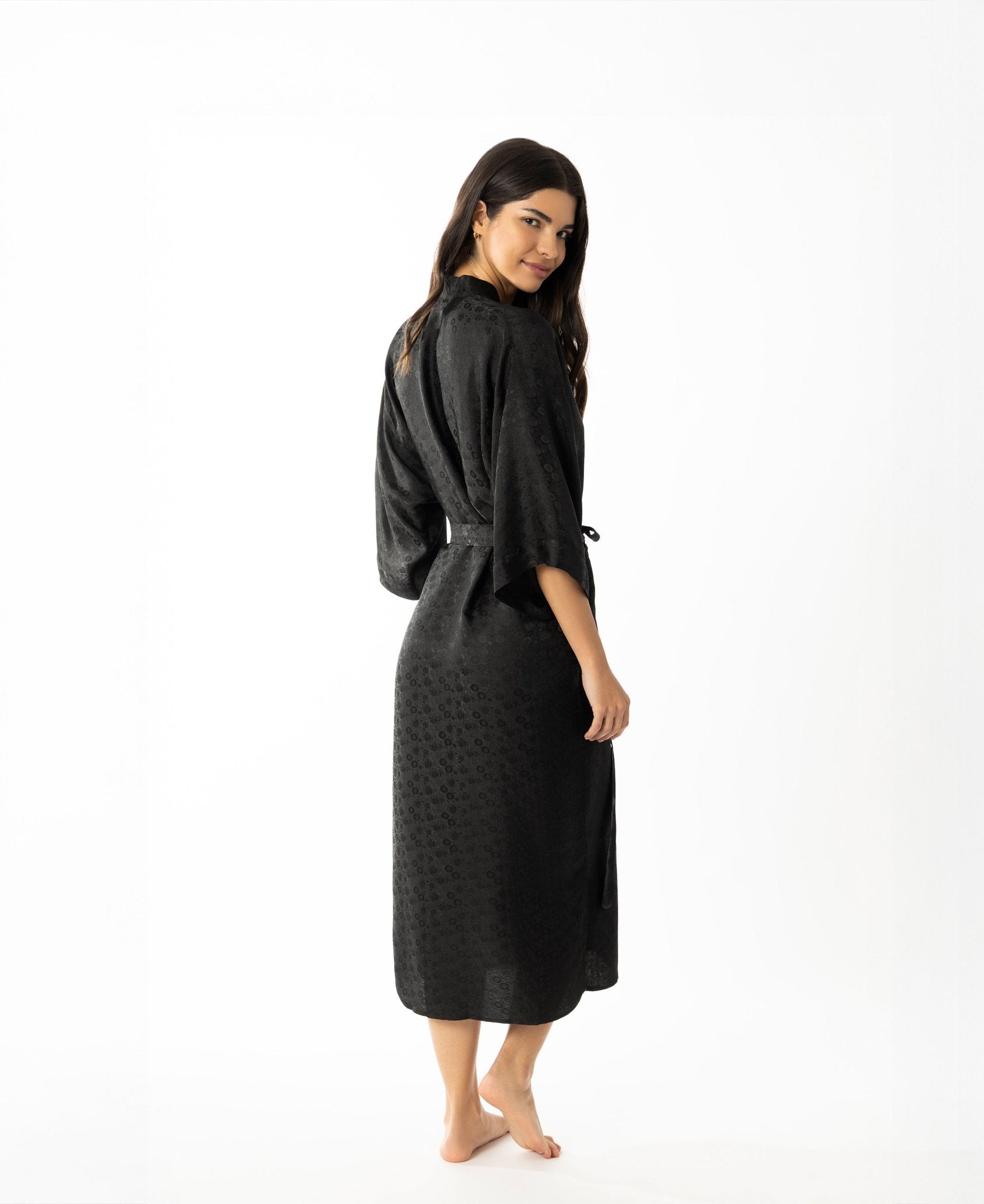
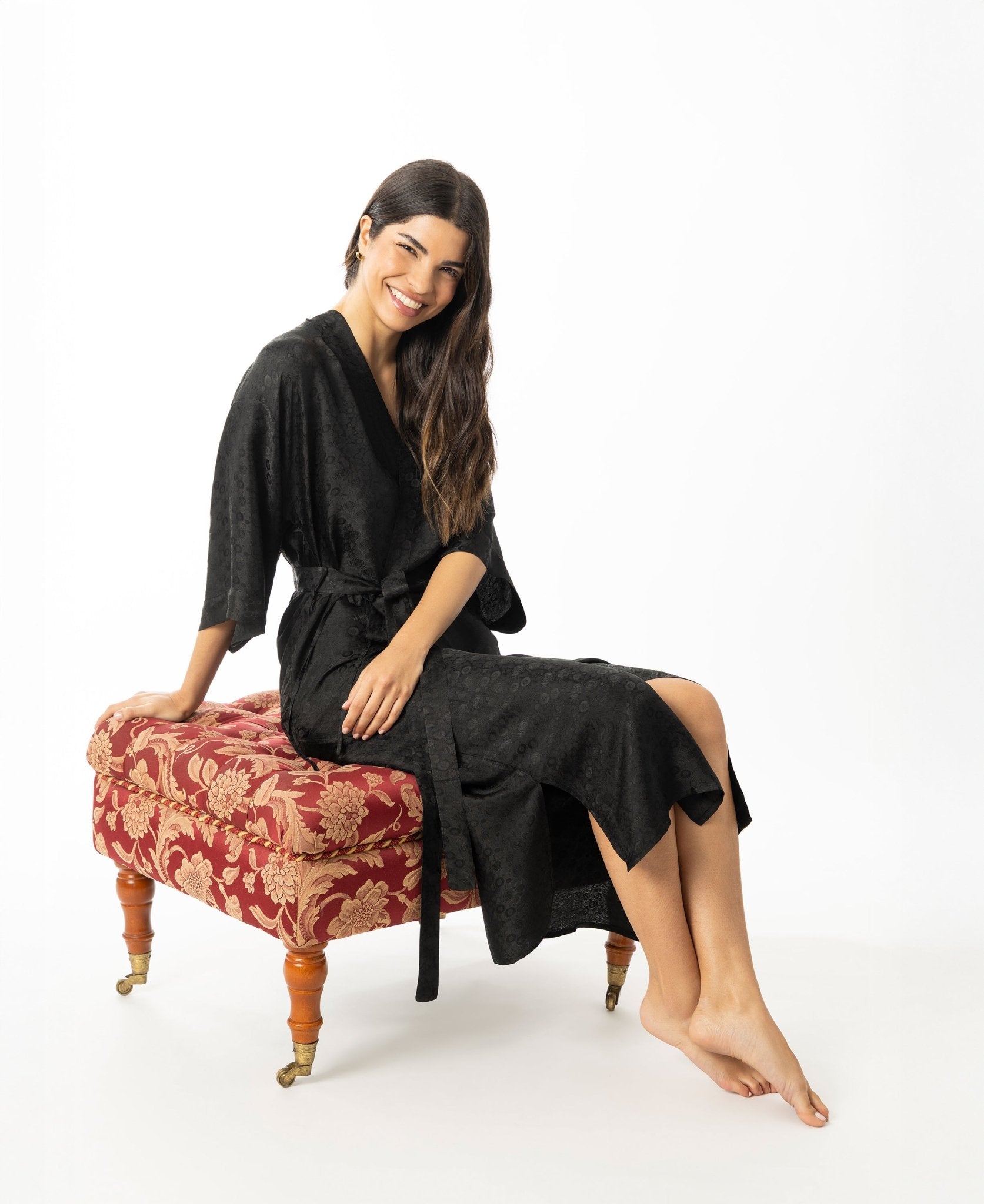
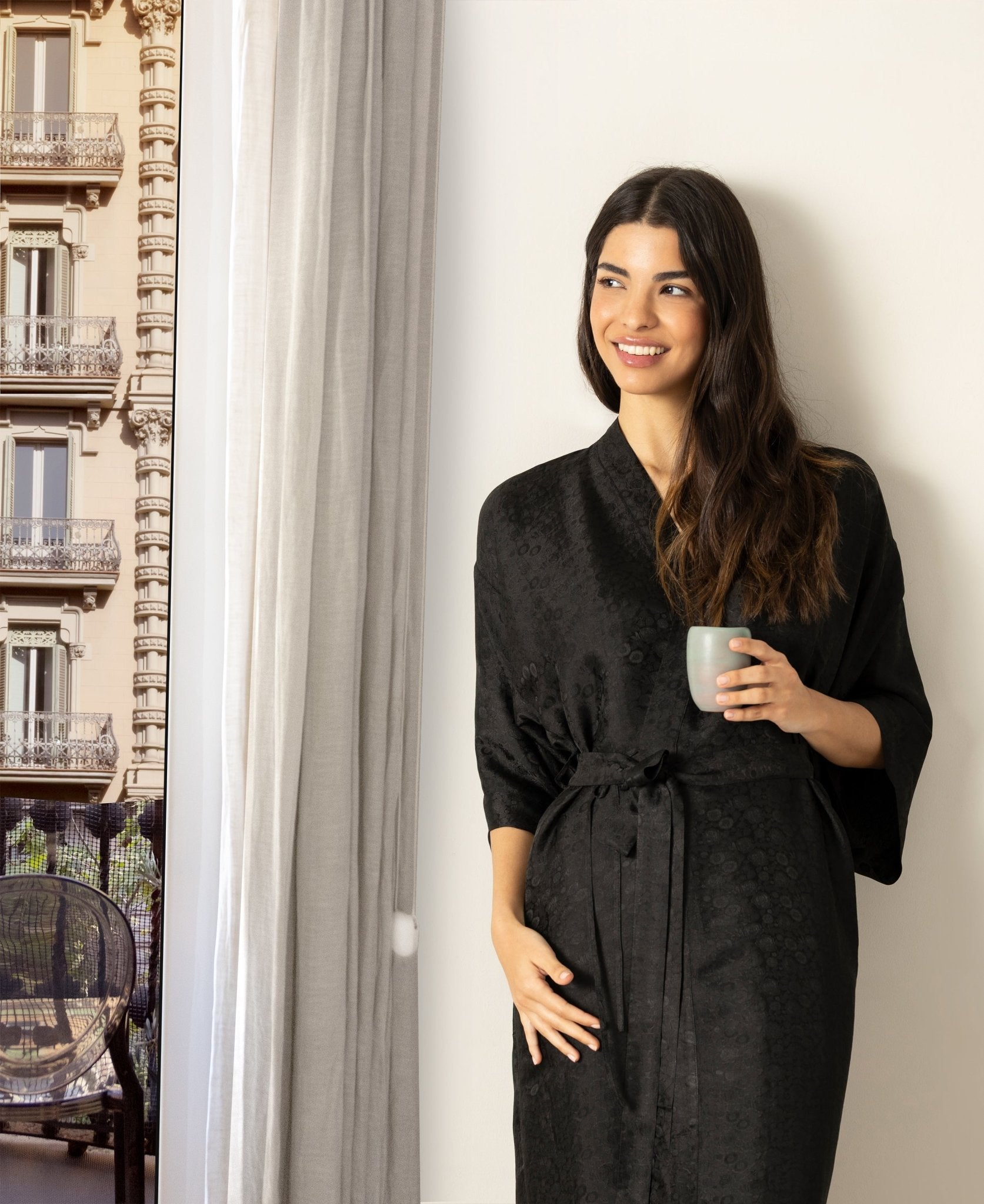
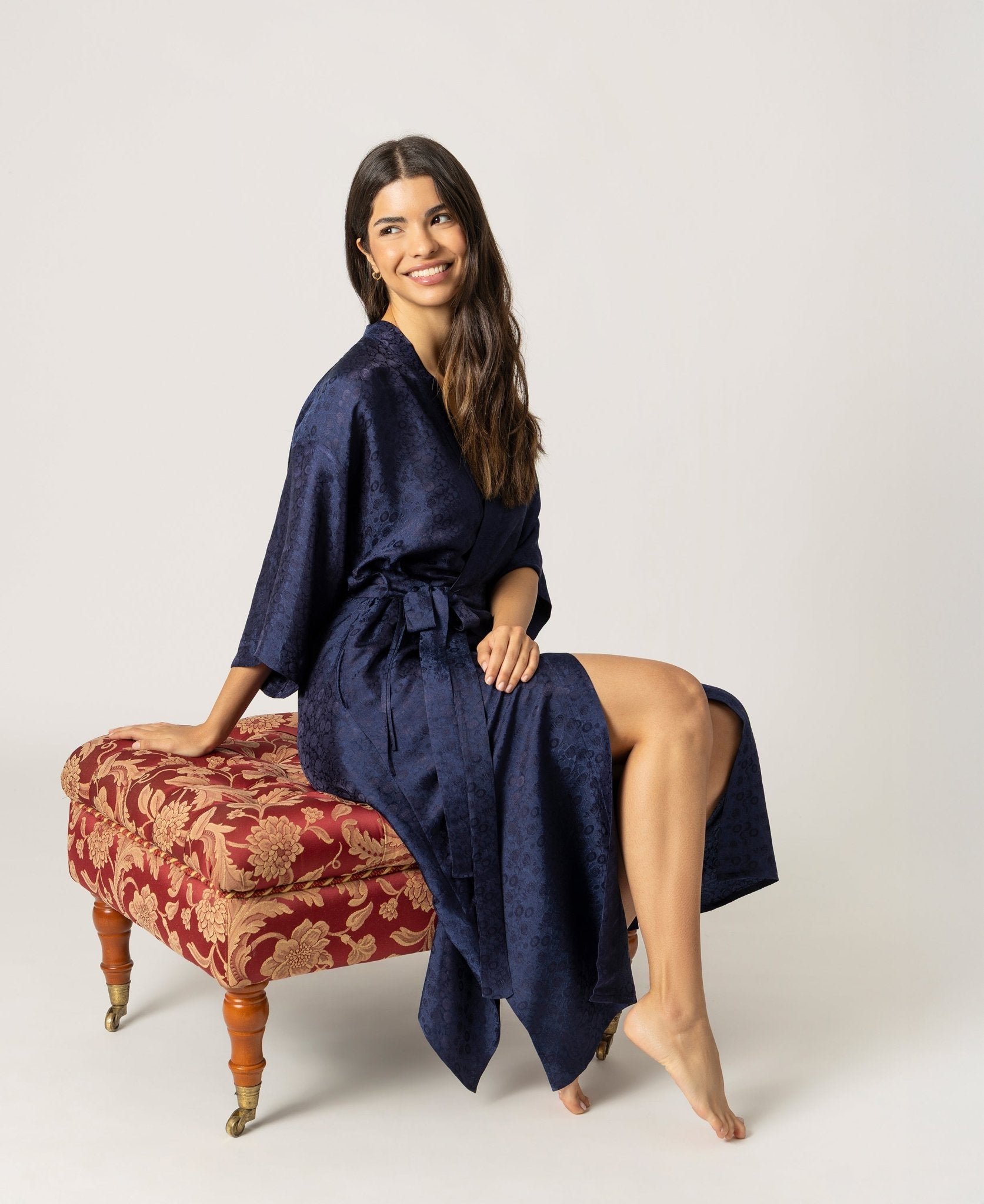
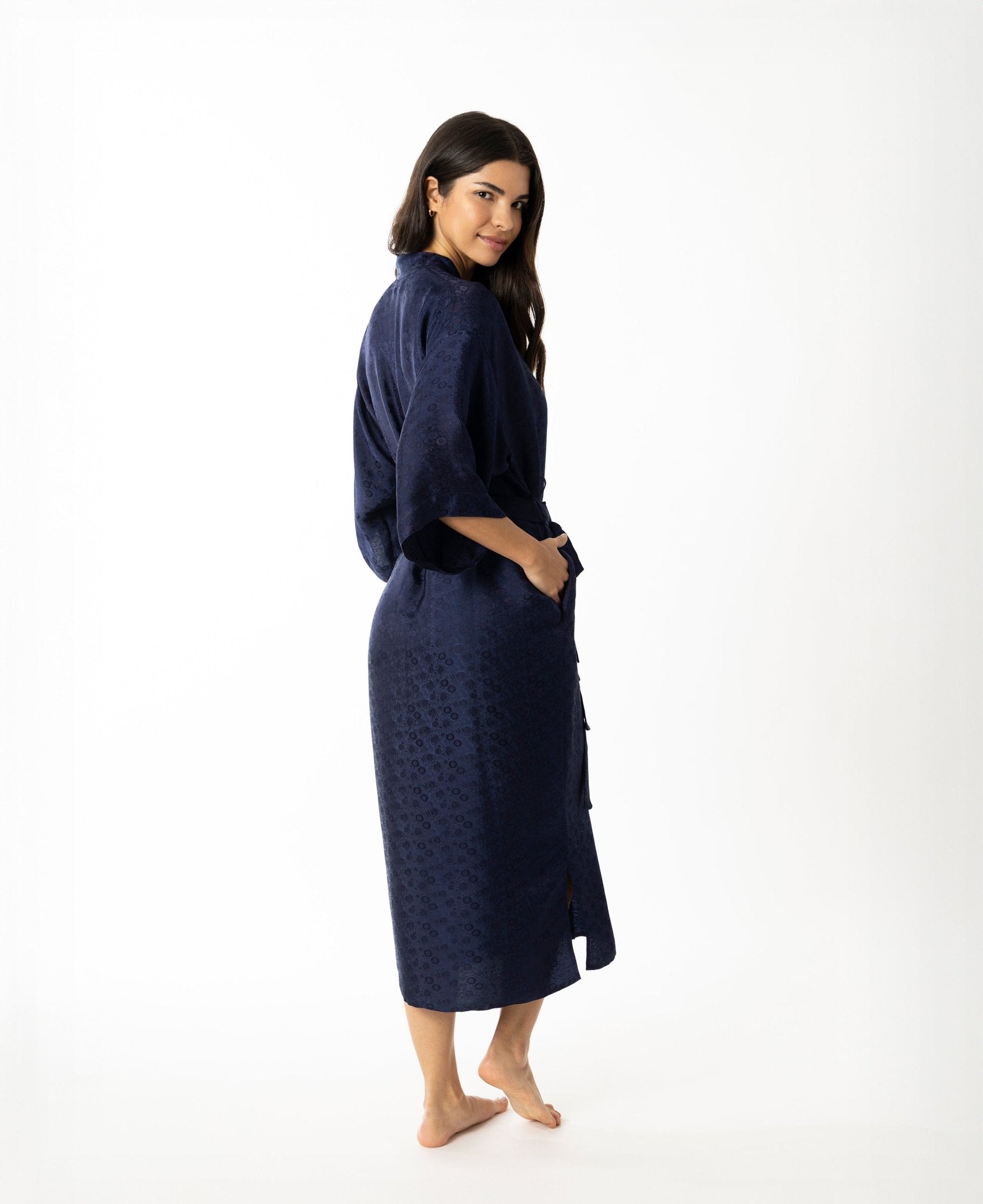
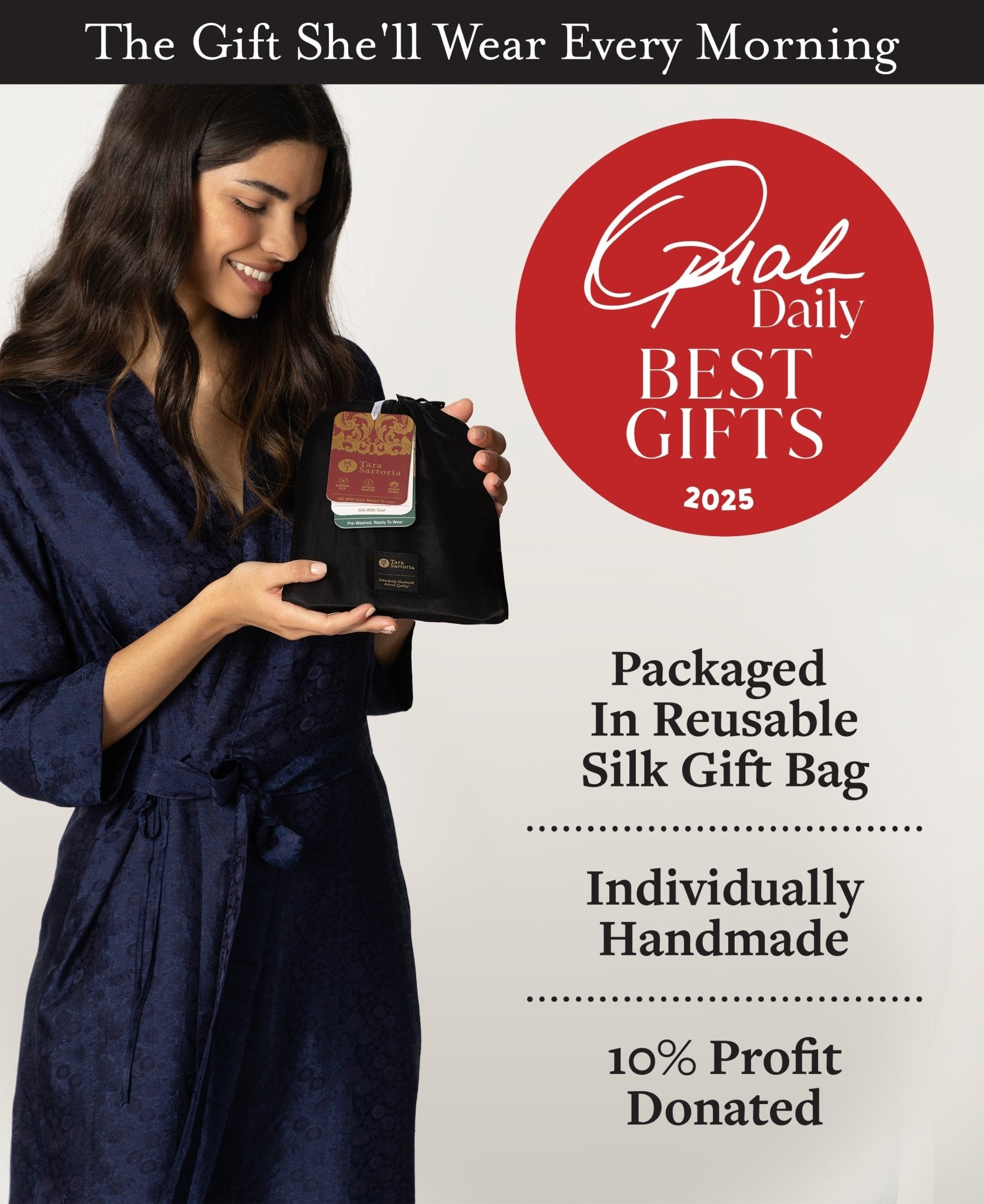
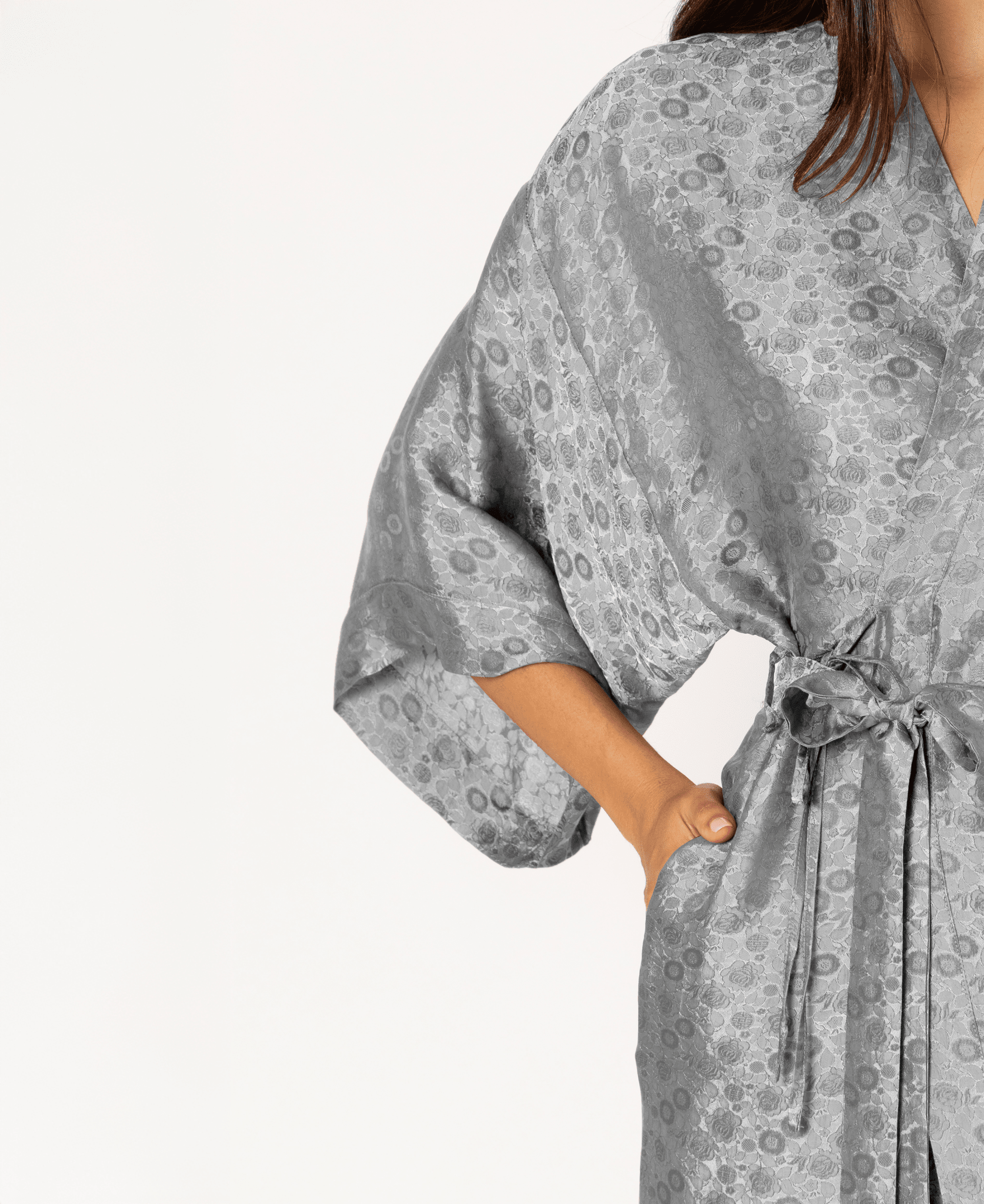
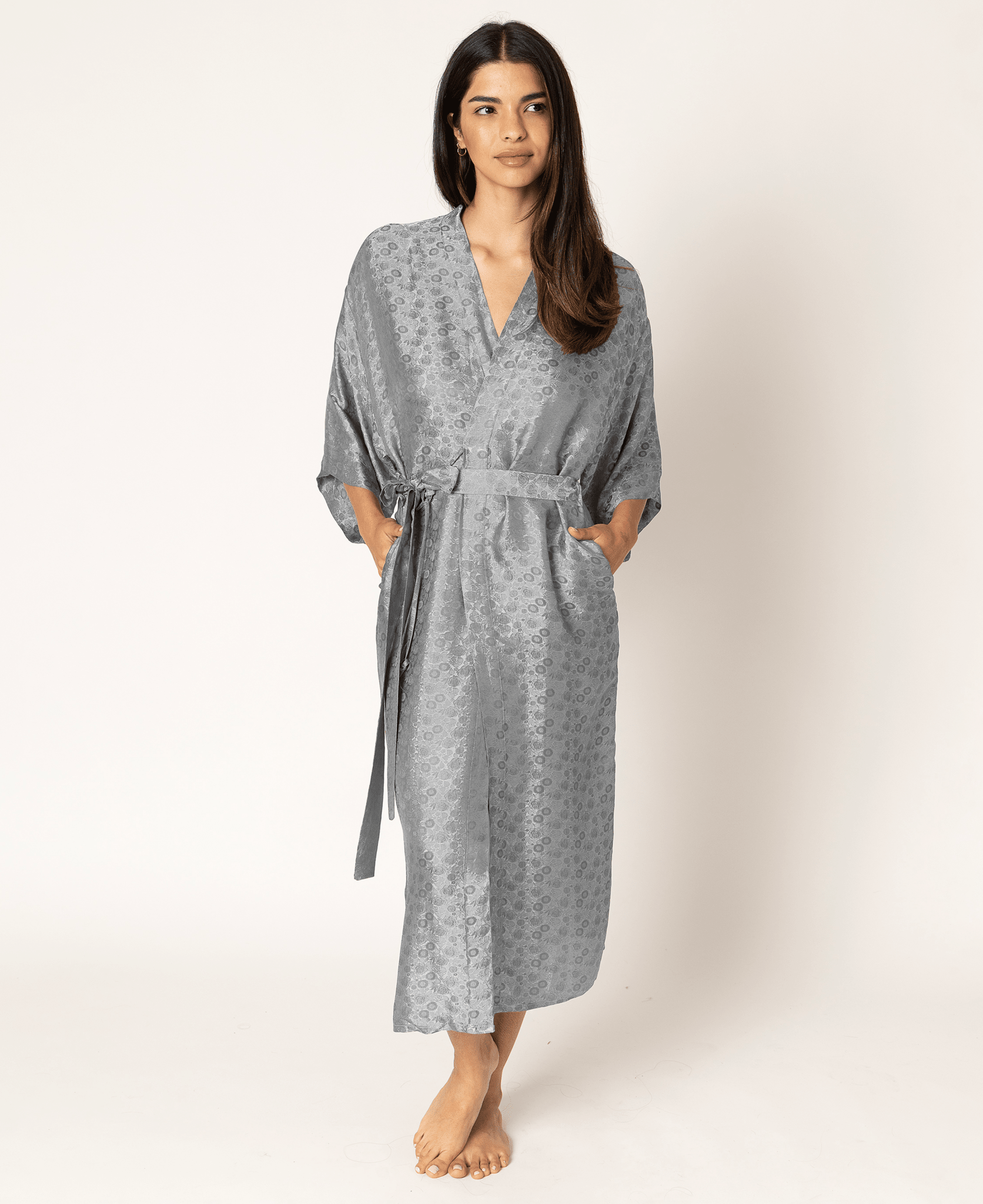
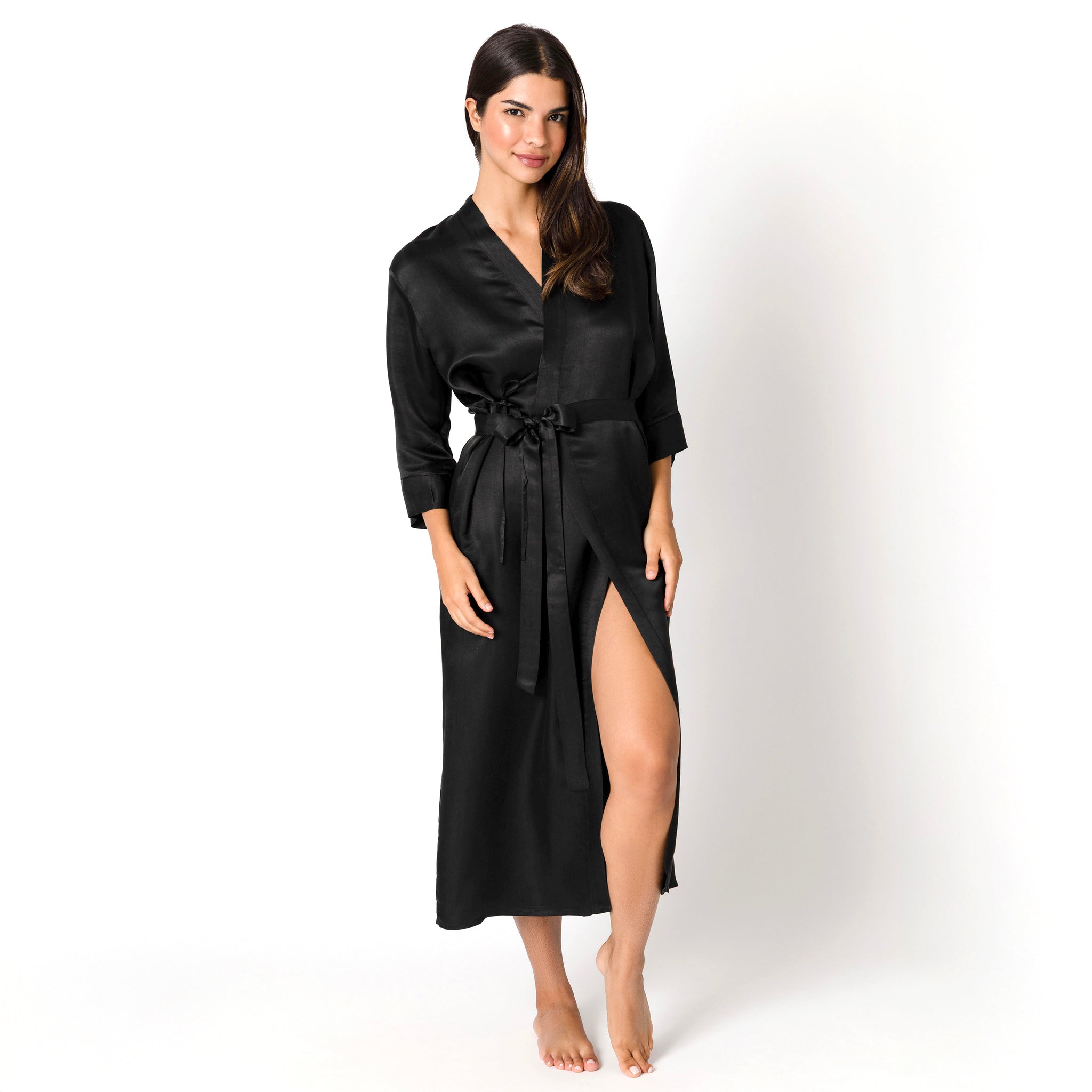
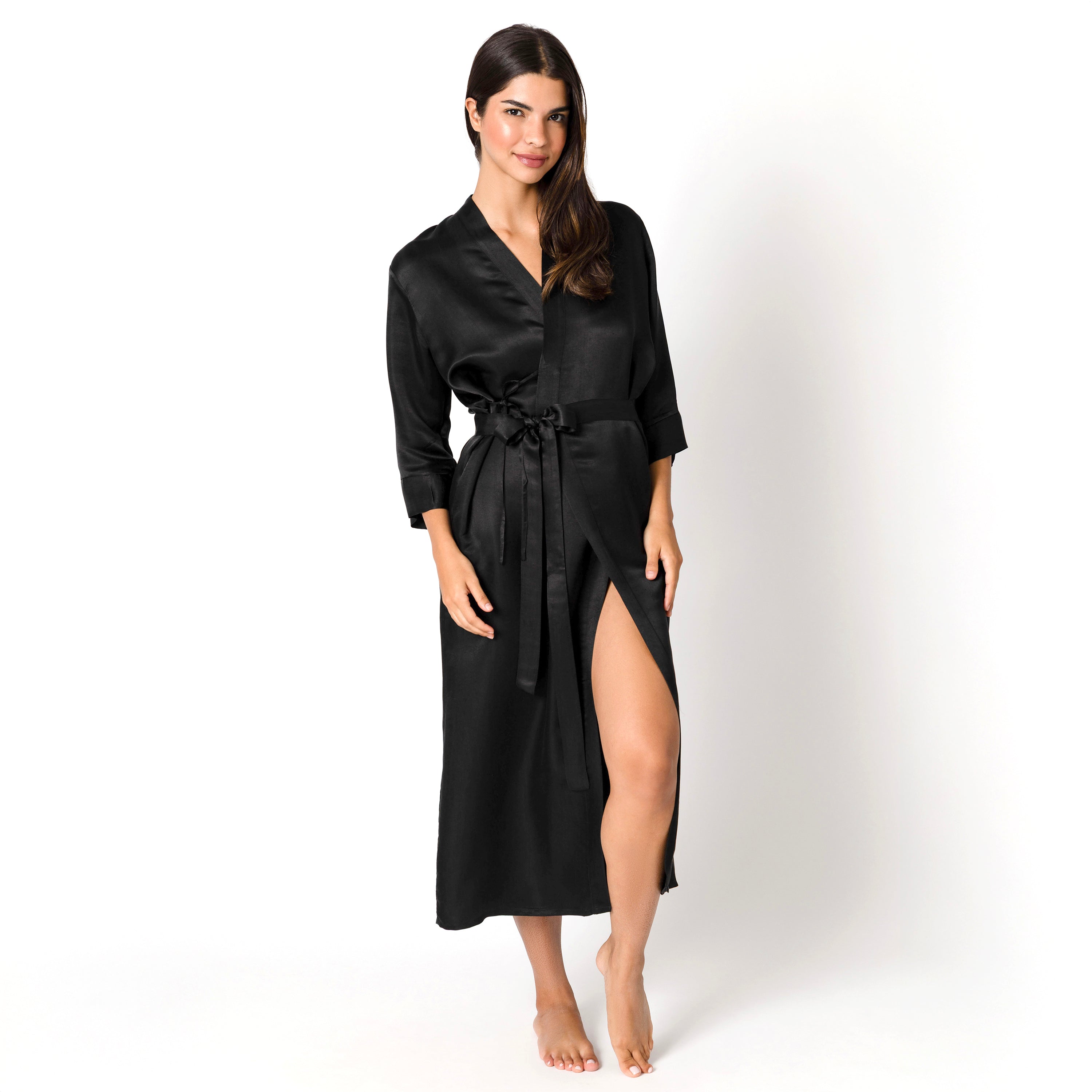
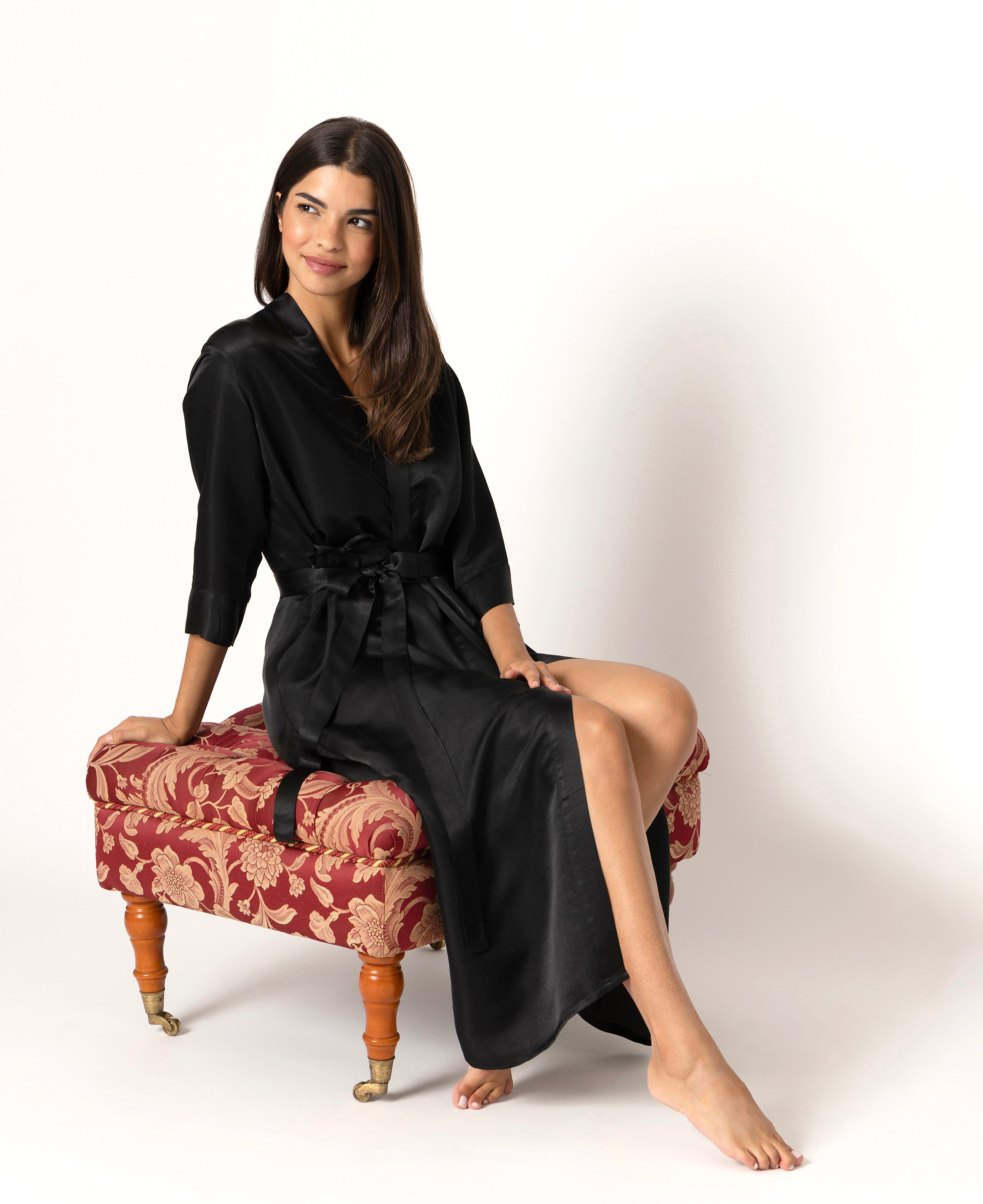
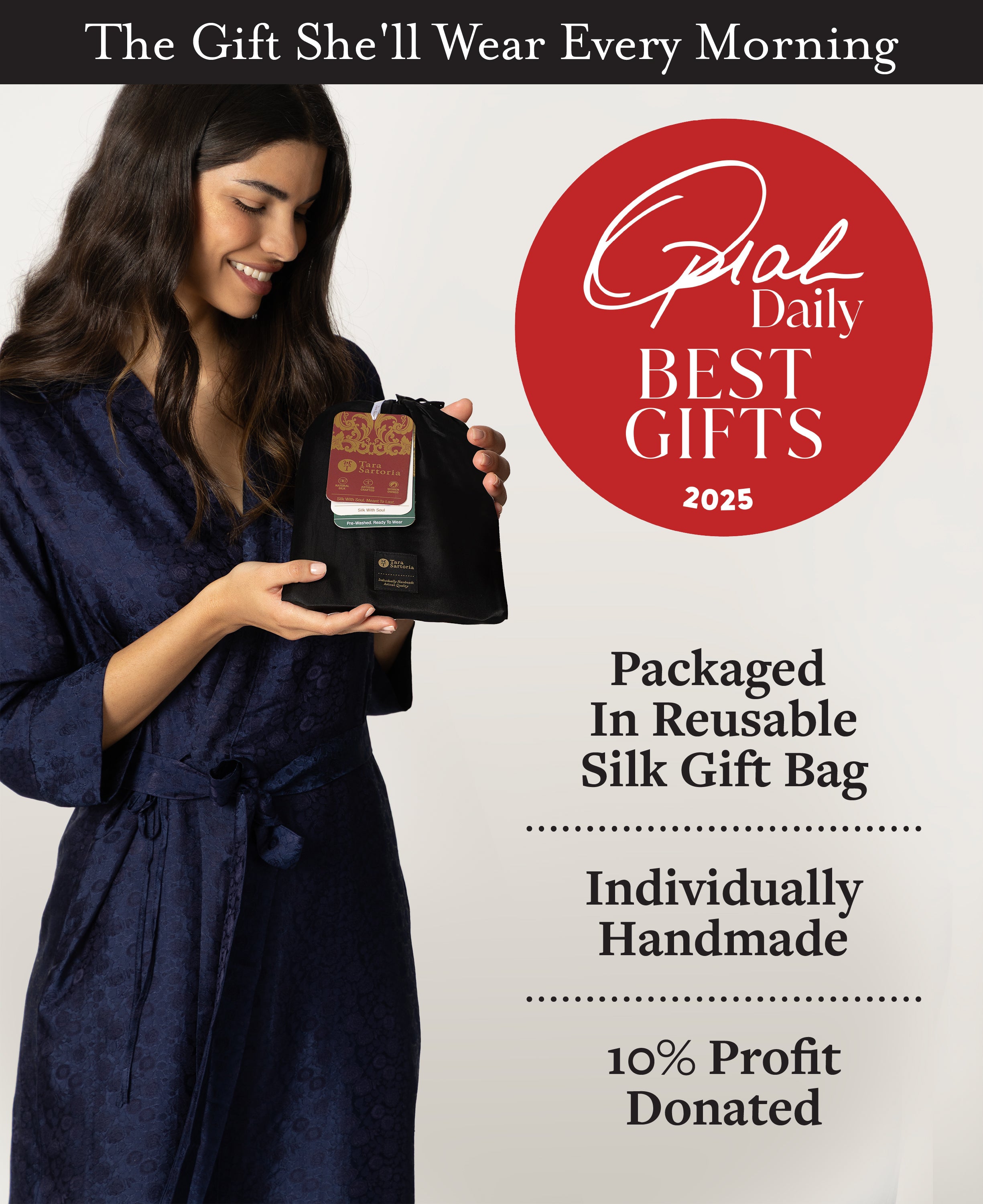
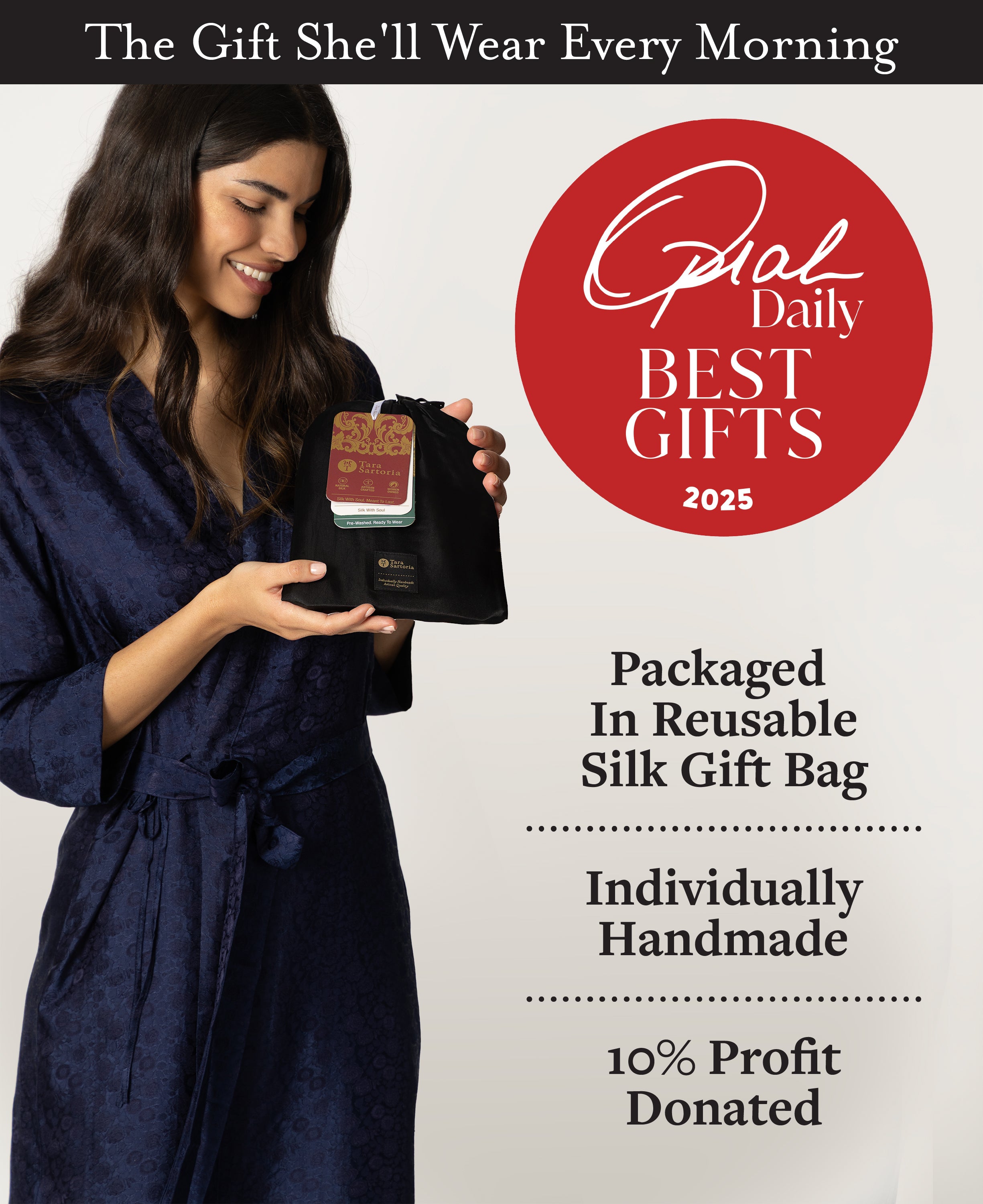
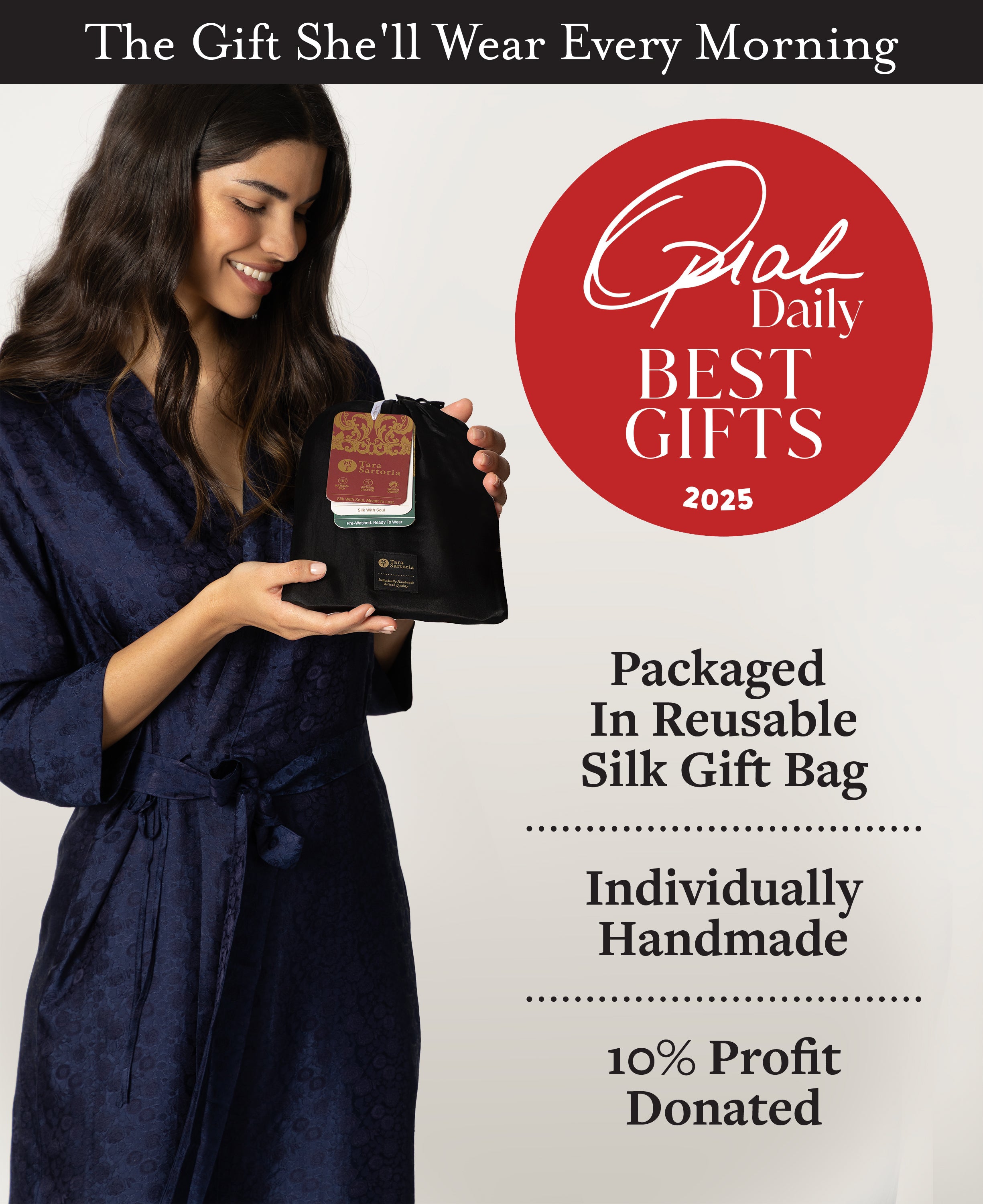
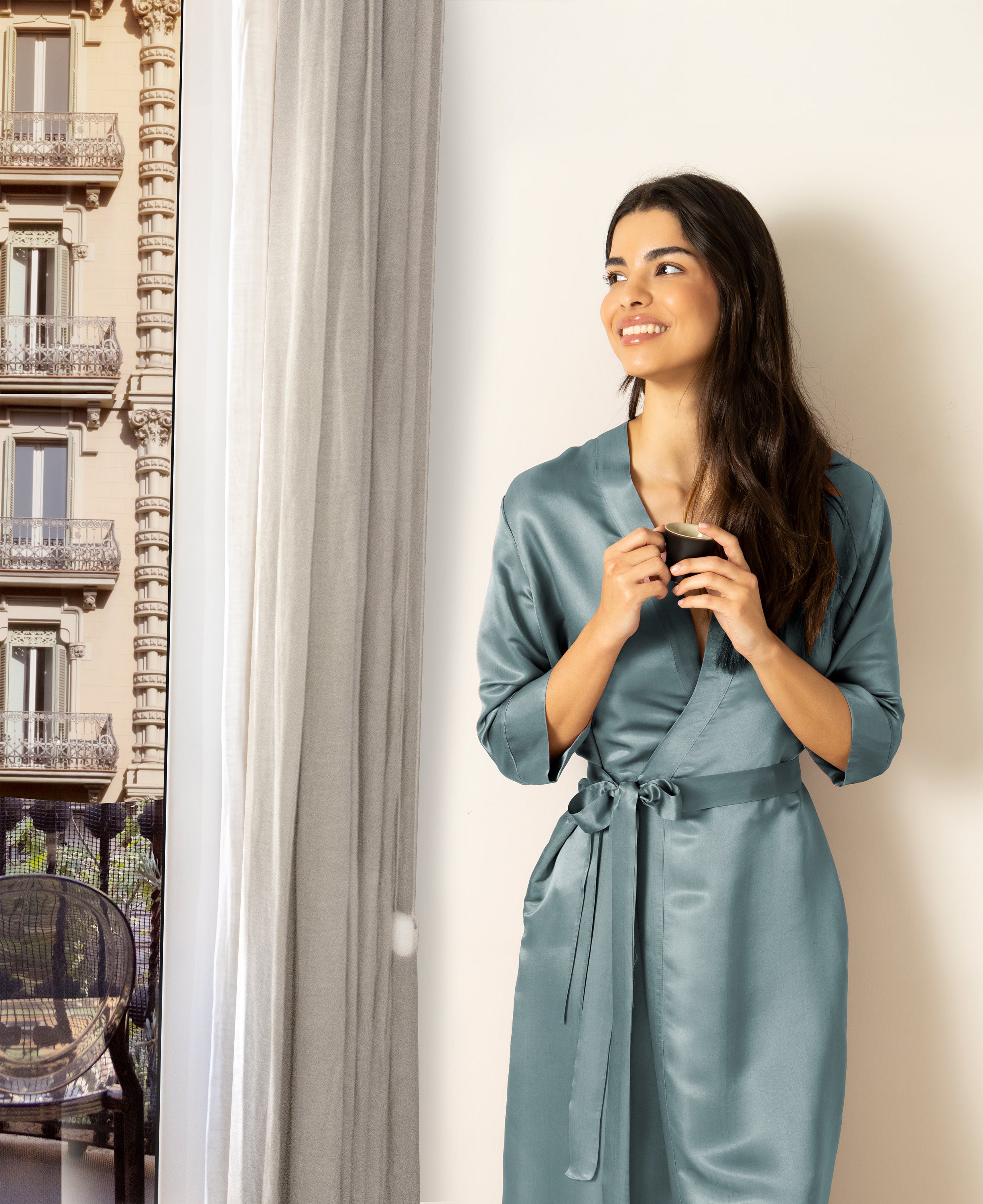
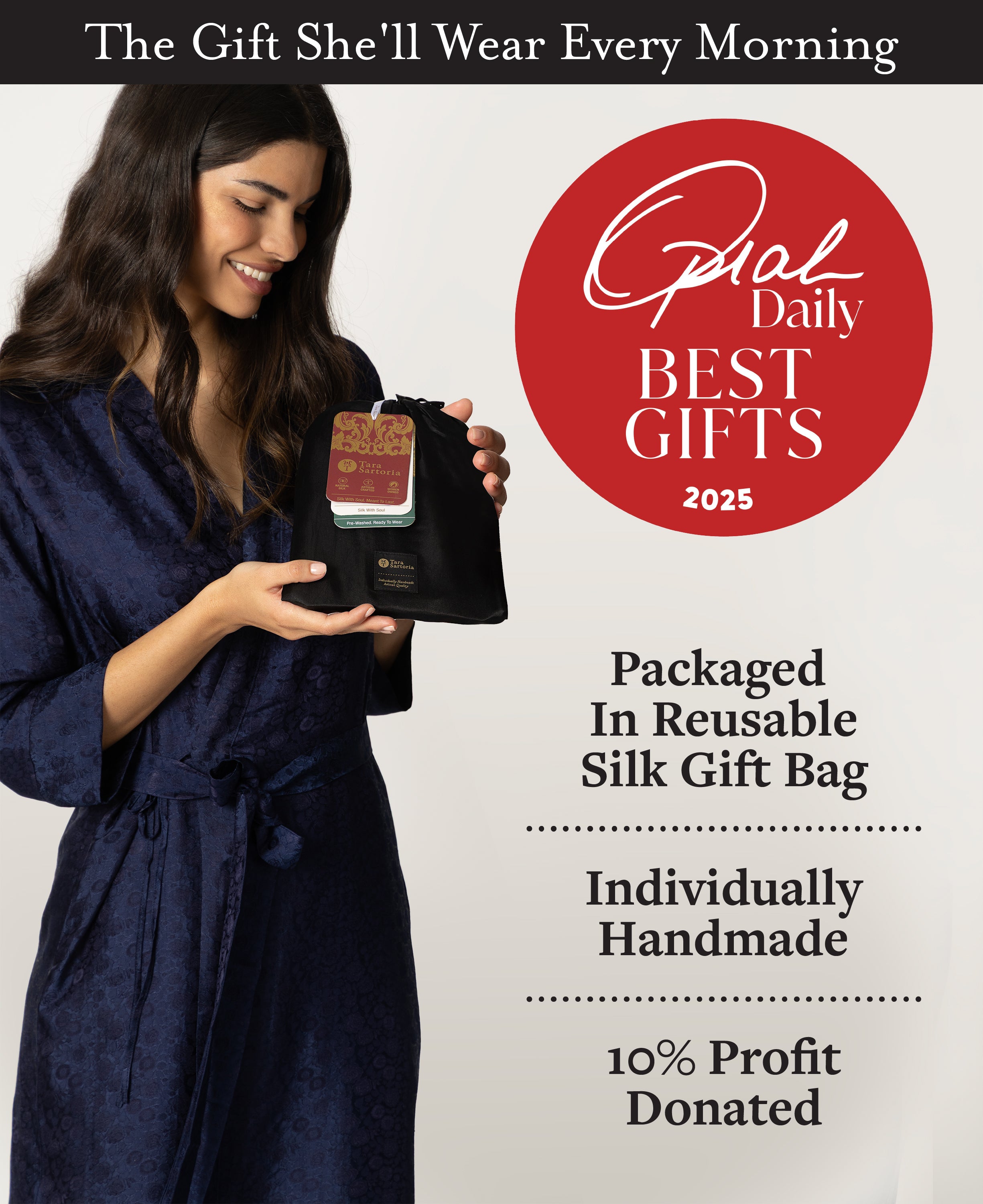
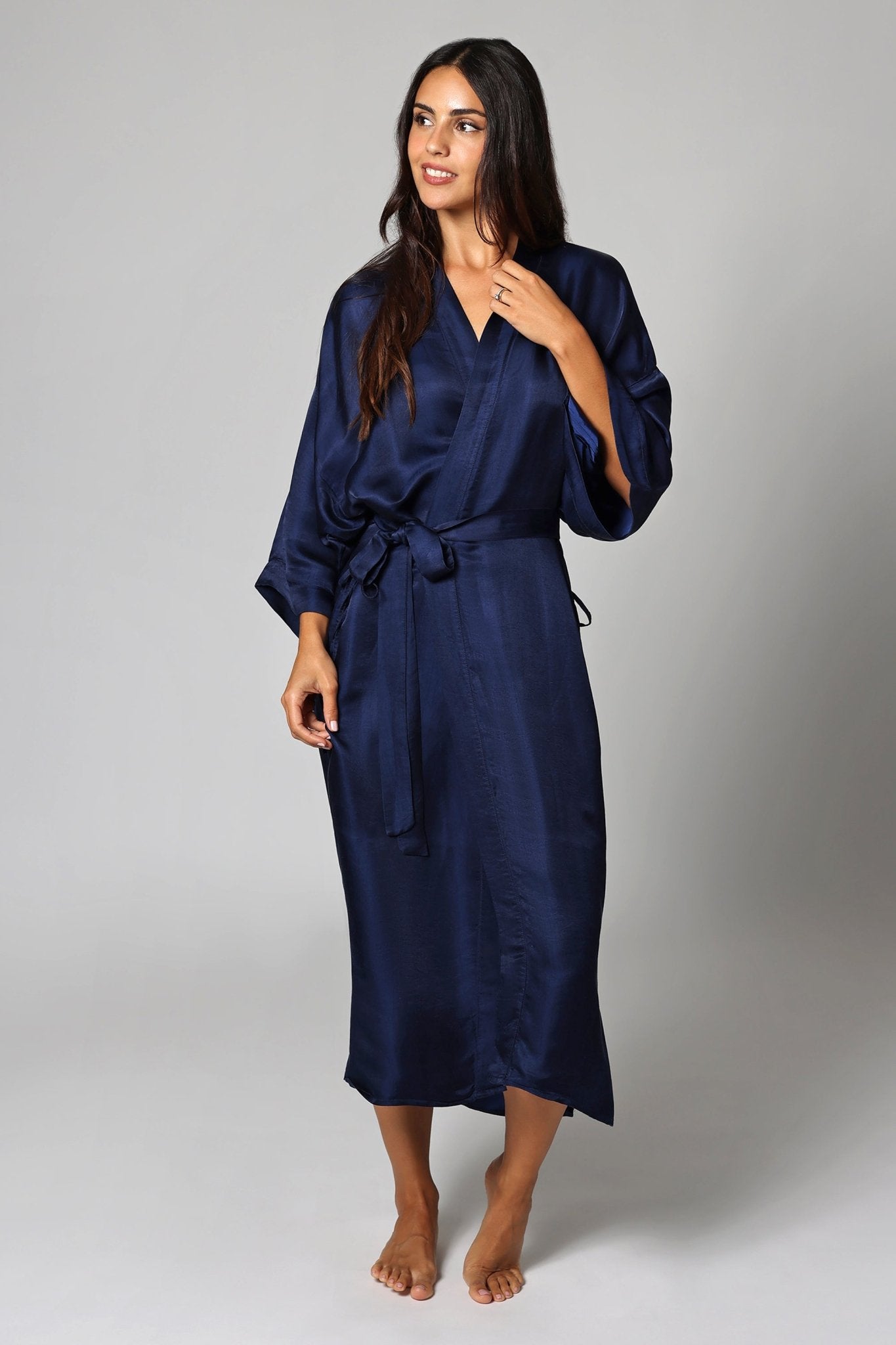
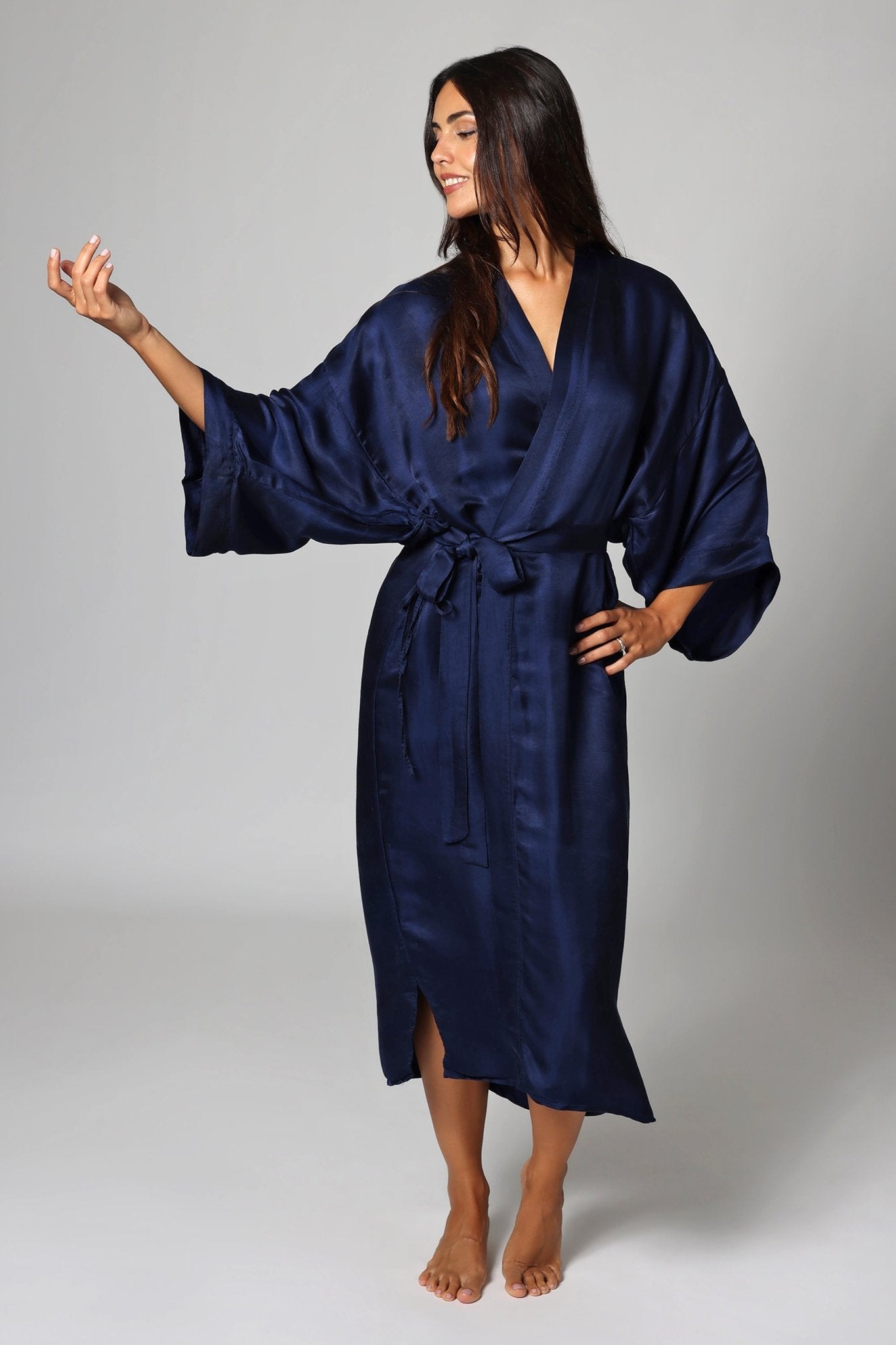
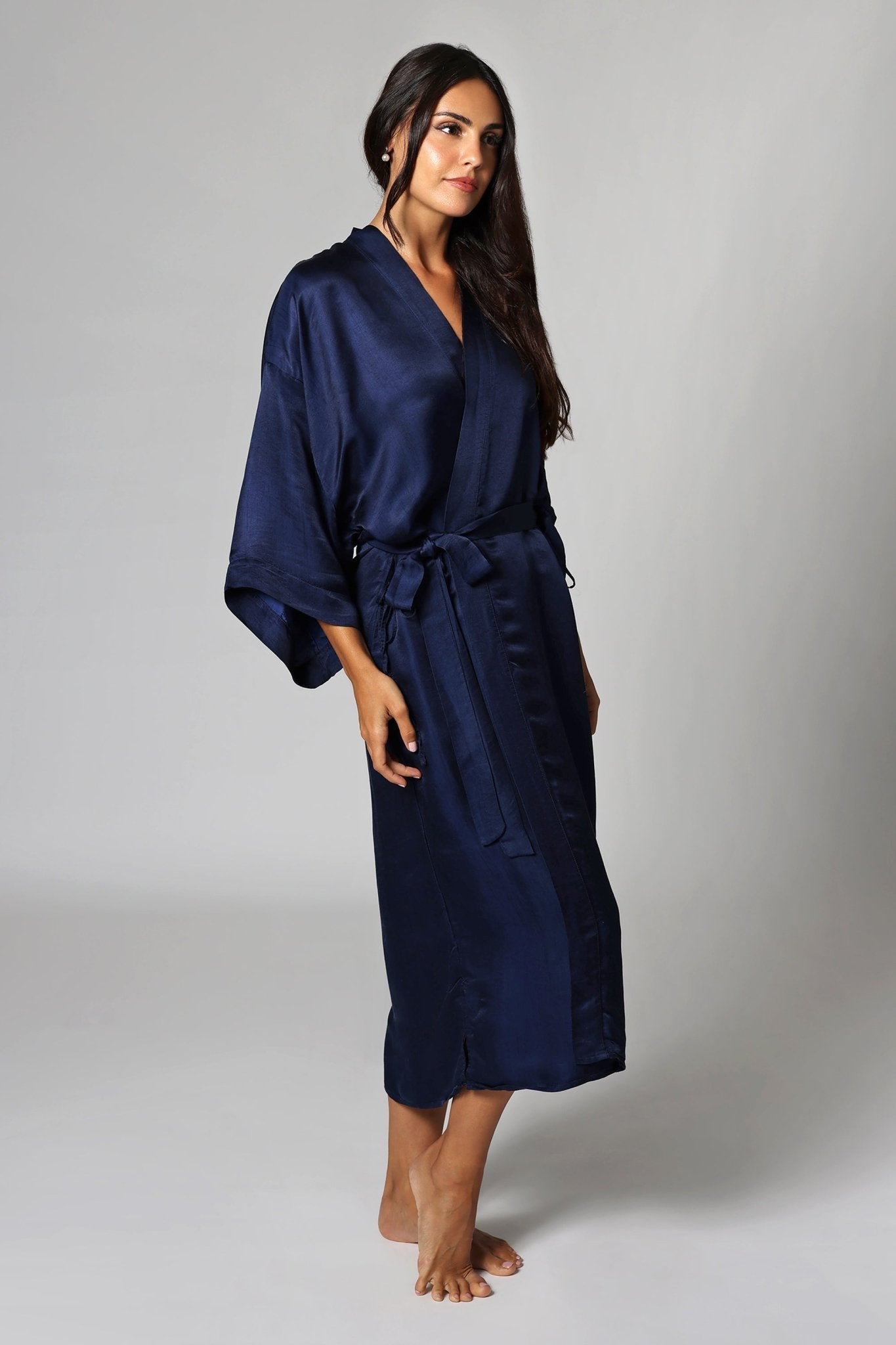
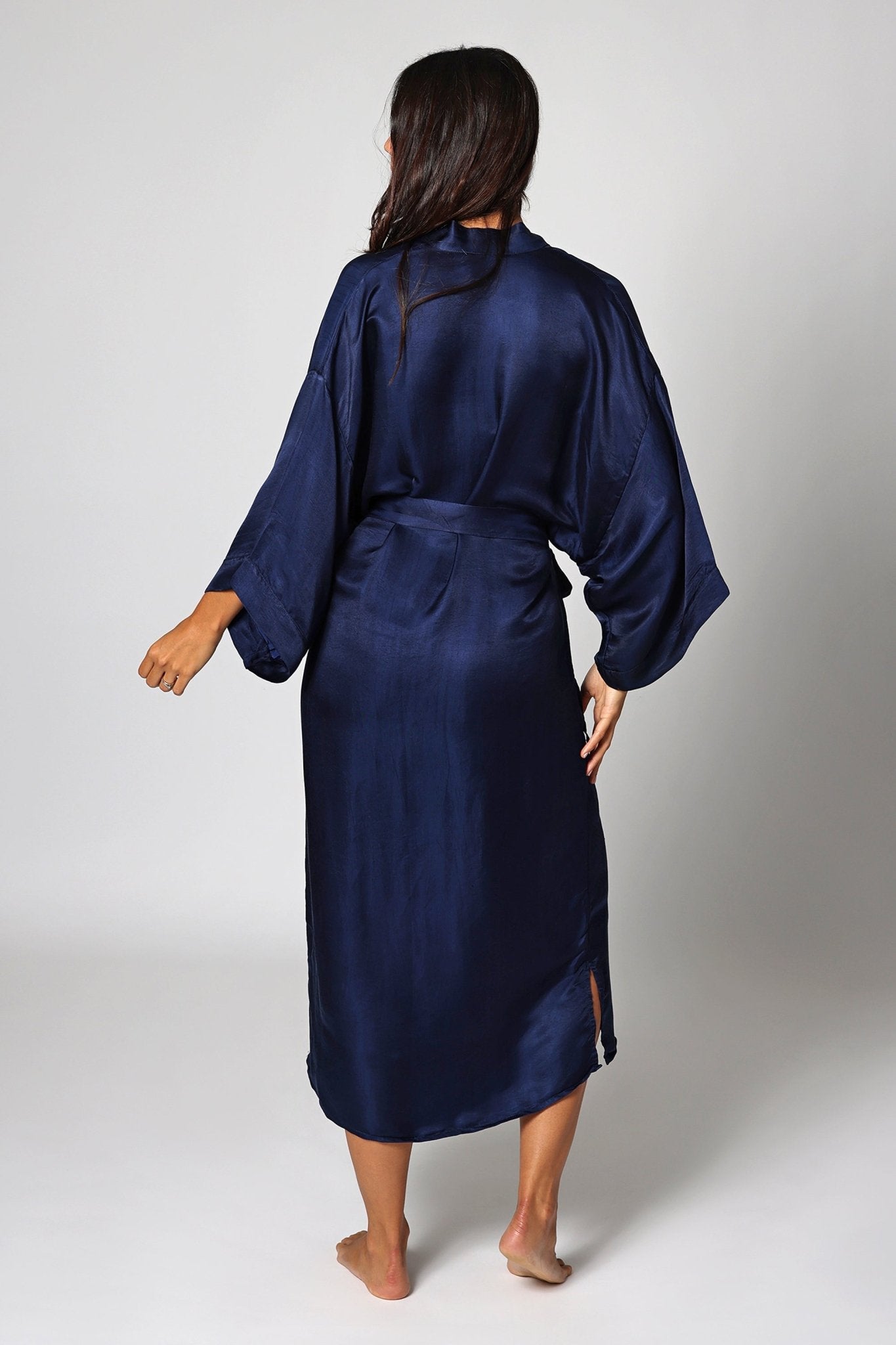
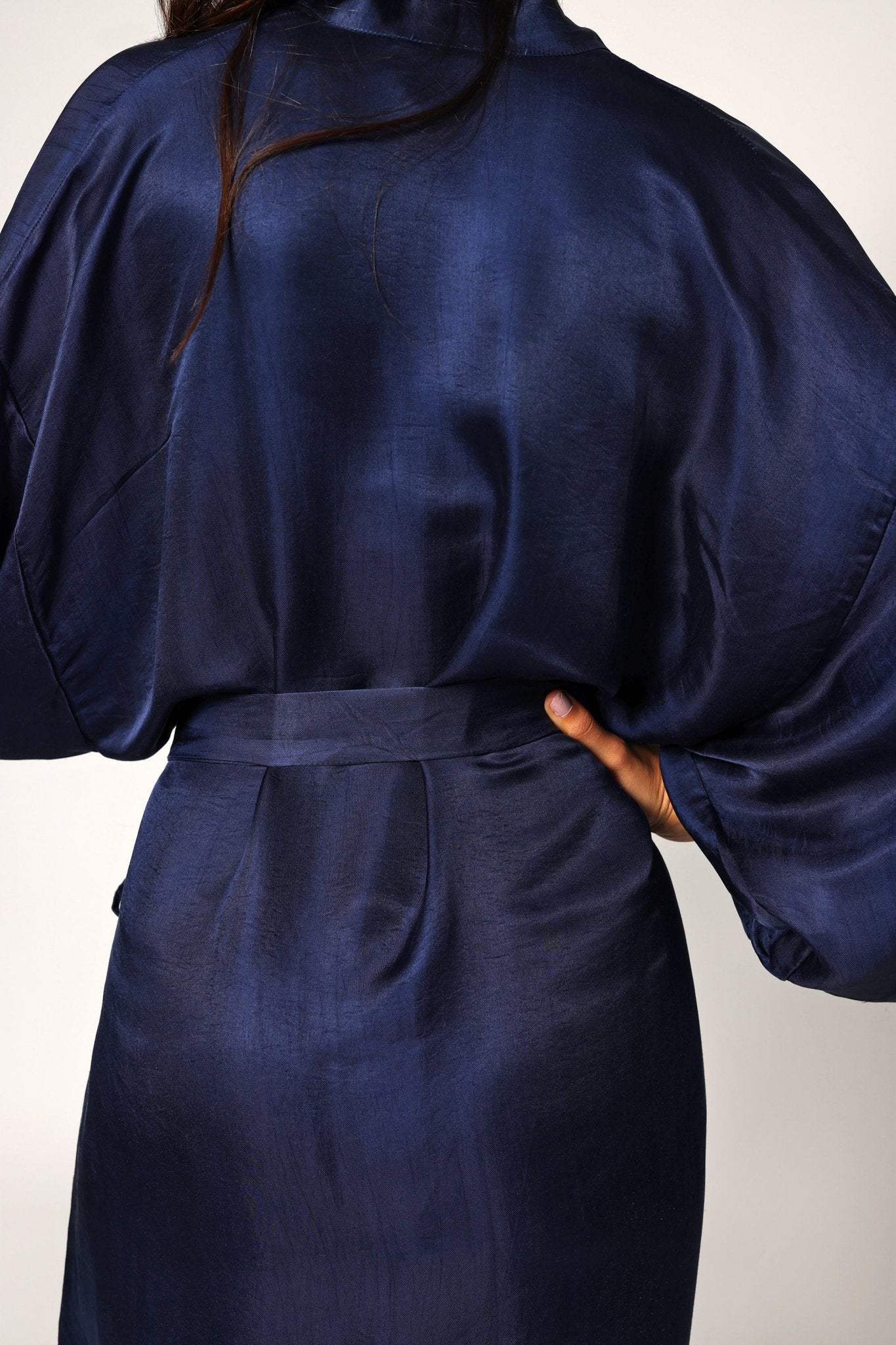
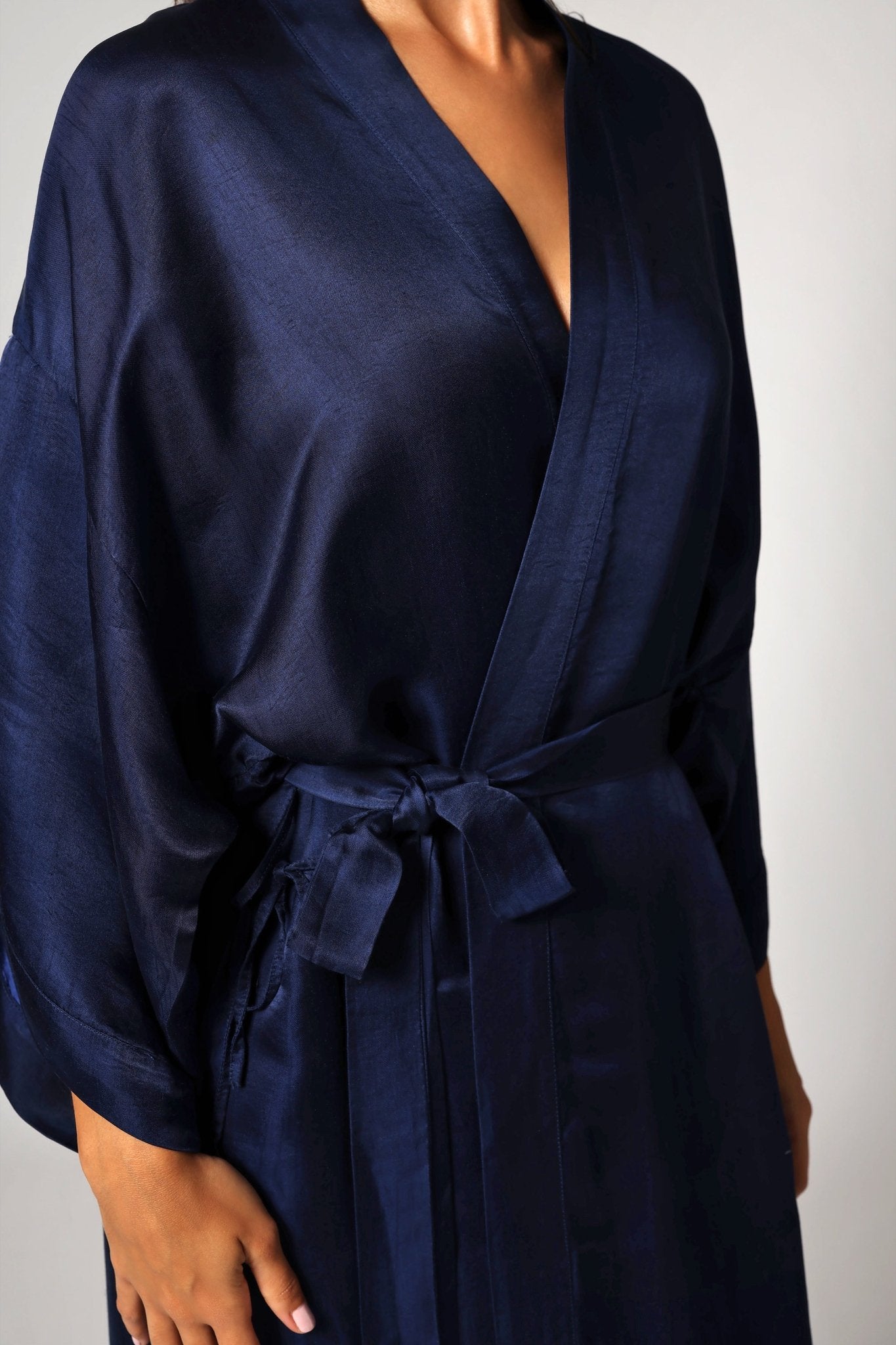
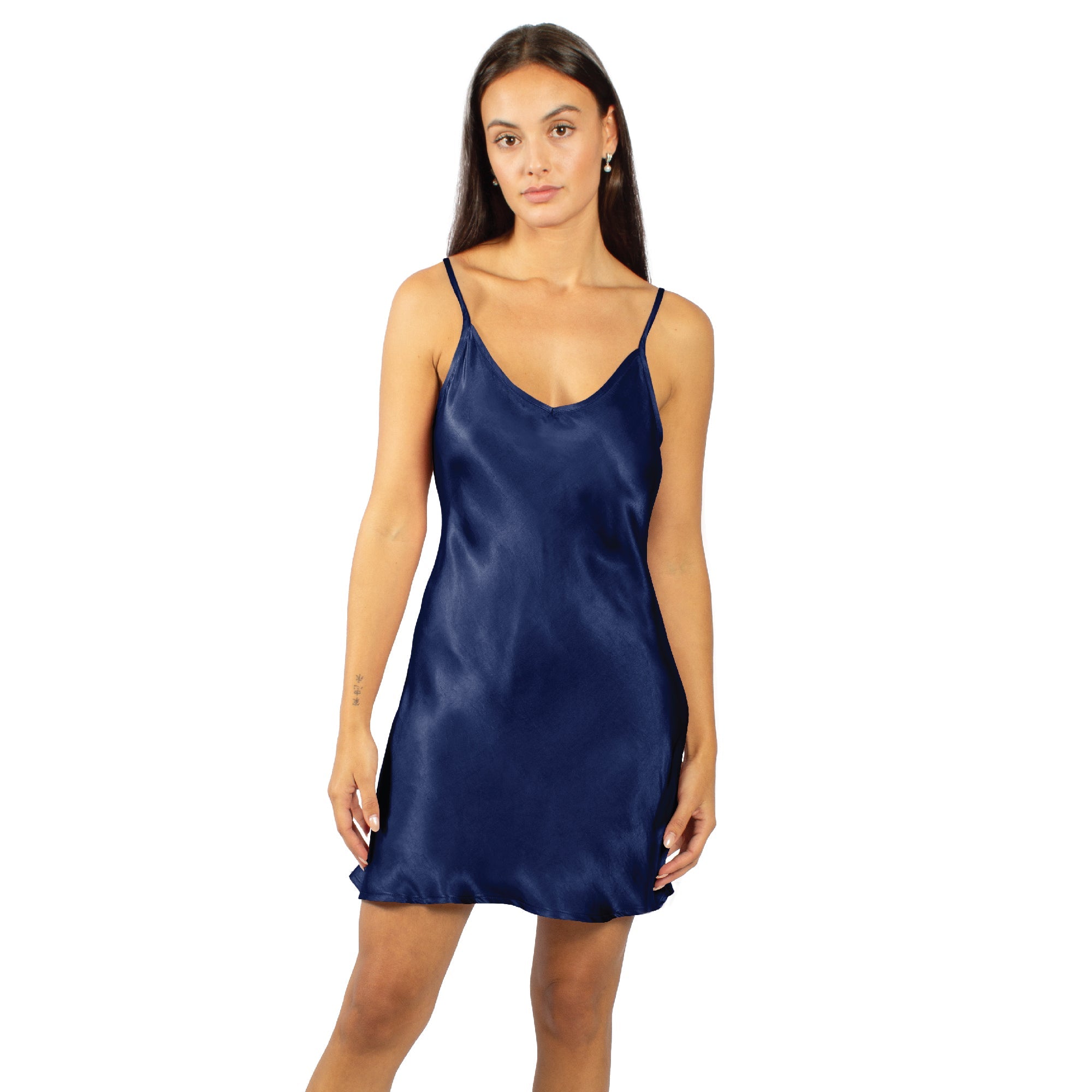
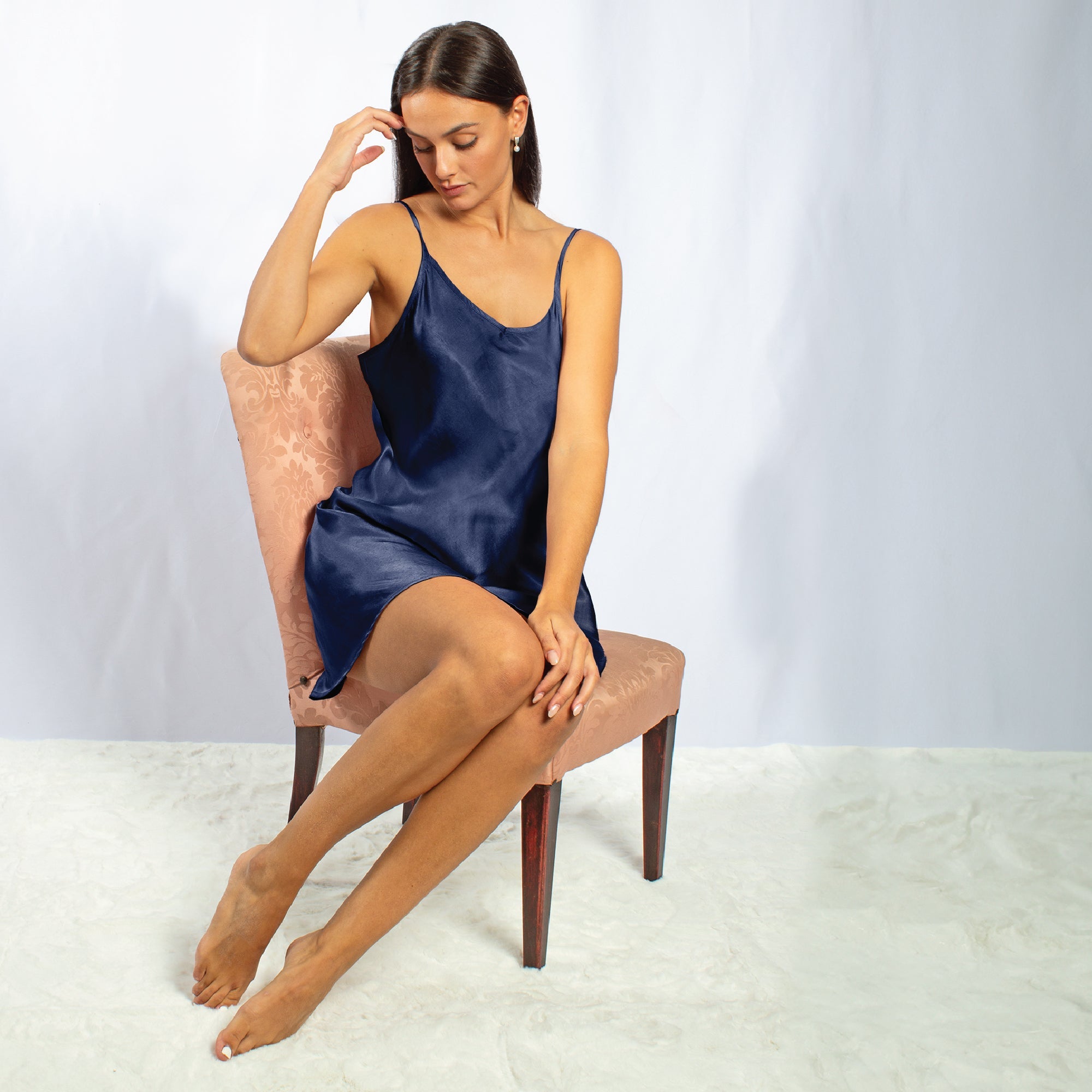
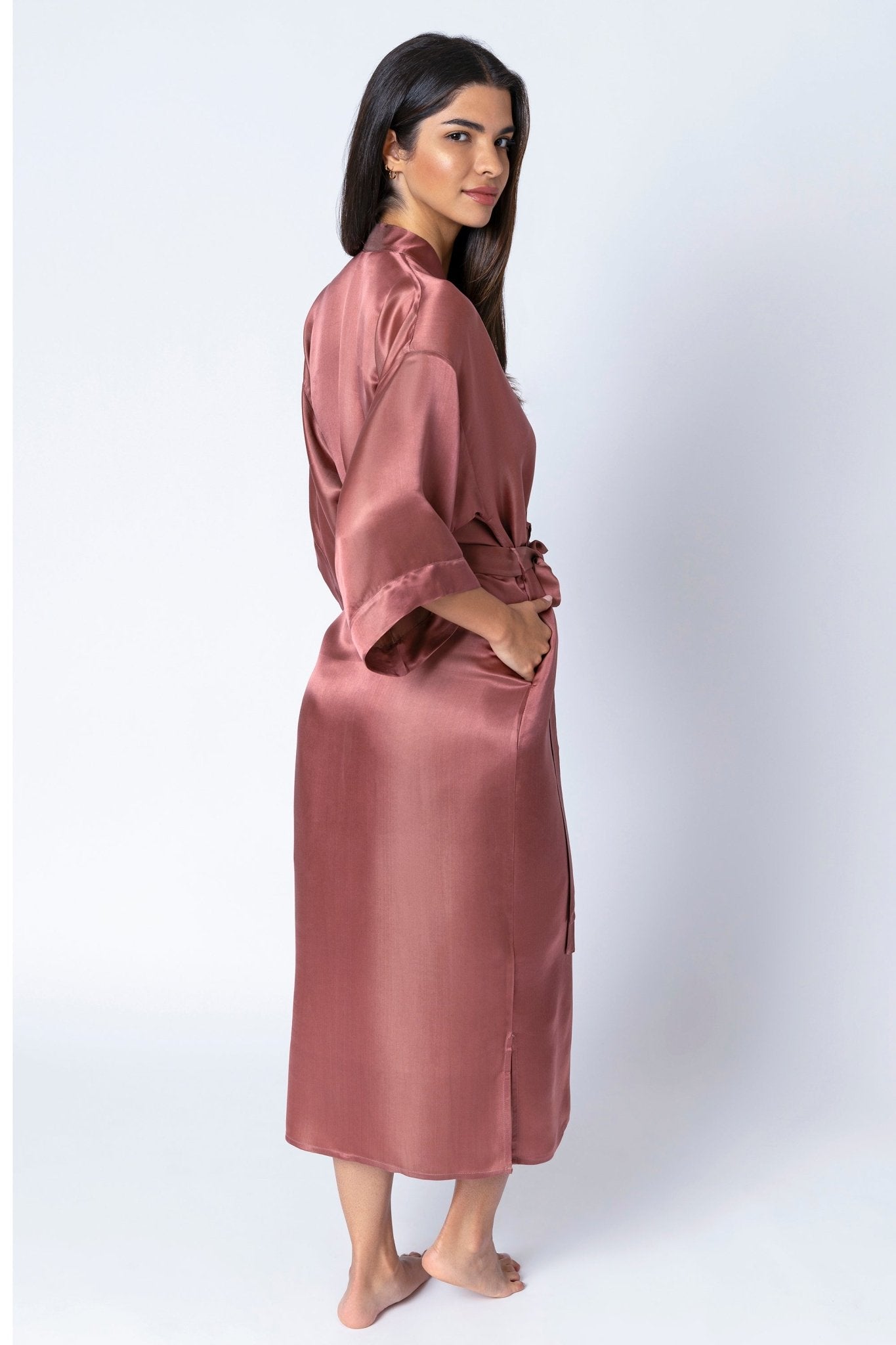
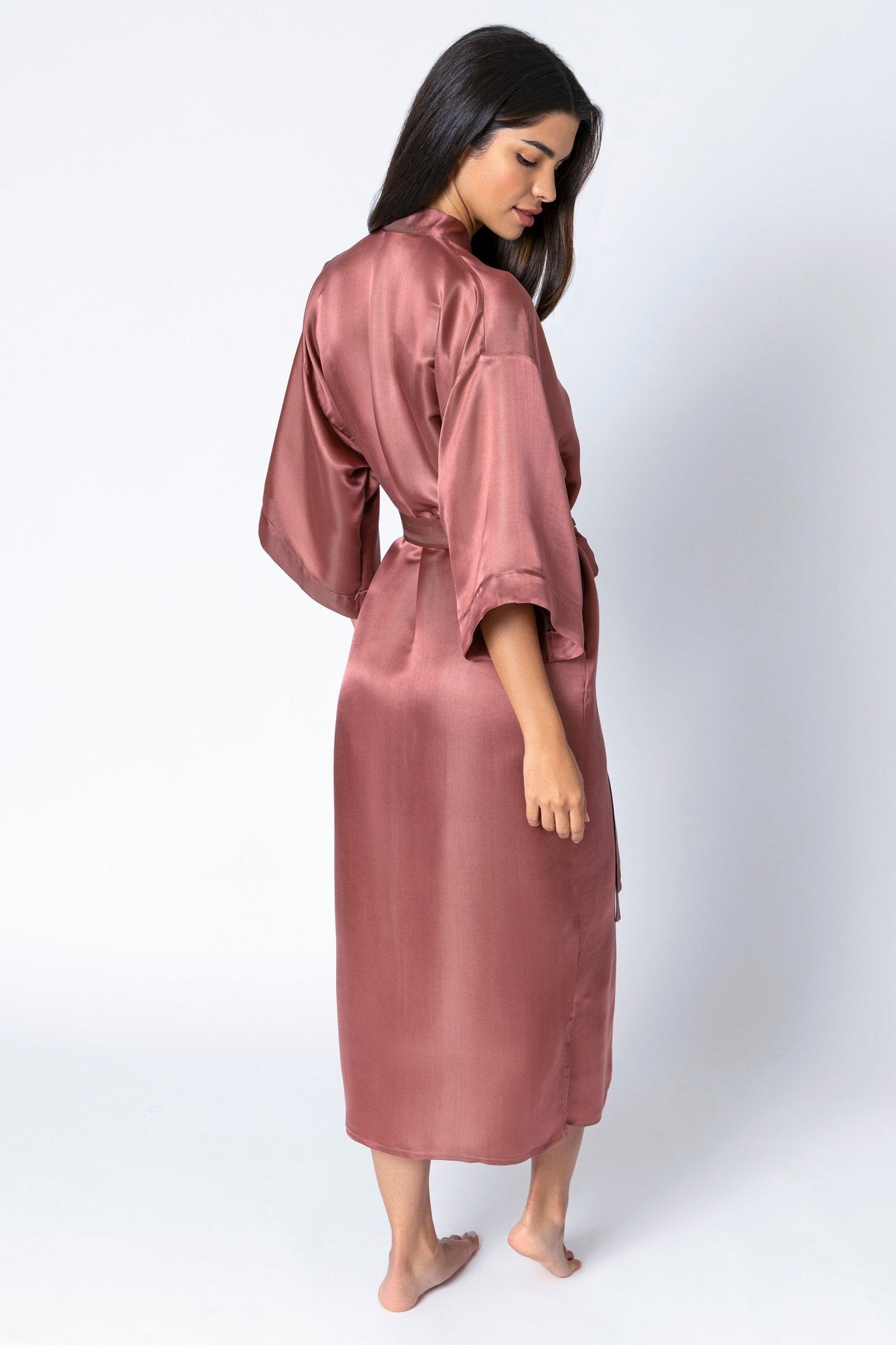
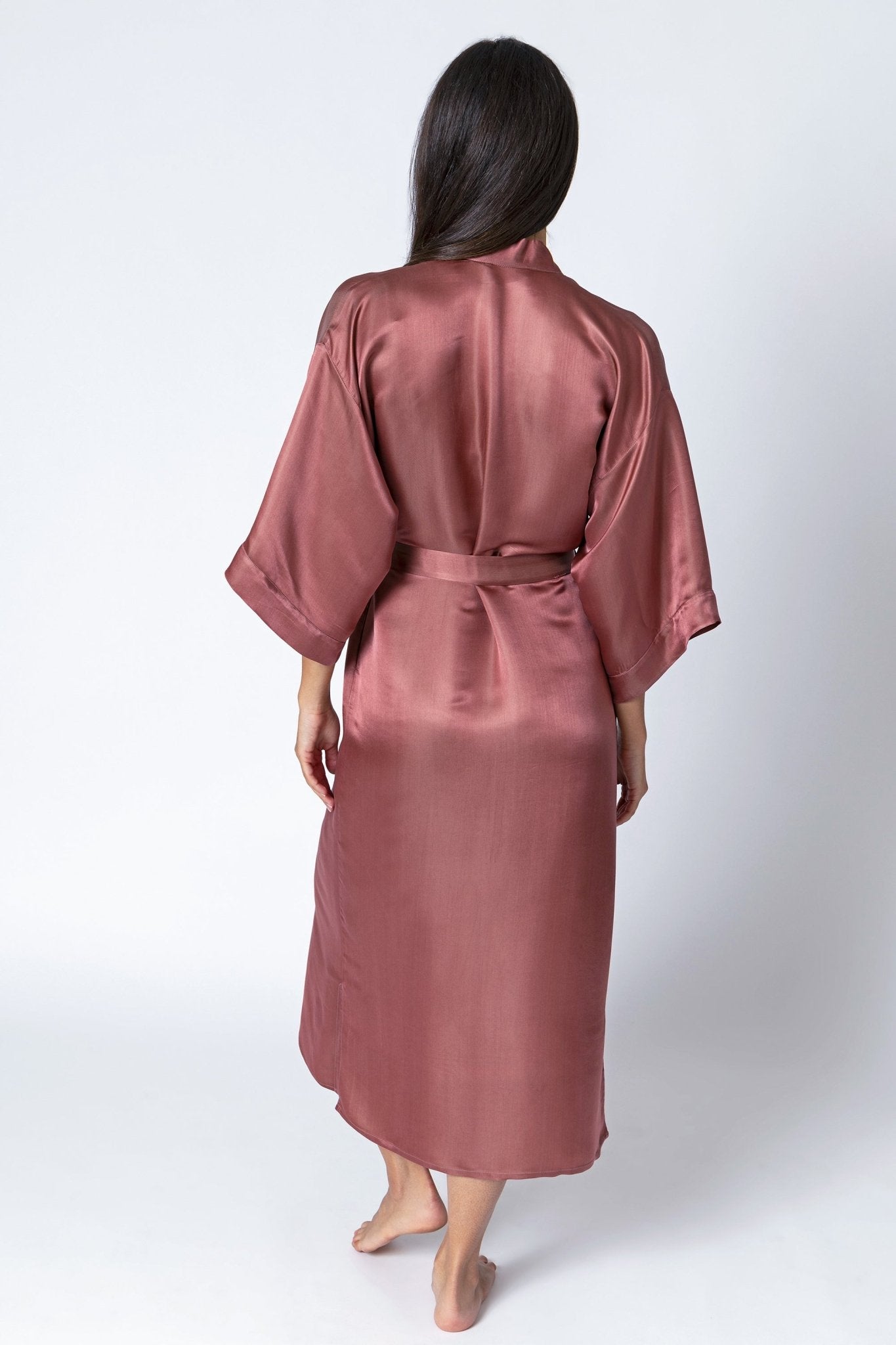
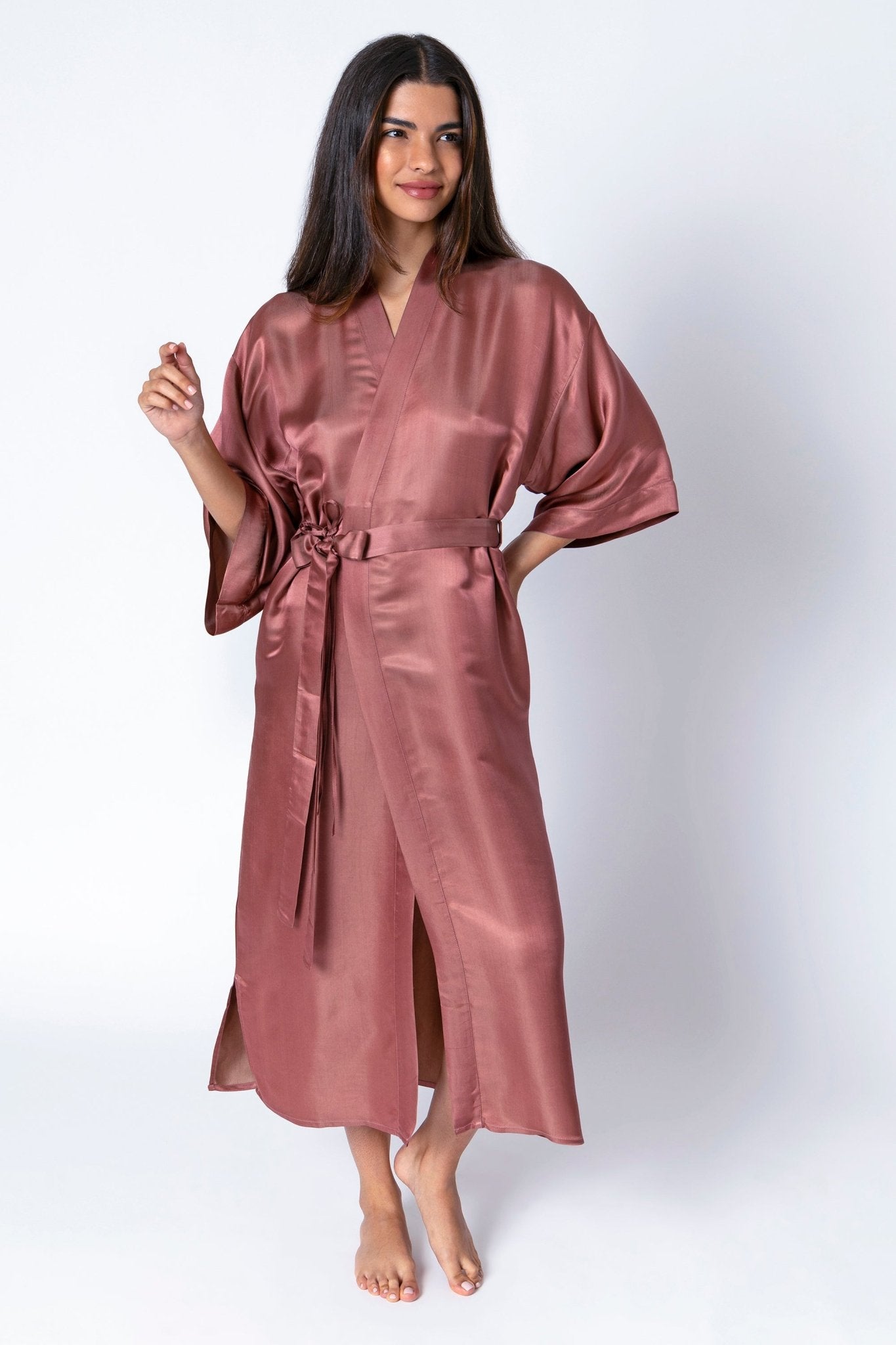
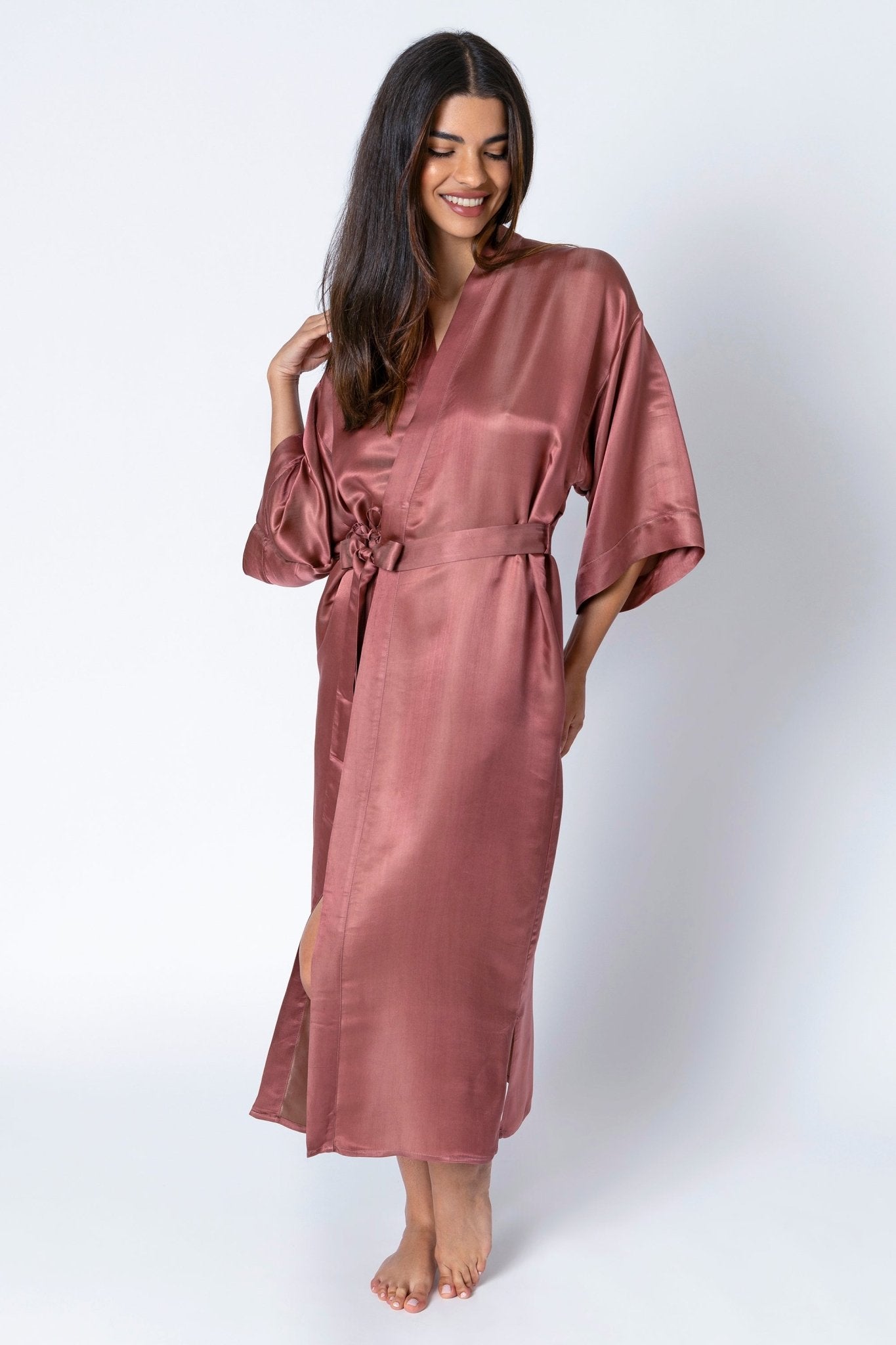
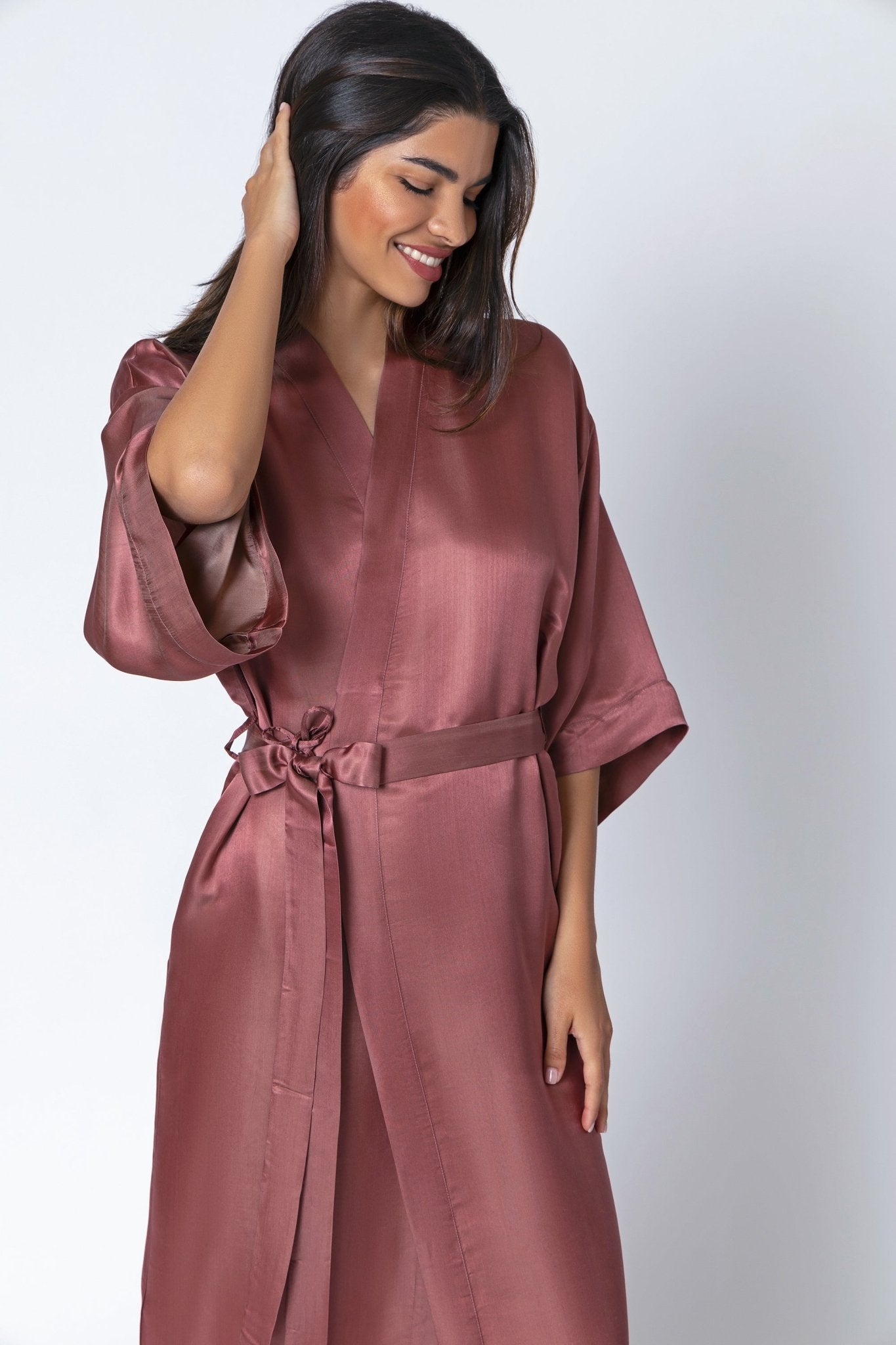
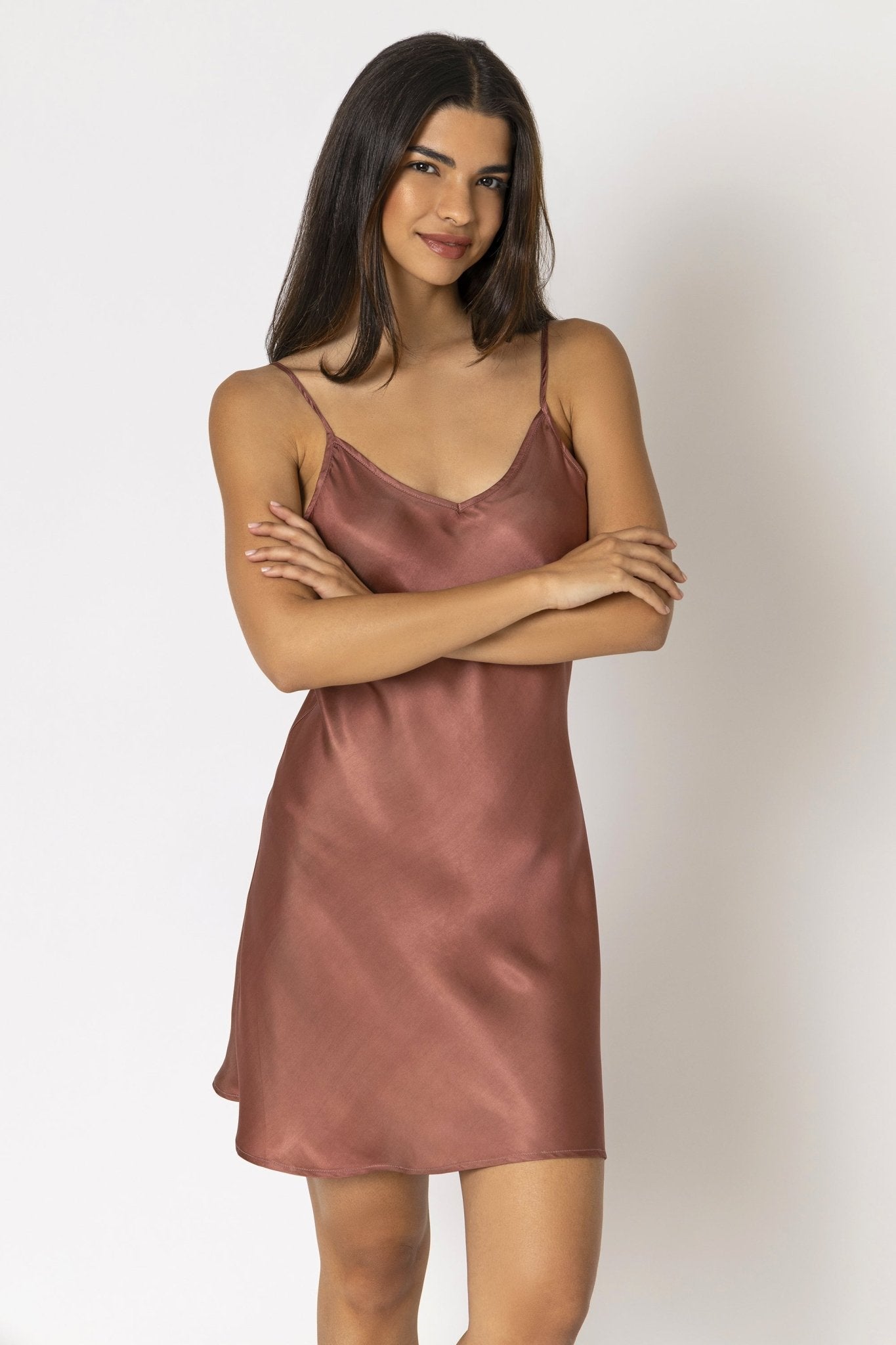
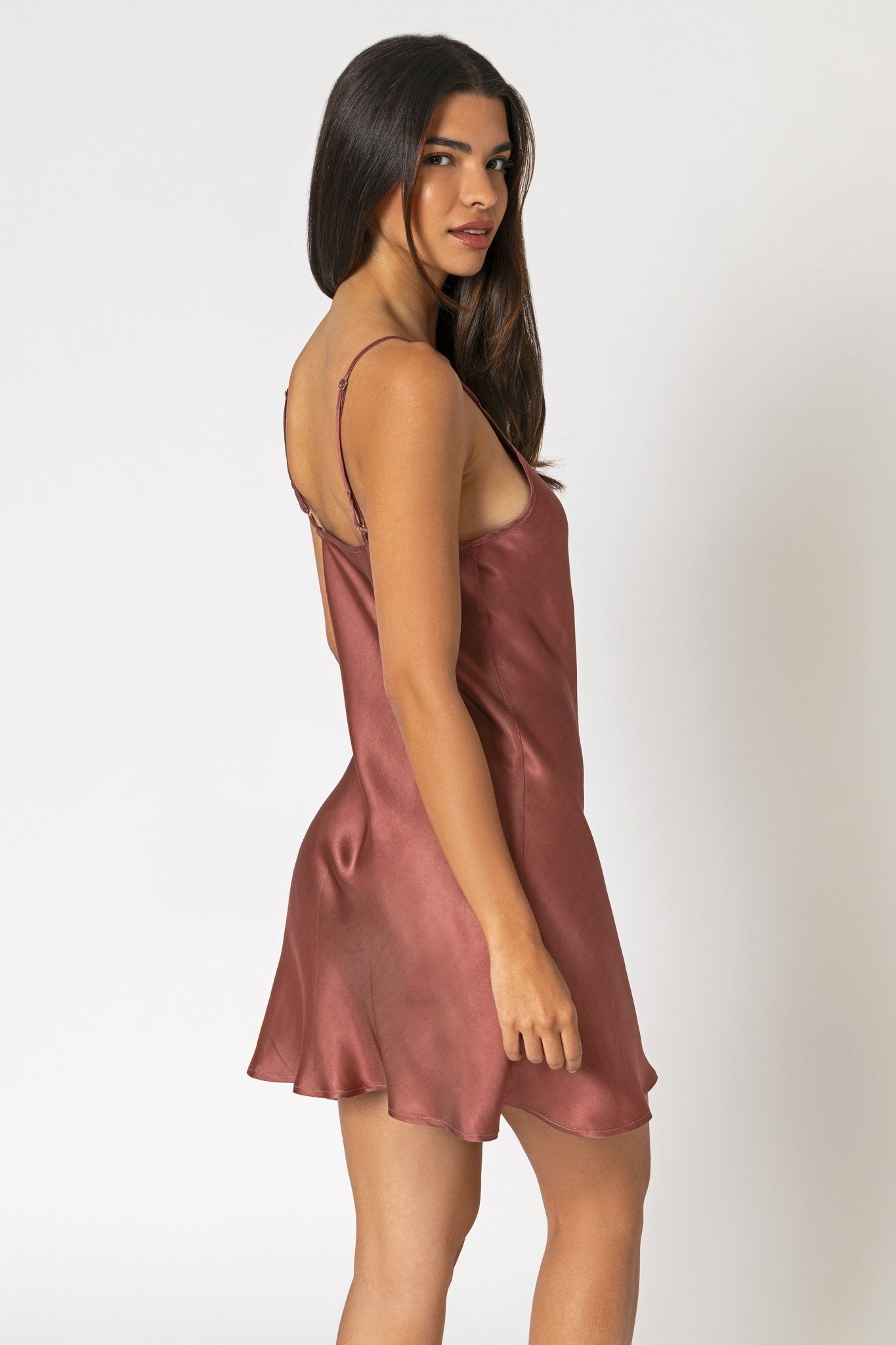
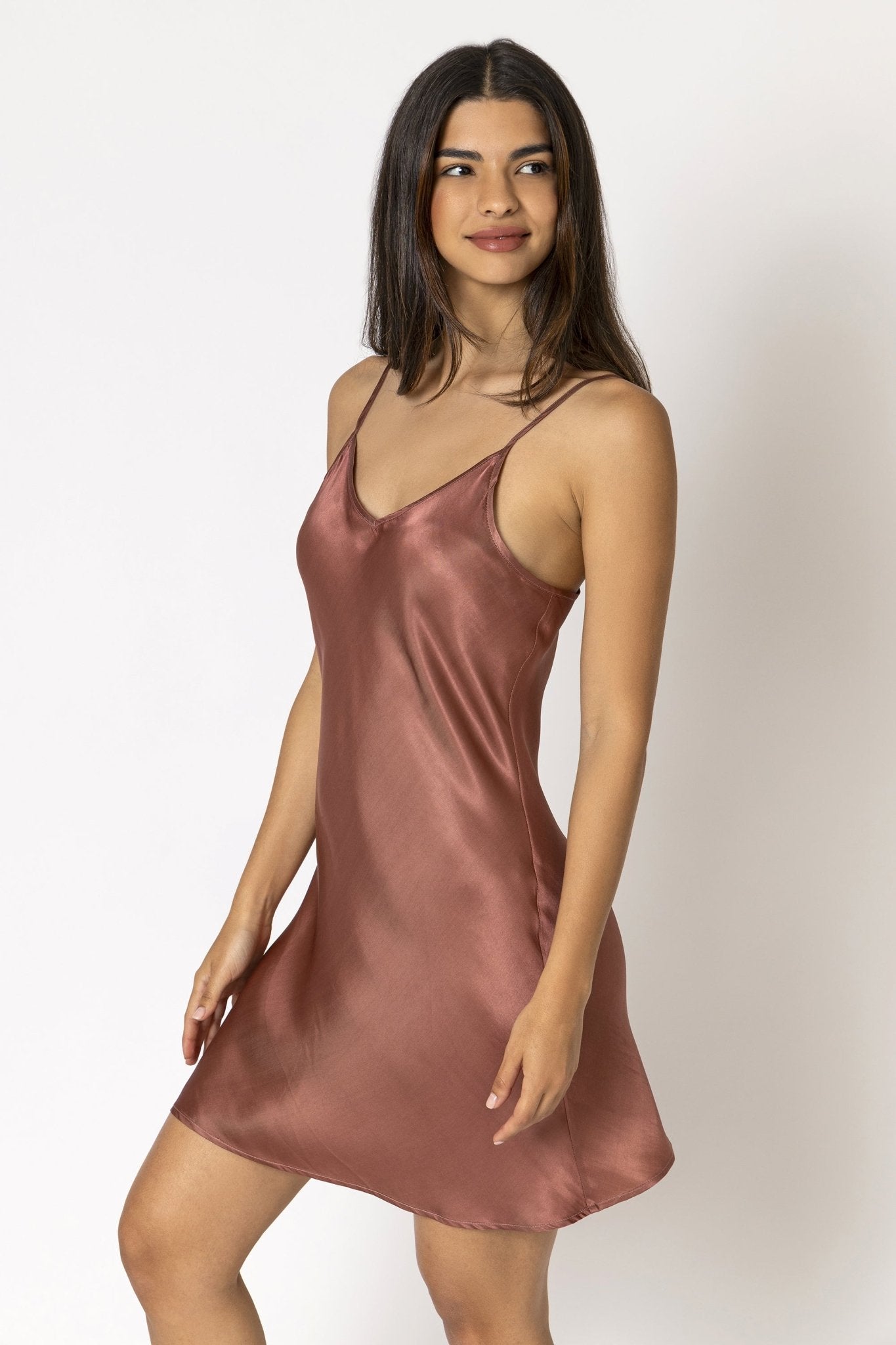
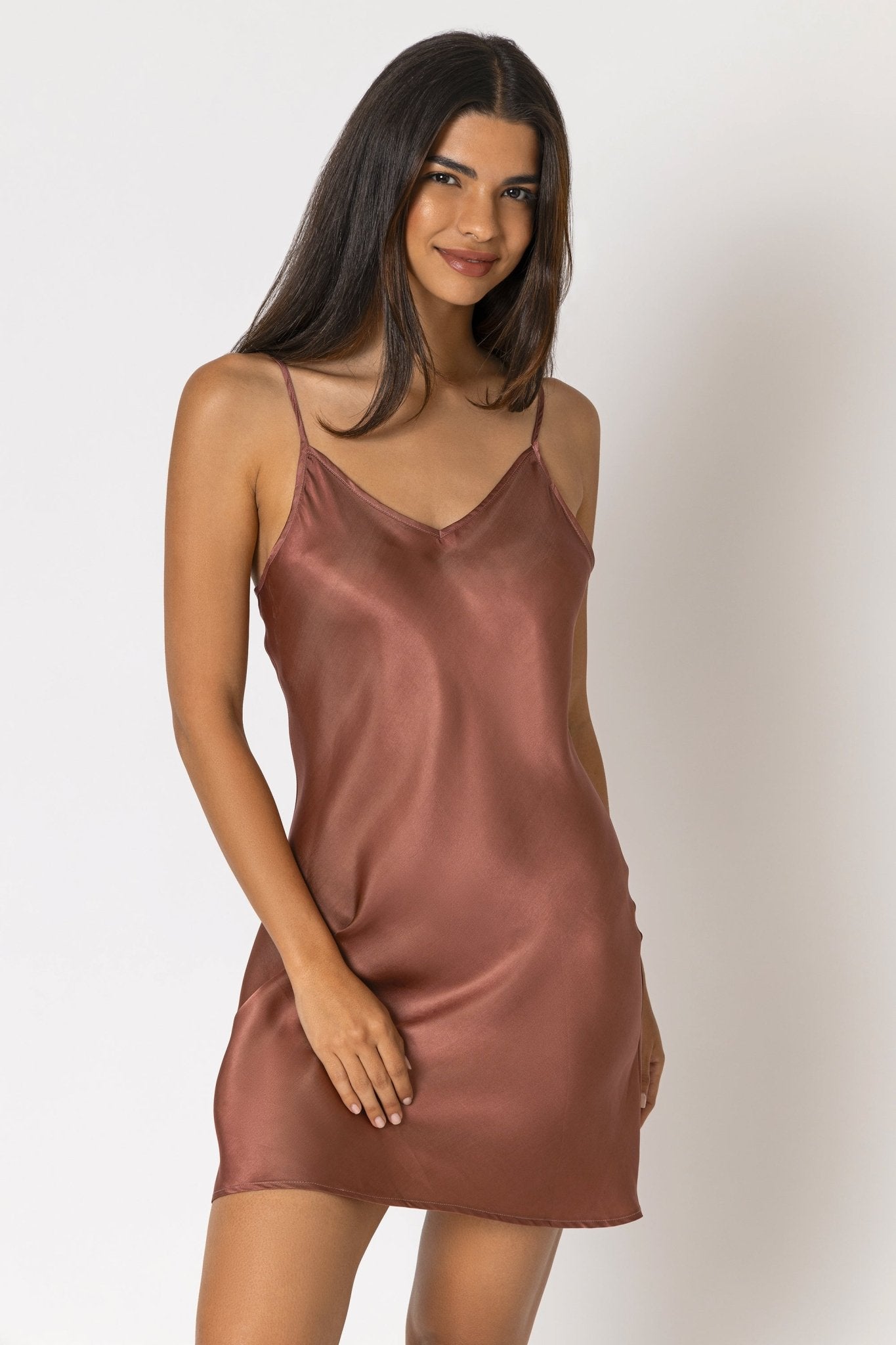
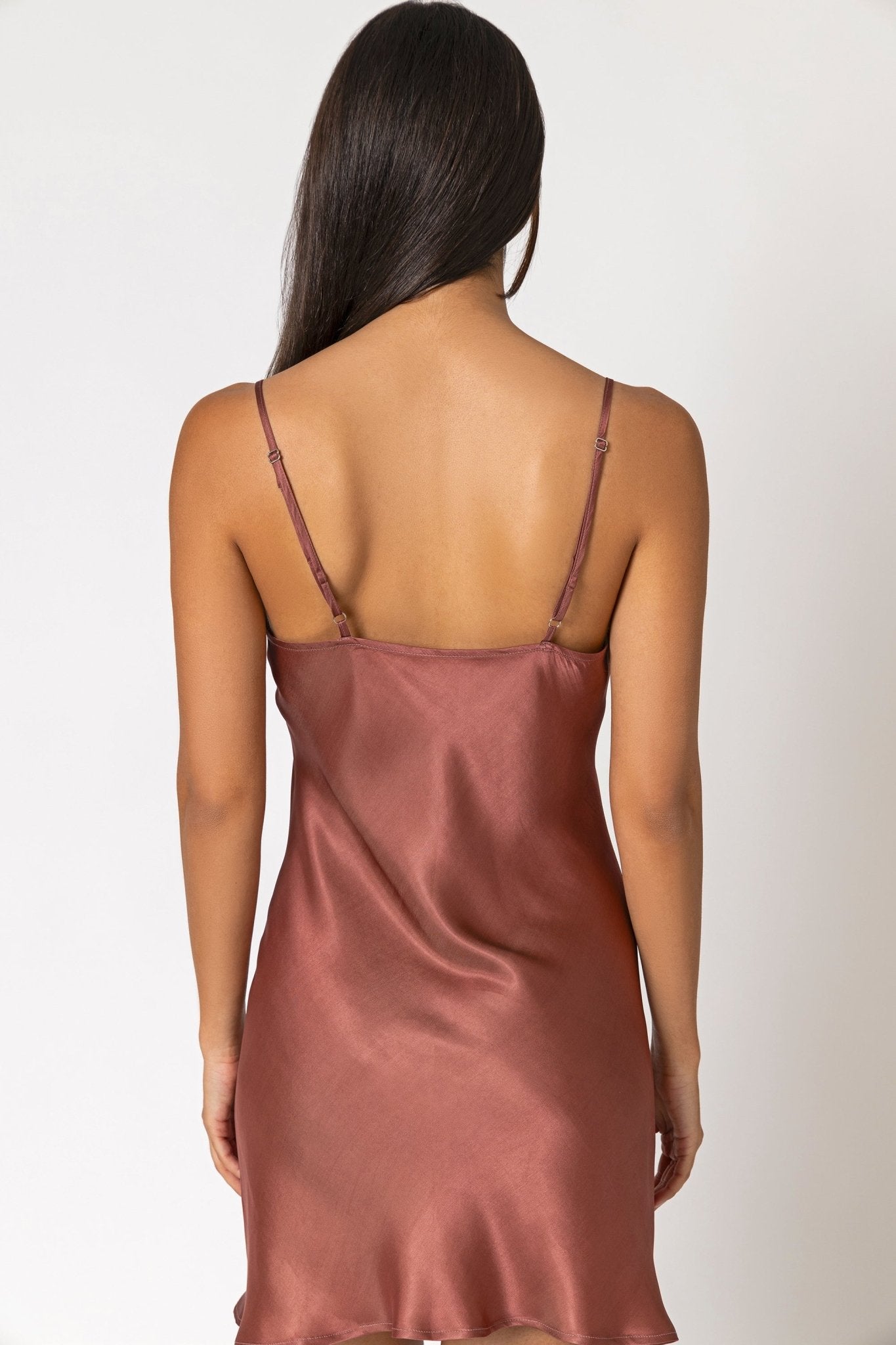
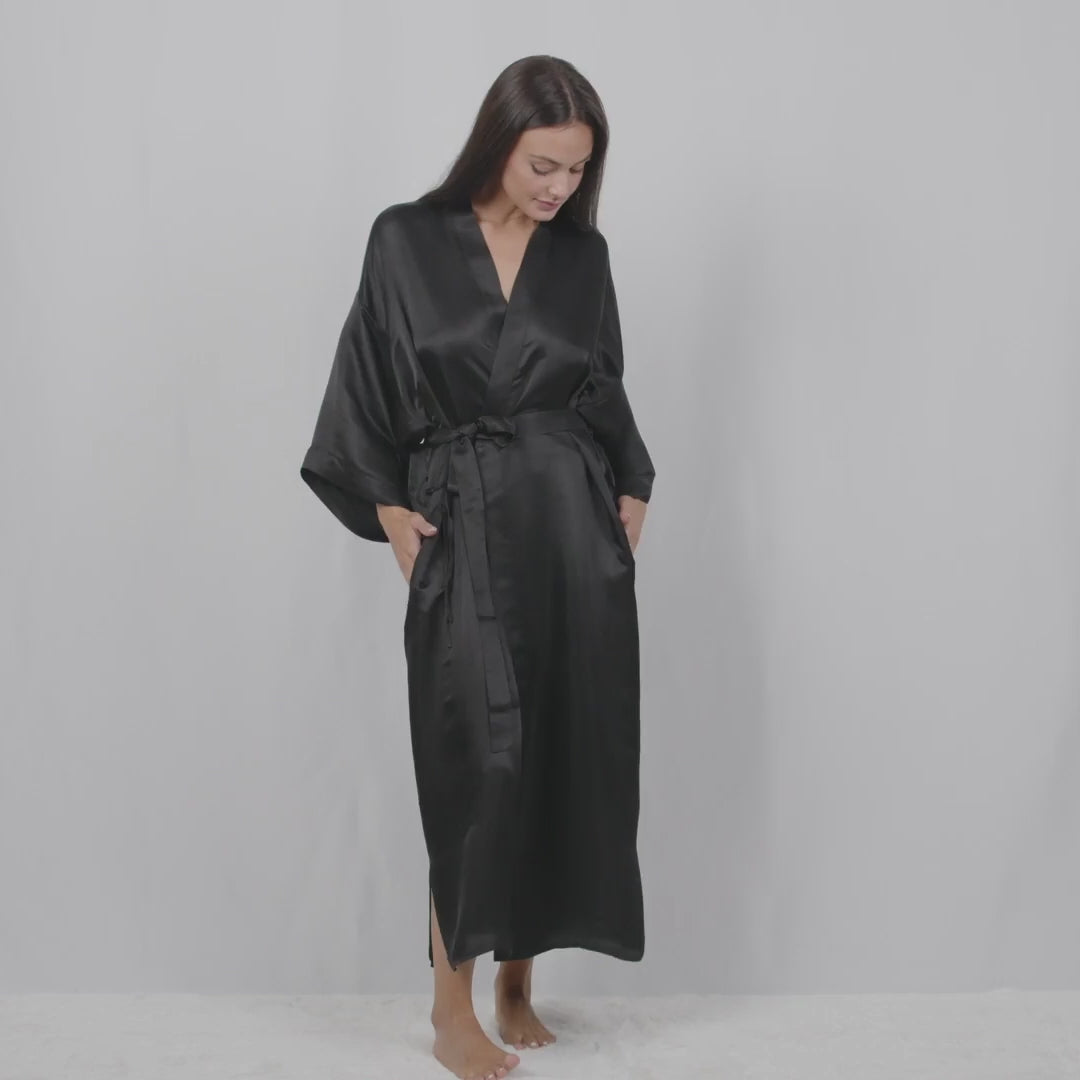
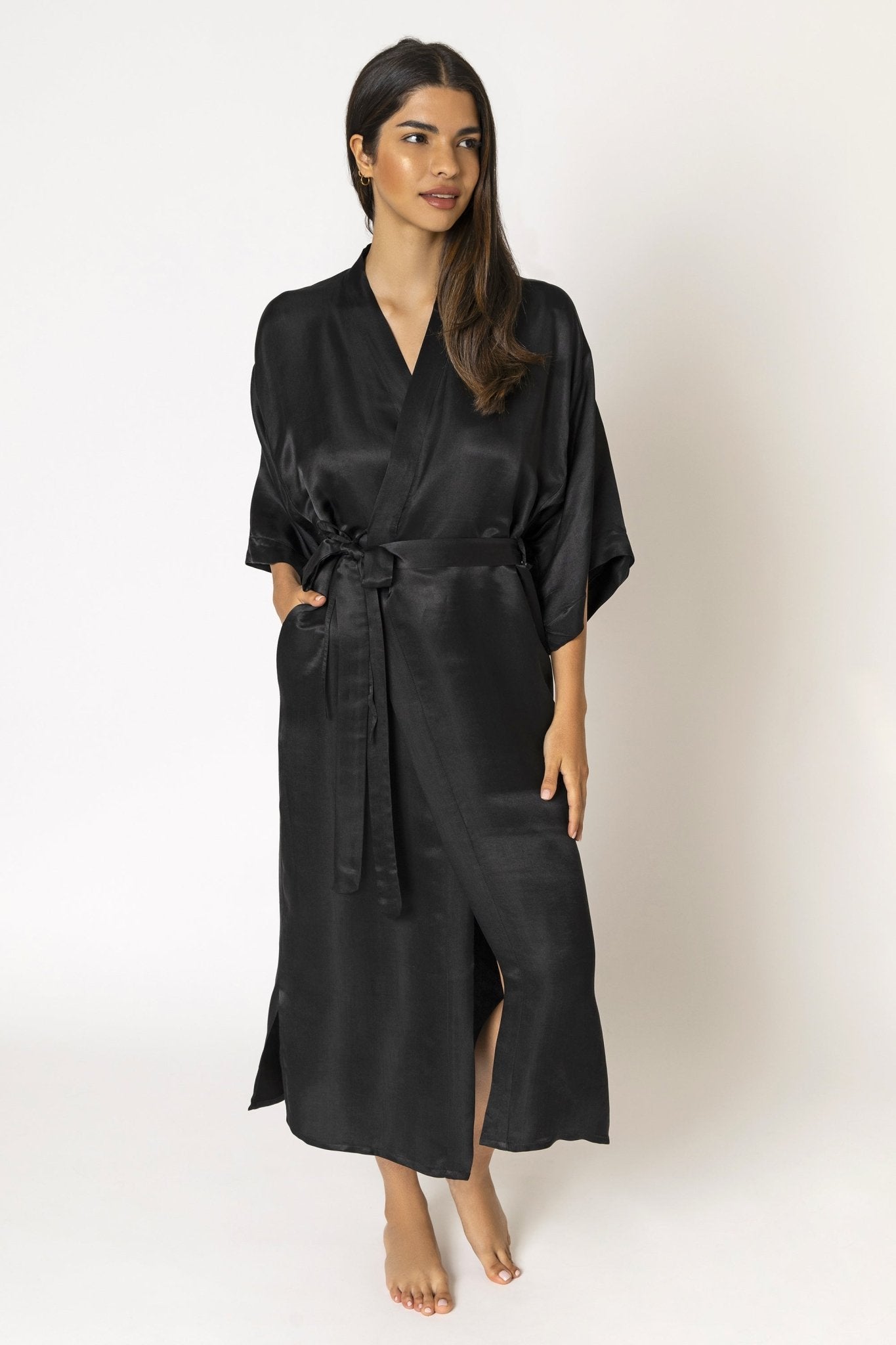
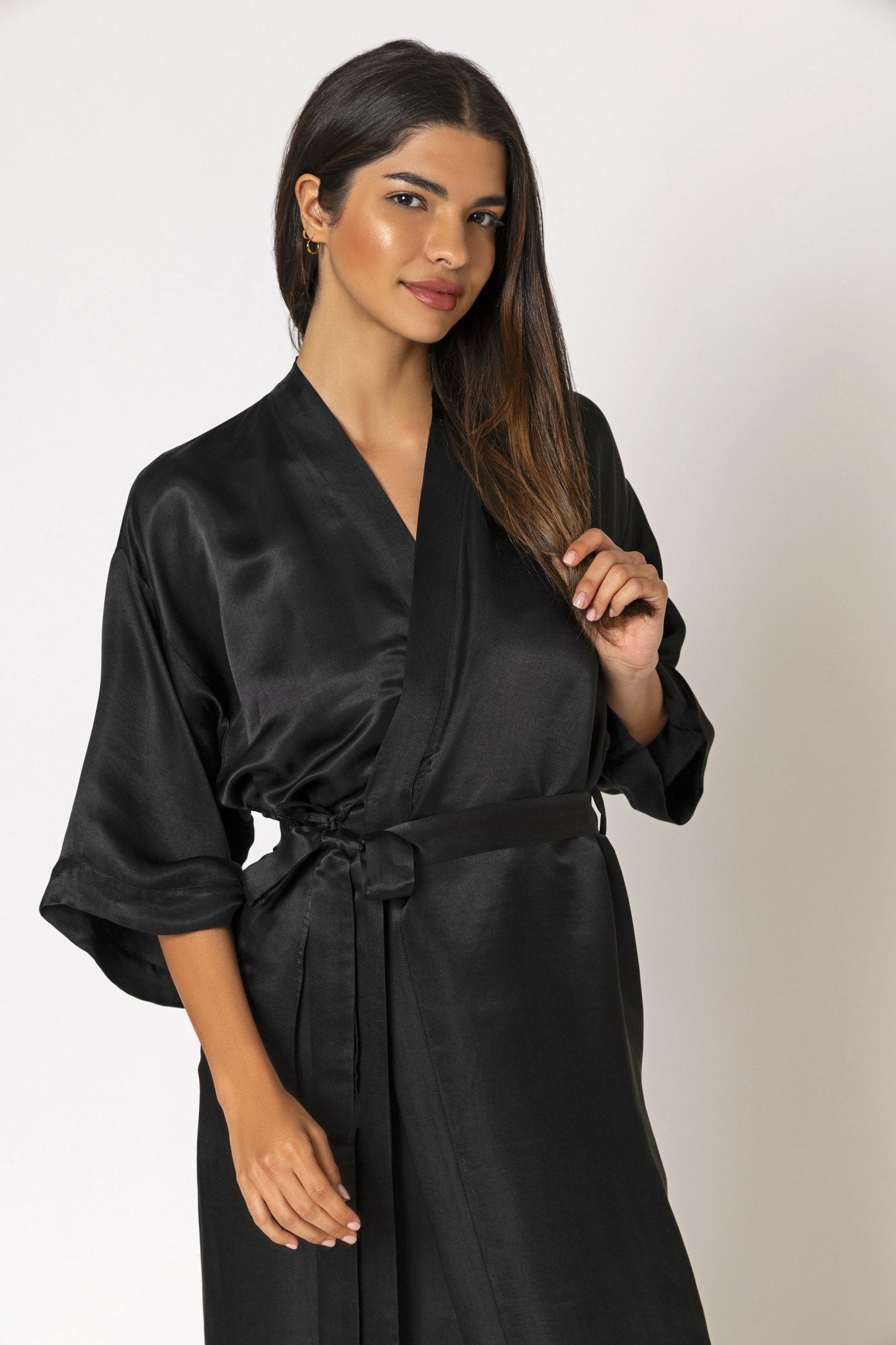
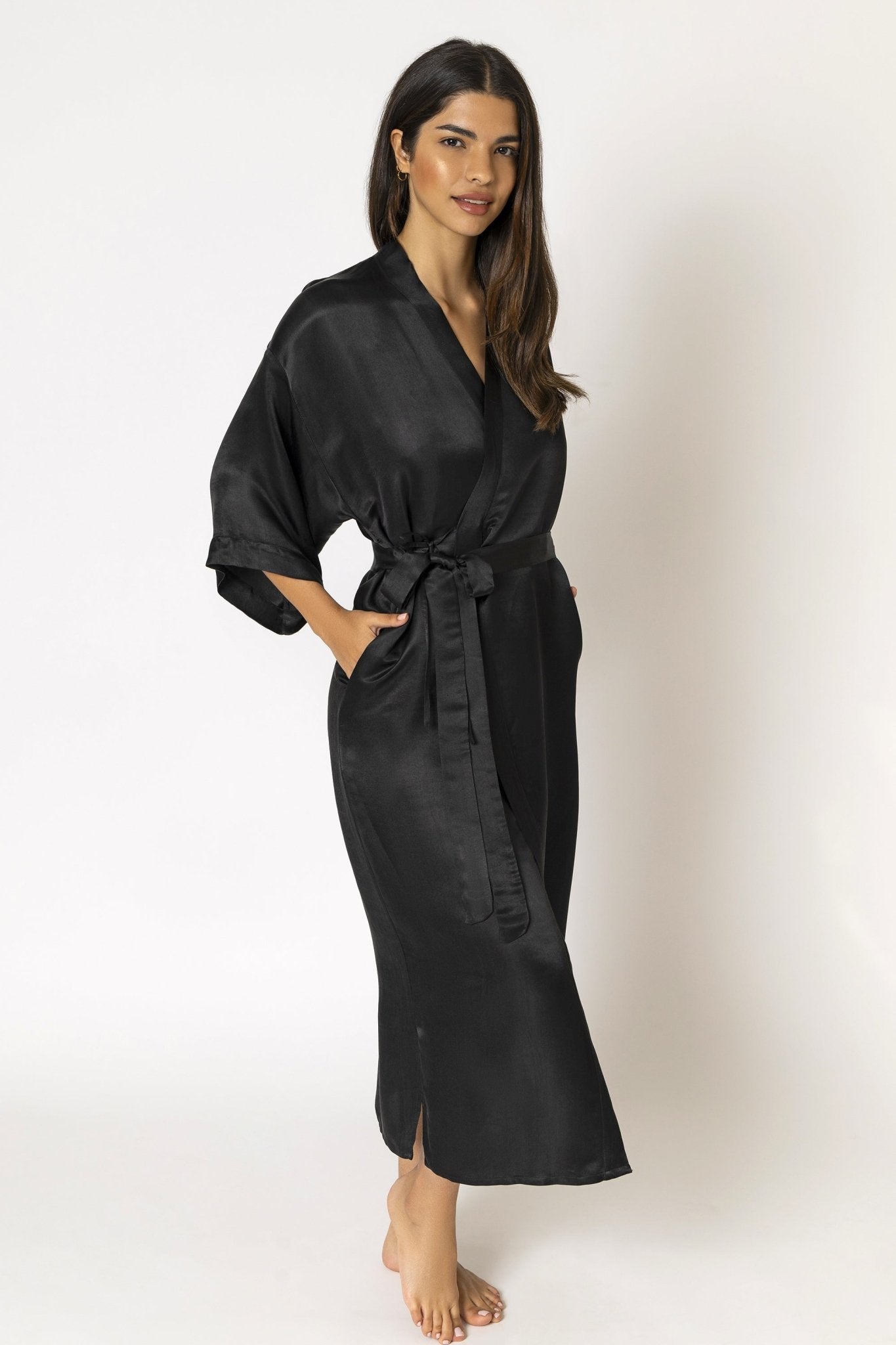
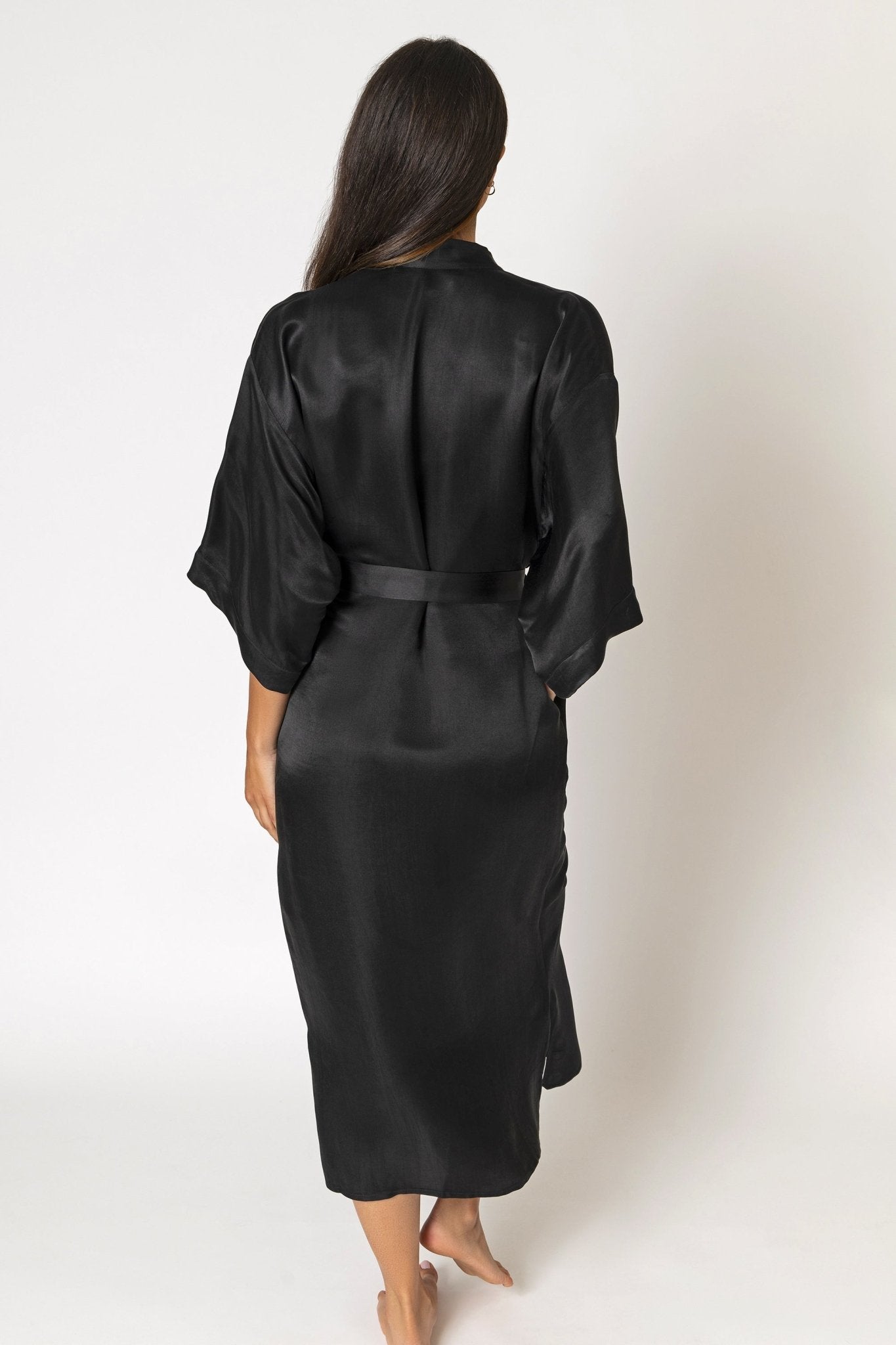
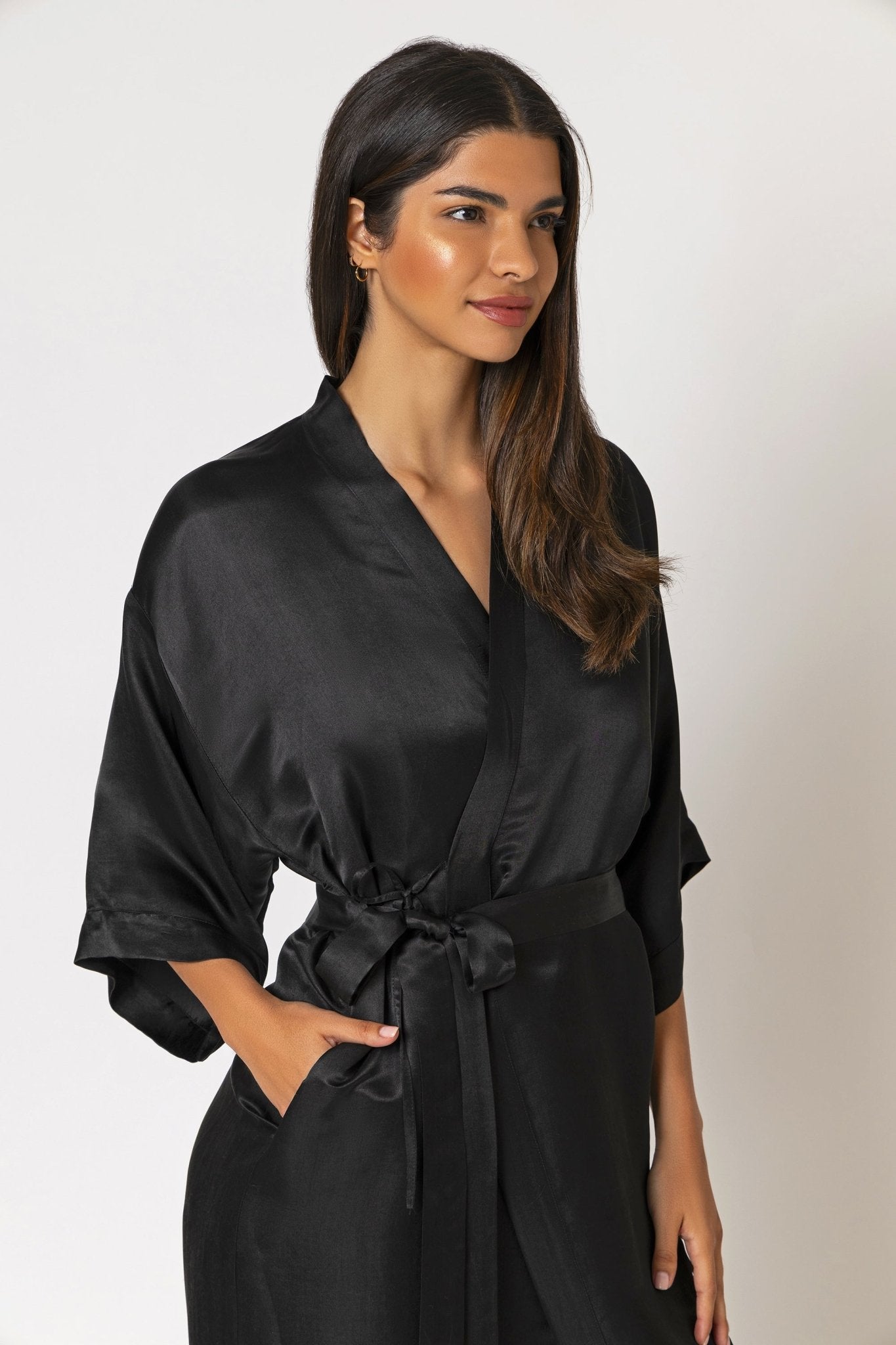
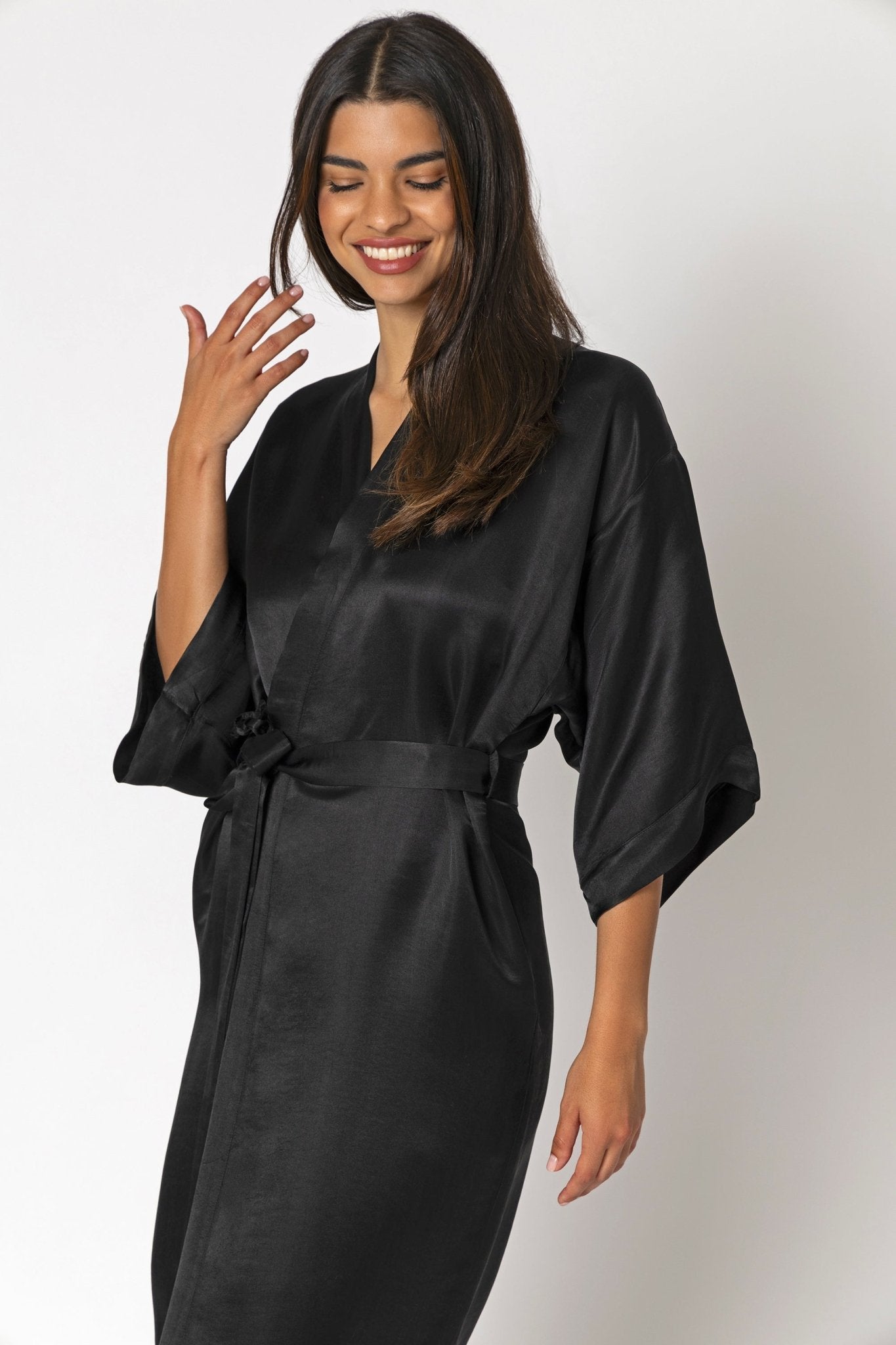
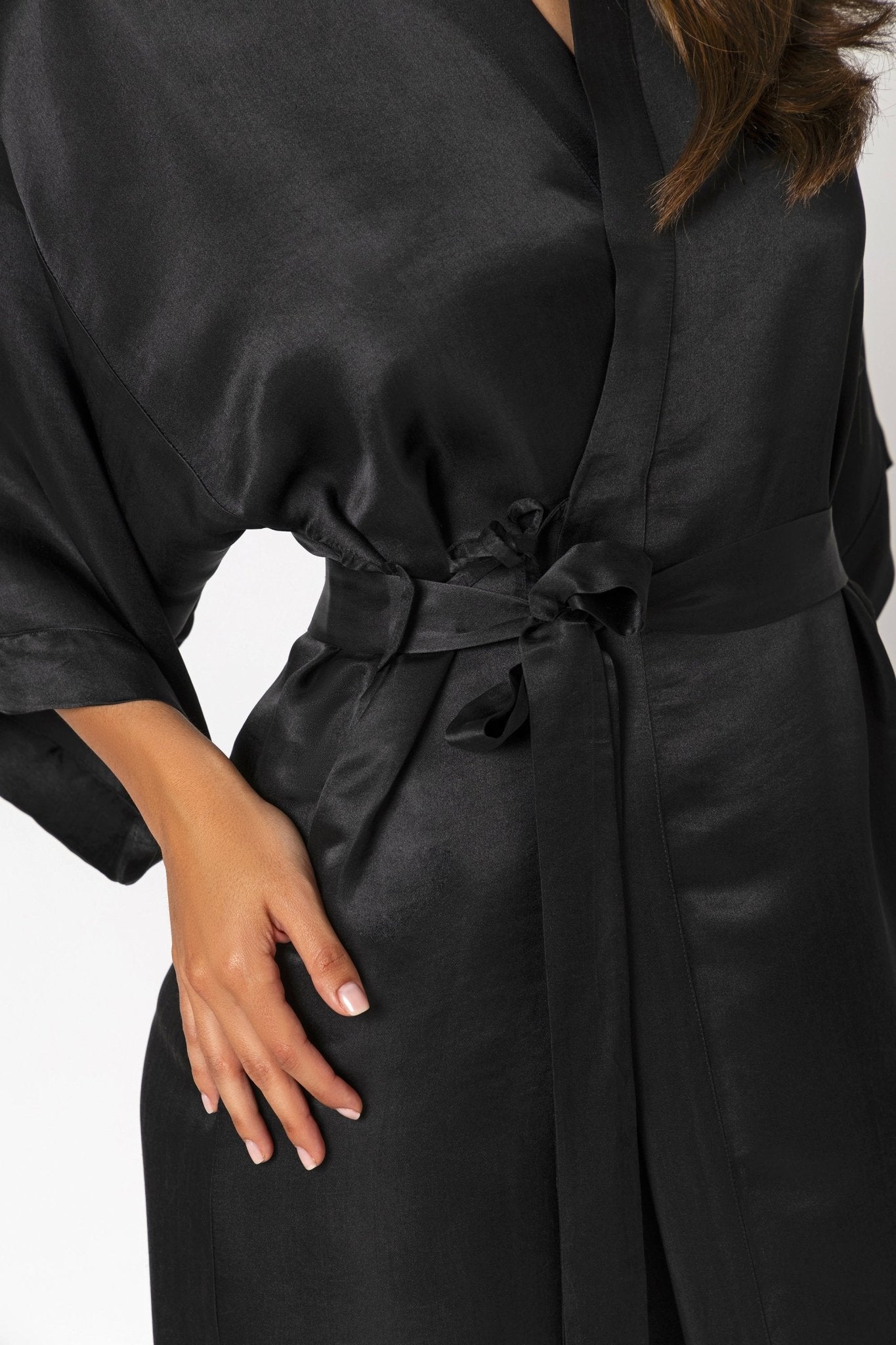
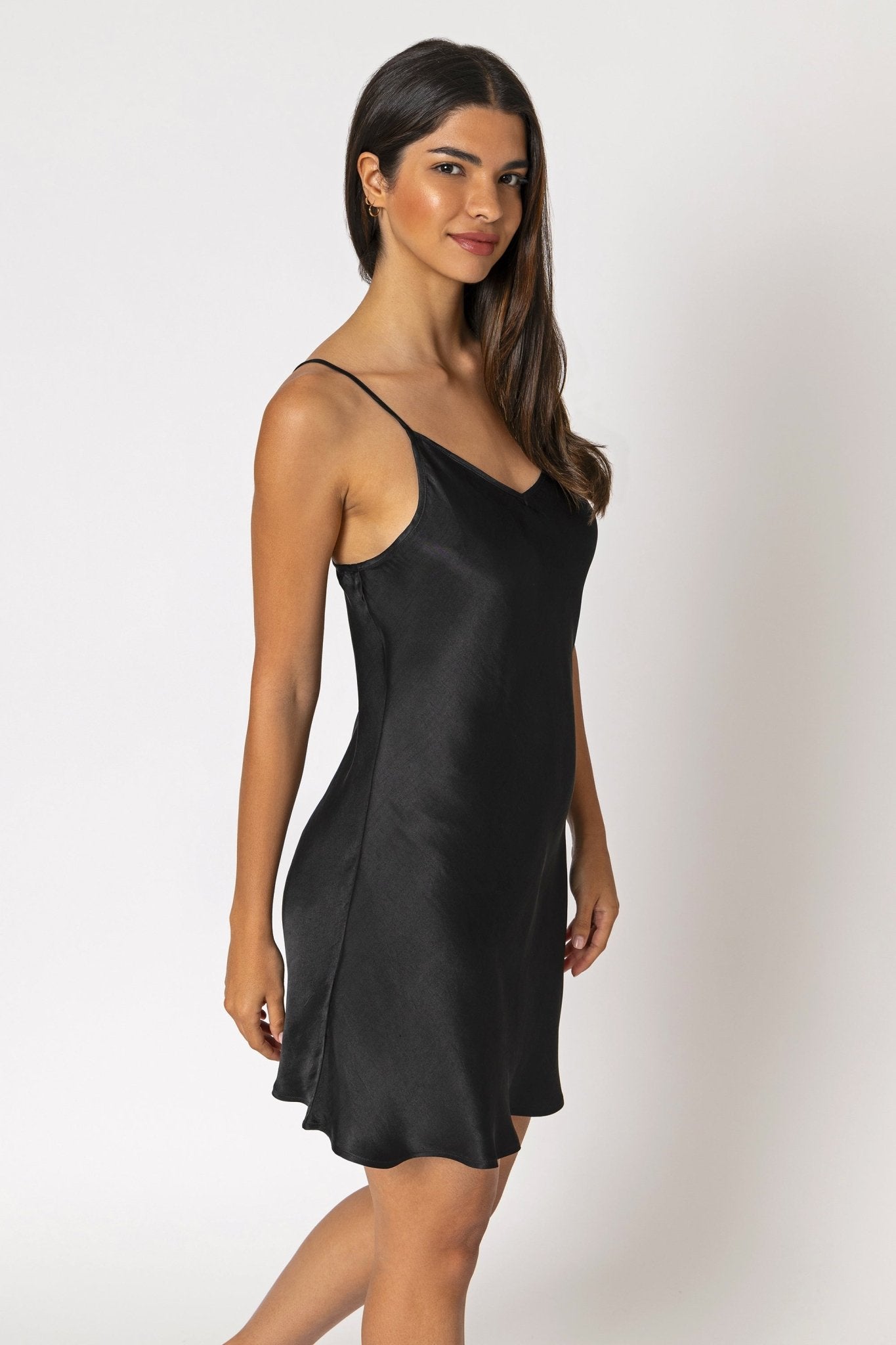
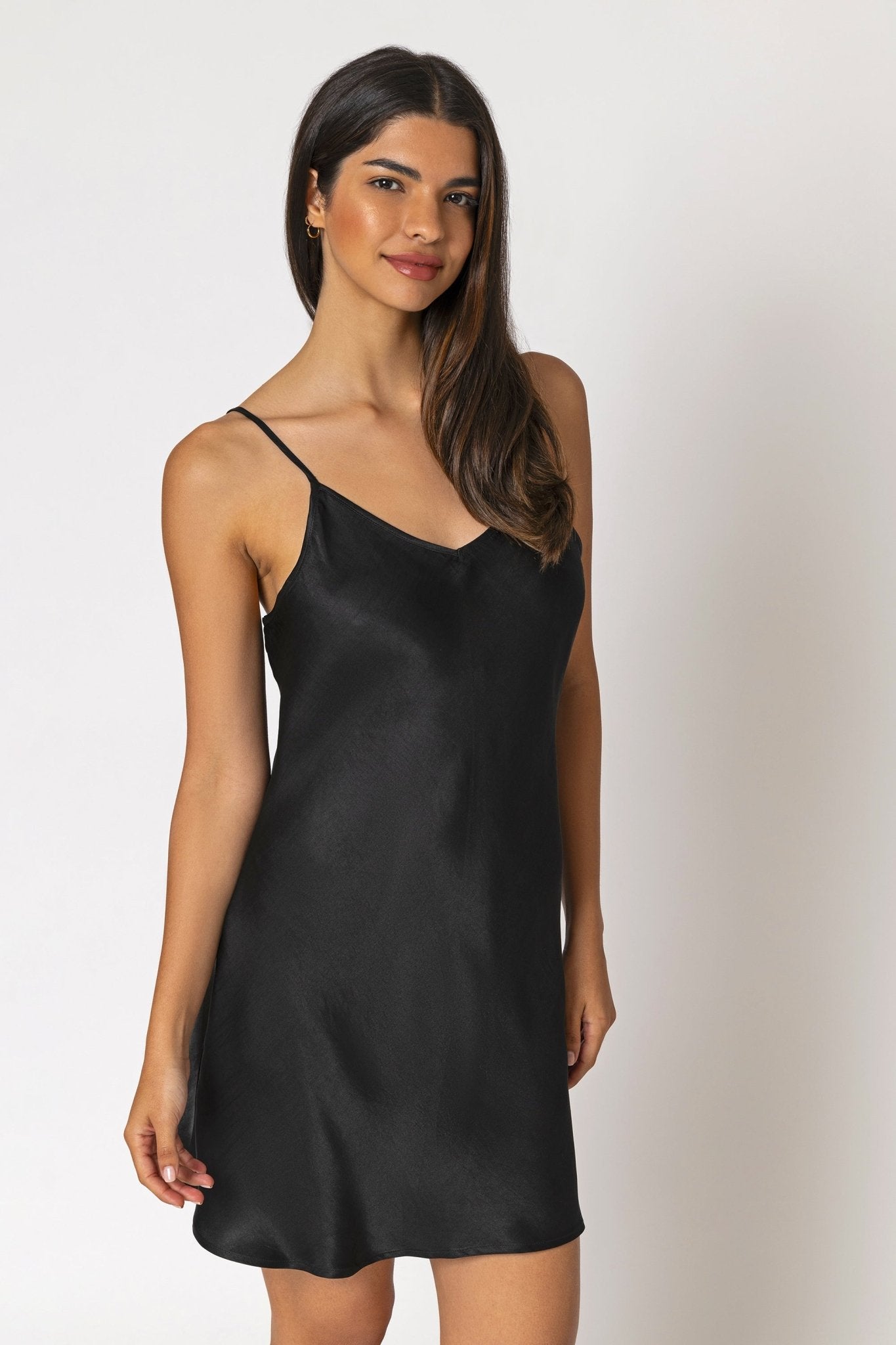
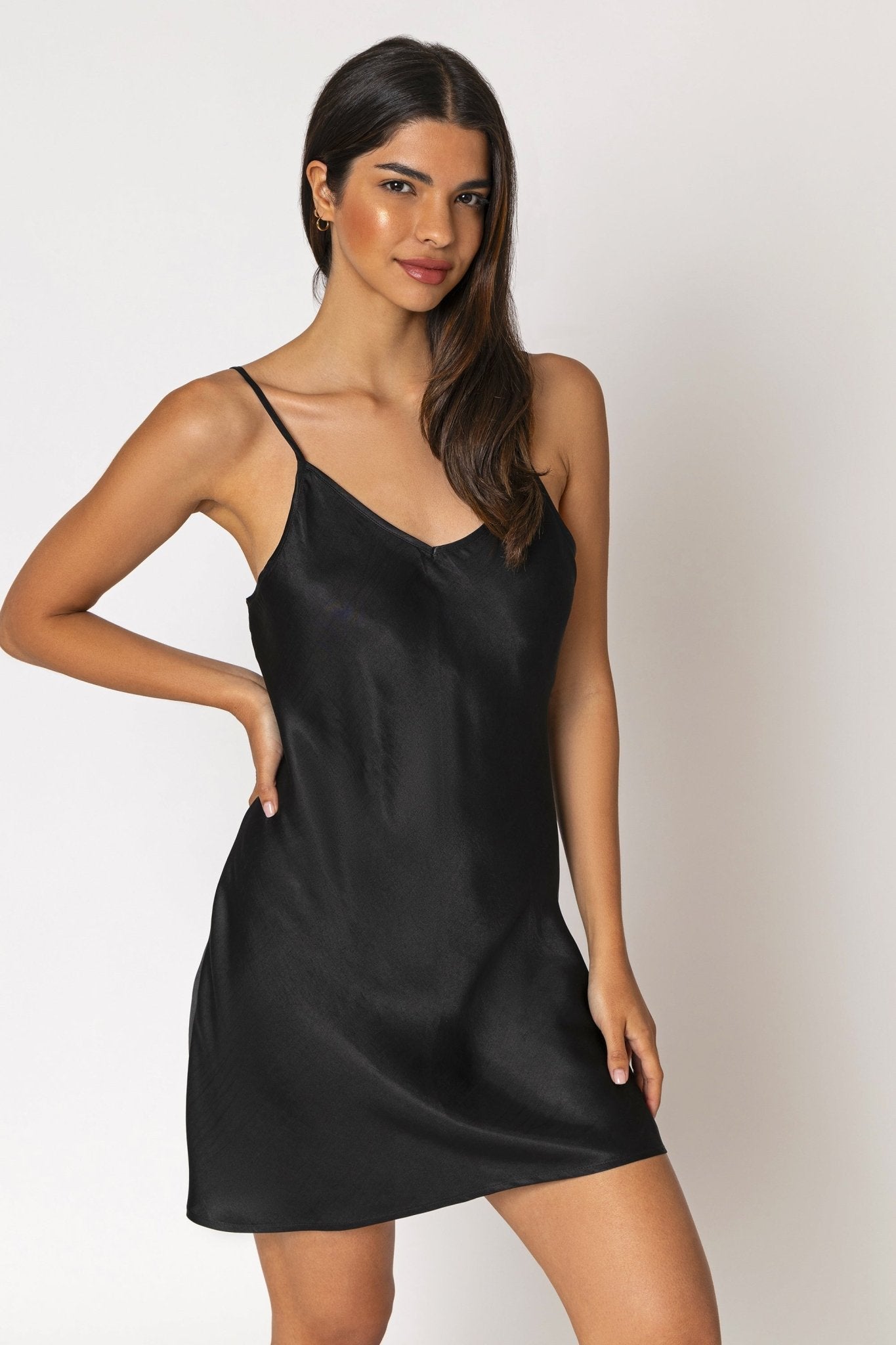
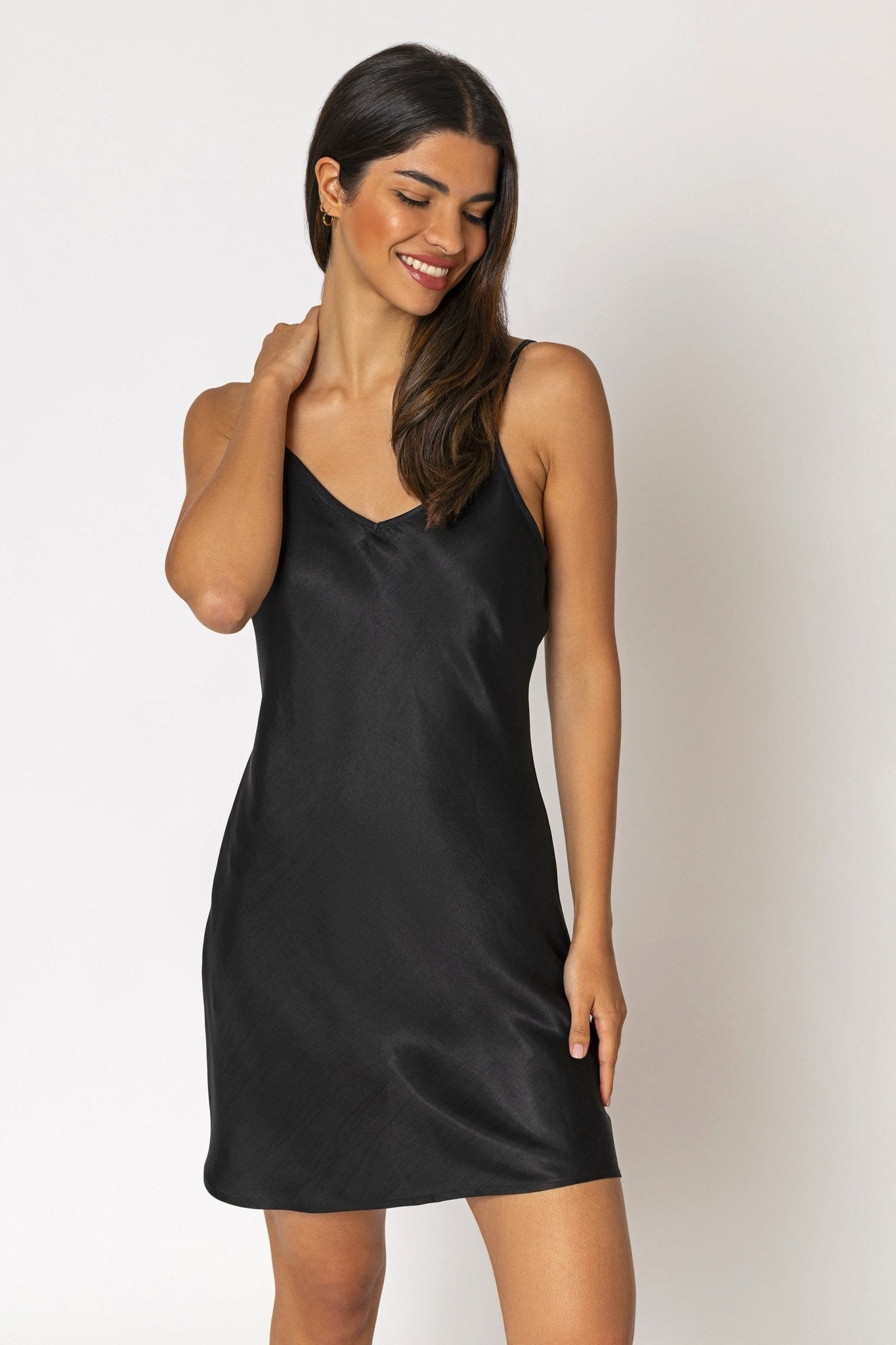
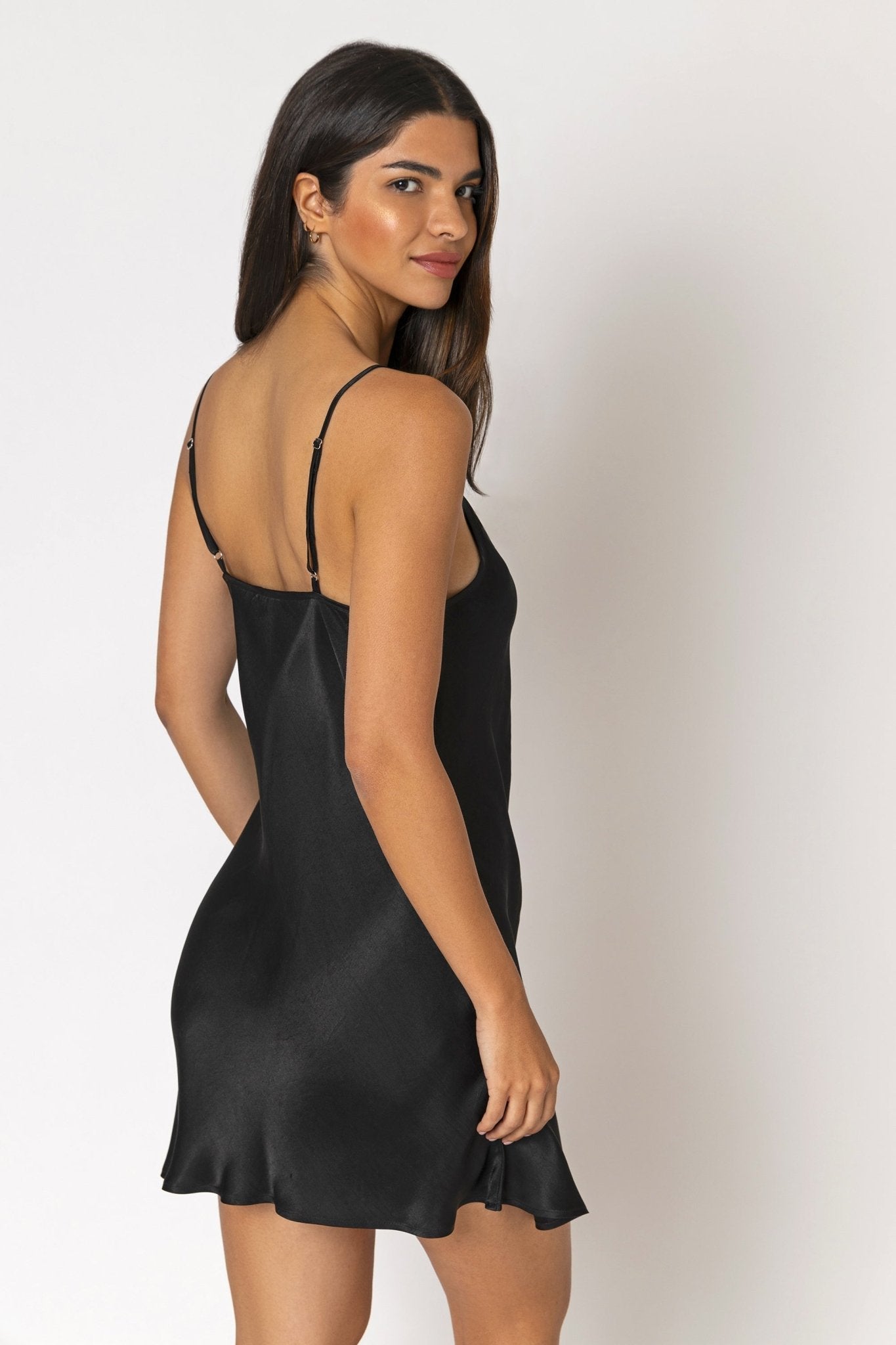
Each piece is made one piece at a time by a master artisan in Vietnam's historic silk villages. The silk is woven on heritage looms in 27 momme mulberry silk. The garment is cut from a single layer of fabric, not a stack, with the fabric's particular hand and that day's particular humidity accounted for in the cut. One artisan sews the whole garment. The seams are French seams, folded inward and enclosed on both sides. The piece is inspected, pressed, folded, and placed in the silk pouch it ships in by the same person who made it.
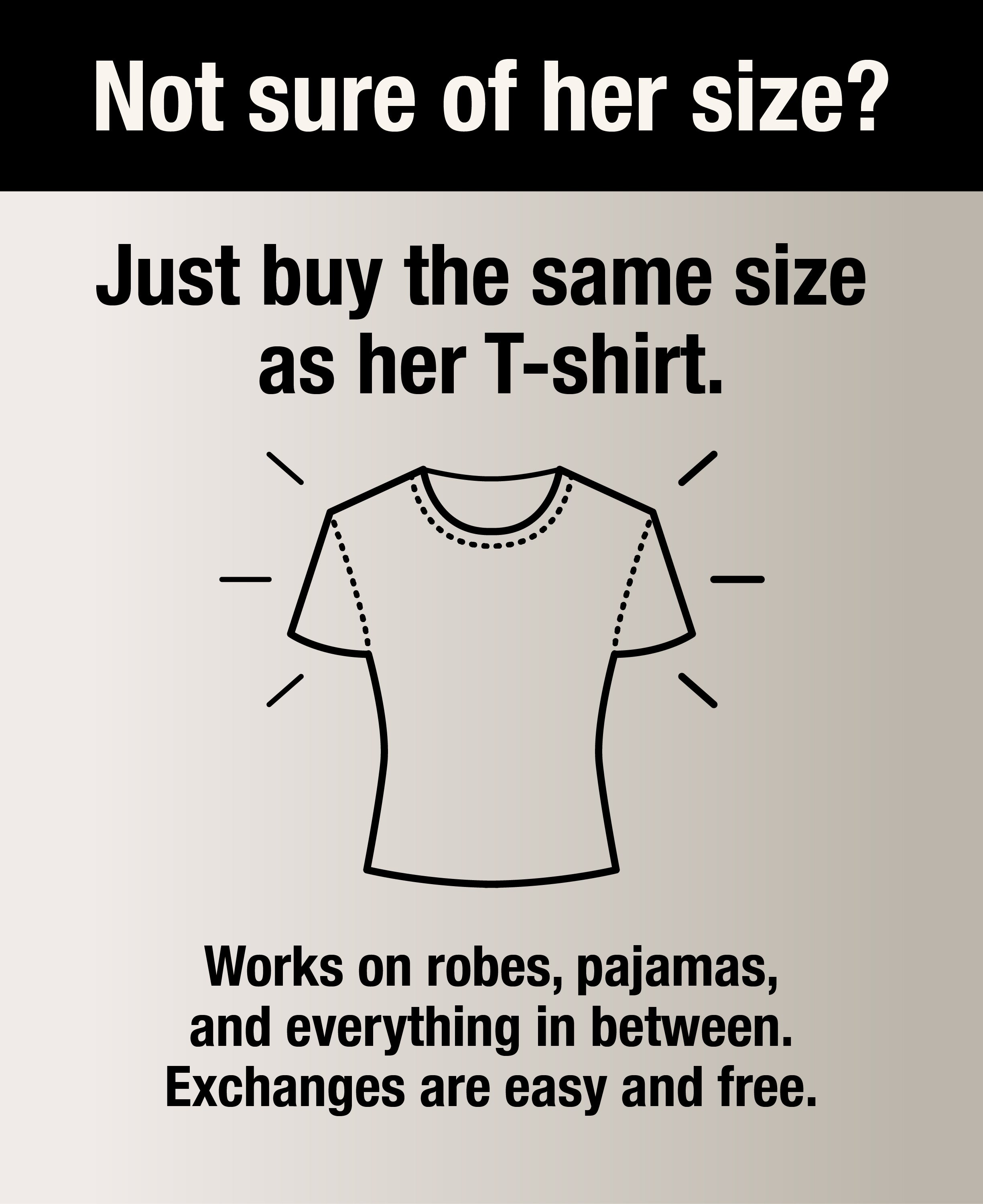
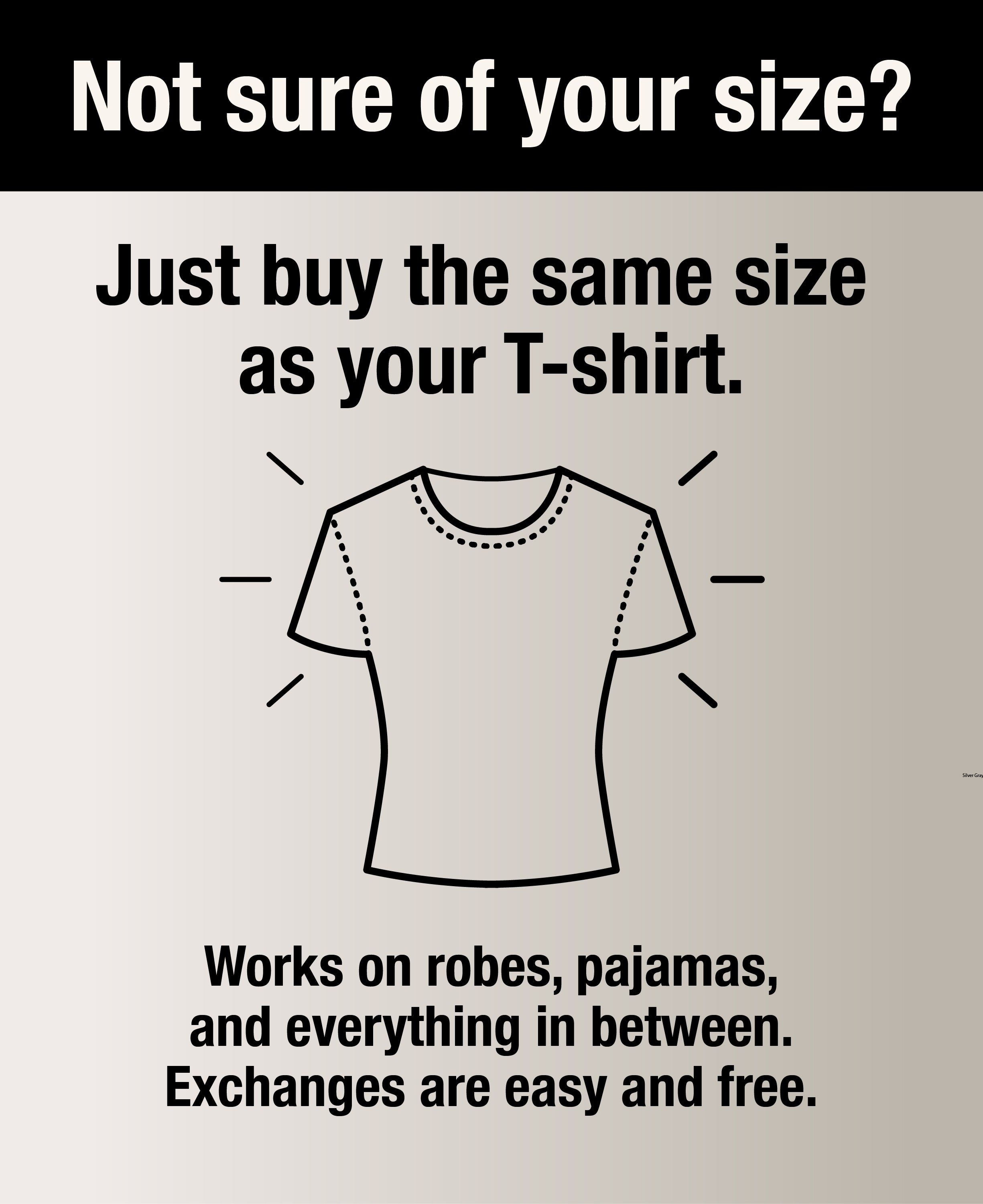
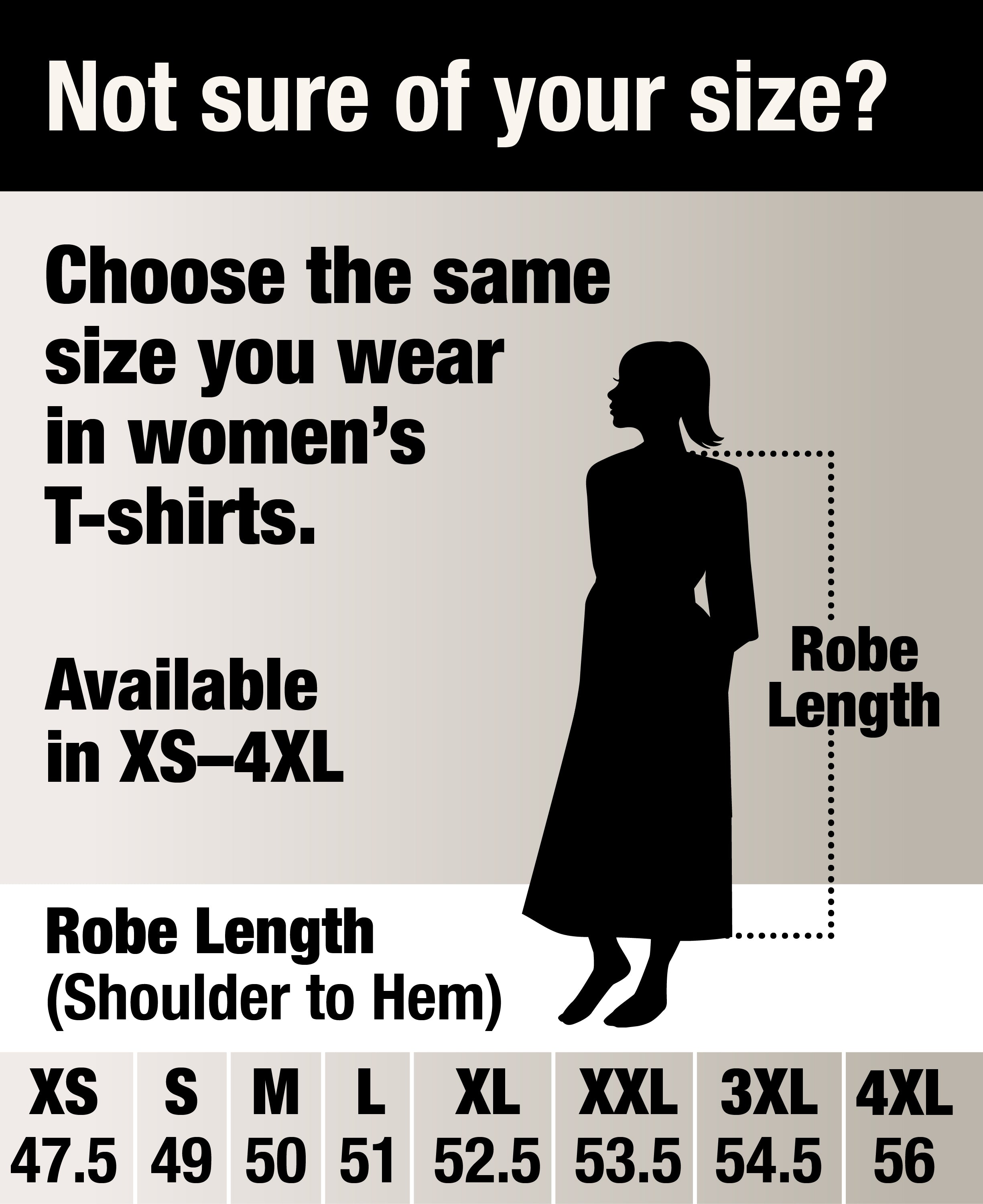
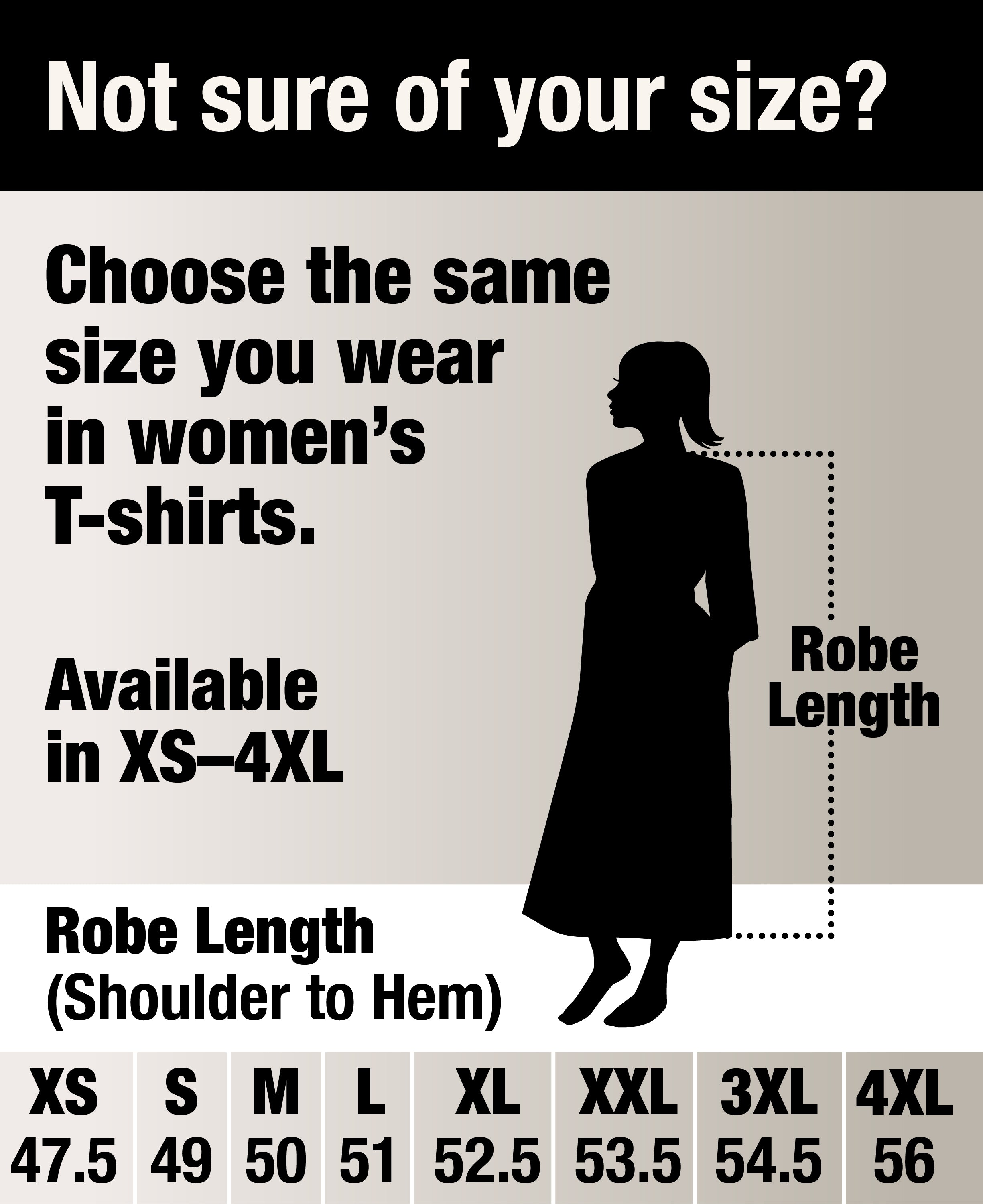
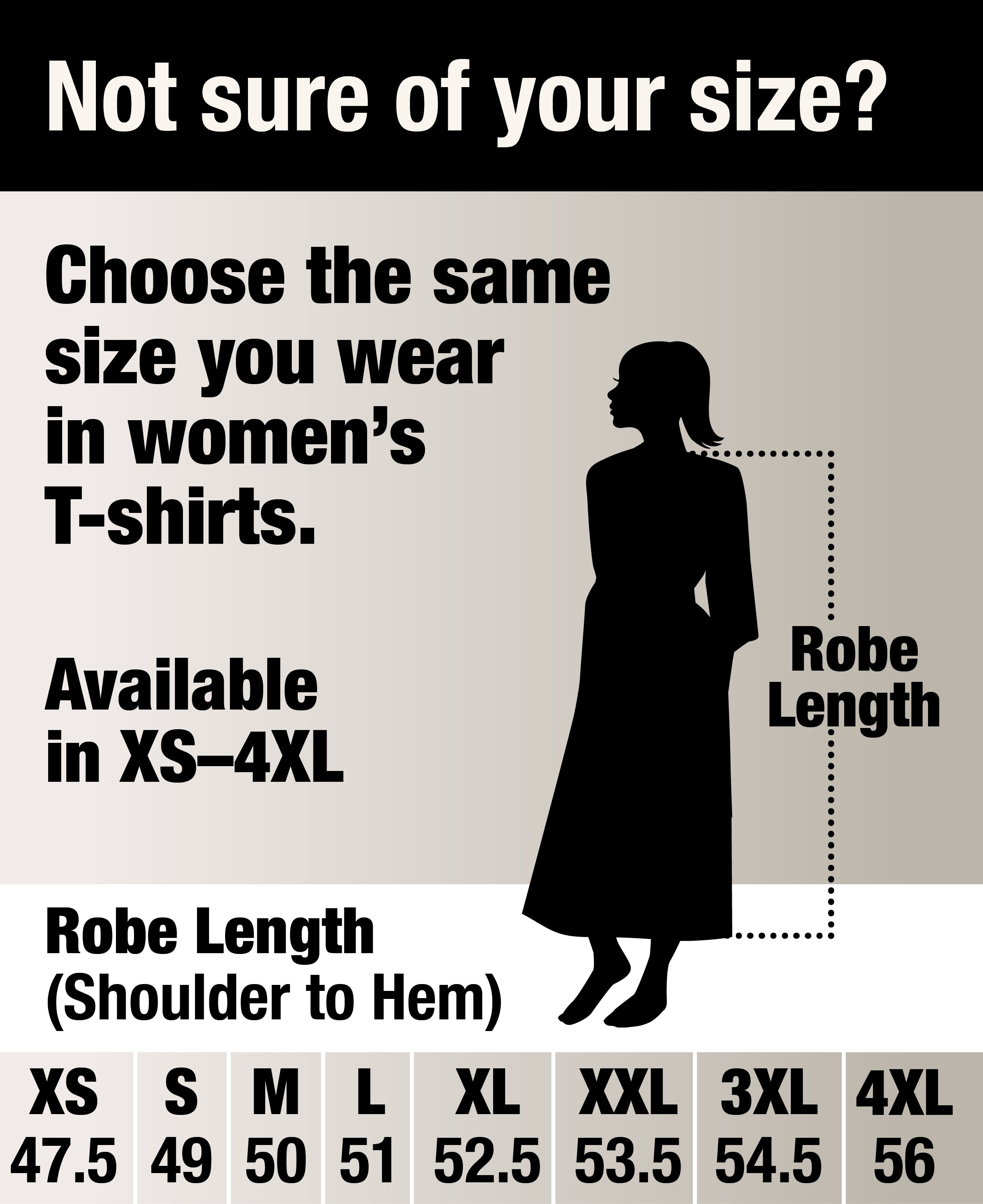
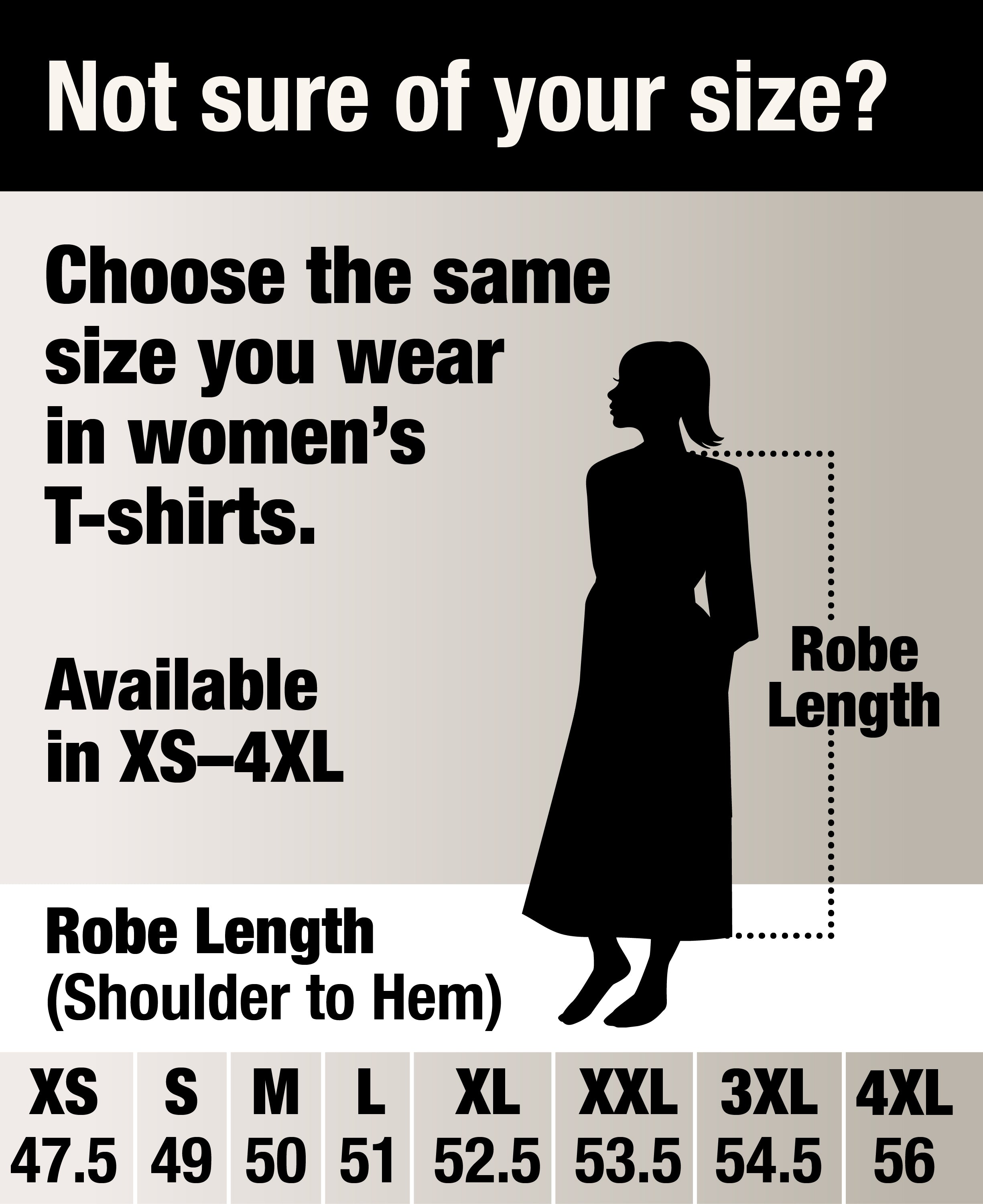
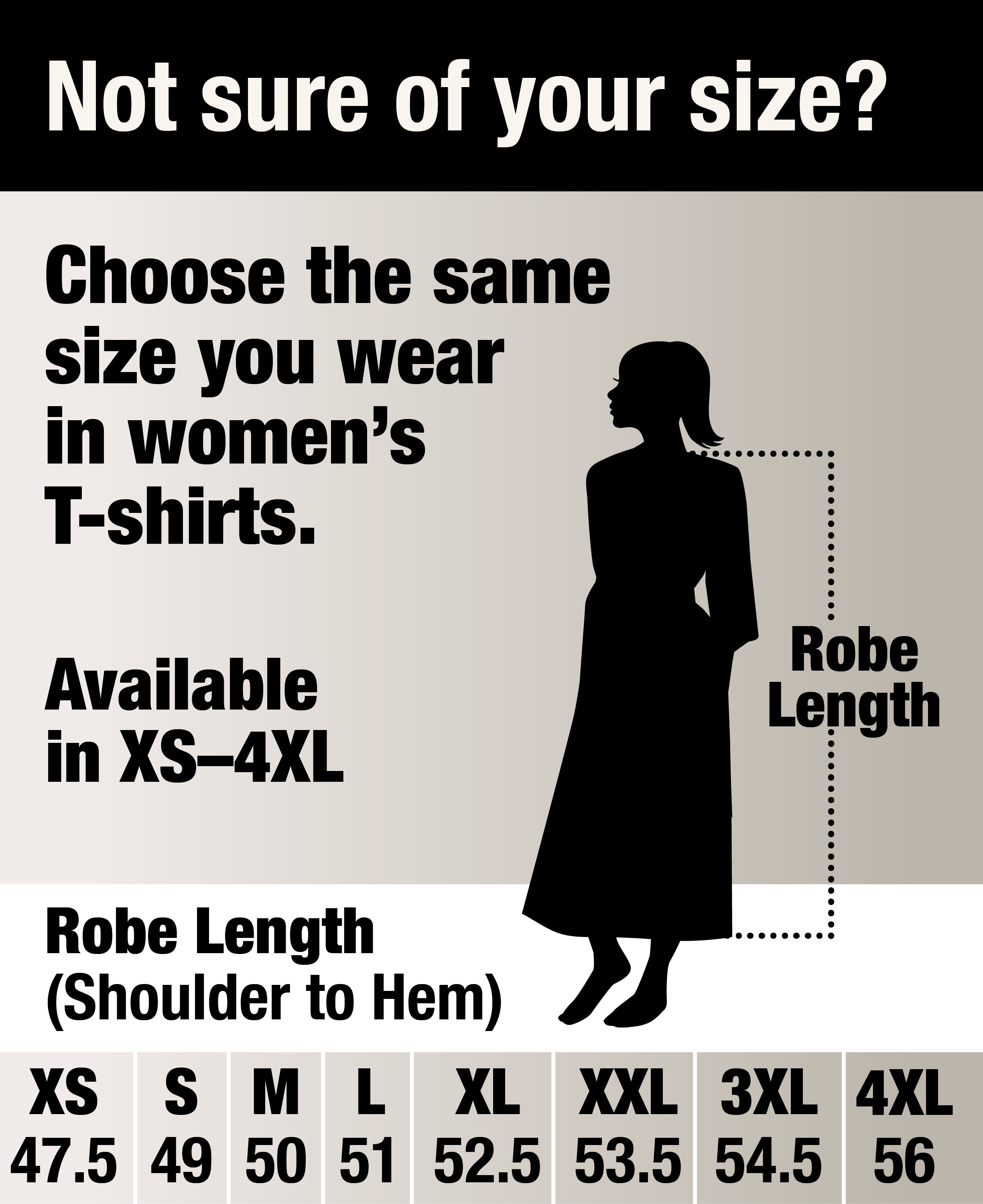
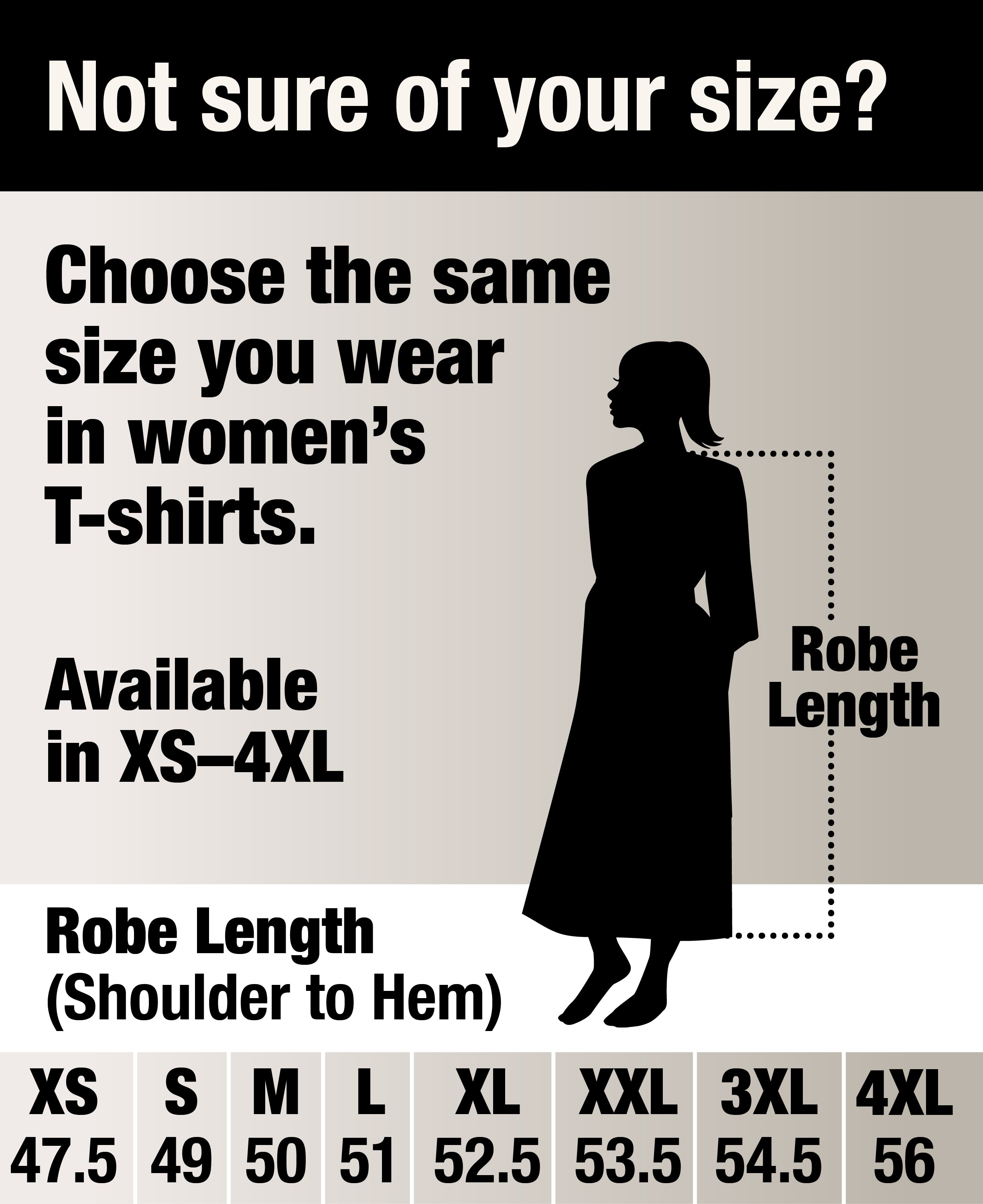
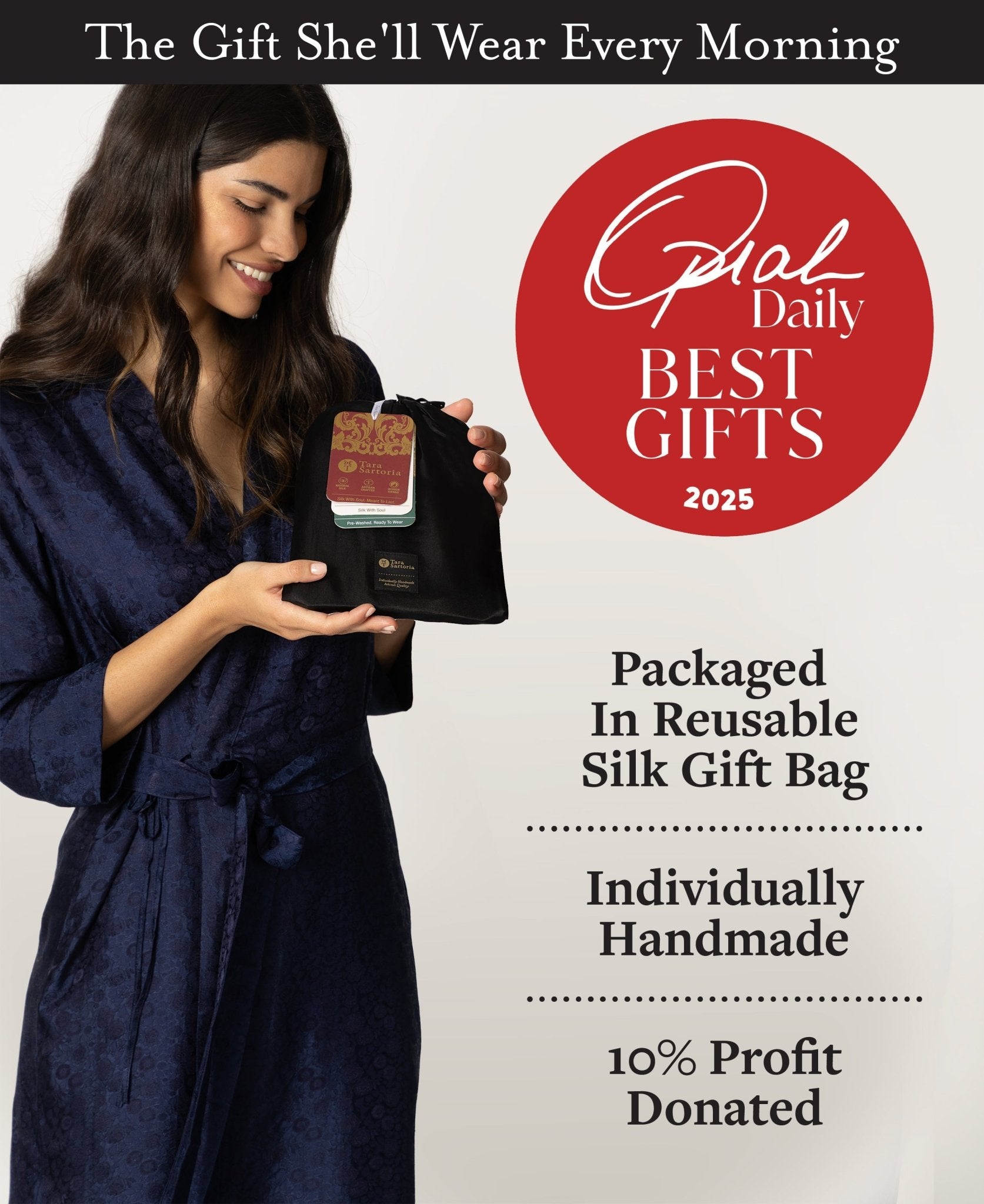
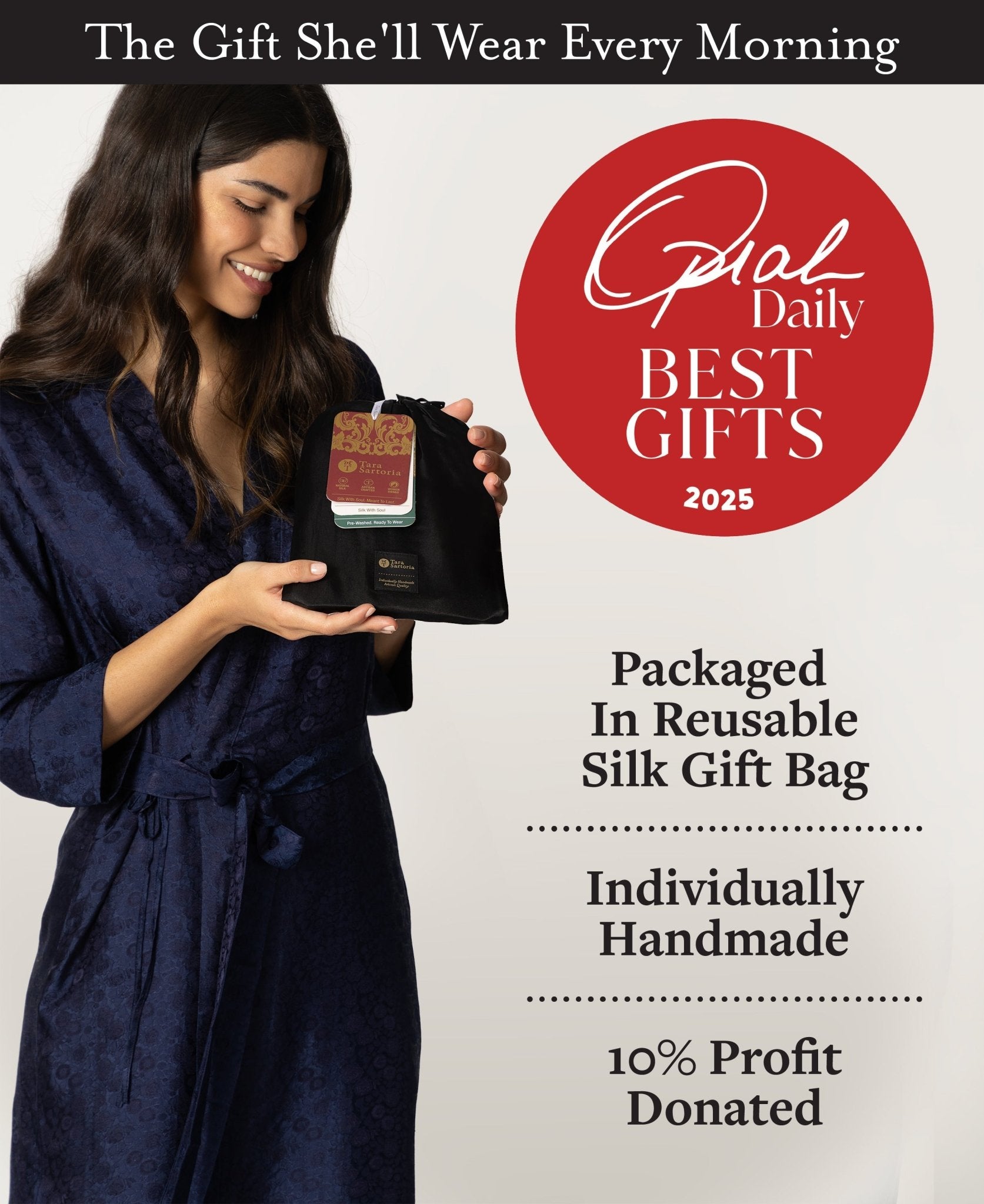
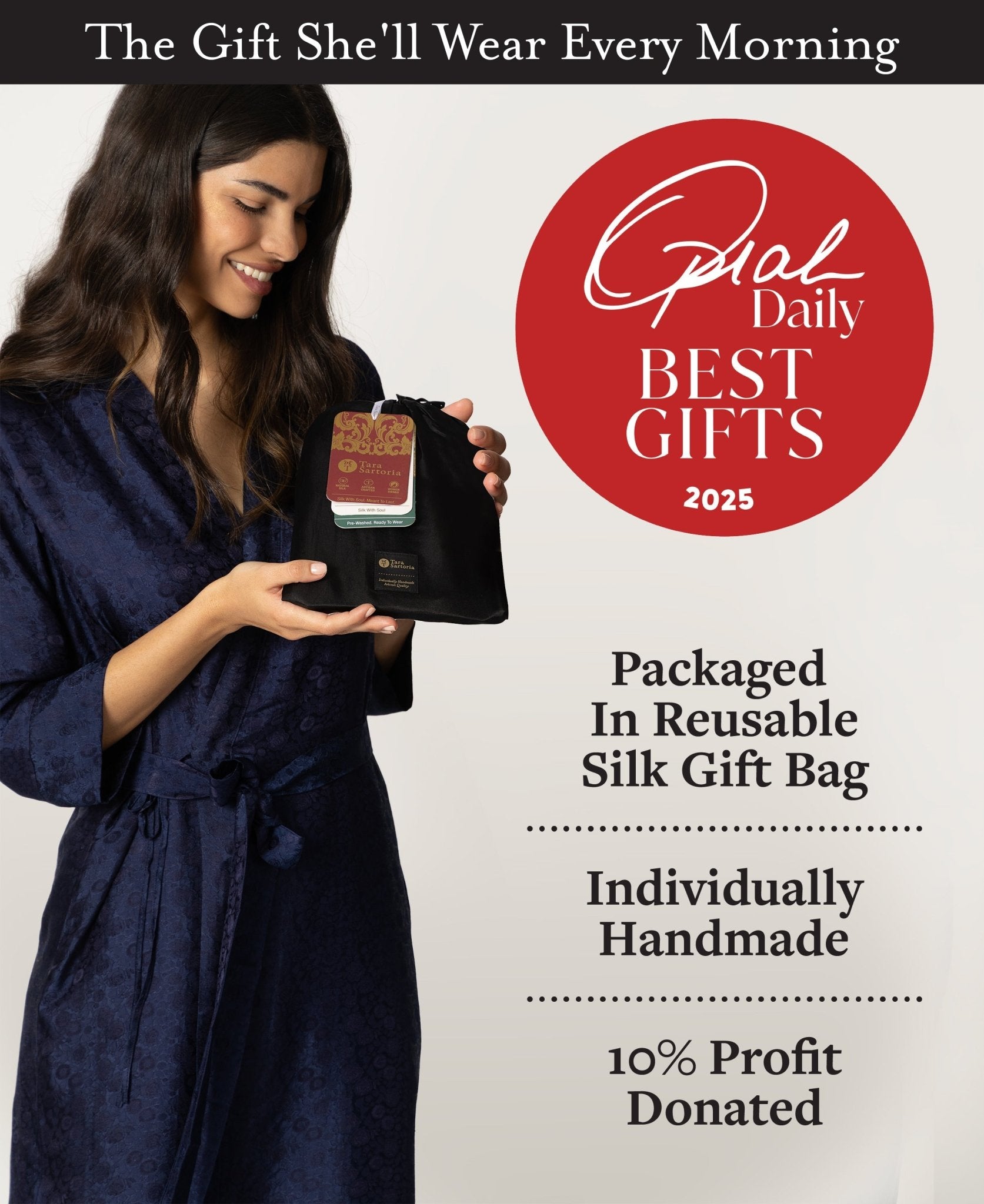
Sizes run XS to 4XL as standard, with custom sizing available when needed. Machine washable on a delicate cycle. Every order ships in a silk pouch with a handwritten note from the artisan who made it.






The Takeaway
Heritage looms matter because the loom decides what kind of fabric you end up with, and the fabric decides whether the garment is still good in eight years or thinning in eighteen months. Most silk on the market today is woven on industrial looms because industrial looms are faster and cheaper. The silk in our robes and pajamas is woven on heritage looms because that is the only way we have found to make silk that holds up to a real life. The loom is the part of the story the brand does not usually tell. It is also the part that decides everything else. See the collection when you are ready.
Frequently Asked Questions
What is a heritage loom?
A heritage loom is a slower, traditional weaving loom used in Vietnam's historic silk villages and other small-batch silk regions. Most are wooden frame looms run by a single weaver who knows the loom well. Compared to modern industrial looms, heritage looms produce less fabric per hour but produce fabric with tighter weave structure, more consistent thread tension, and greater durability. The fabric leaves the loom with the structure it will keep through years of wear.
Why does the loom affect how silk feels and lasts?
Because the loom decides how tightly and evenly the threads sit against each other in the finished fabric. A faster loom under higher tension produces silk that is slightly compressed at the thread level and relaxes over time, which shows up as pilling, thinning, and drape loss. A heritage loom produces silk with stable internal structure that survives daily wear and washing for years. The loom is the foundation. Everything else builds on it.
Are all Tara Sartoria pieces woven on heritage looms?
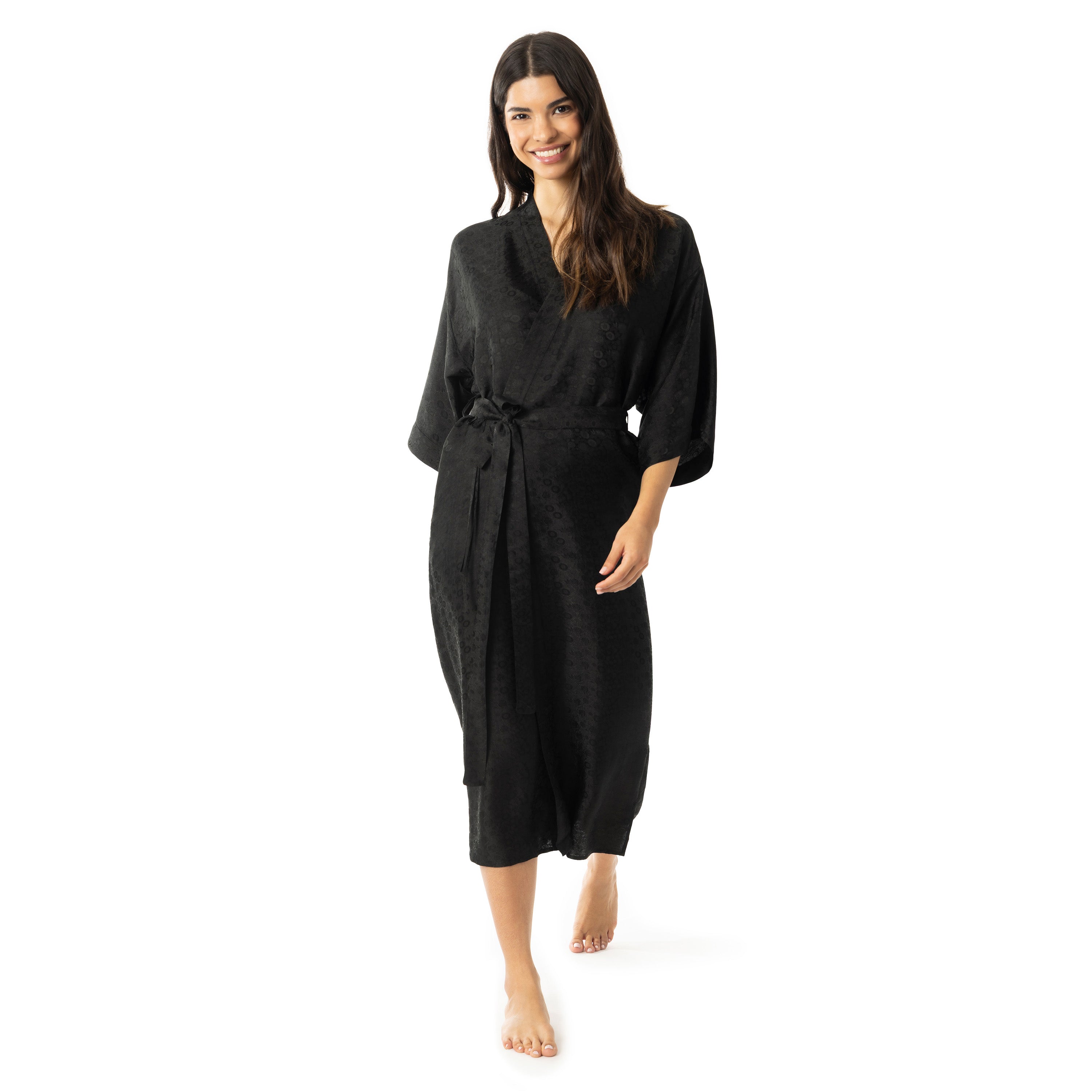
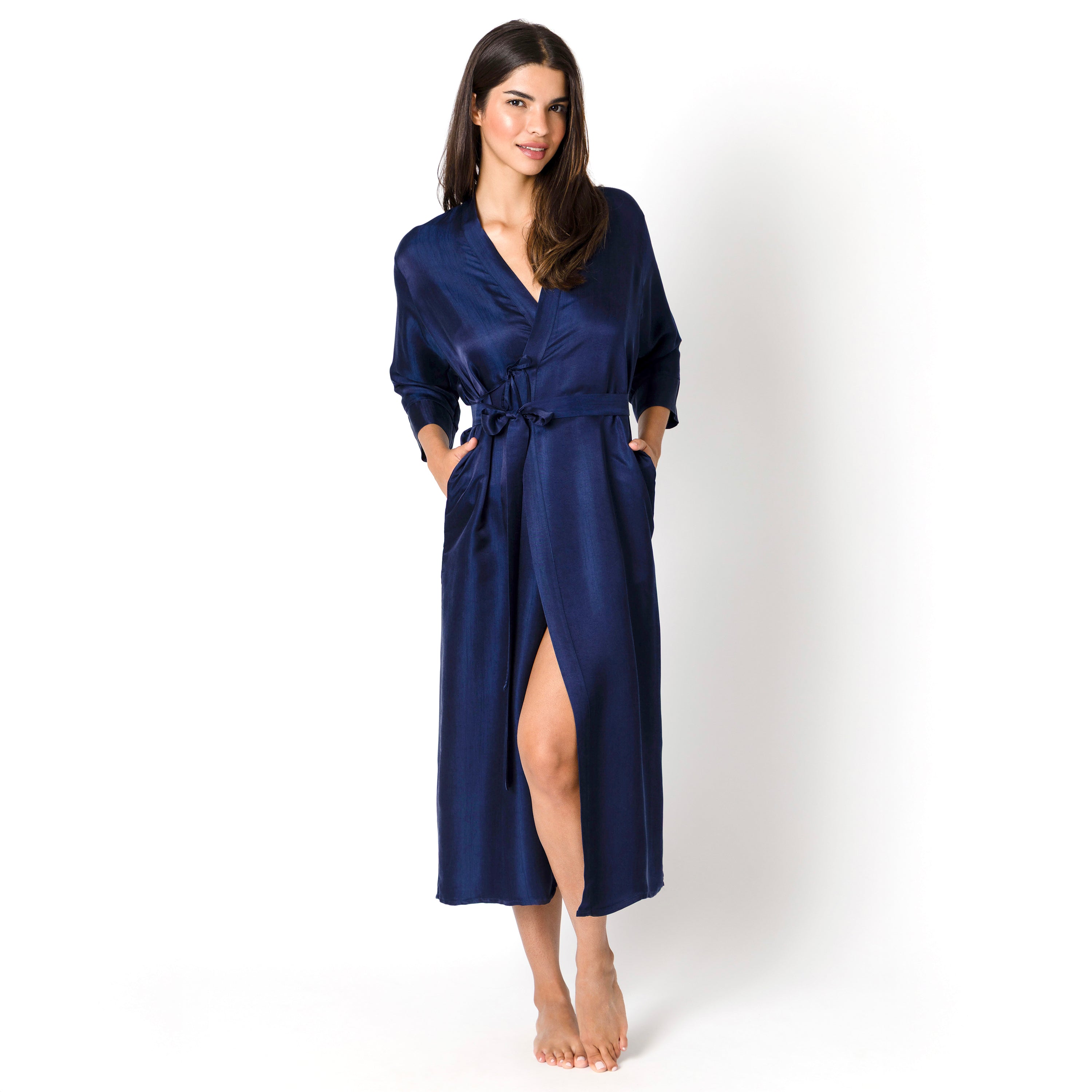
Yes. Every piece in the collection, from boxers to robes to pillowcases, is made from 27 momme mulberry silk woven on heritage looms in Vietnam's historic silk villages. Each garment is then made one piece at a time by a master artisan, with French seams throughout, machine washable, and sized XS to 4XL.
Is heritage-loom silk machine washable?
Yes. Because the fabric leaves the loom with stable thread structure and high density, it survives a delicate cycle wash without thinning or pilling. Use cool water at 30 degrees, a mesh laundry bag, no fabric softener, and lay flat to dry. Good silk should not require dry cleaning, and ours does not. Most silk that requires dry cleaning requires it because the fabric is too thin to survive a wash, not because silk inherently cannot be washed.
How can I tell if a silk brand uses heritage looms?
The brand will name the region, the loom type, and the artisan model explicitly. If a brand describes its silk in general terms only, with no detail about how the silk was woven or who wove it, the silk was almost certainly woven on a modern industrial loom. The absence of detail is itself a signal. A brand using heritage looms has every reason to mention them, because the production is the differentiator and the cost has to be explained.
